


A complete guide to homemade calcium baby food -- 15+ recipes with exact calcium milligrams per serving, organized by age and dietary needs.
Calcium rich baby food is not something most new parents think about until a pediatrician brings it up -- or until a dairy allergy throws the entire feeding plan sideways. Here is a number that puts things in perspective: 99% of your body's calcium resides in bones and teeth, and those structures form at their fastest rate during infancy. The foods you serve right now are literally building your child's skeleton.
Yet most online guides give you a generic food list and call it a day. No recipes. No milligram counts. No guidance for the baby who breaks out in hives after a spoonful of yogurt. If you have been wondering how much calcium a 6-month-old really needs, which non-dairy calcium sources actually deliver meaningful amounts, or how to make calcium-rich baby food recipes at home that your baby will enjoy, you are in the right place.
This guide from PatPat gives you everything in one resource: 15+ tested calcium foods for baby organized into dairy and non-dairy tracks, exact calcium content per serving, age-appropriate textures from first purees to finger foods, a weekly meal plan, and strategies for dairy-free families. Every recipe is informed by NIH calcium guidelines and USDA nutritional data.

How Much Calcium Does Your Baby Need by Age
Before diving into recipes, you need a clear target. How much calcium does a baby need daily? The answer changes significantly as your child grows, and the jump at 12 months catches many parents off guard.
The National Institutes of Health establishes Adequate Intake (AI) levels for calcium in infants and toddlers because there is not yet enough data for a formal Recommended Dietary Allowance at these ages.
Daily Calcium Requirements Chart from Birth to Age 3
| Age | Daily Calcium (AI) | Primary Sources |
|---|---|---|
| 0-6 months | 200mg | Breast milk or formula exclusively |
| 6-12 months | 260mg | Breast milk/formula + complementary calcium foods |
| 1-3 years | 700mg | Whole milk, dairy products, calcium-rich foods |
Notice that jump: calcium needs nearly triple when your child turns one. A single cup of whole milk yogurt delivers approximately 300mg of calcium, making it one of the most efficient sources available. But what if dairy is not an option? That is exactly why this guide covers both paths.
Baby Calcium Requirements at a Glance
- 0-6 months: 200mg/day (breast milk or formula)
- 6-12 months: 260mg/day (milk + solid foods)
- 1-3 years: 700mg/day (food-based sources essential)
- 1 cup whole milk yogurt = approximately 300mg calcium
- Breast milk provides ~250mg calcium per liter
Calcium Needs During Growth Spurts and Teething
Growth spurts at 6, 9, and 12 months temporarily increase calcium demand. Baby teeth begin erupting around 6 months and require calcium for proper mineralization. During these periods, your baby may increase milk feeds -- a natural response to higher calcium needs. Teething discomfort can reduce solid food intake, making high-calcium milk feeds a critical backup source for maintaining adequate calcium for baby bone growth.
Top Dairy Calcium Sources and Yogurt Recipes for Baby
Dairy remains the most bioavailable source of calcium for babies. Absorption rates sit around 30-35% compared to 5-25% for most plant sources. Full-fat dairy is recommended for babies and toddlers because healthy fats support brain development and help absorb fat-soluble vitamins.
A question parents frequently ask: when can babies start eating yogurt? The answer is 6 months -- earlier than whole cow's milk as a drink, which is not recommended until 12 months. The fermentation process breaks down proteins and lactose, making yogurt easier on young digestive systems.
Dairy Calcium Content Comparison Chart
| Dairy Food | Calcium per Serving | Serving Size | Safe From Age |
|---|---|---|---|
| Parmesan cheese | 330mg | 1 oz | 8+ months (grated) |
| Plain whole milk yogurt | 300mg | 1 cup (8 oz) | 6+ months |
| Whole milk kefir | 300mg | 1 cup | 6+ months |
| Ricotta cheese (whole milk) | 255mg | 1/2 cup | 6+ months |
| Full fat Greek yogurt | 200mg | 3/4 cup (6 oz) | 6+ months |
| Mild cheddar cheese | 200mg | 1 oz | 8+ months (shredded) |
| Cottage cheese (whole milk) | 100mg | 1/2 cup | 6+ months |
| Cream cheese | 28mg | 1 oz | 8+ months |
Notice cream cheese at the bottom. Despite being dairy, it provides almost no calcium -- do not count on it as a calcium source.

Yogurt Berry Puree for Babies 6 Months and Up
Yogurt Berry Puree 75mg calcium per serving
Ingredients: 1/4 cup plain whole milk yogurt, 2 tbsp mashed blueberries (steamed soft for babies under 8 months), 1 tsp ground flaxseed (optional)
Instructions: Combine yogurt with mashed berries. Stir in ground flaxseed if using. Serve immediately at room temperature.
Yield: 1 serving | Prep time: 5 minutes
Texture tip: For 6-month-olds, blend berries completely smooth. For 8+ months, leave some soft pieces.
Vitamin D tip: Choose yogurt fortified with vitamin D when available, as vitamin D is essential for calcium absorption.
Cottage Cheese and Fruit Combinations for Baby Led Weaning
Cottage cheese baby food combinations are endlessly versatile. Here are five pairings that deliver varied flavors and nutrients, each providing approximately 50mg calcium per 1/4 cup serving:
- Cottage cheese + mashed avocado + tiny pinch of cumin -- healthy fats for brain development
- Cottage cheese + steamed peach slices -- vitamin C boosts iron absorption at other meals
- Cottage cheese + mashed banana + dash of cinnamon -- potassium-rich and naturally sweet
- Cottage cheese + pureed roasted sweet potato -- beta-carotene for eye health
- Cottage cheese + finely diced soft pear -- gentle fiber for digestion
For baby led weaning, preload a spoon for your baby to self-feed or offer on a suction plate with a lip.
Non-Dairy Calcium Sources and Plant-Based Recipes for Babies
If dairy is not on the table -- whether due to allergy, family preference, or your baby simply refusing every cheese you offer -- non-dairy calcium sources for babies can absolutely fill the gap. The key insight most guides miss is that total calcium content does not tell the whole story. Bioavailability matters more.
Non-Dairy Calcium Content Ranked by Bioavailability
| Non-Dairy Food | Calcium per Serving | Absorption Rate | Usable Calcium | Safe From |
|---|---|---|---|---|
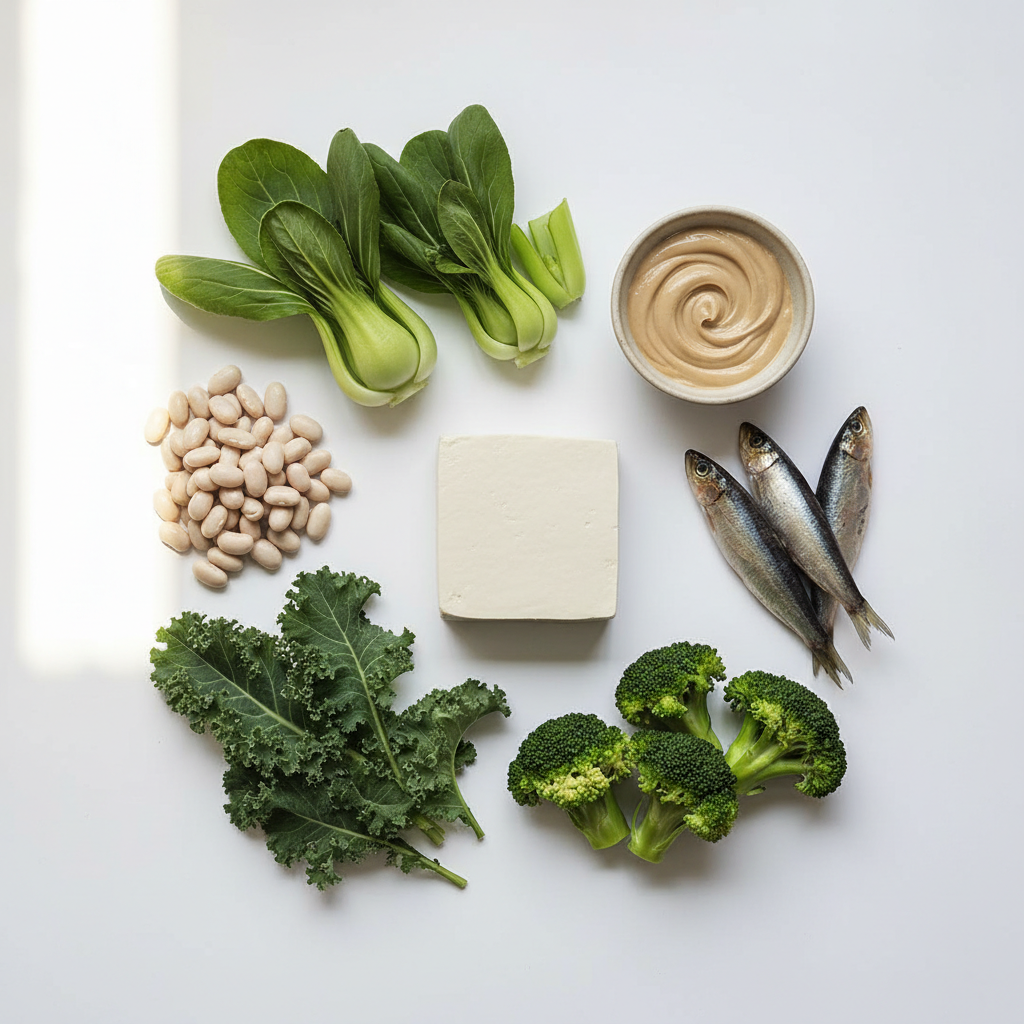
| Calcium-set tofu | 250-400mg | 31% | 78-124mg | 6+ months |
| Bok choy (cooked) | 160mg/cup | 54% | 86mg | 6+ months |
| Canned sardines with bones | 325mg/3oz | 27% | 88mg | 9+ months |
| Kale (cooked) | 94mg/cup | 49% | 46mg | 6+ months |
| Broccoli (cooked) | 60mg/cup | 61% | 37mg | 6+ months |
| White beans (cooked) | 80mg/half cup | 22% | 18mg | 6+ months |
| Chia seeds (ground) | 76mg/tbsp | 20% | 15mg | 6+ months |
| Tahini | 64mg/tbsp | 21% | 13mg | 6+ months |
| Edamame | 50mg/half cup | 24% | 12mg | 8+ months |
A counterintuitive finding: bok choy and broccoli actually have higher absorption rates than dairy despite lower total calcium. Spinach, on the other hand, looks impressive on paper but delivers only about 5% of its calcium due to high oxalate content -- making it an unreliable calcium source for your baby.
Tofu and Broccoli Calcium Puree for Babies 6 Months and Up
Tofu and Broccoli Puree 95mg calcium per serving
Ingredients: 3oz calcium-set firm tofu, 1/2 cup broccoli florets, 1/4 ripe avocado, breast milk or water for thinning
Instructions: Steam broccoli until completely tender (10 minutes). Crumble tofu. Blend all ingredients until smooth. Thin to desired consistency.
Yield: 4 servings (2oz each) | Prep time: 15 minutes
Label check: Look for calcium sulfate or calcium chloride in the tofu ingredients. Silken tofu set with glucono delta-lactone contains far less calcium.
Texture tip: Blend smooth for 6 months. Mash with a fork for 8+ months.
Bok Choy and White Bean Puree with Tahini
Bok Choy White Bean Puree 70mg calcium per serving
Ingredients: 1 cup baby bok choy (chopped), 1/3 cup cooked white beans (navy or cannellini), 1 tsp tahini, squeeze of lemon
Instructions: Steam bok choy until very soft (6-8 minutes). Combine with cooked white beans and tahini. Blend until smooth with a small squeeze of lemon juice.
Yield: 3 servings (2oz each) | Prep time: 15 minutes
Allergen note: Tahini is a sesame product -- introduce sesame separately first before including in combination recipes.
Sardine and Sweet Potato Mash for Babies 9 Months and Up
Sardine Sweet Potato Mash 110mg calcium per serving
Ingredients: 1 can sardines in water (drained, bones included), 1/2 medium sweet potato (cooked, mashed), 1 tbsp finely diced tomato
Instructions: Flake sardines with a fork, mashing the soft bones completely into the flesh. Combine with mashed sweet potato and diced tomato.
Yield: 3 servings (3oz each) | Prep time: 10 minutes
Why sardines: The edible soft bones are the calcium source, not the fish flesh itself. Canned sardine bones are completely soft and safe for babies. Sardines are also among the lowest mercury fish, making them safe for regular consumption.
Dairy-Free Calcium Solutions for Babies with Milk Allergy or Lactose Intolerance
When dairy is off limits, the calcium challenge feels more urgent. Cow's milk protein allergy (CMPA) affects approximately 2-3% of infants and is the most common food allergy in the first year of life. Understanding the difference between allergy and intolerance is the first step toward finding the right dairy alternatives for baby calcium.
Milk Allergy vs. Lactose Intolerance -- What Parents Need to Know
| Feature | Milk Allergy (CMPA) | Lactose Intolerance |
|---|---|---|
| Cause | Immune reaction to casein/whey proteins | Cannot break down lactose sugar |
| Symptoms | Eczema, hives, vomiting, blood in stool | Gas, bloating, diarrhea, cramps |
| Must avoid | ALL dairy products | Liquid milk (may tolerate yogurt, aged cheese) |
| Prevalence in infants | 2-3% | Very rare under 12 months |
| Outlook | Most outgrow by age 3-5 | May be lifelong or temporary |
For CMPA babies, approximately 10-15% also react to soy, so monitor closely when introducing tofu and edamame. Work with your pediatrician to confirm the diagnosis and develop a calcium replacement plan.

7-Day Dairy-Free Calcium Meal Plan for Babies 8-12 Months
| Day | Breakfast | Lunch | Dinner | Food Calcium |
|---|---|---|---|---|
| Mon | Fortified oatmeal + chia (65mg) | Tofu broccoli puree (95mg) | Sardine sweet potato mash (110mg) | 270mg |
| Tue | Fortified cereal + mashed fig (55mg) | Bok choy white bean puree (70mg) | Edamame carrot mash (60mg) | 185mg |
| Wed | Tahini banana oatmeal (74mg) | Sardine sweet potato mash (110mg) | Tofu bok choy stir (90mg) | 274mg |
| Thu | Fortified oatmeal + almond butter (75mg) | White bean kale puree (66mg) | Tofu broccoli puree (95mg) | 236mg |
| Fri | Chia seed porridge (76mg) | Bok choy white bean puree (70mg) | Sardine tomato mash (110mg) | 256mg |
| Sat | Fortified pancake + tahini (70mg) | Tofu edamame mash (80mg) | Kale white bean puree (66mg) | 216mg |
| Sun | Fortified cereal + figs (55mg) | Sardine sweet potato mash (110mg) | Bok choy tofu puree (90mg) | 255mg |
These totals reflect food-based calcium only. Breast milk or hypoallergenic formula adds an additional 150-250mg daily, bringing totals well above the 260mg adequate intake for 6-12 month olds. No single day needs to be perfect -- aim for consistency across the week.
Calcium-Rich Finger Foods and Snacks for Self-Feeding Babies and Toddlers
Once your baby starts practicing the pincer grasp around 8 months, calcium rich finger foods for baby become your best friend. Self-feeding promotes motor development and independence while keeping calcium intake on track. Every item here passes the safety test: soft enough to squish between two adult fingers.
Calcium-Rich Finger Foods for Babies 8-12 Months
| Finger Food | Calcium | Preparation |
|---|---|---|
| Shredded cheddar on toast strips | 100mg | Melt cheese on toast, cut into finger-width strips |
| Homemade yogurt melts | 60mg/6 pieces | Drop yogurt onto parchment, freeze 2+ hours |
| Steamed broccoli florets | 15mg/3 florets | Steam until very soft, serve as tree-shaped handles |
| Soft tofu cubes | 65mg/1oz | Cut calcium-set tofu into 1/2-inch cubes |
| Ricotta on pear slices | 65mg/tbsp | Spread ricotta on thin ripe pear slices |
| Kale cheese mini muffins | 80mg/muffin | Bake with kale, cheese, and egg |

Homemade Yogurt Melts and Calcium Snack Recipes for Toddlers
Homemade Yogurt Melts ~300mg calcium per batch
Ingredients: 1 cup plain whole milk yogurt, 1/4 cup pureed fruit (mango, strawberry, or banana)
Instructions: Mix yogurt with fruit puree. Drop by half-teaspoon onto parchment-lined baking sheet. Freeze 2+ hours until solid. Store in freezer bag up to 2 months.
Serving note: Serve directly from freezer -- they soften in the mouth and dissolve safely. Perfect calcium snacks for toddlers on the go.
Kale Cheese Mini Muffins 80mg calcium per muffin
Ingredients: 1 cup whole wheat flour, 1/2 cup finely chopped steamed kale, 1/2 cup shredded cheddar, 1 egg, 1/2 cup whole milk yogurt, 1 tbsp olive oil
Instructions: Combine dry ingredients. Mix wet ingredients separately. Fold together with kale and cheese. Bake at 350F for 12-15 minutes in mini muffin tin.
Yield: 12 mini muffins | Storage: Refrigerate up to 4 days, freeze up to 3 months. Daycare-friendly and portable.
Tahini Banana Bites (Dairy-Free) ~100mg calcium per batch
Ingredients: 1 ripe banana, 2 tbsp tahini, 1 tbsp ground chia seeds
Instructions: Mash banana. Mix with tahini and chia seeds. Roll into small balls. Refrigerate 30 minutes until firm.
Yield: 8 bites | Allergen note: Contains sesame. Only suitable after sesame has been safely introduced.
Maximizing Calcium Absorption with Vitamin D and Food Pairing Strategies
Serving calcium rich baby food is only half the equation. Only a fraction of dietary calcium is actually absorbed, and several factors determine how much reaches your baby's bones. Understanding these factors lets you get more value from every meal.
Why Vitamin D Is Essential for Calcium Uptake
Vitamin D triggers the synthesis of calbindin, the protein that transports calcium across the intestinal wall into the bloodstream. Without adequate vitamin D, a baby can eat calcium-rich foods and still develop weak bones -- a condition known as rickets. The AAP recommends 400 IU of vitamin D daily for all breastfed infants and formula-fed infants consuming less than 32oz of formula per day.
The vitamin D supplement is arguably more critical than any single calcium food choice -- it is the bottleneck for calcium utilization in your baby's body.
Foods That Block Calcium Absorption and How to Manage Them
| Boost Absorption | Block Absorption |
|---|---|
| Vitamin D (400 IU daily supplement) | Oxalates (spinach, Swiss chard) |
| Vitamin C (fruits and vegetables) | Phytates (raw whole grains, unsoaked beans) |
| Lactose in dairy products | Excess sodium (salty foods) |
| Cooking vegetables (reduces anti-nutrients) | Iron supplements (take 1-2 hours apart) |
A practical rule: do not serve high-oxalate greens like spinach as a primary calcium source. Instead, choose low-oxalate alternatives -- bok choy, kale, and broccoli -- which deliver significantly more usable calcium. Soaking beans and cooking grains reduces phytate content and improves how much calcium your baby actually absorbs.

Signs of Calcium Deficiency in Babies and When to Call the Pediatrician
Clinical calcium deficiency in infants is uncommon when babies receive adequate breast milk or formula plus complementary foods. But it does occur, especially in specific risk populations: premature infants, very low birth weight babies, and those with vitamin D deficiency.
Warning Signs and Symptoms of Low Calcium in Infants
Watch for these potential indicators:
- Muscle twitching or tremors, especially in hands and feet
- Irritability or excessive fussiness beyond normal patterns
- Poor feeding or reduced appetite
- Unusual mouth movements (may indicate numbness or tingling)
- Delayed tooth eruption -- no teeth by 13 months warrants evaluation
- Soft or unusually shaped skull bones
- In severe cases: seizures (a medical emergency -- call 911)
When to Schedule a Pediatrician Visit About Baby's Calcium Intake
Schedule a routine discussion if:
- Baby has been dairy-free for more than 2 months without a calcium replacement plan
- Baby consistently refuses calcium-rich foods
- Baby was premature or low birth weight
Seek prompt evaluation if:
- Muscle twitching or tremors are observed
- Multiple teeth are significantly delayed
- Baby shows persistent failure to thrive
The AAP does not recommend routine calcium blood testing for healthy term infants, but testing is appropriate for high-risk groups. A pediatric dietitian referral can be especially helpful for families managing dairy allergy, vegan diets, or multiple food allergies.

Weekly Calcium Meal Plan and Batch Cooking Guide for Busy Parents
All the recipes and knowledge in the world mean nothing if you do not have time to execute. This section turns everything above into a practical weekly calcium meal plan for baby that takes about 95 minutes of batch cooking on one day per week.
Sample 7-Day Calcium Meal Plan for Babies 6-12 Months (Dairy-Inclusive)
| Day | Morning | Midday | Evening | Food Calcium |
|---|---|---|---|---|
| Mon | Yogurt berry puree (75mg) | Tofu broccoli puree (95mg) | Cheese toast strips (100mg) | 270mg |
| Tue | Fortified oatmeal + chia (65mg) | Sardine sweet potato mash (110mg) | Ricotta on pear slices (65mg) | 240mg |
| Wed | Yogurt berry puree (75mg) | Bok choy white bean puree (70mg) | Kale cheese muffin (80mg) | 225mg |
| Thu | Cottage cheese + banana (50mg) | Tofu broccoli puree (95mg) | Broccoli + cheese melt (115mg) | 260mg |
| Fri | Yogurt melts + banana (60mg) | Sardine sweet potato mash (110mg) | Bok choy white bean puree (70mg) | 240mg |
| Sat | Fortified oatmeal + tahini (74mg) | Cottage cheese + peach (50mg) | Tofu broccoli puree (95mg) | 219mg |
| Sun | Yogurt berry puree (75mg) | Kale cheese muffin (80mg) | Sardine sweet potato mash (110mg) | 265mg |
These totals reflect food-based calcium only. Breast milk or formula adds approximately 150-250mg daily. Combined with milk feeds, every day exceeds the 260mg adequate intake for 6-12 month olds.

Batch Cooking Strategy: Prep Calcium-Rich Baby Food in Under 2 Hours
Here is your Sunday prep session plan:
- Cook white beans from dry or open 2 cans (10 min active prep)
- Steam broccoli and bok choy in batches (15 min)
- Prepare tofu broccoli puree -- portion into silicone molds, freeze (20 min)
- Make bok choy white bean puree -- portion and freeze (15 min)
- Bake kale cheese mini muffins -- freeze individually (25 min)
- Prepare homemade yogurt melts -- place in freezer (10 min)
Total active time: approximately 95 minutes. Yield: 4-5 days of calcium-rich meals with minimal daily prep.
Storage guidelines:
- Frozen purees: up to 3 months
- Mini muffins: up to 3 months frozen
- Yogurt melts: up to 2 months frozen
- Fresh yogurt dishes: serve same day
- Cottage cheese combinations: within 24 hours
Looking for more baby feeding ideas? Explore PatPat's collection of adorable baby essentials designed to make mealtime easier -- from stain-resistant bibs to easy-change outfits for messy eaters.
Frequently Asked Questions About Calcium in Baby Food
What foods are high in calcium for babies?
The highest-calcium foods safe for babies include plain whole milk yogurt (300mg per cup), calcium-set tofu (250-400mg per half cup), ricotta cheese (255mg per half cup), canned sardines with soft bones (325mg per 3oz), and kefir (300mg per cup). Among vegetables, cooked bok choy (160mg per cup) and cooked kale (94mg per cup) offer the best calcium with high absorption rates. Dairy sources have approximately 30-35% absorption, while bok choy and broccoli absorb at 50-60%.
Can babies get enough calcium without dairy?
Yes. Babies can meet the 260mg daily calcium target for 6-12 month olds through a combination of calcium-set tofu, bok choy, kale, broccoli, white beans, canned sardines (from 9 months), tahini, chia seeds, and fortified infant cereals. The key is combining multiple non-dairy sources throughout the day because individual plant portions contain less calcium per serving than dairy. Continued breast milk or hypoallergenic formula provides additional baseline calcium.
When can babies start eating yogurt for calcium?
Babies can safely eat plain, whole milk yogurt from 6 months of age, even though whole cow's milk as a drink is not recommended until 12 months. The fermentation process in yogurt partially breaks down milk proteins and lactose, making it easier to digest than liquid milk. Choose plain varieties without added sugar, and start with 1-2 tablespoons per serving.
Is cheese a good source of calcium for babies?
Cheese is an excellent calcium source for babies, with parmesan providing 330mg per ounce and cheddar providing 200mg per ounce. Introduce soft cheeses (ricotta, cottage cheese) from 6 months and shredded or melted harder cheeses from 8 months. Avoid giving whole chunks of hard cheese to babies under 12 months due to choking risk. Choose low-sodium varieties when possible.
Does cooking destroy calcium in food?
No. Calcium is a mineral, not a vitamin, and is not destroyed by heat. Cooking actually improves calcium availability from many foods by breaking down cell walls and reducing anti-nutrients like oxalates and phytates that block absorption. Steaming and boiling vegetables like broccoli and bok choy retains their calcium content while making the calcium more accessible.
How do I know if my baby is getting enough calcium?
Track your baby's calcium intake by estimating milligrams from daily foods using the calcium content charts in this guide. A 6-12 month old needs 260mg per day from all sources (breast milk, formula, and food combined). If your baby drinks breast milk or formula regularly and eats at least one calcium-rich food per meal, they are likely meeting the target. Consult your pediatrician if your baby is dairy-free without a calcium replacement plan.
Is spinach a good calcium source for babies?
Spinach contains 120mg of calcium per half cup cooked, but its high oxalate content reduces actual calcium absorption to approximately 5%, yielding only about 6mg of usable calcium per serving. This makes spinach a poor calcium source despite its impressive total calcium number. Better vegetable choices include bok choy (54% absorption), kale (49% absorption), and broccoli (61% absorption).
Do breastfed babies need extra calcium from food?
Breast milk provides approximately 250mg of calcium per liter with high bioavailability, which is sufficient for most babies under 6 months. After 6 months, as solid foods gradually replace some milk feeds, food-based calcium becomes important to maintain adequate intake. The 260mg daily target for 6-12 month olds is typically met through a combination of continued breastfeeding and calcium-rich complementary foods.
Building Strong Bones Starts on the Highchair Tray
Calcium rich baby food does not have to be complicated. Whether you lean on yogurt and cheese or build your strategy around tofu, bok choy, and sardines, the goal is the same: consistent, varied calcium sources that match your baby's age and abilities. You now have 15+ recipes with exact calcium milligrams, two complete weekly meal plans (dairy-inclusive and dairy-free), a batch cooking system that takes under two hours, and the science to understand what actually gets absorbed.
Start with one or two recipes this week. Track your baby's calcium for a few days using the charts above. You will likely find that reaching the daily target is more manageable than it seemed before you had a plan.
For more baby nutrition guides, feeding tips, and the softest baby clothing for messy mealtimes, visit PatPat. Because building strong bones is important -- and so is enjoying the journey of feeding your little one.
Shop PatPat for baby-friendly mealtime essentials, soft organic clothing, and everything your growing family needs. Visit PatPat today and make every stage of parenthood a little easier.
Medical Disclaimer: This article is for informational purposes only and does not replace professional medical advice. Always consult your pediatrician or a registered dietitian before making significant changes to your baby's diet, especially if your child has food allergies, medical conditions, or nutritional concerns. Calcium values are approximate and based on USDA FoodData Central data; actual content may vary by brand and preparation.
Additional Resources:




