


You have reached one of the most exciting milestones in your parenting journey: starting solid foods. The kitchen counter is covered with tiny spoons, silicone bibs are at the ready, and now comes the big question: what should your baby eat first? If you are looking for a nutrient-dense, no-cook option that supports brain development and tastes naturally delicious, avocado baby food deserves a spot at the top of your list.
Avocado has earned its reputation as a superfood for babies, and for good reason. This creamy fruit requires zero cooking, mashes easily with just a fork, and delivers the healthy fats your little one needs for optimal cognitive growth. At PatPat, we understand that new parents want straightforward guidance they can trust. That is exactly what this guide provides: everything from selecting the perfect ripe avocado to preparing age-appropriate recipes and navigating common concerns like allergies and storage.
In this comprehensive avocado baby food guide, you will learn when babies can safely start eating avocado, discover the impressive nutritional profile that makes it ideal for brain development, master simple preparation techniques, explore delicious combination recipes, and understand important safety considerations. Whether you are following traditional spoon-feeding or baby led weaning, this resource has you covered.
When Can Babies Start Eating Avocado Safely?
The timing of introducing solid foods matters for your baby's digestive system and developmental readiness. According to the American Academy of Pediatrics, babies can begin eating solid foods at about 6 months. Avocado makes an excellent choice at this stage because its naturally soft texture requires no cooking, and its mild flavor helps babies transition from breast milk or formula.
Introducing avocado before 4 months is not recommended. Your baby's digestive system is still developing, and early introduction of solids can increase the risk of digestive discomfort and potential allergic sensitization. If your baby was born prematurely, consult your pediatrician about adjusted timing based on corrected age.
Developmental Signs Your Baby Is Ready for Avocado
Beyond calendar age, look for these readiness signals before offering avocado or any solid food:
- Head control: Your baby can hold their head steady while sitting in a high chair or feeding seat
- Loss of tongue-thrust reflex: They no longer automatically push food out of their mouth with their tongue
- Interest in food: They watch you eat, reach for your food, and seem eager to participate in mealtimes
- Ability to sit with support: They can maintain an upright position with minimal assistance
- Mouth movements: They can move food to the back of their mouth rather than just letting it dribble out
Age-by-Age Avocado Introduction Timeline
| Age | Texture | Serving Style |
|---|---|---|
| 6-7 months | Very smooth, thin puree | Spoon-fed or preloaded spoon for self-feeding |
| 7-8 months | Thicker mash with soft lumps | Spoon or thick strips for BLW |
| 9-12 months | Chunky mash or soft pieces | Small cubes for pincer grasp practice |
Nutritional Benefits of Avocado for Baby Brain Development
What makes avocado stand out among first foods? The answer lies in its remarkable fat content. Research shows that lipids represent 50-60% of the human brain's dry weight. Your baby's brain is developing at an extraordinary pace during the first two years, and it needs quality fats to build neural pathways and support cognitive function.
Healthy Fats That Support Infant Cognitive Growth
Avocado is rich in monounsaturated fatty acids, particularly oleic acid, which plays a crucial role in myelin sheath formation. This protective coating around nerve cells enables faster signal transmission in the brain. Fat is an essential component of brain and nerve cells, necessary for healthy brain growth and development, especially from infancy through adolescence.
Here is a counterintuitive point many parents miss: during infancy, you should not restrict fat intake. Unlike adult nutrition guidelines, babies need approximately 40-50% of their calories from fat to support rapid brain development. Avocado delivers these healthy fats in a form that is easy for tiny tummies to digest.
Essential Vitamins and Minerals in Every Serving
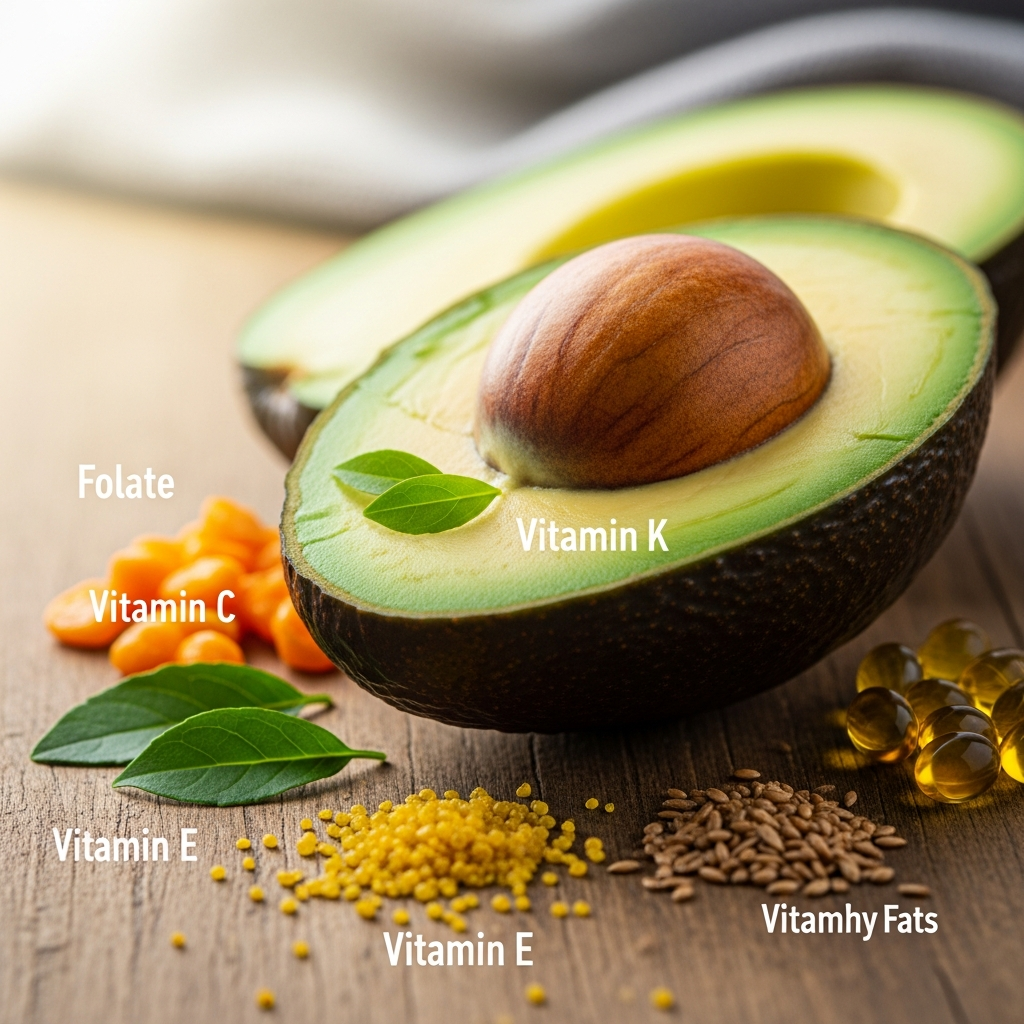
According to research published in the National Library of Medicine, one-half an avocado contains impressive amounts of key nutrients:
- Potassium (345 mg): More than a banana, supporting heart and muscle function
- Folate (60 mcg): Essential for cell growth and development
- Vitamin E (1.3 mg): Antioxidant protection for developing cells
- Vitamin K (14 mcg): Important for blood clotting and bone health
- Vitamin B6 (0.2 mg): Supports brain development and immune function
- Fiber (4.6 g): Promotes healthy digestion
Nutritional Comparison: Avocado vs. Other First Foods
| Nutrient | Avocado (1/2) | Sweet Potato (1/2 cup) | Banana (1 medium) |
|---|---|---|---|
| Healthy Fats | 11g | 0.1g | 0.4g |
| Potassium | 345mg | 475mg | 422mg |
| Fiber | 4.6g | 3g | 3.1g |
| Cooking Required | No | Yes | No |
How to Select and Prepare the Perfect Ripe Avocado
The secret to delicious avocado baby food starts at the grocery store. An underripe avocado is hard and bitter, while an overripe one becomes brown and stringy. Learning to identify the perfect ripeness window takes practice, but these techniques will help you choose avocados that are ready for your baby.
The 3-Step Ripeness Test for Baby-Ready Avocados
- Color check: Look for dark green to purplish-black skin (for Hass avocados). Bright green typically indicates the fruit needs more time.
- Gentle squeeze test: Apply light pressure with your palm. A ripe avocado yields slightly but does not feel mushy. If it feels rock-hard, it needs several days to ripen.
- Stem removal check: Gently flick off the small stem at the top. Green underneath means the avocado is ready. Brown indicates overripeness.
Hass avocados are ideal for baby food due to their creamy texture and rich flavor. Florida avocados (the larger, smooth-skinned variety) have lower fat content and a more watery consistency, making them less suitable for purees.
Quick Ripening Methods When You Need Avocado Now
Bought avocados that are not quite ready? Try these techniques:
- Paper bag method (2-3 days): Place avocados in a brown paper bag with a banana or apple. These fruits release ethylene gas that speeds ripening.
- Room temperature ripening (3-5 days): Leave avocados on your counter away from direct sunlight.
- Skip the oven method: While some suggest baking unripe avocados, this changes the texture and can create an unpleasant taste for babies.
Storing Unripe and Cut Avocados
Keep unripe avocados at room temperature until ready. Once ripe, move them to the refrigerator to slow further ripening for up to 5 days. For cut avocados, squeeze lemon or lime juice over the exposed flesh, press plastic wrap directly onto the surface (no air gaps), and refrigerate for up to 2 days.
Simple Avocado Puree Recipe for Beginners
Classic Avocado Puree for Baby
Ingredients:
- 1 ripe Hass avocado
- 1-2 tablespoons breast milk, formula, or water
- Optional: pinch of cinnamon (for babies 8+ months)
Instructions:
- Wash the avocado exterior thoroughly to remove any surface bacteria
- Cut the avocado in half lengthwise, working your knife around the pit
- Twist both halves gently to separate them
- Remove the pit using a spoon (avoid the knife-stab method for safety)
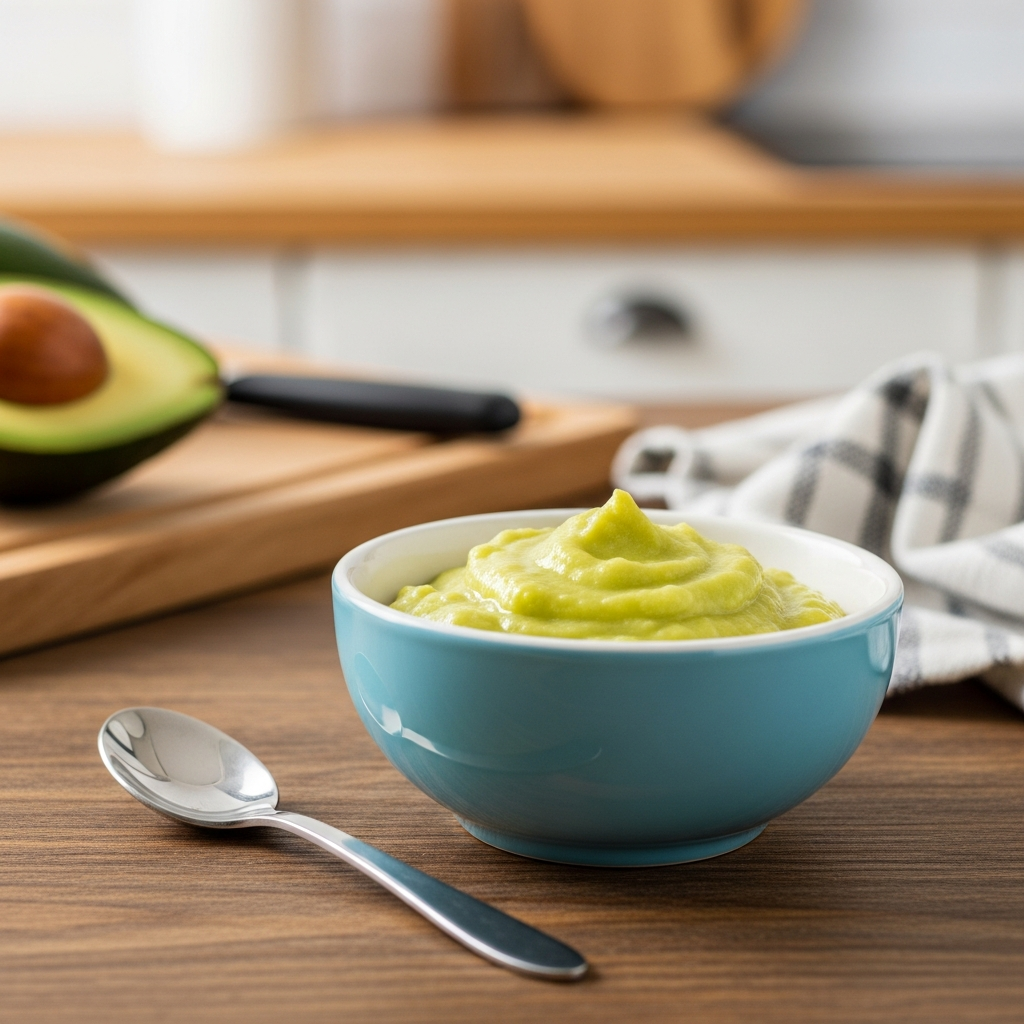
- Scoop the flesh into a clean bowl
- Mash with a fork until you reach the desired consistency
- Add liquid gradually to thin the puree for younger babies
- Serve immediately or store properly
Texture Adjustments by Age
- 6 months: Very smooth, almost liquid consistency. Add more breast milk or formula to thin.
- 7-8 months: Slightly thicker mash with tiny soft lumps to encourage chewing motions.
- 9+ months: Chunky mash or small soft pieces for developing motor skills.
No-Blender Method for Quick Preparation
One major advantage of avocado baby food is that you never need a blender. A ripe avocado mashes perfectly with just a fork. For younger babies who need a smoother texture, use the back of a spoon to press the mashed avocado through a fine mesh sieve. This removes any fibrous bits while keeping preparation simple and cleanup minimal.
Delicious Avocado Combination Recipes for Every Stage
Once your baby tolerates plain avocado well, introducing combinations expands their palate and provides diverse nutrition. The key is pairing avocado with foods your baby has already tried individually, waiting 3-5 days between new introductions to monitor for reactions.
Avocado Banana Puree (6+ Months)
Ingredients: 1/2 ripe avocado, 1/2 ripe banana
Method: Mash both fruits together until smooth. The banana adds natural sweetness that most babies love.
Nutrition Highlight: This combination delivers a potassium powerhouse, supporting heart rhythm and muscle function.
Avocado Sweet Potato Mash (6+ Months)
Ingredients: 1/2 avocado, 1/4 cup cooked sweet potato
Method: Steam or bake sweet potato until soft. Mash with avocado. The avocado adds creaminess while the sweet potato provides beta-carotene.
Nutrition Highlight: Beta-carotene meets healthy fats for better vitamin A absorption.
Creamy Avocado Apple Blend (7+ Months)
Ingredients: 1/2 avocado, 1/4 cup steamed apple
Method: Steam apple until very soft. Blend or mash with avocado. The apple adds gentle sweetness and pectin fiber.
Nutrition Highlight: Combined fibers support healthy digestion.
Avocado Egg Scramble (8+ Months)
Ingredients: 1/4 avocado, 1 scrambled egg
Method: Scramble egg until fully cooked with soft curds. Mix with mashed avocado. Introduce egg separately first to check for allergies.
Nutrition Highlight: Complete protein paired with healthy fats for sustained energy.
Avocado Toast Strips for Baby Led Weaning (8+ Months)
Ingredients: 1/4 avocado, 1 slice whole grain bread (low sodium)
Method: Toast bread lightly. Spread thin layer of mashed avocado. Cut into finger-width strips that baby can grip.
Tip: Remove crusts for younger babies and ensure bread is soft enough to dissolve with gumming.
Avocado Serving Methods for Baby Led Weaning
Baby led weaning (BLW) allows babies to self-feed from the start of solids rather than being spoon-fed purees. Avocado works beautifully for this approach, though its slippery texture presents a unique challenge. Here is how to set your baby up for success.
How to Cut Avocado Strips for 6-8 Month Old Babies
Young babies use a palmar grasp, grabbing food with their whole fist. Cut avocado into strips about the length and width of your finger. The piece should be long enough that some sticks out of their fist for eating. One clever technique: leave a small strip of skin on one side to provide grip, peeling it away from the portion baby will eat.
Making Avocado Less Slippery for Little Hands
Avocado's smooth texture can frustrate babies learning to self-feed. Try these grip-enhancing strategies:
- Roll in hemp seeds: These tiny seeds add texture and nutrition
- Coat with infant cereal: A light dusting of iron-fortified cereal creates friction
- Crinkle-cut technique: Use a crinkle cutter to create ridged surfaces
- Preloaded spoon: Load a soft-tipped spoon with mashed avocado and let baby bring it to their mouth
Transitioning to Pincer Grasp Pieces (9+ Months)
Around 9 months, babies develop the pincer grasp, picking up small items between thumb and forefinger. At this stage, offer small avocado cubes about the size of a chickpea. This size encourages motor skill development while remaining safe for their developing swallowing abilities.
Storing and Freezing Avocado Baby Food
The biggest challenge with avocado baby food? It browns quickly once exposed to air. This oxidation is harmless but can make the puree less appealing. Here is how to maximize freshness and minimize waste.
Refrigerator Storage Best Practices
- Store in an airtight container with plastic wrap pressed directly onto the surface
- Add 1/4 teaspoon lemon or lime juice per avocado to slow browning
- Use within 1-2 days for best quality
- Scrape off any brown layer before serving; green flesh underneath remains fresh
Can You Freeze Avocado Puree Successfully?
The honest answer: freezing changes avocado's texture. Thawed avocado becomes watery and less creamy. However, if you want to freeze it anyway, follow these steps:
- Add lemon juice to slow oxidation
- Portion into ice cube trays
- Flash freeze until solid
- Transfer cubes to freezer bags
- Use within 1 month
- Thaw in refrigerator overnight
Better freezing strategy: freeze avocado in combination with other foods. Avocado banana puree or avocado sweet potato mash freezes better than plain avocado because the other ingredients help mask texture changes.
Safety Considerations and Common Concerns
While avocado is generally considered one of the safest first foods, understanding potential concerns helps you introduce it confidently.
Recognizing Avocado Allergy Symptoms in Babies
True avocado allergies are uncommon but possible. According to the Allergy and Asthma Network, approximately 30-50% of individuals allergic to latex show sensitivity to certain plant foods including avocado. This connection, called latex-fruit syndrome, means families with latex allergies should introduce avocado cautiously.
Watch for these symptoms after feeding avocado:
- Mild: Rash or hives around the mouth, skin irritation
- Moderate: Vomiting, diarrhea, stomach pain
- Severe (seek emergency care): Difficulty breathing, facial swelling, wheezing
Does Avocado Cause Constipation or Help Digestion?
Contrary to common worry, avocado typically supports healthy digestion rather than causing constipation. Its fiber content helps move things along. However, every baby responds differently. If your baby seems uncomfortable after eating avocado, try offering smaller portions with plenty of breast milk or formula. Ensure adequate hydration whenever introducing fiber-rich foods.
Preventing Choking While Serving Avocado
Avocado's soft texture makes it a low choking risk when prepared appropriately. Follow these guidelines:
- Always supervise your baby during meals
- Ensure baby is seated upright in a high chair
- Match texture to developmental stage (purees for younger babies, soft pieces for older)
- Avoid hard, unripe avocado which could pose a choking hazard
- Know the difference between gagging (normal, loud) and choking (silent, requires intervention)
Frequently Asked Questions About Avocado Baby Food
Is Avocado a Good First Food for Babies?
Yes, avocado is an excellent first food for babies starting solids at 6 months. Its naturally soft, creamy texture requires no cooking and is easy for babies to swallow. Avocado provides essential healthy fats crucial for brain development, along with vitamins E, K, and B6. The mild flavor also helps babies accept new tastes.
How Much Avocado Can I Give My Baby Daily?
Start with 1-2 tablespoons of avocado per serving for babies 6-8 months old. You can gradually increase to 1/4 avocado (about 2-3 tablespoons) per day for older babies. While avocado is nutritious, variety matters. Offer avocado 3-4 times per week alongside other fruits and vegetables for balanced nutrition.
Do I Need to Cook Avocado Before Giving It to My Baby?
No, you do not need to cook avocado for baby food. Avocado is one of the easiest first foods because it is naturally soft and ready to eat raw. Simply mash a ripe avocado with a fork until smooth. This no-cook preparation makes it perfect for busy parents and preserves all nutrients.
What Pairs Well With Avocado for Baby Food?
Avocado pairs wonderfully with many baby-friendly foods. Popular combinations include banana for natural sweetness, sweet potato for beta-carotene, apple or pear for fruity variety, and yogurt for protein. For older babies, try avocado with egg, oatmeal, or as a spread on toast strips.
Why Does My Baby Refuse or Gag on Avocado?
Gagging on avocado is common and usually not dangerous. It is your baby's natural reflex while learning to manage new textures. If baby refuses avocado, try offering it mixed with familiar foods like banana. Babies may need 10-15 exposures before accepting a new food. Stay patient and avoid pressure during mealtimes.
Can Avocado Baby Food Be Made Ahead and Stored?
Avocado baby food is best served fresh because it browns quickly when exposed to air. If storing, add a few drops of lemon juice, press plastic wrap directly onto the surface, and refrigerate for maximum 1-2 days. Freezing is possible but changes the texture. For convenience, prepare avocado immediately before feeding.
Is Brown Avocado Safe for Babies to Eat?
Light browning on avocado is safe for babies and does not indicate spoilage. The brown color results from oxidation, similar to a cut apple browning. Simply scrape off the brown layer to reveal fresh green flesh underneath. However, discard avocado that smells off, tastes bitter, or has dark stringy spots throughout.
Should I Choose Organic Avocados for Baby Food?
According to the Environmental Working Group, avocados rank among the Clean Fifteen produce with lowest pesticide residue. Their thick skin protects the flesh effectively. Conventional avocados are generally safe for baby food. If budget allows, organic is fine, but prioritize organic for thin-skinned produce instead.
Start Your Baby's Avocado Journey Today
Introducing avocado baby food opens a world of nutrition and flavor for your little one. From its brain-building healthy fats to its convenient no-cook preparation, avocado truly earns its place as one of the best first foods you can offer. Remember that every baby develops at their own pace. Some take to avocado immediately, while others need multiple exposures before accepting it. Either response is completely normal.
As you begin this exciting feeding journey, trust your instincts and watch your baby's cues. Start with small amounts, introduce combinations gradually, and enjoy watching your baby explore new tastes and textures. The mess is temporary, but the foundation you are building for healthy eating habits lasts a lifetime.
At PatPat, we love celebrating these everyday milestones with families. Whether your baby is diving into their first avocado puree or mastering avocado toast strips, these moments matter. Bookmark this guide for reference as your baby grows, share it with other parents starting their solid food journey, and most importantly, have fun exploring the wonderful world of homemade baby food together.
Have questions about avocado baby food or want to share your baby's avocado adventures? We would love to hear from you. And remember, when in doubt about your baby's readiness or any concerning symptoms, always consult your pediatrician for personalized guidance.





