


You catch your reflection after a shower, and instead of celebrating the incredible journey your body just completed, you find yourself tracing stretch marks and wondering if your skin will ever feel like "yours" again. If this sounds familiar, you are not alone. As many as 90 percent of women develop stretch marks during pregnancy, and concerns about loose skin rank among the top postpartum body image struggles.
Here is what rarely gets discussed: your skin spent nine months stretching, adapting, and transforming to grow a human being. Expecting it to snap back overnight is not just unrealistic, it ignores the remarkable biology happening beneath the surface. Collagen, often called your body's natural scaffolding protein, plays a central role in skin elasticity and firmness. During pregnancy, hormones actually soften collagen fibers, making them more pliable for your growing belly.
The encouraging news? You can actively support your body's collagen production through strategic nutrition. At PatPat, we understand that new mothers need practical, science-backed solutions that fit into their demanding schedules. This guide delivers exactly that: collagen-boosting recipes for postpartum skin recovery that work with your body's natural healing processes. Set realistic expectations of 8 to 12 weeks for visible improvements, and remember that nourishing yourself is one of the most loving things you can do during this transformative time.
For comprehensive guidance on postpartum nutrition needs, the Mayo Clinic provides evidence-based recommendations for nursing mothers that complement the collagen-focused strategies in this article.
How Collagen Supports Postpartum Skin Healing
The Science of Collagen and Skin Elasticity
Collagen is the most abundant protein in your body, forming the structural foundation of your skin, bones, tendons, and connective tissues. Think of it as the framework that keeps your skin plump, firm, and resilient. When collagen fibers are strong and abundant, your skin bounces back from stretching. When they weaken or break down, you see sagging, wrinkles, and reduced elasticity.
During pregnancy, your body undergoes remarkable changes in collagen synthesis. Research shows that collagen and elastin undergo a marked increase in pregnancy followed by a rapid decrease during involution. This natural cycle means your postpartum body needs extra nutritional support to rebuild its collagen stores.
Adding to the challenge, natural collagen production begins declining after age 25. This does not mean your skin cannot recover; it means strategic nutrition becomes even more important for supporting your body's healing capacity.
Why Nutrition Matters More Than Supplements Alone
While collagen supplements have gained popularity, food-based approaches offer distinct advantages. Whole foods provide the complete nutritional package your body needs: amino acids for collagen building, vitamin C for synthesis, zinc for tissue repair, and omega-3s for inflammation management.
A significant finding from research published in the International Journal of Sport Nutrition and Exercise Metabolism revealed that amino acid concentrations in bone broth vary significantly based on preparation methods. This highlights why understanding proper food preparation matters for maximizing collagen benefits.
Bone Broth After Giving Birth: Complete Recipe Guide
Nutritional Benefits of Bone Broth for New Mothers
Bone broth after giving birth has been a cornerstone of postpartum recovery across cultures for centuries. Modern science now validates this traditional practice. According to Cleveland Clinic, a cup of bone broth may contain 6 to 12 grams of collagen protein, depending on preparation methods.
The breakdown of collagen during cooking produces gelatin, which contains key amino acids including glycine and proline. These are considered "conditionally essential" because while your body can produce them, it often cannot make enough to meet increased demands, especially during postpartum recovery.
| Amino Acid | Role in Skin Recovery | Found In |
|---|---|---|
| Glycine | Primary collagen component; supports sleep and mental clarity | Bone broth, gelatin, meat |
| Proline | Supports immune function, wound healing, antioxidative responses | Bone broth, egg whites, dairy |
| Hydroxyproline | Essential for collagen stability | Bone broth, animal proteins |
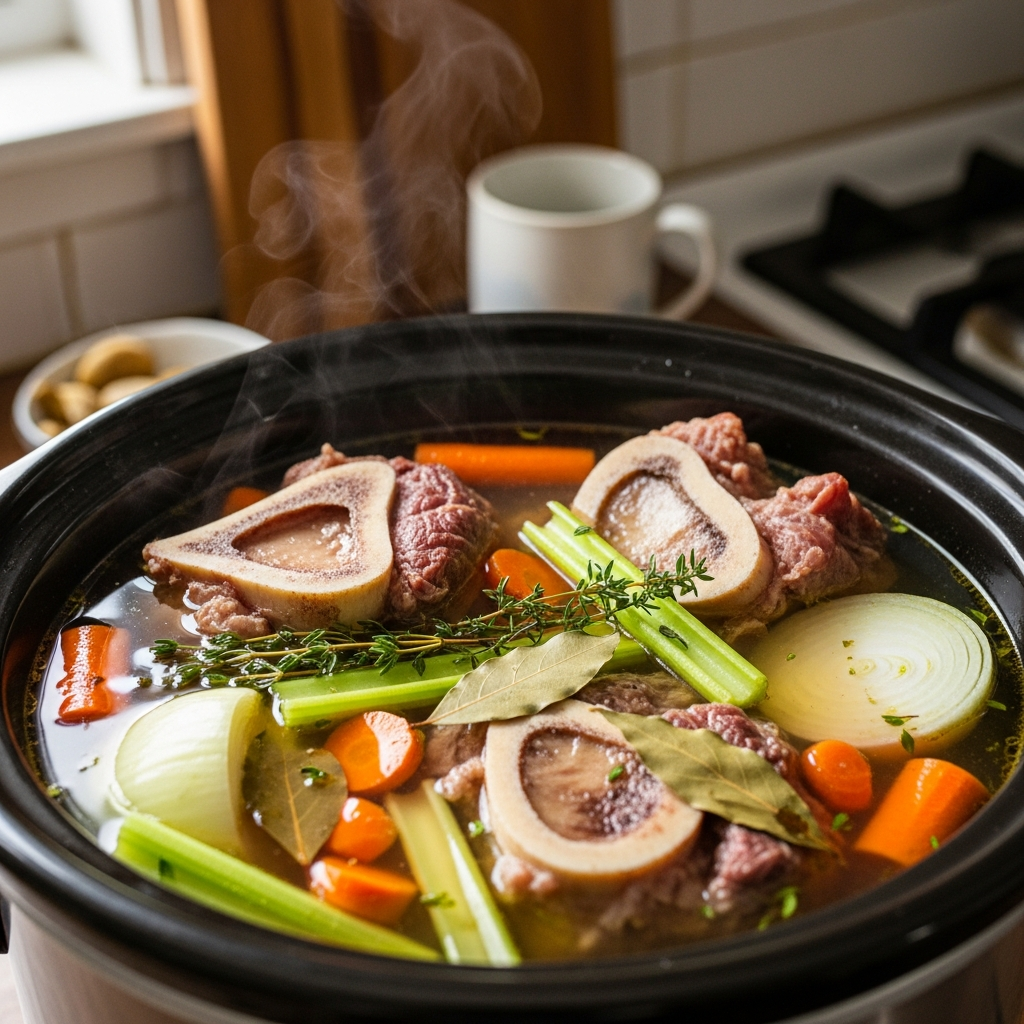
Classic Slow-Cooker Bone Broth Recipe
Nourishing Postpartum Bone Broth
Prep Time: 15 minutes | Cook Time: 24 hours | Yield: 10-12 cups
Ingredients
- 3-4 pounds mixed bones (beef marrow bones, chicken carcasses, or combination)
- 2 tablespoons apple cider vinegar (helps extract minerals)
- 1 large onion, quartered
- 3 carrots, roughly chopped
- 3 celery stalks, roughly chopped
- 4 garlic cloves, smashed
- 1 tablespoon whole peppercorns
- 2 bay leaves
- Fresh herbs: thyme, rosemary, parsley stems
- Cold water to cover
Instructions
- If using beef bones, roast at 400 degrees Fahrenheit for 30 minutes for deeper flavor (optional).
- Place bones in slow cooker. Add apple cider vinegar and let sit 30 minutes.
- Add vegetables, garlic, peppercorns, bay leaves, and herbs.
- Cover with cold water, leaving 1 inch headspace.
- Cook on low for 24 hours (chicken) or up to 48 hours (beef).
- Strain through fine-mesh strainer. Cool and refrigerate.
- Skim solidified fat before using. Store refrigerated up to 5 days or freeze for 3 months.
Pro Tip: When properly made, refrigerated bone broth should gel like Jello, indicating high gelatin content. Sip warm as a beverage or use as a base for soups and cooking grains.
Vitamin C Foods That Maximize Collagen Absorption
Top Vitamin C Sources for Collagen Synthesis
Vitamin C is not optional for collagen production; it is essential. Research confirms that vitamin C is an essential cofactor for prolyl hydroxylase and lysyl hydroxylase, enzymes required for collagen biosynthesis. Without adequate vitamin C, your body simply cannot produce stable collagen structures.
Studies have shown that prolonged exposure to vitamin C induces an eight-fold increase in collagen synthesis in connective tissue cells without affecting other proteins.
| Food | Vitamin C (mg per serving) | Serving Size |
|---|---|---|
| Red bell pepper | 190 | 1 cup chopped |
| Orange | 70 | 1 medium |
| Kiwi | 64 | 1 medium |
| Strawberries | 85 | 1 cup |
| Broccoli | 81 | 1 cup cooked |
Strategic Food Pairing for Optimal Nutrient Uptake
Maximizing collagen-boosting benefits requires thoughtful food combinations. Pair iron-rich proteins with vitamin C sources to enhance absorption. Consume vitamin C foods alongside collagen-rich options like bone broth. For example, squeeze lemon into your morning bone broth or enjoy citrus fruits with your protein-rich meals.
Protein-Rich Recipes for Skin Elasticity Recovery
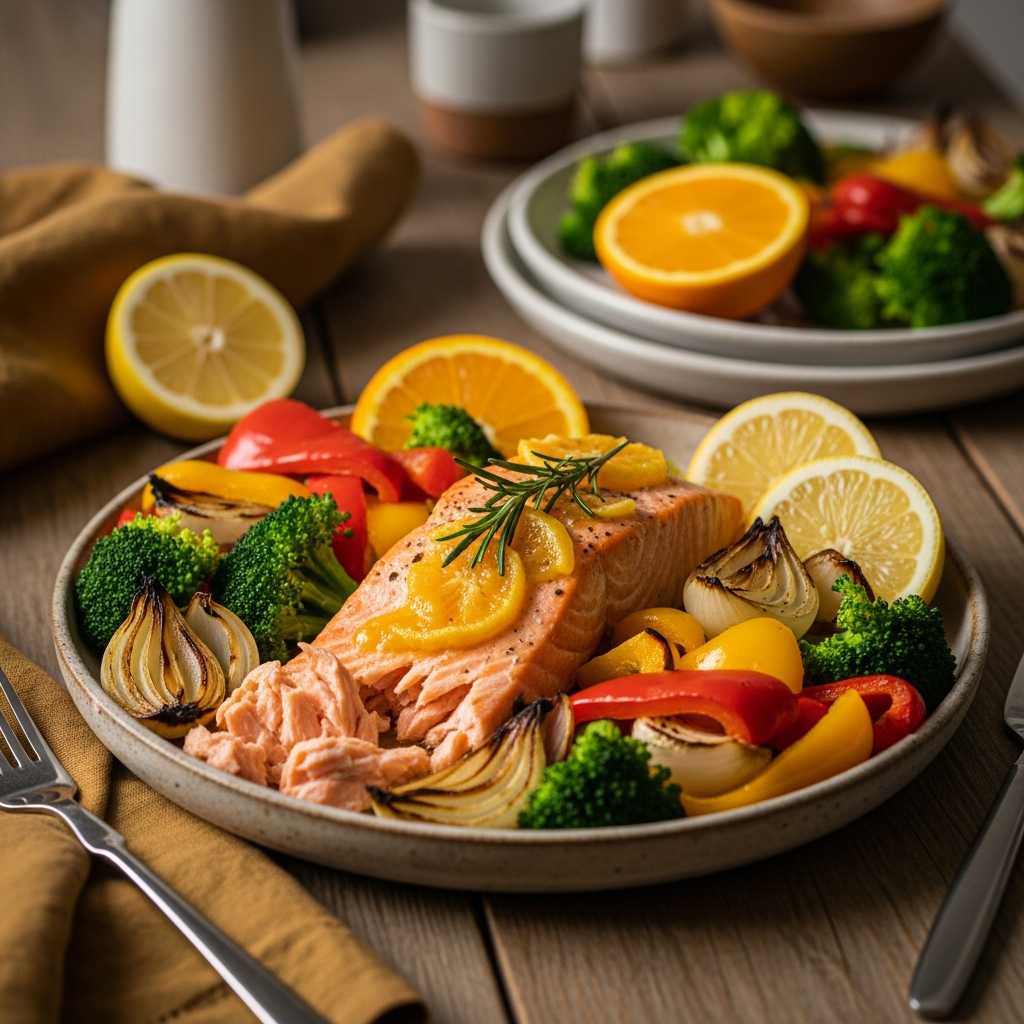
Citrus-Glazed Salmon with Roasted Vegetables
Omega-3 Rich Citrus Salmon
Prep Time: 15 minutes | Cook Time: 25 minutes | Servings: 4
Salmon provides 22 to 25 grams of protein per 3.5-ounce serving along with omega-3 fatty acids that support skin hydration. This recipe combines collagen-supporting protein with vitamin C from citrus for optimal nutrient synergy.
Ingredients
- 4 salmon fillets (about 6 ounces each)
- 2 oranges, juiced and zested
- 2 tablespoons honey
- 1 tablespoon soy sauce or coconut aminos
- 2 garlic cloves, minced
- 2 cups broccoli florets
- 2 bell peppers, sliced
- 2 tablespoons olive oil
- Salt and pepper to taste
Instructions
- Preheat oven to 400 degrees Fahrenheit.
- Whisk orange juice, zest, honey, soy sauce, and garlic for glaze.
- Toss vegetables with olive oil, salt, and pepper. Spread on sheet pan.
- Place salmon fillets on vegetables. Brush with half the glaze.
- Bake 20 to 25 minutes until salmon flakes easily.
- Brush with remaining glaze before serving.
Slow-Cooker Chicken and Vegetable Stew
Collagen-Rich Chicken Stew
Prep Time: 20 minutes | Cook Time: 6-8 hours | Servings: 6
Ingredients
- 2 pounds bone-in chicken thighs
- 4 cups bone broth
- 3 carrots, sliced
- 3 celery stalks, sliced
- 1 large onion, diced
- 4 garlic cloves, minced
- 2 cups red potatoes, cubed
- 1 cup frozen peas
- 2 teaspoons fresh thyme
- Salt and pepper to taste
Instructions
- Place chicken thighs in slow cooker bottom.
- Add carrots, celery, onion, garlic, and potatoes around chicken.
- Pour bone broth over everything. Add thyme, salt, and pepper.
- Cook on low 6 to 8 hours until chicken falls off bone.
- Remove chicken, shred meat, discard bones and skin.
- Return meat to pot, add peas, cook 10 minutes more.
Berry Collagen Smoothie Bowl
Antioxidant-Packed Smoothie Bowl
Prep Time: 10 minutes | Servings: 1
Ingredients
- 1 cup frozen mixed berries
- 1 frozen banana
- 1/2 cup Greek yogurt
- 1/4 cup bone broth or milk
- 1 tablespoon almond butter
- Toppings: sliced kiwi, strawberries, chia seeds, granola
Instructions
- Blend frozen berries, banana, yogurt, and liquid until thick and creamy.
- Pour into bowl.
- Arrange toppings decoratively.
- Enjoy immediately.
Essential Nutrients Beyond Collagen for Skin Firmness
Zinc and Its Role in Tissue Repair
Zinc is a powerhouse mineral for postpartum healing. According to research published in Wound Repair and Regeneration, zinc is essential for cell membrane repair, cell proliferation, growth, and immune system function. It serves as a cofactor for numerous enzymes required for keratinocyte migration during wound repair.
Best food sources include oysters, beef, pumpkin seeds, chickpeas, and cashews. Aim for 11 to 12 mg daily during breastfeeding.
Omega-3 Fatty Acids for Skin Hydration
Omega-3s directly support skin barrier function and hydration. Research shows that omega-3 fatty acids enhance lipid membrane integrity, reducing transepidermal water loss and improving skin barrier function.
Focus on fatty fish like salmon (2 servings weekly), sardines, and mackerel. Plant sources include walnuts, flaxseeds, and chia seeds.
Additional Skin-Supporting Micronutrients
- Vitamin E: Works synergistically with vitamin C to protect collagen from oxidative damage. Found in almonds, sunflower seeds, and avocados.
- Copper: Required for collagen cross-linking. Sources include shellfish, nuts, and dark chocolate.
- Silica: Supports collagen structure. Found in oats, bananas, and leafy greens.
Meal Prep Strategies for Busy New Mothers
Freezer-Friendly Collagen Meal Ideas
Reality check: you have a newborn. Elaborate daily cooking is not happening. Batch cooking during pregnancy or when you have help is essential.
- Bone broth: Freeze in silicone muffin molds for single-serving portions
- Soups and stews: Prepare double batches; freeze in labeled containers
- Marinated proteins: Prep salmon or chicken with marinades; freeze flat in bags
- Smoothie packs: Pre-portion fruits and greens in freezer bags
One-Handed Eating Options for Nursing Mothers
When you are feeding a baby, you often have one hand free. Prepare foods accordingly:
- Bone broth in insulated mugs with lids
- Energy balls with collagen-supporting ingredients
- Hard-boiled eggs (prep a dozen weekly)
- Cut vegetables with hummus in snack containers
- Salmon salad in lettuce cups
Safety Considerations for Breastfeeding Mothers
Collagen Supplements vs. Food Sources During Lactation
The question of collagen supplements while breastfeeding requires careful consideration. According to the InfantRisk Center, researchers have not found published data on collagen excretion in breast milk. Because collagen is digested into amino acids similar to those from any meat, it is generally considered safe.
Important: Collagen supplements are not regulated by the FDA for purity or potency. If choosing supplements, select reputable brands with third-party testing. Always consult your healthcare provider before starting any new supplement during breastfeeding.
Food-based collagen sources like bone broth offer the safest approach during lactation while providing additional nutrients.
Foods to Approach with Caution
- High-mercury fish: Limit tuna, swordfish, and king mackerel; choose salmon, sardines, and anchovies instead
- Excessive vitamin A: Avoid liver in large quantities
- Raw or undercooked proteins: Ensure all meats reach safe internal temperatures
Realistic Timeline for Postpartum Skin Recovery
What to Expect Month by Month
Understanding the natural healing timeline helps set realistic expectations. According to dermatological research, it takes about a year for stretch marks to reach the mature stage.
| Timeline | What is Happening | Nutrition Focus |
|---|---|---|
| 0-3 months | Initial healing; hormones fluctuating; stretch marks may begin flattening | Bone broth, hydration, gentle nutrition |
| 3-6 months | Marks become lighter; texture smoothing; collagen rebuilding | Increase protein, vitamin C, zinc |
| 6-12 months | Stretch marks mature; significant healing complete | Maintain collagen-supporting diet |
| 12+ months | Continued subtle improvements possible | Long-term nutritional habits |
Remember: Fresh stretch marks (red or purple) respond better to nutritional and topical interventions than older, white marks. Starting your collagen-boosting nutrition early maximizes results.
Frequently Asked Questions
What foods help skin elasticity after pregnancy?
Foods rich in protein, vitamin C, zinc, and omega-3 fatty acids support skin elasticity. Prioritize bone broth, fatty fish like salmon, citrus fruits, bell peppers, leafy greens, and nuts. These provide the building blocks your body needs for collagen synthesis and skin repair.
Does collagen help with postpartum skin?
Yes, collagen supports postpartum skin recovery by providing amino acids needed for skin structure and elasticity. Whether from food sources like bone broth or supplements, collagen can help rebuild the skin's framework that stretched during pregnancy.
How can I boost collagen naturally after giving birth?
Consume collagen-rich foods like bone broth, pair proteins with vitamin C sources, stay hydrated, get adequate sleep when possible, and include zinc-rich foods in your diet. These strategies support your body's natural collagen production.
Is bone broth good for postpartum recovery?
Absolutely. Bone broth provides collagen, amino acids like glycine and proline, and easily digestible nutrients. It supports skin healing, gut health, and hydration, making it ideal for postpartum recovery.
Can I take collagen supplements while breastfeeding?
Collagen supplements are generally considered safe during breastfeeding since collagen breaks down into amino acids similar to those in meat. However, choose third-party tested brands and consult your healthcare provider before starting supplements.
How long does it take for skin to tighten after pregnancy?
Most women see gradual improvement over 6 to 12 months, with continued subtle changes possible beyond that. Factors affecting timeline include genetics, age, nutrition, hydration, and how much weight was gained during pregnancy.
What vitamins help with loose skin after pregnancy?
Vitamin C is essential for collagen synthesis. Vitamin E protects existing collagen from damage. Vitamin A supports skin cell turnover. A balanced diet with these vitamins, plus adequate protein, supports skin recovery.
Does collagen help with stretch marks?
Collagen can help improve the appearance of stretch marks, especially newer ones that are still red or purple. While it will not completely eliminate them, supporting collagen production can help marks fade faster and blend better with surrounding skin.
Nourishing Your Recovery Journey
Postpartum skin recovery is a marathon, not a sprint. Your body accomplished something remarkable, and it deserves time and nourishment to heal. By incorporating collagen-boosting recipes into your daily routine, including nutrient-rich bone broth after giving birth, vitamin C-packed produce, and protein-rich meals, you give your skin the tools it needs to regain elasticity and firmness.
Remember that visible improvements typically take 8 to 12 weeks of consistent nutrition, with full skin maturation taking up to a year. Be patient with yourself. Every bowl of bone broth, every serving of salmon, every vitamin C-rich snack contributes to your recovery.
At PatPat, we celebrate the incredible strength of mothers. Your body grew a human being. It changed, stretched, and adapted in beautiful ways. Now it is time to support it with the nutrition it needs. Start with one recipe this week, whether that is setting up a slow cooker of bone broth or whipping up a berry smoothie bowl, and build from there.




