


Did you know that approximately 18% of infants age 6 to 12 months in the United States have inadequate iron intakes? If you are a parent looking to boost your baby's iron levels naturally, beef baby food might be the solution you have been searching for. Unlike plant-based iron sources, beef contains heme iron, which your baby's body absorbs up to two and a half times more efficiently than iron from cereals or vegetables.
At PatPat, we understand that feeding your little one nutritious meals is a top priority. That is why we have created this comprehensive guide to beef baby food recipes, covering everything from simple purees for 6-month-olds to finger-friendly meatballs for older babies. Whether you are team slow cooker or prefer the stovetop method, you will find delicious, age-appropriate recipes that support your baby's brain development, immune function, and overall growth.
Why Beef is an Excellent First Food for Babies
When most parents think about first foods, rice cereal and mashed bananas often come to mind. However, leading health organizations are now recommending a different approach. The American Academy of Pediatrics, the Women Infants and Children's Program, and the Dietary Guidelines for Americans recommend introducing iron-rich solid foods like beef to infants to pack every bite with essential nutrients.
The Heme Iron Advantage
Here is something that might surprise you: not all iron is created equal. Beef contains heme iron, which your baby's body recognizes and absorbs far more efficiently than non-heme iron found in plant foods and fortified cereals. According to research published by the National Institutes of Health, heme iron from red meat is estimated to be 25% bioavailable, while iron from fortified cereals is only about 10% bioavailable.
This difference matters tremendously for your baby. Between 6 and 12 months, your little one's iron needs are exceptionally high due to rapid growth and brain development. Their iron stores from birth begin depleting around 6 months, making dietary iron crucial. Research published in Pediatric Research found that when meat was added to vegetable purees, nonheme iron absorption significantly increased compared to vegetables alone, showing that beef does double duty by providing heme iron and boosting absorption of iron from other foods.
Complete Nutritional Profile of Beef for Babies
Beef is not just about iron. It delivers a powerhouse combination of nutrients essential for your baby's development:
- High-quality protein: Supports muscle and tissue development with all essential amino acids
- Zinc: Supports immune function, cognitive development, and growth (babies 7-12 months need approximately 3 mg daily)
- Vitamin B12: Essential for nerve function and red blood cell formation
- Choline: Vital for brain development and memory function
- Selenium: Supports healthy metabolism and immune response
When to Introduce Beef Baby Food
Contrary to outdated advice suggesting parents wait until 8-10 months to introduce meat, current guidelines support a much earlier timeline. According to the CDC, babies can begin eating solid foods at about 6 months, and iron-rich foods like beef should be among those early introductions.
The American Academy of Pediatrics recommends meats like beef as one of the first solids for breastfed infants because most babies' iron stores begin to diminish at about 6 months. Despite these recommendations, many physicians delay introducing beef until 10 months or later, primarily due to choking concerns. However, with proper preparation and age-appropriate textures, beef is both safe and beneficial from 6 months onward.
Signs Your Baby is Ready for Beef
Before introducing beef puree for baby, ensure your little one shows these developmental signs:
- Can sit upright with minimal support
- Shows interest in food when others are eating
- Opens mouth when food approaches
- Has lost the tongue-thrust reflex
- Can move food from the front to the back of their mouth
Age-Appropriate Textures Guide
Understanding texture progression is essential for both safety and developmental success. As your baby's oral motor skills develop, you will gradually increase texture complexity. Remember that your baby does not need teeth to eat meat. Their gums are surprisingly strong and capable of handling properly prepared soft foods.
| Age | Texture | Serving Ideas |
|---|---|---|
| 6-7 months | Smooth, thin puree | Beef puree mixed with breast milk or formula |
| 8-9 months | Thicker puree, soft mashes | Ground beef mixed with mashed vegetables |
| 10-12 months | Soft chunks, finger foods | Small meatballs, shredded beef strips |
It is important to move forward with texture by 9 months at the latest. Babies who are not exposed to varied textures during this critical window may develop feeding difficulties later on.
Choosing the Best Cuts of Beef for Baby Food
Not all beef cuts work equally well for baby food. Your goal is tender, easily digestible meat that purees smoothly or shreds apart for older babies. The cut you choose will also affect your cooking method, time, and final texture. Selecting the right cut saves time and produces better results.
Best Cuts for Purees (6-8 Months)
- Ground beef (85% lean): Easiest to cook and puree, budget-friendly
- Sirloin: Lean, tender, and purees well
- Tenderloin: Extremely tender but more expensive
Best Cuts for Slow Cooking (All Ages)
For fall-apart tender beef that works beautifully for baby-led weaning, choose tougher cuts that become incredibly soft after slow cooking:
- Chuck roast: Nicely marbled, becomes tender and juicy
- Beef brisket: Shreds perfectly for little fingers
- Beef shin or shank: Economical and flavorful
Essential Cooking Methods for Tender Beef Baby Food
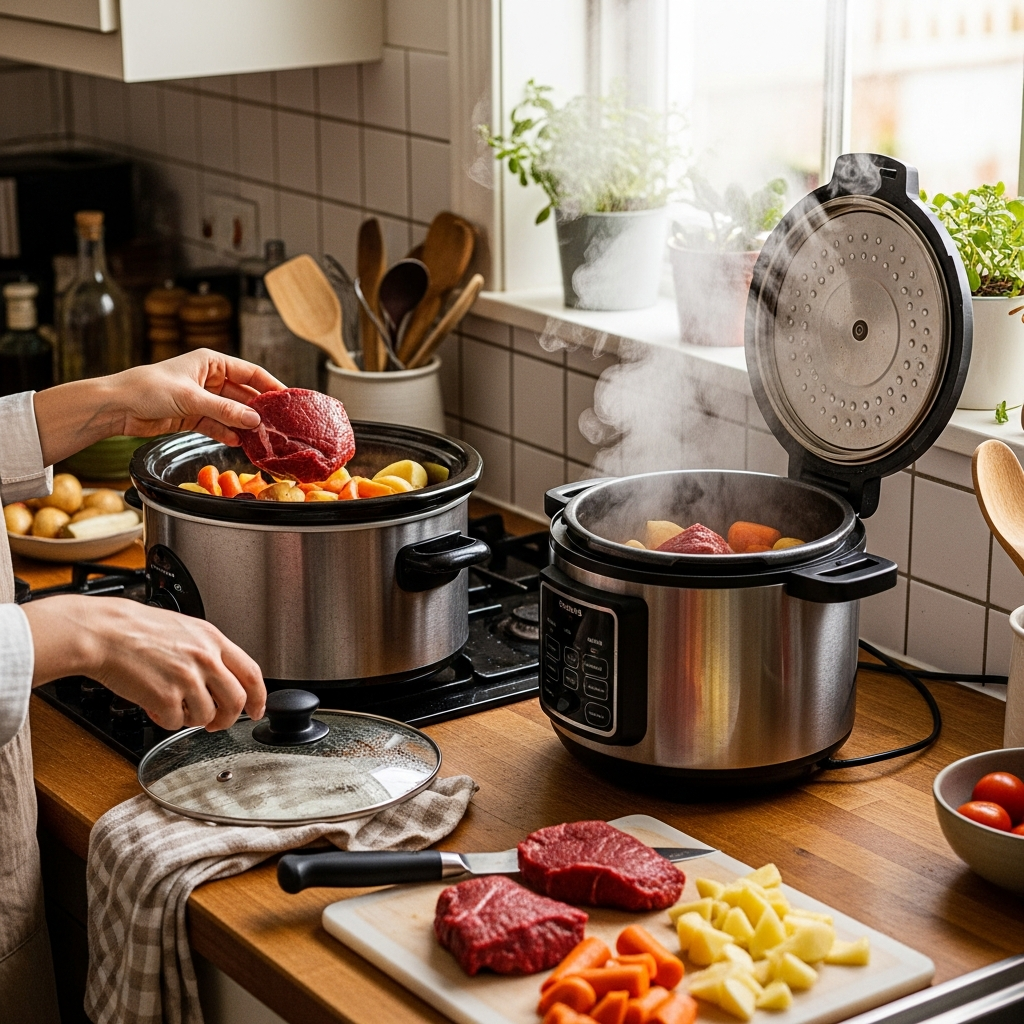
The key to successful beef baby food is achieving the right tenderness. Here are three proven methods that deliver consistently soft, baby-friendly results.
Slow Cooker Method
Using the slow cooker to cook meats is an excellent way to ensure they are nice and soft for your baby. The low, slow heat breaks down tough connective tissues, resulting in meat that practically melts.
Basic Slow Cooker Beef:
- Place 2 pounds of beef chuck in slow cooker
- Add 1 cup low-sodium beef broth or water
- Cook on low for 8-10 hours or high for 4-5 hours
- Shred with two forks when done
Pressure Cooker/Instant Pot Method
The pressure cooker is incredibly useful for creating juicy, tender meat quickly. The pressure system breaks down connective tissue, producing fall-apart beef in a fraction of the time.
Quick Pressure Cooker Beef:
- Add 2 pounds beef chuck and 1 cup broth to pressure cooker
- Cook on high pressure for 60-90 minutes
- Allow natural pressure release for 15 minutes
- Shred and serve or puree as needed
Stovetop Method
For ground beef baby food recipes, the stovetop offers quick, convenient cooking. This method works best when you need a small batch quickly or want to make a single meal without firing up larger appliances.
- Brown ground beef in a skillet over medium heat
- Break into small pieces while cooking
- Add a splash of water or broth to keep moist
- Cook until no pink remains and internal temperature reaches 160 degrees Fahrenheit
- Reserve some cooking liquid to help with pureeing
Pro tip: Keep the heat moderate rather than high. High heat causes ground beef to dry out quickly, making it harder to puree smoothly. Adding liquid while cooking helps maintain moisture.
Beef Baby Food Recipes by Age

Now for the recipes you have been waiting for. These beef baby food recipes progress from simple purees to textured meals to finger foods, supporting your baby through each developmental stage. Each recipe prioritizes nutrition, safety, and taste while keeping preparation straightforward for busy parents.
Recipes for 6-7 Months: Smooth Purees
At this stage, your goal is creating silky-smooth purees that introduce beef's flavor and iron benefits without challenging your baby's developing oral motor skills. These recipes make excellent first introductions to iron-rich baby food.
Basic Beef Puree
Ingredients:
- 4 ounces cooked ground beef or tender beef
- 1/4 cup cooking liquid, breast milk, or formula
Instructions:
- Place cooked beef in blender or food processor
- Add liquid gradually while blending
- Process until completely smooth, adding more liquid as needed
- Strain through fine mesh sieve for extra-smooth texture if desired
Beef and Sweet Potato Puree
Ingredients:
- 3 ounces cooked ground beef
- 1/2 cup cooked sweet potato
- 1/4 cup water or low-sodium broth
Instructions:
- Combine beef and sweet potato in blender
- Add liquid and blend until smooth
- Adjust consistency with additional liquid
Beef, Carrot, and Apple Puree
Ingredients:
- 3 ounces cooked beef
- 1/4 cup steamed carrots
- 1/4 cup peeled, cooked apple
- Cooking liquid as needed
Instructions:
- Combine all ingredients in food processor
- Blend until completely smooth
- The apple adds natural sweetness that babies love
Recipes for 8-9 Months: Textured Meals
By 8-9 months, your baby is ready for more texture. At this age, babies develop a pincer grasp and begin learning to self-feed, making food textures and feeding methods important considerations. These recipes introduce soft lumps and mashes while maintaining easy-to-swallow consistency.
Ground Beef and Vegetable Mash
Ingredients:
- 4 ounces cooked ground beef, finely crumbled
- 1/2 cup mashed potatoes
- 1/4 cup steamed peas, mashed
- 1 tablespoon unsalted butter (optional)
Instructions:
- Mix crumbled beef into mashed potatoes
- Fold in mashed peas
- Add butter for extra calories if desired
- Serve slightly warm
Beef and Broccoli Mash
Ingredients:
- 3 ounces cooked ground beef
- 1/2 cup steamed broccoli florets
- 2 tablespoons plain whole-milk yogurt
Instructions:
- Mash broccoli with fork until soft and chunky
- Mix in crumbled ground beef
- Stir in yogurt for creaminess
Recipes for 10-12 Months: Finger Foods
This exciting stage brings self-feeding and finger foods. Your baby can now handle soft chunks and practice their developing fine motor skills. Ground beef baby food recipes for this age focus on creating foods that are easy to grasp, safe to gum, and packed with nutrition.
Baby-Friendly Beef Meatballs
Baked beef meatballs with extra vegetables boost flavor, softness, and juiciness. The texture of moist ground beef is soft enough that babies can squish it between their gums. A great trick to keep meatballs extra moist is adding coconut milk or regular milk to your recipe, creating that soft, almost mushy texture ideal for little ones.
Ingredients:
- 1 pound ground beef (85% lean)
- 1/4 cup finely grated zucchini, squeezed dry
- 1/4 cup breadcrumbs or rolled oats
- 2 tablespoons coconut milk or regular milk
- 1 egg yolk
Instructions:
- Preheat oven to 375 degrees Fahrenheit
- Mix all ingredients thoroughly
- Roll into balls at least 2 inches in diameter
- Bake for 20-25 minutes until internal temperature reaches 160 degrees Fahrenheit
- Cool and serve whole or halved
Slow Cooker Shredded Beef Strips
Ingredients:
- 2 pounds beef chuck roast
- 1 cup low-sodium beef broth
- 1 teaspoon garlic powder (optional)
Instructions:
- Place roast in slow cooker with broth
- Cook on low 8-10 hours
- Shred with two forks
- Serve in finger-length strips for easy gripping
Food Safety Guidelines for Beef Baby Food
When preparing baby food with meat, safety is paramount. Babies under 5 years old are among the most vulnerable populations for foodborne illness. Their immune systems are still developing, which means symptoms like diarrhea and vomiting from contaminated food can lead to serious dehydration and complications. Following proper food safety practices protects your baby while giving you peace of mind.
Safe Cooking Temperatures
According to the USDA, ground beef must reach an internal temperature of 160 degrees Fahrenheit to destroy harmful bacteria. Use a food thermometer to verify, as color alone is not a reliable indicator of doneness. Ground beef may turn brown before reaching safe temperatures, and some patties remain pink even when thoroughly cooked. The only reliable way to know beef is safe is by checking the internal temperature.
Critical temperature guidelines:
- Ground beef: 160 degrees Fahrenheit
- Beef steaks and roasts: 145 degrees Fahrenheit minimum
- Always verify with a food thermometer
Storage Guidelines
Refrigerator Storage:
- Homemade beef baby food keeps 24-48 hours in the refrigerator
- Store in airtight containers
- Refrigerate within 2 hours of cooking
- Keep refrigerator at 40 degrees Fahrenheit or below
Freezer Storage:
- Meat purees should be consumed within 1-2 months for best quality
- Freeze in ice cube trays, then transfer to freezer bags
- Label with date and contents
- Never use glass jars for freezing
Thawing and Reheating:
- Thaw in refrigerator overnight (4-12 hours)
- Never thaw at room temperature
- Reheat to 165 degrees Fahrenheit internal temperature
- Stir well and test temperature before serving
- Never refreeze thawed baby food
Combining Beef with Other Foods for Maximum Nutrition
Pairing beef with certain foods can enhance nutrient absorption and create more balanced meals for your baby. Smart food combinations help you maximize the nutritional benefit of every spoonful, which is especially important given babies' small appetites and high nutrient needs.
Iron Absorption Boosters
Vitamin C significantly enhances iron absorption. Combine beef puree with:
- Bell peppers (pureed or finely diced)
- Tomatoes (cooked and pureed)
- Broccoli (steamed and mashed)
- Sweet potatoes
- Citrus fruits (small amounts)
Balanced Meal Combinations
| Beef Base | Vegetable Addition | Starch Option |
|---|---|---|
| Ground beef | Spinach and carrots | Sweet potato |
| Shredded beef | Peas and corn | Brown rice |
| Beef meatballs | Zucchini and tomato | Pasta |
Troubleshooting Common Beef Baby Food Challenges
Even with the best preparation, you may encounter some bumps along the way. Here are solutions to the most common challenges parents face when introducing beef baby food.
Baby Rejects Beef Puree
Do not be discouraged if your baby makes a face or turns away from beef at first. Many babies need 10-15 exposures to accept a new food. The flavor and texture of meat differ significantly from fruits and vegetables, so some resistance is normal. Try these strategies:
- Mix small amounts of beef into familiar foods
- Combine with naturally sweet vegetables like sweet potato
- Serve when baby is hungry but not overly tired
- Let baby see you eating and enjoying beef
Puree is Too Thick or Grainy
- Add more liquid gradually while blending
- Use a high-powered blender for smoother results
- Strain through fine mesh sieve
- Ensure meat is fully cooked and very tender before pureeing
Concerns About Allergies
While beef is not among the top 9 common allergens, some babies may react. Introduce beef on its own first, watch for any reactions over 3-5 days, and consult your pediatrician if you notice any concerning symptoms. If your baby has existing allergies to milk or eggs, discuss meat introduction with your healthcare provider.
Frequently Asked Questions About Beef Baby Food
Parents often have questions about introducing beef to their babies. Here are answers to the most common concerns about iron-rich baby food with meat.
Can I give my 6-month-old beef puree?
Yes, you can introduce beef puree starting at 6 months when your baby shows signs of readiness for solid foods. In fact, health authorities recommend iron-rich foods like beef as excellent early foods because babies' iron stores begin depleting around this age.
How much beef should I give my baby per day?
Start with 1-2 teaspoons mixed into familiar foods and gradually increase to 1-2 tablespoons. Aim to serve iron-rich foods like beef 2-3 times per week. Your baby's appetite and developmental stage will guide portion sizes.
Is ground beef safe for babies?
Ground beef is safe for babies when cooked thoroughly to an internal temperature of 160 degrees Fahrenheit. Ground beef carries a higher risk of bacterial contamination than whole cuts because grinding mixes surface bacteria throughout the meat, making proper cooking essential.
Can I use store-bought beef baby food?
Commercial beef baby food is a convenient option and meets safety standards. However, homemade beef baby food allows you to control ingredients, avoid additives, and often costs less. Both options can be part of a healthy diet.
How do I make beef puree smooth enough for a 6-month-old?
Use very tender, well-cooked meat and a high-powered blender. Add liquid gradually while processing, and strain through a fine mesh sieve if needed. Slow-cooked or pressure-cooked beef purees most smoothly.
Can I freeze beef baby food?
Yes, you can freeze beef baby food for 1-2 months. Freeze in ice cube trays or small portions, then transfer to labeled freezer bags. Thaw overnight in the refrigerator and use within 48 hours. Never refreeze thawed baby food.
What if my baby does not like beef?
Persistence is key. Babies often need 10-15 exposures to accept new foods. Try mixing small amounts into foods your baby already enjoys, pairing with sweet vegetables, or offering different textures as your baby grows.
Is it better to give beef puree or finger foods?
Both approaches work well and depend on your baby's age and developmental stage. Start with purees at 6-7 months, transition to thicker textures at 8-9 months, and introduce soft finger foods like meatballs around 10-12 months. Some parents successfully use baby-led weaning from 6 months with appropriately prepared strips of very tender beef.
Nourishing Your Baby's Future with Iron-Rich Beef Baby Food
Introducing beef baby food is one of the most impactful nutritional choices you can make for your little one. The heme iron, high-quality protein, and essential nutrients in beef support brain development, immune function, and healthy growth during this critical window of development. With research showing that iron deficiency during the first 6-12 months of life can cause persistent effects into adulthood, prioritizing iron-rich foods like beef puree for baby makes a real difference.
Remember, there is no single right way to feed your baby. Whether you choose smooth purees, baby-led weaning, or a combination approach, the goal is providing nutrient-dense foods that support your baby's unique developmental journey. Start with simple beef purees around 6 months, progress to textured combinations as your baby develops, and eventually offer finger-friendly meatballs and shredded beef strips as your little one approaches their first birthday.
The recipes and guidelines in this article give you everything you need to confidently introduce ground beef baby food recipes and other beef preparations to your baby. From understanding heme iron benefits to mastering safe cooking temperatures, you are now equipped to make beef a regular part of your baby's diet.
At PatPat, we believe every meal is an opportunity to nourish both body and bond. As you prepare these iron-rich beef recipes, you are not just feeding your baby, you are laying the foundation for a lifetime of healthy eating habits. For more parenting tips, baby-friendly recipes, and adorable outfits for your growing little one, explore our complete collection designed with families like yours in mind.





