


You have seen movies where pregnancy looks like a beautiful, glowing nine months filled with cute cravings and nursery decorating. You have scrolled through social media posts showing radiant expectant parents with perfectly styled bump photos. Then you got that positive test result, and suddenly you are wondering why why nobody warned you about the weird symptoms, the overwhelming emotions, and the endless questions swirling through your mind.
Here is why nobody tells you why nobody warned you about the weird symptoms, the overwhelming emotions, and the endless questions swirling through your mind.
At PatPat, we believe every first-time parent deserves honest, supportive guidance that acknowledges the real experience of pregnancy rather than the polished version. Whether you are dealing with exhaustion that sleep cannot fix, anxiety about whether everything is normal, or simply trying to figure out what your baby actually needs, this guide covers what no one tells you about pregnancy.
Take a deep breath. You are not alone in feeling unprepared or overwhelmed. Thousands of first-time parents have walked this path before you, and their collective wisdom forms the foundation of everything you will read here. Let us explore the surprising, challenging, and ultimately beautiful journey of your first pregnancy together.
Surprising Physical Symptoms During Your First Pregnancy
The pregnancy books mention nausea and fatigue, but they often gloss over the strange, unexpected symptoms that catch first-time parents completely off guard. Understanding these weird early pregnancy symptoms helps you recognize that what you are experiencing is normal, even when it feels anything but.
Why Morning Sickness Is Actually All-Day Sickness
Let us clear up one of the biggest misconceptions right away. According to research from the National Institutes of Health, 70 to 80 percent of pregnant women experience nausea, and only 1.8 percent report it exclusively in the morning. For most, it is an all-day affair. March of Dimes notes that at least 7 in 10 pregnant women have morning sickness in the first trimester, usually starting around week six.
Your experience might range from mild queasiness to severe vomiting. Some fortunate parents experience none at all. Practical coping strategies include eating small, frequent meals throughout the day, keeping crackers by your bedside, staying hydrated with small sips of water, and trying ginger in tea, candies, or supplements. However, if you cannot keep any food or fluids down, experience severe weight loss, or feel dizzy, contact your healthcare provider immediately as this could indicate hyperemesis gravidarum.
The Exhaustion That Sleep Cannot Fix
First trimester fatigue is not regular tiredness. It is bone-deep exhaustion that catches first-time pregnant people completely off guard. You might sleep ten hours and still struggle to keep your eyes open by noon. This is not weakness or laziness. Your body is working incredibly hard.
According to Merck Manual research, maternal blood volume increases by 30 to 50 percent during pregnancy. Your body is simultaneously building a placenta from scratch, the organ that sustains your baby for months. Your heart works 25 percent harder to pump this increased blood volume.
The good news is that this fatigue typically improves significantly in the second trimester, around weeks 12 to 14. Until then, rest without guilt. This is not the time to maintain your pre-pregnancy pace.
Strange Symptoms That Are Completely Normal
Beyond nausea and fatigue, pregnancy brings surprising symptoms that might make you wonder if something is wrong:
- Heightened sense of smell: Your partner's cologne becomes unbearable, and you can smell cooking from three houses away. This typically subsides after the first trimester.
- Vivid, unusual dreams: Intense, sometimes bizarre dreams are linked to hormonal fluctuations and sleep pattern changes.
- Increased saliva production: Some women produce so much extra saliva they need tissues constantly. Annoying but harmless.
- Nosebleeds and gum sensitivity: Increased blood volume makes gums bleed when brushing and causes unexpected nosebleeds.
- Food aversions: Foods you once loved might become repulsive. This is your body's protective mechanism.
Body Changes During First Pregnancy That Might Surprise You
Your body transforms remarkably during pregnancy, adapting to nurture and grow new life. Some changes are temporary and fade after delivery; others might stick around longer. Understanding what to expect helps you navigate these transformations with confidence.
Skin Changes Beyond the Pregnancy Glow
The "pregnancy glow" gets all the attention, but skin changes during first pregnancy are more complex. According to medical research, up to 90 percent of women experience hyperpigmentation during pregnancy, meaning skin darkens in certain areas.
Common skin changes include:
- Linea nigra: WebMD reports 90 percent of pregnant women notice this dark abdominal line.
- Melasma: Dark facial patches affecting 45 to 75 percent of pregnant women, particularly those with darker skin tones.
- Pregnancy acne: Hormonal fluctuations trigger breakouts even with previously clear skin.
- Darkening nipples: Nature's way of helping newborns locate food.
Most changes fade after delivery, though melasma can persist in up to 30 percent of cases.
When Your Feet Grow and Other Lasting Changes
Pregnancy can permanently change your feet. Research shows pregnancy causes lasting foot structure changes with decreased arch height and increased length. The hormone relaxin loosens ligaments throughout your body, including your feet. 60 to 70 percent of women have longer and wider feet after first pregnancy. Many go up half a shoe size permanently.
Other potential lasting changes include different hair texture, changes in breast size and shape, and shifts in body composition. These are not failures of your body. They are evidence of the incredible work your body did to create life.
Understanding Healthy Weight Gain
First pregnancy weight gain varies significantly. Guidelines suggest gaining 25 to 35 pounds for those starting at a healthy weight, but individual circumstances differ. Understanding where this weight goes eases anxiety:
| Component | Weight |
|---|---|
| Baby | 7-8 lbs |
| Placenta | 1.5 lbs |
| Amniotic fluid | 2 lbs |
| Blood volume | 4 lbs |
| Breast tissue | 2 lbs |
| Uterus | 2 lbs |
| Fat stores | 5-9 lbs |
Focus on nutrition quality rather than obsessing over the scale. Your healthcare provider will monitor your weight gain pattern.
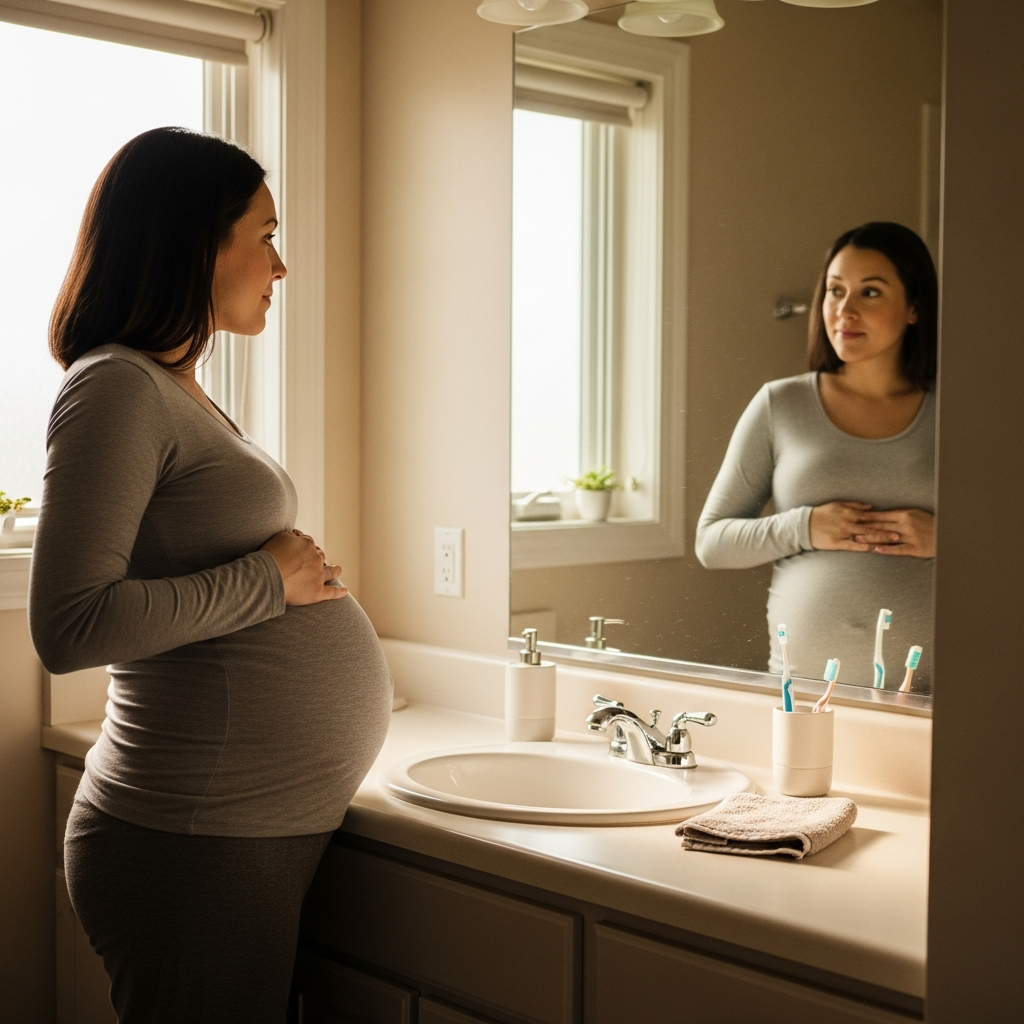
The Emotional Landscape of First Pregnancy
First pregnancy emotions can feel like a rollercoaster with no brakes. One moment you are thrilled about your baby, the next you are crying over a commercial. Understanding that these emotional changes first pregnancy brings are biological, not character flaws, helps you navigate this time with self-compassion.
Mood Swings and Why They Happen
Movies show pregnant people gazing lovingly at their bumps with instant connection. Many first-time parents do not feel immediate bond during pregnancy, causing unnecessary guilt.
Bonding is a process, not a single moment. Some connect deeply during pregnancy, feeling movements with wonder. Others feel more like they are hosting a stranger. Both experiences are valid and normal. Many parents bond more strongly after birth when they can see, hold, and care for their child. If you are not feeling that magical connection yet, you are not alone.
Preparing for Your First Baby: What You Actually Need
Walk into any baby store and the overwhelming array suggests you need a small fortune to welcome your child. The truth about preparing for first baby is much simpler. Marketing creates wants; your baby has basic needs that are surprisingly minimal.
Building Your Baby's First Wardrobe
First-time parents often overbuy newborn clothes, only to discover their baby outgrew them in two weeks. When selecting your newborn's wardrobe, prioritize comfortable baby clothes made from gentle, breathable fabrics.
Here is what you actually need:
- 6-8 onesies or bodysuits: Everyday rotation with envelope necklines or snap closures for easy dressing.
- 4-6 sleepers: Footed pajamas with zippers make middle-of-the-night diaper changes easier than buttons.
- 2-3 going-out outfits: For appointments and visitors, though sleepers work fine too.
- 2-3 hats: Newborns lose heat through their heads.
- 5-6 pairs of socks: The ones that stay on are worth their weight in gold.
Many parents find that breathable bamboo baby clothes work wonderfully for temperature regulation and are gentle on sensitive skin. Bamboo fabric is naturally hypoallergenic and gets softer with each wash.
Important tip: do not buy everything in newborn size. Some babies never fit newborn sizes, while others wear them briefly. Stock up more in 0-3 month sizes.
The Minimalist Nursery Approach
Essential items:
- Safe sleep space: A bassinet or crib meeting current safety standards
- Firm, flat mattress with fitted sheet (nothing else in sleep space)
- Changing area: Can be a pad on top of a dresser
- Storage for clothes and supplies
Can wait until after baby arrives:
- Baby swing or bouncer (some babies hate them)
- Elaborate nursery decor
- Specialized gadgets
The American Academy of Pediatrics recommends room-sharing for at least six months, so that decorated nursery might go unused initially. Focus on safety over aesthetics.
Hospital Bag Essentials
Pack around 36 weeks so you are ready whenever baby arrives:
For you: Comfortable going-home clothes (still maternity-sized), toiletries, nursing bra if breastfeeding, phone charger, comfortable robe for walking the halls.
For baby: Going-home outfit in newborn clothes (0-3 month range), car seat (required for discharge), blanket for the ride home.
For partner: Snacks and entertainment for long labor, change of clothes, toiletries.
Documents: ID and insurance cards, birth plan if you have one, hospital pre-registration paperwork.

What Partners and Support People Should Know
Partners play a crucial role during first pregnancy, but knowing how to actually help can be confusing. This section offers practical guidance for anyone supporting a pregnant person.
Practical Ways to Support Your Pregnant Partner
The best first pregnancy tips for dads and partners focus on consistent, thoughtful action:
- Take initiative with household tasks: Do not wait to be asked. Notice what needs doing and handle it, especially during the exhausting first trimester.
- Attend prenatal appointments: Being present shows support and keeps you informed.
- Learn about pregnancy stages: Understanding what is happening helps you respond with empathy rather than confusion.
- Create restful environments: When fatigue hits, make it easy for your partner to rest without guilt.
- Be patient with mood fluctuations: They are hormonally driven, not about your relationship.
Emotional Support That Actually Helps
- Practical support: Listen without immediately trying to "fix" feelings
- Validate concerns: Try, "That sounds stressful. What would help?" instead of dismissing worries.
- Educate yourself independently: Read pregnancy resources without your partner teaching you everything.
- Express excitement: Your enthusiasm matters, even when anxiety is present.
- Manage your own anxieties: Find appropriate outlets rather than adding to your partner's emotional load.
Preparing Together for Parenthood
The months before baby arrives offer valuable time to strengthen your partnership: discuss parenting philosophies, take childbirth classes together, plan division of responsibilities, and build your support network as a team.
First Pregnancy Timeline: What to Expect When
Understanding your first pregnancy symptoms week by week reduces anxiety and helps you know what questions to ask your provider.
First Trimester (Weeks 1-12)
Weeks 1-4: Conception and implantation occur, often before you know you are pregnant.
Weeks 5-8: Symptoms begin. Fatigue, breast tenderness, nausea. First prenatal appointment and potentially first ultrasound.
Weeks 9-12: Baby's organs forming. Heartbeat detectable. Genetic screening available. Miscarriage risk decreases significantly after week 12.
Second Trimester (Weeks 13-26)
The "honeymoon trimester." Energy returns, nausea subsides.
- Visible baby bump: First-timers usually show between weeks 12-16.
- Quickening: First fetal movements felt between weeks 16-22.
- Anatomy scan: Detailed ultrasound around week 20 checks development.
Third Trimester (Weeks 27-40)
Final stretch with renewed challenges:
- Increased physical discomfort including back pain and difficulty sleeping
- Nesting instincts intensify
- Weekly prenatal visits in final month
- Birth preparation: classes, hospital tour, pediatrician selection
Navigating Your First Prenatal Appointments
Walking into your first prenatal appointment can feel intimidating. Knowing what to expect and what to ask doctor first pregnancy helps you feel empowered.
Essential Questions for Your First Visit
- Prenatal vitamins: ACOG recommends 400 micrograms of folic acid daily.
- Foods and activities to avoid
- Warning signs requiring immediate attention
- Genetic testing options and timeline
- Due date and appointment schedule
Also discuss any current medications, pre-existing health conditions, and relevant family medical history.
Understanding Prenatal Tests
- Blood work: Checks blood type, Rh factor, immunity, and conditions like anemia.
- Ultrasounds: Dating scan (weeks 8-12) confirms due date. Anatomy scan (week 20) examines development.
- Genetic screening vs. diagnostic testing: Screenings like NIPT assess risk; diagnostics like amniocentesis provide definitive answers.
Building Trust with Your Care Team
Whether you choose an obstetrician, midwife, or family doctor, feeling heard matters. Write down questions beforehand, bring a support person, and advocate for yourself. If the fit feels wrong, it is acceptable to change providers.
Self-Care Throughout Your First Pregnancy
First pregnancy tips extend beyond medical care to overall wellbeing. Taking care of yourself sets the foundation for a healthier pregnancy.
Safe Exercise During Pregnancy
Most regular exercise can continue with modifications. Generally safe activities: walking, swimming and water aerobics, prenatal yoga, low-impact strength training, stationary cycling. Avoid contact sports, hot yoga, scuba diving, and fall risks. Always discuss plans with your provider.
Nutrition Beyond Cravings
Pregnancy nutrition focuses on nourishing yourself and baby with nutrient-dense foods:
- Folate: Leafy greens, legumes, fortified foods for neural development
- Iron: Lean meats, beans, spinach for increased blood volume
- Calcium: Dairy, fortified plant milks for baby's bones
- DHA: Low-mercury fish, supplements for brain development
Stay hydrated and enjoy cravings in moderation. Limit high-mercury fish, unpasteurized dairy, and excessive caffeine.
Protecting Mental Health
- Prioritize rest without guilt: Your body is doing extraordinary work.
- Maintain supportive social connections: Isolation worsens anxiety and low mood.
- Limit stressful content: Including scary birth stories online.
- Consider prenatal counseling or support groups
- Recognize when to seek help: If sadness or anxiety persists, contact your provider.
Frequently Asked Questions About First Pregnancy
What are the weird early pregnancy symptoms no one talks about?
Beyond nausea and fatigue: heightened smell sensitivity, vivid dreams, increased saliva, nosebleeds, gum sensitivity, and food aversions. These are hormonal and typically improve after the first trimester.
When do first pregnancy symptoms start?
Most begin between weeks 4-6, coinciding with the first missed period. Some notice changes earlier; others not until weeks 7-8.
Is pregnancy anxiety normal?
Yes, extremely common. If it overwhelms daily functioning, speak with your healthcare provider about support options.
What clothes do newborns need?
6-8 onesies, 4-6 sleepers, 2-3 outfits, socks, hat, weather-appropriate outerwear. Prioritize soft fabrics and avoid overbuying newborn sizes.
How long does first trimester fatigue last?
Typically peaks weeks 8-10 and improves around weeks 12-14 as the placenta takes over hormone production.
What should I ask at my first prenatal appointment?
Prenatal vitamins, foods to avoid, warning signs, genetic testing options, due date, appointment schedule. Also discuss medications and health history.
When will I start showing?
First-timers typically show between weeks 12-16, varying by body type and baby position.
How can my partner support me?
Take initiative with tasks, attend appointments, learn about pregnancy independently, be patient with mood changes, listen without fixing, express excitement.


