


Are you wondering how to introduce protein baby food to your little one? You are not alone. Many parents feel overwhelmed when it comes to making meat puree for baby or figuring out how to puree chicken for baby without ending up with a grainy, unappetizing texture. The good news is that with the right techniques and knowledge, you can create smooth, delicious protein purees that your baby will love.
Here is a surprising fact that might change how you think about first foods: research shows that approximately 18% of infants between 6-12 months have inadequate iron intakes in the United States. This matters because your baby's iron stores from birth begin depleting right around the six-month mark. Protein-rich foods like meat, poultry, fish, and legumes are among the best sources of iron and essential nutrients your growing baby needs.
At PatPat, we understand that feeding your baby well is one of your top priorities. This comprehensive guide will walk you through everything you need to know about protein purees for baby, from mastering silky smooth textures to maximizing iron absorption. Whether you are preparing beef, chicken, salmon, or lentil purees, you will find practical tips and easy recipes to make mealtime a success.
Why Your Baby Needs Protein-Rich Purees Starting at 6 Months
Around six months of age, something important happens in your baby's body. The iron stores they were born with start running low, and breast milk or formula alone can no longer meet their growing nutritional needs. This is exactly why the American Academy of Pediatrics recommends introducing iron-rich foods around this time.
Protein does far more than just provide iron. It delivers zinc for immune function, B12 for nervous system development, and essential amino acids that support your baby's rapid brain growth. In fact, according to the American Academy of Family Physicians, from 6 months to 13 years of age, 58% of dietary protein is used to support growth. That is a significant portion dedicated entirely to helping your child develop.
Understanding Heme Iron vs Non-Heme Iron in Baby Food
Not all iron is created equal, and understanding this distinction can help you plan better meals for your baby. Iron comes in two forms: heme iron from animal sources and non-heme iron from plant sources.
According to scientific research published by the National Institutes of Health, 15% to 35% of heme iron is absorbed by the body, while only 2% to 20% of non-heme iron makes it into your baby's system. This dramatic difference explains why meat-based protein purees are so valuable for preventing iron deficiency.
| Iron Type | Sources | Absorption Rate |
|---|---|---|
| Heme Iron | Beef, chicken, turkey, fish, pork | 15-35% |
| Non-Heme Iron | Lentils, beans, spinach, fortified cereals | 2-20% |
How to Make Smooth Meat Puree for Baby Without Grainy Texture
Let us address the elephant in the room: meat puree for baby can be tricky to get right. Many parents end up with a chalky, grainy texture that their baby refuses to eat. The secret lies in understanding that meat requires different handling than fruits and vegetables.
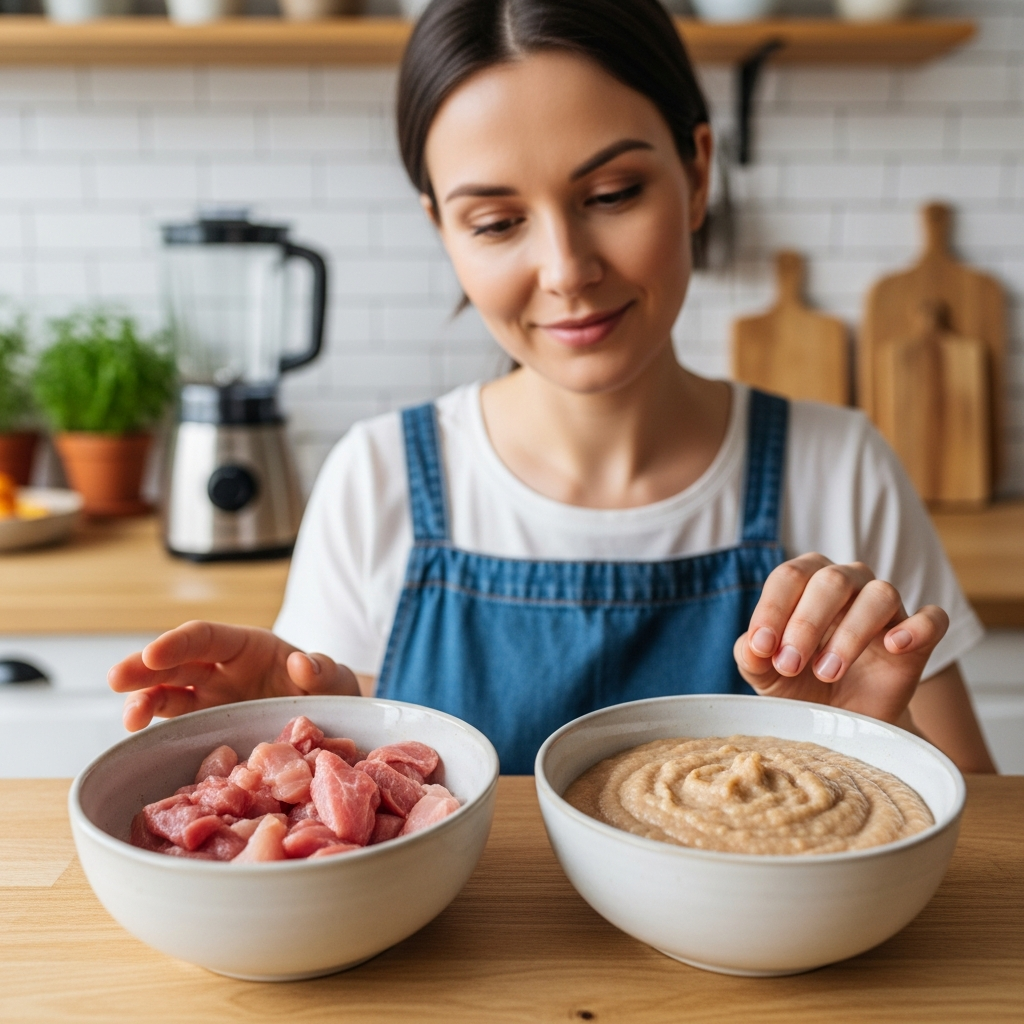
Here is what makes meat purees challenging: protein fibers are tougher than plant cell walls, which means they need more liquid and longer blending times. The key to success is the liquid ratio. For Stage 1 baby food, use at least a 1:1 ratio of meat to liquid, meaning one cup of cooked meat needs at least one cup of cooking liquid.
Follow these steps for silky smooth meat puree:
- Choose the right cooking method. Poaching or slow-cooking produces more tender meat than grilling or roasting.
- Reserve the cooking liquid. This flavorful broth adds nutrition and helps achieve smooth consistency.
- Cut meat into small chunks before blending. One-inch pieces blend more evenly.
- Add liquid gradually while blending. Start with half the liquid and add more as needed.
- Blend for 2-3 minutes minimum. Meat needs significantly longer blending time than vegetables.
- Stop and scrape the sides every 30 seconds to ensure even blending.
- Strain through a fine mesh sieve for ultra-smooth Stage 1 purees if needed.
Best Blender Settings and Timing for Silky Baby Food Purees
Your blender settings matter more than you might think. High-powered blenders like Vitamix or Ninja work best for meat purees, but even a standard blender can produce good results with patience.
Start on low speed to break down larger pieces, then gradually increase to high. Continue blending on high for at least two full minutes, stopping occasionally to scrape down the sides. If the mixture seems too thick, add cooking liquid one tablespoon at a time until you reach your desired consistency.
How to Puree Chicken for Baby: From Raw to Silky Smooth
Learning how to puree chicken for baby is often where many parents start their protein puree journey. Chicken is mild-flavored, affordable, and when prepared correctly, blends into a wonderfully smooth consistency that most babies accept readily.
Here is a counterintuitive tip that will improve your chicken puree dramatically: use dark meat instead of breast. Chicken thighs contain more iron than chicken breast, have higher fat content that creates creamier purees, and stay moist during cooking. While many adults prefer lean breast meat, thighs are actually the better choice for baby food.
Best cooking methods for chicken puree:
- Poaching: Simmer chicken thighs in water or low-sodium broth for 15-20 minutes until internal temperature reaches 165 degrees Fahrenheit.
- Steaming: Steam boneless thighs over simmering water for 20-25 minutes.
- Slow cooking: Cook on low for 4-6 hours for the most tender, easy-to-blend results.
Quick Chicken Puree Recipe for 6-Month-Old Babies
Simple Chicken Puree
Prep Time: 5 minutes | Cook Time: 20 minutes | Yield: About 8 ounces
Ingredients:
- 2 boneless, skinless chicken thighs (about 8 oz)
- 1.5 cups water or low-sodium chicken broth
Instructions:
- Place chicken thighs in a small saucepan and cover with liquid.
- Bring to a boil, then reduce heat and simmer for 18-20 minutes until internal temperature reaches 165 degrees F.
- Remove chicken and let cool slightly. Reserve all cooking liquid.
- Cut chicken into 1-inch pieces and place in blender.
- Add half of the cooking liquid (about 3/4 cup).
- Blend on high for 2-3 minutes, adding more liquid as needed for desired consistency.
- For Stage 1 babies, strain through a fine mesh sieve.
Storage: Refrigerate for up to 2 days or freeze in ice cube trays for up to 3 months.
Beef, Lamb and Pork Purees: Red Meat Baby Food Guide
Red meats offer the highest concentration of heme iron among all protein sources, making them excellent choices for iron-rich baby food. Beef puree for baby delivers impressive nutritional benefits, with just three ounces providing a significant portion of your baby's daily iron needs.
When choosing cuts for pureeing, ground meat and slow-cooked cuts work best. Ground beef is already broken down, making it easier to achieve smooth consistency. Tougher cuts like chuck roast become incredibly tender after slow cooking and blend beautifully.
| Red Meat | Iron Content (per 3 oz cooked) | Best for Baby Because |
|---|---|---|
| Beef (ground) | 2.2 mg | Highest iron, mild flavor, easy to blend |
| Lamb | 1.6 mg | Rich in zinc, tender texture |
| Pork | 0.9 mg | Mild taste, good protein content |
Simple Beef and Sweet Potato Puree Recipe
Beef and Sweet Potato Iron-Boosting Puree
Prep Time: 10 minutes | Cook Time: 25 minutes | Yield: About 12 ounces
Ingredients:
- 4 oz lean ground beef
- 1 medium sweet potato, peeled and cubed
- 1 cup water or low-sodium beef broth
Instructions:
- Brown ground beef in a skillet over medium heat until no pink remains. Drain excess fat.
- Meanwhile, steam or boil sweet potato cubes until fork-tender, about 15 minutes.
- Combine beef, sweet potato, and liquid in blender.
- Blend until smooth, adding more liquid as needed.
Why this combination works: Sweet potato contains vitamin C, which significantly boosts iron absorption from the beef.
Fish Puree for Baby: Safe Seafood Choices and Preparation
Fish offers unique nutritional benefits that other proteins cannot match. It provides DHA and omega-3 fatty acids essential for brain development, plus it naturally produces smoother purees than meat because of its delicate texture.
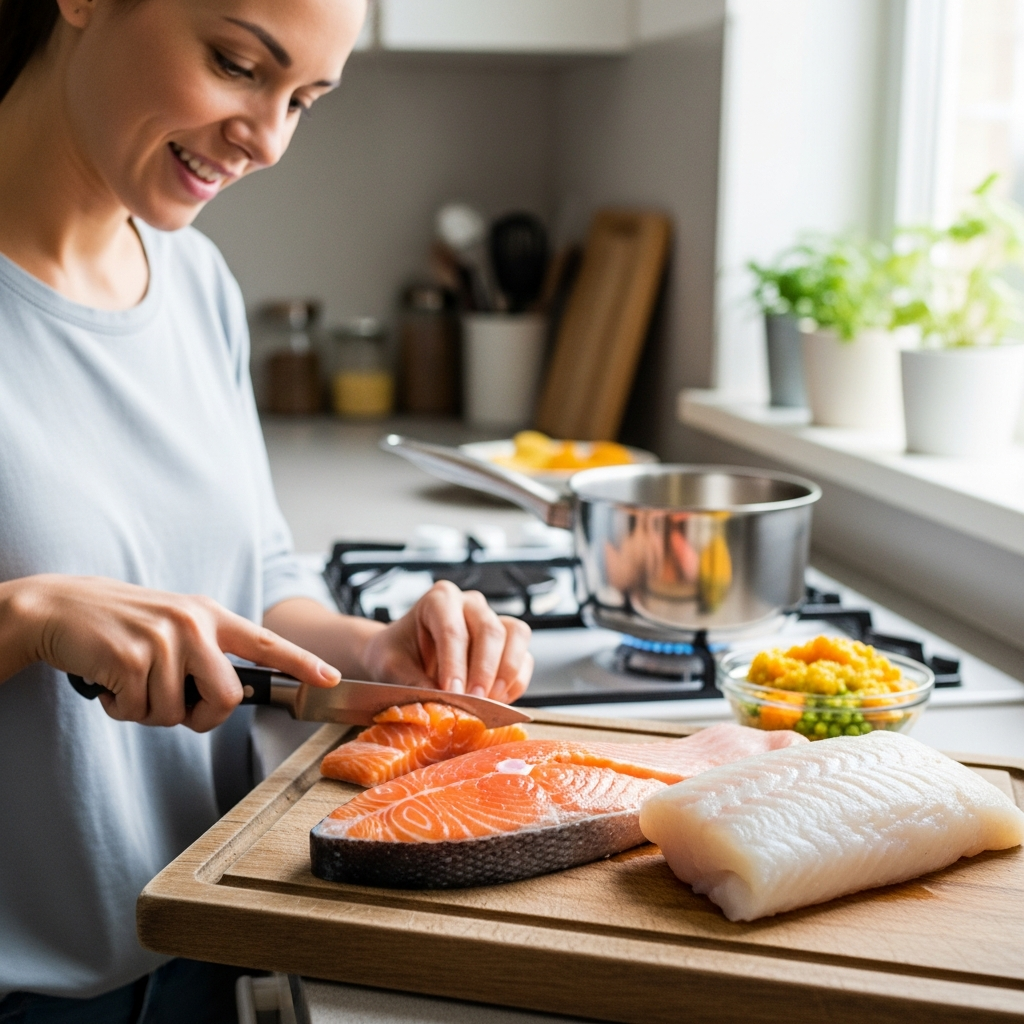
The key concern with fish is mercury content. According to the FDA, best choices for low-mercury fish include salmon, sardines, anchovies, catfish, and tilapia. These can be safely introduced around 6 months of age.
Safe fish choices for baby puree:
- Salmon: Rich in omega-3s, mild flavor, excellent for brain development
- Cod: Very mild white fish, low in fat, easy to digest
- Tilapia: Affordable, mild flavor, easy to find
- Pollock: Low mercury, commonly used in commercial baby foods
- Sardines: High in calcium and omega-3s when bones are mashed
Omega-3 Rich Salmon Puree Recipe
Brain-Boosting Salmon Puree
Prep Time: 5 minutes | Cook Time: 12 minutes | Yield: About 6 ounces
Ingredients:
- 4 oz wild-caught salmon fillet, skin removed
- 1/2 cup water
- Optional: 2 tablespoons steamed carrots or peas
Instructions:
- Check salmon carefully for bones, removing any you find.
- Steam or poach salmon for 10-12 minutes until it flakes easily.
- Flake salmon into blender, add water and optional vegetables.
- Blend until smooth. Fish purees smoothly with less liquid than meat.
Plant-Based Protein Purees: Lentils, Beans and Tofu for Baby
Whether your family follows a vegetarian diet or you simply want to offer variety, plant-based protein purees provide excellent nutrition for your baby. Lentil puree for baby is particularly popular because red lentils cook quickly and naturally become smooth without much effort.
The main consideration with plant proteins is iron absorption. Remember that non-heme iron from plants absorbs at much lower rates than heme iron from meat. However, you can significantly improve absorption by pairing plant proteins with vitamin C-rich foods.
Plant protein options for baby:
- Red lentils: Cook in 15-20 minutes, naturally smooth, mild flavor
- Chickpeas: Higher protein than most legumes, creamy when pureed
- Black beans: Rich in fiber and protein, slightly sweet flavor
- Tofu: Complete protein, silky texture, absorbs other flavors well
- Split peas: High in protein and fiber, earthy flavor
Creamy Red Lentil Puree with Carrots
Iron-Rich Lentil and Carrot Puree
Prep Time: 5 minutes | Cook Time: 20 minutes | Yield: About 10 ounces
Ingredients:
- 1/2 cup red lentils, rinsed
- 1 medium carrot, peeled and diced
- 1.5 cups water
- Pinch of mild cumin (optional, for babies 8+ months)
Instructions:
- Combine lentils, carrots, and water in a saucepan.
- Bring to a boil, then reduce heat and simmer for 18-20 minutes until lentils are very soft.
- Add cumin if using. Blend until smooth, adding water if needed.
Iron boost: The vitamin C in carrots helps your baby absorb more iron from the lentils.
Maximizing Iron Absorption: Food Pairing Strategies
Making iron-rich baby food is only half the equation. How you combine foods dramatically affects how much iron your baby actually absorbs. This section reveals the science-backed strategies that can double or even triple iron absorption.
Vitamin C is the most powerful iron absorption enhancer. When you pair iron-rich foods with vitamin C sources, you can significantly increase the amount of iron your baby absorbs. This is especially important for plant-based iron sources.
Foods that BOOST iron absorption:
- Bell peppers (red, yellow, orange)
- Broccoli
- Sweet potatoes
- Tomatoes
- Citrus fruits
- Strawberries
- Mango
- Papaya
Foods that INHIBIT iron absorption (serve separately):
- Dairy products (milk, cheese, yogurt)
- Calcium supplements
- Tea or coffee (not appropriate for babies anyway)
- High-fiber foods in large amounts
Top 10 Vitamin C and Protein Puree Combinations
These pairings are designed to maximize your baby's iron absorption while creating delicious flavor combinations:
- Beef + Bell Pepper: Classic combination with excellent iron boost
- Chicken + Broccoli: Mild flavors that most babies enjoy
- Lentils + Tomato: Mediterranean-inspired vegetarian option
- Turkey + Butternut Squash: Sweet and savory fall favorite
- Salmon + Mango: Tropical twist with brain-boosting omega-3s
- Chickpeas + Citrus Zest: Bright flavor with enhanced absorption
- Lamb + Peas: Traditional pairing with natural sweetness
- Pork + Apple: Sweet-savory combination babies love
- Cod + Spinach: Mild fish with iron-rich greens
- Black Beans + Sweet Potato: Fiber-rich vegetarian powerhouse
Storage, Freezing and Reheating Protein Baby Food Safely
Proper storage is critical for protein-based baby foods. Unlike fruit and vegetable purees, meat and fish purees have shorter safe storage windows and require more careful handling.
| Storage Method | Meat/Poultry Purees | Fish Purees | Legume Purees |
|---|---|---|---|
| Refrigerator | 1-2 days | 1 day | 2-3 days |
| Freezer | 1-3 months | 1-2 months | 3 months |
Safe freezing method:
- Let freshly made puree cool to room temperature (within 2 hours of cooking).
- Spoon into ice cube trays or silicone baby food molds.
- Cover and freeze until solid (about 4-6 hours).
- Pop frozen cubes into labeled freezer bags with the date.
- Use within the recommended timeframe for best quality.
- Never refreeze thawed protein purees
- Thaw in refrigerator overnight, not at room temperature
- Reheat to steaming hot, then cool to lukewarm before serving
- Discard any puree baby has eaten from directly (saliva introduces bacteria)
- When in doubt, throw it out
Frequently Asked Questions About Protein Purees for Baby
When can babies start eating pureed meat?
Babies can start eating pureed meat at 6 months old when they begin solid foods. The CDC recommends introducing iron-rich foods like meat around this age because babies' iron stores from birth begin depleting. Meat can be among your baby's very first foods.
How do I make meat puree smooth and not grainy?
To achieve smooth meat puree, use a high-powered blender and add plenty of liquid at a minimum 1:1 ratio. Blend for 2-3 minutes, scraping sides frequently. Use slow-cooked or poached meat rather than grilled for better results. For ultra-smooth Stage 1 purees, strain through a fine mesh sieve.
How much protein does a 6-month-old baby need daily?
Babies 7-12 months need approximately 11 grams of protein daily. Start with 1-2 tablespoons of protein puree per meal and gradually increase. Remember that breast milk or formula still provides the majority of nutrition at this age, with solid foods complementing rather than replacing milk feeds.
What is the best first meat for baby to try?
Chicken and beef are excellent first meats for baby. Chicken is mild-flavored and easy to puree smooth, while beef offers the highest heme iron content. Dark meat chicken thighs are recommended over breast meat because they contain more iron, healthy fats, and stay moister when pureed.
Does blending or pureeing meat reduce its protein content?
No, blending or pureeing meat does not reduce its protein content. The mechanical process only changes texture, not nutritional value. Protein molecules remain completely intact during pureeing. While overcooking before blending can reduce some B vitamins, it does not affect protein levels.
How long can meat puree be stored in the refrigerator?
Homemade meat puree should be refrigerated and used within 1-2 days for optimal safety and freshness. For longer storage, freeze immediately in ice cube trays or silicone molds. Frozen meat puree maintains quality for 1-3 months. Never refreeze previously frozen puree.
Can vegetarian babies get enough protein without meat?
Yes, vegetarian babies can get adequate protein from plant sources including lentils, chickpeas, beans, tofu, quinoa, and eggs if included. Combine plant proteins with vitamin C-rich foods to boost iron absorption. Consult your pediatrician about iron and B12 supplementation for fully plant-based diets.
What fish is safe for baby puree and which should I avoid?
Safe low-mercury fish for babies include salmon, cod, tilapia, pollock, sardines, and trout. Avoid high-mercury fish including shark, swordfish, king mackerel, tilefish, and bigeye tuna. Introduce fish around 6 months, starting with mild white fish or omega-3-rich salmon.
Start Your Baby's Protein Journey with Confidence
Making protein purees for baby does not have to be complicated or stressful. With the techniques you have learned in this guide, you can create smooth, nutritious meat puree for baby, master how to puree chicken for baby with perfect texture, and prepare iron-rich legume purees that support your little one's growth and development.
Remember these key takeaways:
- Start introducing protein baby food around 6 months when iron stores begin depleting
- Use plenty of liquid and blend longer for smooth meat textures
- Dark meat chicken and red meats offer the highest iron content
- Pair iron-rich foods with vitamin C sources to maximize absorption
- Store protein purees safely: 1-2 days refrigerated or 1-3 months frozen
- Plant-based proteins like lentils offer excellent vegetarian options
At PatPat, we know that every meal you prepare for your baby is an act of love. Whether you are making your first batch of chicken puree or experimenting with salmon and mango combinations, you are giving your baby the best possible start in life.
Ready to Dress Your Little One for Mealtime Adventures?
Explore PatPat's collection of adorable, easy-clean baby clothing perfect for messy mealtimes. From bibs to onesies, we have everything you need to make feeding time fun and fashionable.
Do you have questions about protein purees or want to share your own tips? We would love to hear about your baby's feeding journey. Start exploring our recipes today and watch your baby thrive on nutritious, homemade protein purees.




