


Every year, the world witnesses its largest annual human migration as hundreds of millions of people travel home for the Spring Festival. This massive journey, known as chunyun, underscores just how deeply Chinese New Year traditions are woven into the fabric of family life. Whether your family has celebrated for generations or you are discovering these customs for the first time, understanding these Lunar New Year traditions can enrich your holiday experience in meaningful ways.
The Spring Festival, also called Chinese New Year or Lunar New Year, marks the beginning of a new year on the traditional lunisolar calendar. In 2026, the Year of the Horse begins on February 17th, ushering in fifteen days of celebration, feasting, and time-honored rituals. From the vibrant red decorations adorning doorways to the joyful exchange of red envelopes, each custom carries centuries of meaning and symbolism.
In this comprehensive guide, we explore 15 essential Chinese New Year customs that will help you understand the cultural significance behind each practice and offer practical tips for incorporating them into your own celebrations. Whether you are hosting a reunion dinner or visiting relatives during the holiday, these traditions create lasting memories for everyone in the family.
Understanding the Spring Festival: History and Cultural Significance
What Is the Spring Festival?
The Spring Festival represents the most significant holiday in Chinese culture, celebrating the turn of the traditional lunisolar calendar year. Unlike the fixed January 1st date of the Gregorian New Year, Chinese New Year falls on a different date each year, typically between January 21st and February 20th. According to History.com, the Spring Festival celebrations span 15 days, beginning on New Year's Eve and culminating with the Lantern Festival.
The terms "Spring Festival," "Chinese New Year," and "Lunar New Year" are often used interchangeably, though each carries subtle distinctions. "Spring Festival" (Chunjie) is the official name used in mainland China, while "Lunar New Year" serves as a more inclusive term that acknowledges similar celebrations across Asian cultures, including Korean Seollal and Vietnamese Tet.
The Legend of Nian: Origins of Chinese New Year Traditions
Many Spring Festival traditions trace their origins to the ancient legend of Nian, a fearsome beast believed to emerge from hiding once a year to terrorize villages. According to folklore, the monster Nian feared three things: loud noises, fire, and the color red. Villagers discovered that by lighting firecrackers, hanging red decorations, and staying awake through the night, they could drive the beast away.
This mythological origin explains why red dominates Chinese New Year decorations, why firecrackers echo through neighborhoods, and why families gather together on New Year's Eve. The story of overcoming adversity through unity and clever preparation continues to resonate, reminding us that facing challenges together strengthens family bonds.
Why Is the Spring Festival Important Today?
Beyond mythology, the Spring Festival holds profound significance for billions of people worldwide. For families, it represents the most important annual opportunity to reunite with loved ones. In an era of increasing mobility where children may live thousands of miles from their parents, the Spring Festival creates a sacred pause when families prioritize connection above all else.
The celebration also marks a time for reflection and renewal. Just as nature awakens in spring, the festival encourages individuals to release past burdens and embrace fresh possibilities. Financial debts are traditionally settled before New Year's Day, symbolizing the desire to enter the new year free from obligations. This cultural emphasis on new beginnings gives the Spring Festival a universal appeal that transcends ethnic and national boundaries.
Pre-Festival Preparations: Spring Cleaning and Decorating with Red
Spring Cleaning Tradition (Sao Chen): Sweeping Away Bad Luck
The Chinese New Year cleaning tradition, known as sao chen or "sweeping the dust," typically begins a week or two before New Year's Eve. This thorough house cleaning carries profound symbolic meaning: by sweeping out the old, families make room for good fortune and fresh beginnings in the coming year.
Importantly, all cleaning must be completed before New Year's Day arrives. Why do Chinese people clean before New Year and then stop? Sweeping on New Year's Day is believed to sweep away newly arrived good luck. Many families even put away brooms and dustpans during the first few days of celebration to protect their fortune. For modern families, this tradition offers a practical opportunity to declutter and organize while participating in a meaningful cultural practice.
Decorating with Red: Lanterns, Couplets, and Fu Characters
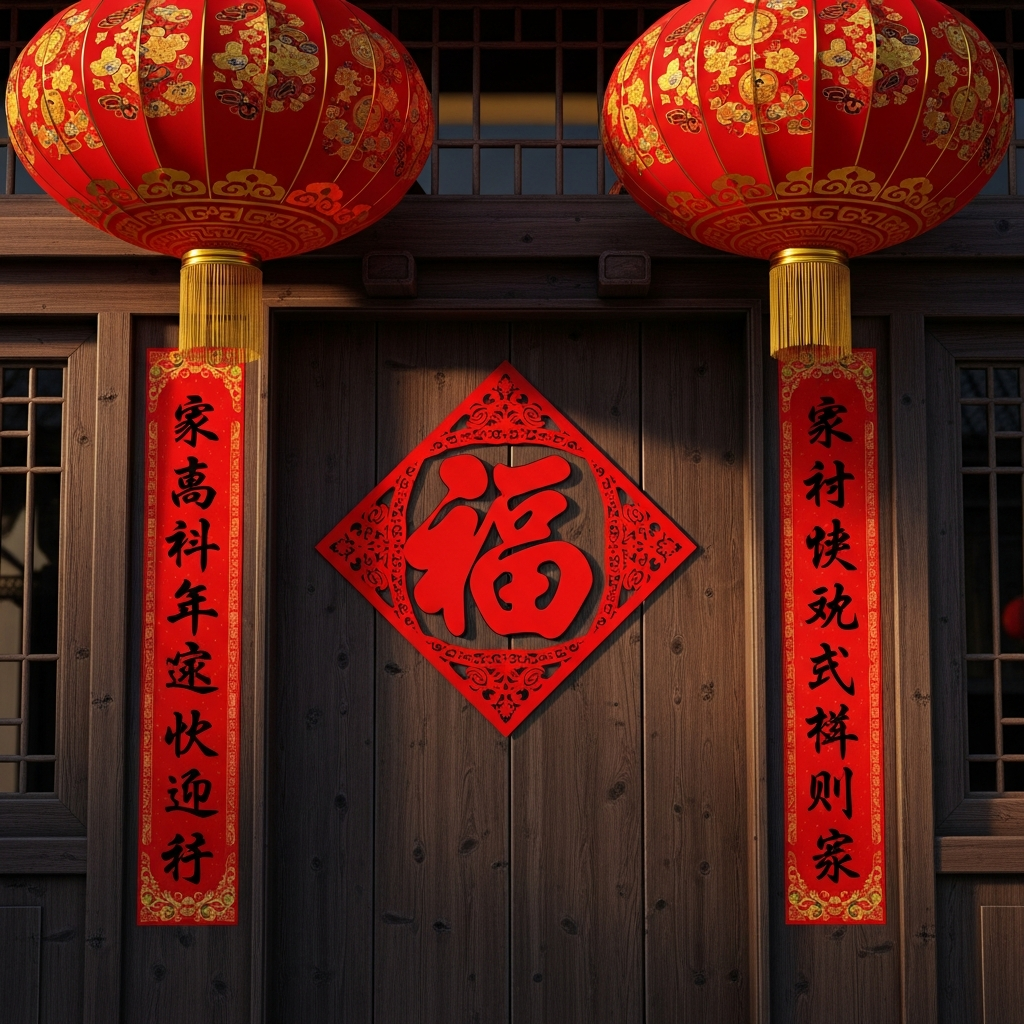
Red decorations transform homes and public spaces during the Spring Festival. Red lanterns hang from doorways and rooftops, their warm glow symbolizing prosperity and the hope that life will be both bright and colorful in the new year.
Spring couplets (chunlian) are pairs of poetic phrases written in elegant calligraphy on red paper and posted on either side of doorways. These couplets typically express wishes for good fortune, health, and prosperity. Common phrases include "May you have a prosperous new year" and "May your family be blessed with happiness."
Perhaps the most recognizable Chinese New Year decoration is the Fu character, meaning "blessing" or "good fortune." Many families hang this character upside down on their doors. Why? The Chinese word for "upside down" (dao) sounds identical to the word for "arrive," so an inverted Fu suggests that good fortune has arrived. Paper cuttings, door gods, and window decorations in vibrant reds and golds complete the festive atmosphere.
Practical Tips for Decorating Your Home
Creating a festive Spring Festival atmosphere at home requires just a few key elements. Start by hanging red lanterns near your entrance or in windows where they can be seen from outside. Purchase or create spring couplets to frame your doorway, choosing phrases that resonate with your family's hopes for the new year.
For families with children, paper cutting projects offer wonderful craft activities. Traditional designs include fish, flowers, and the Chinese characters for luck and prosperity. Modern families often blend traditional decorations with contemporary elements, perhaps adding string lights alongside lanterns or displaying flowers like plum blossoms and orchids, which symbolize resilience and elegance. The goal is creating a warm, welcoming space that signals celebration and invites positive energy.
The Reunion Dinner: Family Gatherings and Traditional Lucky Foods

Reunion Dinner Traditions: The Heart of Chinese New Year
The reunion dinner (nian ye fan) on New Year's Eve represents the most important meal of the entire year. This is when families gather from near and far, sometimes traveling thousands of miles to share this special evening together. The emphasis on family togetherness reflects core values of filial piety and the deep connections between generations.
Traditional reunion dinners feature carefully chosen dishes, each selected for their symbolic meanings rather than simply their taste. The table is often round to represent unity and completeness, and dishes are shared family-style, reinforcing the spirit of togetherness. Many families coordinate their outfits for this occasion, creating memorable photos that capture the joy of being together. Explore matching family outfits to make your celebration picture-perfect.

Lucky Foods and Their Symbolic Meanings
What do you eat on Chinese New Year? Each dish carries specific blessings for the coming year:
| Food | Chinese Name | Symbolic Meaning |
|---|---|---|
| Whole Fish | Yu | Surplus and abundance (sounds like "surplus") |
| Dumplings | Jiaozi | Wealth (shape resembles ancient gold ingots) |
| Rice Cake | Niangao | Rising success and advancement year after year |
| Spring Rolls | Chunjuan | Wealth (golden color resembles gold bars) |
| Sweet Rice Balls | Tangyuan | Family unity and togetherness (round shape) |
| Longevity Noodles | Changshou mian | Long life (longer the noodle, longer the life) |
| Whole Chicken | Ji | Family togetherness and prosperity |
Regional variations add diversity to reunion dinner traditions. Northern Chinese families prioritize dumplings, often staying up late on New Year's Eve to wrap them together. Southern families may feature niangao more prominently. Regardless of region, the Chinese New Year dumpling tradition remains beloved, with some families hiding a coin inside one dumpling for an extra-lucky finder.
Planning Your Own Reunion Dinner
Hosting a reunion dinner does not require expertise in Chinese cuisine. Focus on incorporating symbolic elements that make the meal meaningful. Serve a whole fish as the centerpiece, representing hopes for abundance. Include at least one round dish or ingredient, like tangyuan or a round cake, to symbolize family unity.
Involve family members of all ages in the preparation. Dumpling-making sessions become treasured traditions when grandparents teach grandchildren the proper folding techniques. Set your table with red accents, whether through tablecloths, napkins, or decorative elements. Most importantly, create space for conversation and connection. The true essence of the reunion dinner lies not in perfect execution but in genuine togetherness.
Red Envelopes and Gift-Giving Customs

The Red Envelope Tradition (Hongbao): Lucky Money Explained
Why do Chinese give red envelopes? The hongbao tradition dates back centuries, with the red color symbolizing good luck and the money inside representing wishes for prosperity. Originally, parents would thread coins with a red string to give to children, believing the coins would protect them from evil spirits. Today, red envelopes containing crisp bills continue this tradition of blessing recipients with good fortune.
Understanding who gives red envelopes to whom follows clear etiquette. Married couples give hongbao to unmarried relatives, especially children and elderly family members. Parents give to children, employers may give to employees, and friends sometimes exchange envelopes. The amounts typically involve lucky numbers:
- Number 8: Highly auspicious (sounds like "prosperity")
- Common amounts: 88, 168, 188, 288, 888
- Avoid: Any amount containing 4 (sounds like "death")
- Always: Use even numbers and new, crisp bills
Modern technology has transformed the red envelope tradition through digital hongbao. WeChat and other apps allow users to send virtual red envelopes instantly, creating new traditions like "grabbing" random amounts from group chats. This digital evolution demonstrates how Chinese New Year customs adapt while preserving their essential meaning.
Other Gift-Giving Etiquette During Spring Festival
Beyond red envelopes, visitors often bring gifts when paying New Year calls. Appropriate gifts include fruit baskets (especially oranges and tangerines, which symbolize luck), quality tea, fine wines, or specialty foods. Presentation matters: gifts should be wrapped in red or gold paper, never white or black, which are associated with funerals.
Certain gifts are taboo: clocks (the phrase "giving a clock" sounds like "attending a funeral"), sharp objects (they symbolize severing relationships), and handkerchiefs (associated with crying and farewell). When in doubt, fruit and sweets are always safe choices that bring sweetness to the new year.
Festive Celebrations: Firecrackers, Lion Dances, and the Lantern Festival

Firecrackers and Fireworks: Warding Off Evil Spirits
Chinese New Year firecrackers serve a purpose beyond creating spectacle. According to the Nian legend, the loud sounds frighten away evil spirits and misfortune. Traditionally, firecrackers are set off at midnight on New Year's Eve, again on New Year's morning, and throughout the fifteen days of celebration.
Safety regulations have transformed this tradition in many urban areas, where fireworks may be restricted or prohibited. Families adapt by attending organized public displays, using electronic firecrackers that produce sound without fire, or focusing on other noisy celebrations like banging drums and gongs. The spirit of the tradition, driving away negativity to welcome positive energy, remains central regardless of the method.
Lion and Dragon Dance Performances: Prosperity in Motion
The lion dance Chinese New Year tradition brings communities together in vibrant celebration. Though often confused, lion and dragon dances are distinct performances. Lion dances typically feature two performers inside a single costume, mimicking a stylized lion's movements. Dragon dances involve many performers carrying a long, serpentine dragon on poles.
Both performances symbolize driving away evil spirits and bringing good luck. Businesses often invite lion dance troupes to perform at their openings during the new year, "feeding" the lion with hongbao attached to lettuce (the word for lettuce sounds like "generating wealth"). Communities worldwide host these performances, making them accessible opportunities for cultural participation.
The Lantern Festival: Marking the End of Spring Festival
What is the Lantern Festival? Known as Yuanxiao or Shangyuan, this celebration falls on the fifteenth day of the new year, marking the first full moon and the official end of Spring Festival. Streets and parks fill with elaborate lantern displays, from traditional paper lanterns to modern light installations.
Lantern riddles add an interactive element: riddles written on lanterns challenge visitors to solve them for small prizes. Families also enjoy eating tangyuan, sweet glutinous rice balls, whose round shape echoes the full moon and symbolizes family unity. Making lanterns at home offers a creative activity for children, connecting them to Lantern Festival traditions through hands-on experience.
Finding Local Celebrations
Communities worldwide host public Chinese New Year celebrations that welcome everyone. Chinatowns in major cities organize parades featuring lion and dragon dances, martial arts demonstrations, and cultural performances. Museums and cultural centers often present special exhibitions and educational programs during the festival period.
Check local event listings beginning in early January to find celebrations near you. Many cities host free community festivals with food vendors, entertainment, and activities suitable for children. Attending these events offers an immersive way to experience Spring Festival traditions firsthand, even if your family has no prior connection to the celebration. The welcoming nature of these public festivities reflects the generous spirit at the heart of Chinese New Year.
New Year Customs: Visiting, Greeting, and Wearing New Clothes
Visiting Family and Paying Respects (Bai Nian)
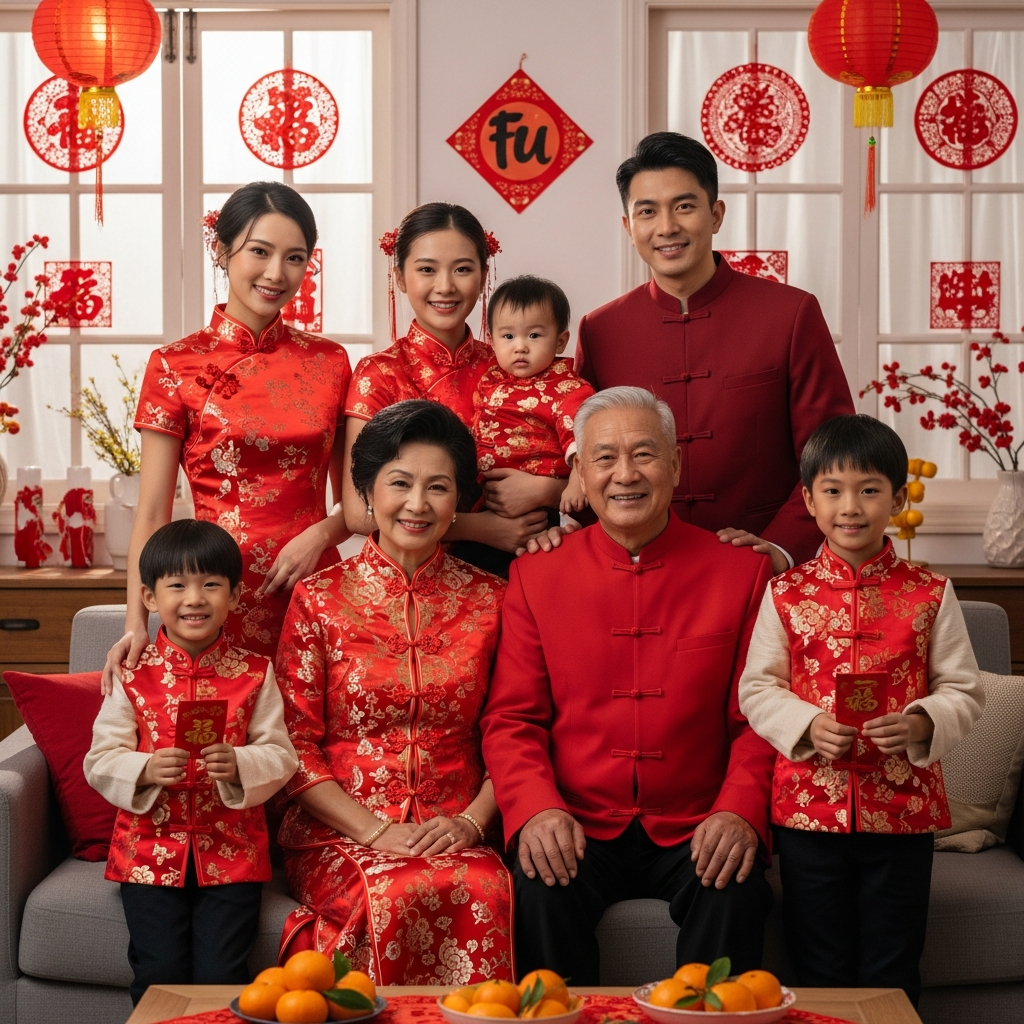
The tradition of visiting family, known as bai nian, follows a careful order based on relationships and respect for elders. On New Year's Day, many families first visit paternal grandparents. The second day traditionally involves visiting maternal relatives. Subsequent days extend to more distant relatives, friends, and colleagues.
When visiting, guests typically bring gifts and receive hongbao in return if they are young or unmarried. The visits involve sharing snacks, drinking tea, and exchanging good wishes. This tradition of visiting family Chinese New Year reinforces social bonds and maintains connections across extended family networks.
Lucky Greetings and Phrases: What to Say
Knowing how to say Happy New Year in Chinese enhances your celebration. Here are essential Chinese New Year greetings:
| Phrase (Pinyin) | Meaning | When to Use |
|---|---|---|
| Gong Xi Fa Cai | Wishing you prosperity | Universal greeting, most popular |
| Xin Nian Kuai Le | Happy New Year | General well-wishing |
| Wan Shi Ru Yi | May everything go as you wish | Blessing for success |
| Shen Ti Jian Kang | Wishing you good health | Especially for elders |
| Xue Xi Jin Bu | Wishing academic progress | For students |
When someone greets you, responding with a similar blessing or simply "Tong yang" (Same to you) shows courtesy. The Gong Xi Fa Cai meaning centers on prosperity, making it the most versatile and widely recognized greeting worldwide.
Practice these phrases before celebrations to deliver them with confidence. Children often enjoy learning New Year greetings, and elders appreciate the effort younger generations make to preserve linguistic traditions. For those unfamiliar with the tones of Mandarin or Cantonese, simple phonetic attempts are always received warmly.
Wearing New Clothes: The Tradition of Fresh Starts
What to wear Chinese New Year? New clothing represents fresh beginnings and the hope for a prosperous year ahead. Just as homes are cleaned to sweep away old energy, wearing new clothes symbolizes shedding the past and stepping into the new year renewed.
Red and bright colors are preferred, as red symbolizes good fortune while bright hues like gold, orange, and pink attract positive energy. Black and white are traditionally avoided during the celebratory period. The tradition of wearing new clothes symbolizes fresh beginnings and renewed hope for the coming year. Celebrate this custom with coordinated family vacation outfits that bring your family together in style during Spring Festival visits.

Temple Fairs, CCTV Gala, and Modern Spring Festival Entertainment
Temple Fairs (Miao Hui): Traditional Entertainment and Shopping
Temple fairs during Chinese New Year transform temple grounds and surrounding areas into bustling marketplaces filled with entertainment and commerce. These fairs offer traditional performances including opera, acrobatics, and folk music, alongside games, crafts, and abundant street food.
Visitors browse stalls selling New Year decorations, toys, and specialty snacks while enjoying the festive atmosphere. For families, temple fairs provide immersive cultural experiences where children can witness traditions in action. Major cities host elaborate fairs that attract thousands of visitors daily throughout the festival period.
Watching the CCTV New Year Gala (Chun Wan)
Since 1983, the CCTV Spring Festival Gala has become a centerpiece of Chinese New Year celebrations. This annual broadcast, one of the most-watched television events globally, airs on New Year's Eve and runs for over four hours. The variety show features musical performances, comedy sketches, dance numbers, and magic acts.
Families gather around televisions much like Western families might for major sporting events or holiday specials. The midnight countdown broadcast from Beijing's Tiananmen Square has become a shared national moment, connecting millions of viewers in collective celebration.
Modern Ways Families Celebrate Spring Festival Today
How do modern families celebrate Chinese New Year? While core traditions remain, contemporary celebrations blend old and new. Video calls connect family members who cannot travel home, allowing grandparents to see grandchildren open red envelopes across continents. Social media enables sharing of festive photos, digital hongbao, and New Year greetings.
Some families create fusion reunion dinners that incorporate favorite dishes from various cuisines alongside traditional lucky foods. Younger generations might organize escape room outings or movie marathons as group activities. The key lies in maintaining the spirit of togetherness and renewal while adapting practices to modern lifestyles.
Cultural appreciation extends beyond ethnic Chinese communities. Many families from diverse backgrounds now incorporate Spring Festival elements into their winter celebrations, teaching children about global traditions and fostering cultural understanding. Schools increasingly include Chinese New Year in multicultural curricula, introducing young students to the rich symbolism and values underlying these ancient customs.
Chinese New Year Taboos and Superstitions to Know
What Not to Do During Spring Festival
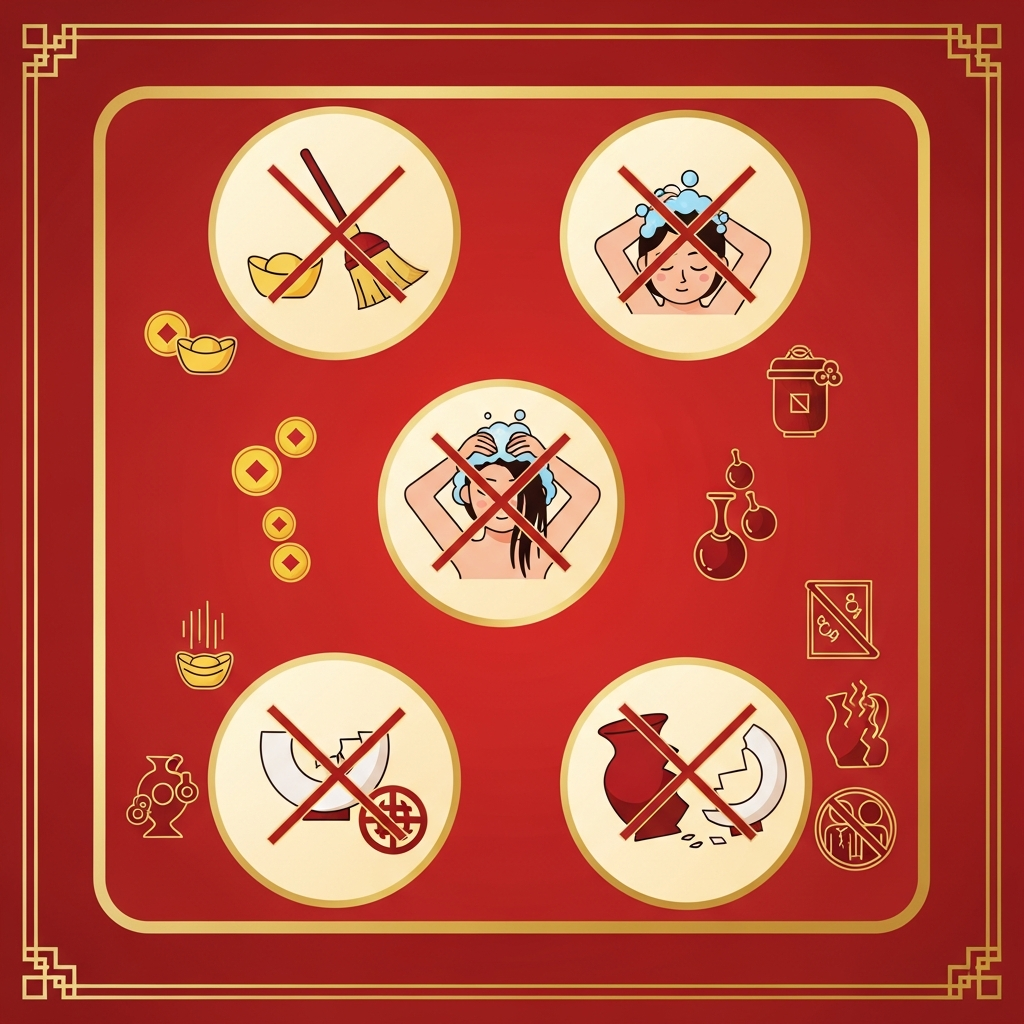
Chinese New Year taboos stem from beliefs about what actions might affect luck in the coming year. Understanding what not to do during Chinese New Year helps guests avoid unintentional offense:
- No sweeping on New Year's Day: Sweeping is believed to sweep away good fortune that has entered your home.
- Avoid washing hair on the first day: Hair in Chinese (fa) sounds like the word for prosperity, so washing it away symbolizes washing away wealth.
- Do not use sharp objects: Scissors and knives might "cut off" good luck or sever positive relationships.
- Avoid breaking things: Broken dishes or glasses signal broken relationships. If something breaks accidentally, say "suisui ping'an" (peace year after year), which sounds like "breaking breaking peace."
- No negative words: Avoid mentioning death, illness, poverty, or anything negative during the festival period.
- Do not cry: Crying on New Year's Day is thought to bring sadness throughout the year.
Unlucky Numbers, Colors, and Actions to Avoid
Numbers carry significant weight in Chinese culture. The number 4 is considered deeply unlucky because it sounds like the word for death. Avoid giving gifts in quantities of four or including the digit in red envelope amounts. Conversely, 8 represents prosperity and good fortune, making amounts like 88 or 888 particularly auspicious.
Colors also matter during Chinese New Year. White and black are associated with mourning and funerals, making them inappropriate for New Year celebrations. Wearing these colors, particularly to reunion dinners or family visits, may be seen as inauspicious. Red, gold, and bright colors are always welcome.
Regional Variations in Taboos and Customs
Chinese New Year traditions vary across regions. Northern Chinese communities may emphasize certain superstitions differently than southern provinces. Hong Kong, Taiwan, and overseas Chinese communities have developed their own variations based on local influences and diaspora experiences.
For example, some regions consider lending money during the festival period to be unlucky, while others focus more on avoiding specific foods. The key is approaching these customs with respect and openness, recognizing that regional differences reflect the rich diversity within Chinese culture.
Frequently Asked Questions About Spring Festival Traditions
What are the main traditions of Chinese New Year?
The main Chinese New Year traditions include spring cleaning before the festival, decorating with red lanterns and couplets, enjoying a reunion dinner with family, exchanging red envelopes (hongbao), wearing new clothes, visiting relatives, watching lion and dragon dances, and celebrating the Lantern Festival. Each tradition carries symbolic meaning for good fortune and prosperity in the coming year.
How long does the Spring Festival last?
The Spring Festival celebration lasts 15 days, starting from Chinese New Year's Eve and ending on the Lantern Festival (Yuanxiao). The first five days are considered the most important, with New Year's Eve and New Year's Day being the peak of celebrations. Many businesses remain closed for at least the first week of festivities.
Why is red important in Chinese New Year?
Red symbolizes good luck, prosperity, and happiness in Chinese culture. According to the legend of Nian, the color red scared away the fearsome monster. Red is used in decorations, clothing, and red envelopes during Spring Festival to attract positive energy and ward off evil spirits for the coming year.
How much money should you put in a red envelope?
Red envelope amounts vary based on your relationship and financial situation. Common amounts include even numbers like 88, 168, or 888, as 8 represents prosperity. Avoid amounts containing 4 (associated with death). Parents typically give children 100-500, while young adults give elderly relatives 200-1000 based on cultural norms and personal circumstances.
What foods are considered lucky for Chinese New Year?
Lucky Chinese New Year foods include whole fish (symbolizing abundance), dumplings (wealth), spring rolls (prosperity), niangao rice cake (advancement), tangyuan (family unity), longevity noodles (long life), and whole chicken (family togetherness). Each dish's name or appearance represents specific blessings for the new year.
What should you not do during Chinese New Year?
Avoid sweeping floors on New Year's Day (sweeps away luck), washing hair on the first day (washes away fortune), using sharp objects (cuts luck), breaking dishes (bad omen), saying negative words, wearing white or black, and giving inappropriate gifts like clocks or sharp objects. These taboos help protect good fortune.
What year is 2026 in the Chinese zodiac?
2026 is the Year of the Horse in the Chinese zodiac. Specifically, it is a Fire Horse year. Chinese New Year 2026 begins on February 17, 2026, and ends with the Lantern Festival on March 3, 2026. People born in Horse years include those born in 1942, 1954, 1966, 1978, 1990, 2002, and 2014.
Can non-Chinese people celebrate Chinese New Year?
Absolutely. Chinese New Year celebrations welcome everyone interested in experiencing the culture. You can participate by attending local Chinatown events, enjoying traditional foods at restaurants, decorating with red lanterns, learning greetings like "Gong Xi Fa Cai," and respecting customs. Many communities host public festivals open to all backgrounds.
Embrace Spring Festival Traditions with Your Family
The fifteen Spring Festival traditions we have explored reveal a celebration built on core values: family togetherness, respect for ancestors, hope for prosperity, and the renewal that comes with each new year. From the thorough spring cleaning that clears space for fresh opportunities to the final lanterns of Yuanxiao, each custom connects participants to centuries of cultural heritage.
Whether your family has celebrated Chinese New Year for generations or you are just beginning to explore these traditions, there is room at the table for everyone. The beauty of Lunar New Year customs lies in their adaptability, with families worldwide creating their own interpretations while honoring the essential spirit of renewal and connection.
Ready to celebrate Spring Festival with your family? Start a new tradition this year by gathering for a reunion dinner, exchanging heartfelt greetings, and creating matching family moments. Browse the matching family outfits collection at PatPat to dress your family in festive harmony.
Gong Xi Fa Cai - may prosperity, health, and happiness be with you and your loved ones in the Year of the Horse and beyond!





