


You finally get your baby to sleep, only to hear them fussing minutes later. The culprit? Those adorable pajamas are riding up, leaving red marks on their thighs, or restricting their natural sleep movements. Sound familiar?
When shopping for baby sleepwear, most parents focus on cute patterns, the right size, or finding a good price. But there is one feature that affects your baby's comfort more than any other, and it often gets overlooked entirely: stretch. Stretchy baby pajamas can mean the difference between peaceful nights and constant wake-ups, between quick diaper changes and wrestling matches at 3 AM.
Here at PatPat, we understand that sleep is precious for both babies and exhausted parents. That is why we are diving deep into why stretch matters so much in baby sleepwear. By the time you finish reading, you will know exactly what to look for to find the best baby pajamas for your little one, how stretchy fabrics improve sleep quality, and which materials offer the optimal combination of comfort and flexibility.
Why Stretch Matters More Than Size Labels
Here is something most parents learn the hard way: size labels only tell part of the story. A pair of pajamas labeled "6-month" that lacks stretch fits completely differently than one with excellent four-way stretch. And when your baby is between sizes or has a growth spurt overnight, that difference becomes enormous.
Why do baby pajamas need stretch? Baby pajamas need stretch for five essential reasons: (1) Comfort, which allows natural movement during sleep without restriction; (2) Growth accommodation, as stretchy fabrics extend the wearable life of each size by 30-50%; (3) Easy dressing, simplifying getting pajamas on a squirmy baby; (4) Quick diaper changes, with flexible fabric making nighttime changes faster; and (5) Safe snug fit, providing the CPSC-required close fit without constricting circulation or movement.
According to Stanford Children's Health, babies can grow over 1 inch each month during their first three months of life. That is a lot of growth happening while you sleep! Growth accommodating pajamas with quality stretch can adapt to these spurts, extending each size by weeks rather than days.
Body proportions also vary wildly between babies. Some have chunky thighs and shorter torsos, while others are long and lean. Snug fit baby pajamas with four-way stretch work for all body types because the fabric moves in every direction, not just horizontally. This means fewer pajamas sitting unworn in the drawer because they do not quite fit right.
How Stretchy Fabrics Transform Your Baby's Sleep Quality
Sleep is everything when you have a baby. Restrictive clothing is a common but often unrecognized sleep disruptor that stretchy baby pajamas can solve.
Freedom of Movement for Active Sleepers
Babies naturally move through sleep cycles, cycling their legs and shifting positions. Comfortable baby pajamas with excellent stretch allow this natural movement without waking them. That classic frog-leg sleeping position babies love requires flexibility in the hip and leg areas, and pajamas without adequate stretch force babies out of this natural posture. The best baby pajamas 2026 parents are choosing feature excellent stretch recovery.
Temperature Regulation and Breathability
Stretchy natural fabrics actually regulate temperature better than rigid alternatives. Bamboo baby pajamas and cotton-spandex blends have thermoregulating properties that help prevent overheating, a common cause of nighttime fussiness. Moisture-wicking stretch fabrics keep your baby dry, and when fabric can move and breathe, air circulates better for comfortable baby pajamas that support quality rest.

The Diaper Change Advantage Parents Love
Let us talk about the reality of parenting: midnight diaper changes happen. A lot. And the wrong pajamas can turn a quick two-minute change into a ten-minute ordeal with a now fully-awake, crying baby.
Stretchy baby pajamas make nighttime changes dramatically easier. When fabric has give, you are not fighting with snaps or wrestling legs through rigid openings. Combined with a two-way zipper that opens from the bottom, stretchy fabric allows you to change a diaper with minimal disruption to your sleepy baby.
Think about the difference between struggling with footed pajamas that have no give versus easily maneuvering stretchy alternatives. With quality stretch, the mythical "one-hand change" actually becomes possible. Quality baby pajamas designed with both stretch and practical two-way zipper closures make midnight changes dramatically easier for exhausted parents.
Best Stretchy Pajamas for Different Baby Body Types
Not all babies are built the same. Stretch is the great equalizer because it works for every body type.
Chunky Babies with Strong Thighs
Those adorable thigh rolls deserve celebration, not restriction. Stretchy baby pajamas that grow with baby accommodate those rolls without cutting off circulation. For rounder body types, look for four-way stretch, stretchy cuffs, and generous leg openings.
Tall, Long-Torsoed Babies
Length is often the first thing babies outgrow. Vertical stretch buys extra weeks of wear. For longer babies, footless stretchy options work best, and stretch in the torso area prevents riding up.
Average-Sized Babies
Even babies on the growth charts benefit from stretch during unpredictable growth spurts. Flexible fit gives you a margin of error when ordering between sizes.
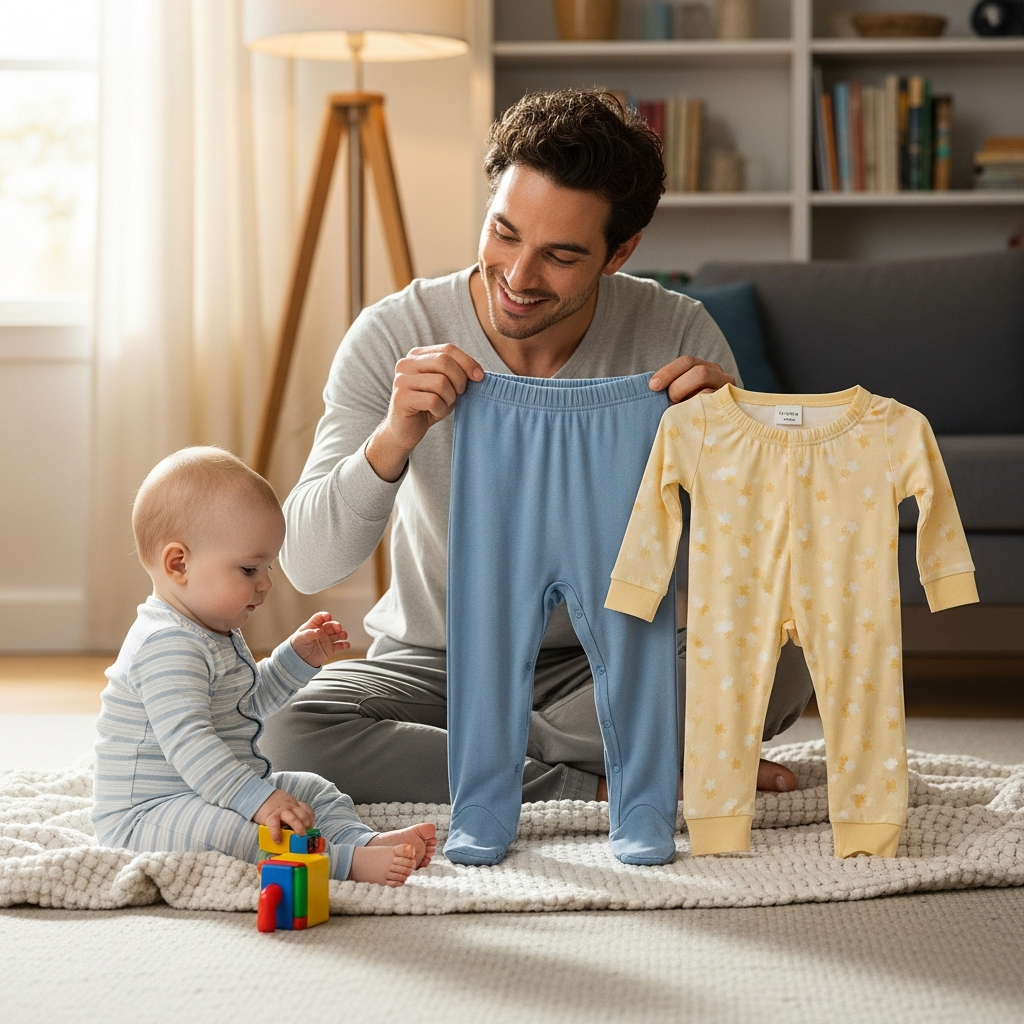
Bamboo vs. Cotton: Which Fabric Stretches Better?
Fabric choice determines stretch quality. Understanding the differences helps you make smarter sleepwear decisions.
Why Bamboo Viscose Offers Superior Stretch
Bamboo viscose has inherent elasticity that sets it apart. According to Fibre2Fashion, 100% bamboo yarns show elasticity of nearly 20% before spandex is added. Blending 95% bamboo with 5% spandex creates optimal stretch and recovery. Bamboo baby pajamas maintain stretch after repeated washing, plus offer hypoallergenic properties for sensitive skin. Explore bamboo baby clothes for that buttery-soft feel with built-in flexibility.
Cotton-Spandex Blends: A Reliable Alternative
Cotton-spandex blends (95/5 ratio) offer very good stretch at a more accessible price point. Ribbed cotton has moderate natural stretch suitable for cooler weather. While they perform well, cotton-spandex blends lack bamboo's temperature regulation.
Fabrics to Avoid
- 100% cotton without stretch: Becomes rigid, leaves marks
- Polyester fleece: Poor stretch, overheating risk
- Cheap synthetic blends: Lose stretch quickly
Fabric Comparison Chart
| Fabric Type | Stretch Level | Softness | Temperature Regulation | Best For |
|---|---|---|---|---|
| Bamboo Viscose + 5% Spandex | Excellent (4-way) | Ultra-soft | Excellent | All seasons, sensitive skin |
| Cotton + Spandex Blend | Very Good | Soft | Good | Budget-friendly option |
| 100% Cotton (Ribbed) | Moderate | Soft | Good | Cooler weather |
| 100% Organic Cotton | Limited | Very Soft | Moderate | Eco-conscious parents |
| Polyester Fleece | Poor | Varies | Poor | Not recommended |
Safety First: How Stretch Meets CPSC Snug-Fit Requirements
Safety is non-negotiable for baby sleepwear. Understanding why pajamas need to fit snugly explains why stretch is essential.
Why Baby Pajamas Must Be Snug-Fitting
According to CPSC regulations, children's sleepwear must either be snug-fitting or treated with flame-retardant chemicals. Most parents prefer snug-fitting pajamas from natural fabrics to avoid chemical treatments. Loose pajamas pose safety risks: they can ride up, cover a baby's face, or catch on crib components.
Stretch Enables Snug Without Restrictive
Snug does NOT mean tight or restrictive. Quality stretch fabrics provide the close fit safety requires while allowing freedom of movement. Think of it as the Goldilocks solution: snug fit baby pajamas with excellent stretch are snug enough for safety but flexible enough for comfort. This is why bamboo baby pajamas have become so popular. Look for OEKO-TEX certified pajamas to ensure fabric is free from harmful chemicals.
What to Look for When Buying Stretchy Baby Pajamas
Here is exactly what to look for when shopping for the best baby pajamas.
Key Features Checklist
- Fabric composition: Bamboo viscose with 5% spandex or cotton-spandex blends
- Four-way stretch: Fabric should move in all directions
- Stretchy cuffs: Flexible wrists and ankles, not tight elastic
- Two-way zipper: Combined with stretch for easy diaper access
- Flat seams: Prevent irritation on sensitive skin
- OEKO-TEX certification: Free from harmful chemicals
- Tag-free labels: No irritation when fabric moves
Testing Stretch Quality
- Pull and release test: Quality stretch snaps back immediately
- Check reviews: Look for mentions of stretch longevity after washing
- Warning signs: Fabric that stays stretched or loses shape
Browse baby clothes that combine all these essential features for your little one's comfort.
Making Stretchy Pajamas Last: Care Tips
The wrong washing habits can ruin stretch in just a few cycles. Here is how to protect your investment.
Quick Care Guide
- Wash in cold water: Heat damages elastic fibers
- Tumble dry low or air dry: High heat destroys stretch
- Skip fabric softener: Coats fibers and reduces flexibility
- Turn pajamas inside out: Protects exterior stretch
- Never bleach: Breaks down elastic fibers
Quality bamboo maintains stretch remarkably well when cared for properly.
Frequently Asked Questions About Stretchy Baby Pajamas
Should baby pajamas be tight or loose?
Baby pajamas should be snug-fitting but not tight. According to CPSC safety regulations, sleepwear must fit closely to avoid fire hazards, but this does not mean restrictive. The solution is stretchy fabrics like bamboo viscose with spandex that provide a close, safe fit while allowing complete freedom of movement and accommodating growth.
Why are baby pajamas so snug?
Baby pajamas are snug because federal safety regulations (CPSC) require children's sleepwear to either be snug-fitting OR treated with flame-retardant chemicals. Most parents prefer snug-fitting pajamas made from stretchy, natural fabrics to avoid chemical treatments. Stretchy fabrics make this snug fit comfortable rather than restrictive.
What is the best material for baby pajamas?
The best material for baby pajamas is bamboo viscose blended with 5% spandex. This combination offers superior four-way stretch, natural temperature regulation, hypoallergenic properties, and a buttery-soft feel. Cotton-spandex blends are also excellent, offering good stretch and breathability at a lower price point.
How do I know if baby pajamas fit correctly?
Properly fitting baby pajamas should be snug at the neck, wrists, and ankles without leaving red marks. You should be able to slide two fingers under the neckline. Baby should move freely in the natural frog-leg position. Stretchy fabric should bounce back when pulled, not stay stretched. Signs of poor fit include fabric bunching, restricting movement, or leaving marks.
Are stretchy pajamas better for babies?
Yes, stretchy pajamas are significantly better for babies. They allow natural movement during sleep, accommodate rapid growth spurts, make dressing and diaper changes easier, and provide the snug fit required for safety without restricting circulation or comfort. Quality stretchy pajamas also last longer as they adapt to your baby's changing size.
Do stretchy baby pajamas help with sleep?
Yes, stretchy baby pajamas directly improve sleep quality. Restrictive clothing is a common but overlooked cause of nighttime fussiness. Stretchy fabrics allow babies to move naturally through sleep cycles, maintain the comfortable frog-leg position, and prevent the discomfort that causes wake-ups. Parents often report better sleep after switching to quality stretchy sleepwear.
Are bamboo pajamas better than cotton for babies?
Bamboo pajamas are generally better than plain cotton for babies due to superior natural stretch, better temperature regulation (cooler in summer, warmer in winter), enhanced moisture-wicking, hypoallergenic properties, and exceptional softness. Cotton-spandex blends offer similar stretch benefits at a lower cost but lack bamboo's thermoregulating advantages.
What percentage of spandex is best for baby pajamas?
5% spandex is the optimal percentage for baby pajamas. This ratio (95% bamboo or cotton, 5% spandex) provides excellent four-way stretch and recovery without compromising the natural fabric's breathability, softness, or temperature regulation. Lower percentages offer insufficient stretch; higher percentages can make fabric feel synthetic.
The Bottom Line on Stretchy Baby Pajamas
Stretch truly is the single most important feature to look for when choosing baby pajamas. It improves sleep by allowing natural movement, simplifies your life with easier dressing and diaper changes, and extends the wearable life of each garment through your baby's unpredictable growth spurts.
When shopping for the best baby pajamas 2026, remember that bamboo viscose with 5% spandex offers the best overall combination of stretch, softness, and temperature regulation. Cotton-spandex blends are an excellent budget-friendly alternative. And with proper care, washing cold and avoiding high heat, your quality stretchy baby pajamas will maintain their flexibility for months of comfortable wear.
You now have everything you need to make smarter sleepwear choices for your little one. It is a small feature that makes a surprisingly big difference in daily life. Your baby deserves comfortable, quality sleepwear, and PatPat is here to help you find it.
Ready to experience the difference stretchy baby pajamas make?
Explore quality options designed with your baby's comfort in mind at PatPat's baby pajamas collection.





