


Did you know that peas pack nearly 5 grams of protein per cup, making them one of the most nutrient-dense vegetables you can offer your baby? For parents starting their little one on solid foods, green pea baby food offers an exceptional combination of plant-based protein, iron, and essential vitamins that support rapid infant development.
Unlike many first foods that are primarily carbohydrate-based, pea puree for baby delivers a nutritional punch that rivals some protein-rich foods. You can make delicious homemade pea baby food using convenient frozen peas, which retain their nutritional value while saving you precious prep time. At PatPat, we understand that feeding your baby nutritious homemade food matters, which is why we have created this guide to help you master smooth, delicious pea puree your baby will love.
In this guide, you will discover why peas deserve a spot in your baby food rotation, how to achieve silky-smooth texture through proper straining, and creative combination recipes. Whether you are making your first batch or expanding your repertoire, this green pea baby food recipe guide has everything you need.
Why Peas Are a Protein and Iron Powerhouse for Babies
When it comes to iron rich baby food vegetables, peas stand out from the crowd. Most vegetables offer minimal protein, but peas break the mold with impressive nutritional credentials that make them perfect for growing babies.
Plant-Based Protein Content in Peas
Peas contain approximately 5 grams of protein per cup when cooked, placing them among the highest-protein vegetables available. This plant-based protein provides essential amino acids that support muscle development and tissue growth in your baby. For vegetarian and vegan families, pea baby food offers an excellent protein source that complements iron-fortified cereals for complete nutrition.
Iron and Folate for Healthy Development
The non-heme iron found in peas supports healthy blood cell production in developing infants. While plant-based iron absorbs differently than iron from animal sources, you can enhance iron absorption by pairing peas with vitamin C-rich foods. This simple strategy can significantly boost how much iron your baby actually absorbs from each serving.
Peas also deliver folate (vitamin B9), a crucial nutrient that supports brain and spine development. Research shows folate plays a vital role in neural tube formation and cognitive development, making peas an excellent choice for supporting your baby's growing brain.
- Calories: approximately 30
- Protein: 2g
- Iron: 0.6mg
- Fiber: 2g
- Folate: 12% Daily Value
- Vitamin C: 10% Daily Value
When Can Babies Start Eating Pea Puree
Timing matters when introducing pea baby food to your little one. Understanding developmental readiness helps ensure a positive feeding experience.
Readiness Signs for Starting Pea Puree
The American Academy of Pediatrics recommends starting solid foods at around 6 months when babies demonstrate specific developmental milestones. Look for these readiness signs:
- Baby can sit with support and hold head steady
- Shows interest in food when others eat
- Lost the tongue-thrust reflex (does not push food out)
- Can close lips around a spoon
- Opens mouth when food approaches
Stage 1 Pea Puree for Beginners
For peas for 6 month old baby feeding, start with a thin, completely smooth puree consistency. Offer peas alone first to identify any potential reactions. Follow the common practice of waiting 3-5 days before introducing new foods. As your baby develops eating skills, gradually thicken the texture to match their abilities.
Why Frozen Peas Are Ideal for Homemade Baby Food
Here is a secret that simplifies baby food preparation: frozen peas are often the better choice for making pea puree for baby. This might seem counterintuitive, but science supports it.
Nutritional Benefits of Flash-Frozen Peas
Research published in the Journal of Agricultural and Food Chemistry found that frozen vegetables retain nutrients comparable to, and sometimes higher than, fresh counterparts. Frozen peas are typically harvested at peak ripeness and flash-frozen within hours, locking in their nutritional value before any degradation occurs.
Fresh peas from the grocery store may have traveled thousands of miles and sat in storage for days before reaching your kitchen. During this time, nutrient levels gradually decline. Frozen peas skip this waiting period entirely.
Convenience for Busy Parents
For busy parents, frozen peas baby food recipe options offer unmatched convenience:
- No shelling or prep work needed
- Store in freezer for months until ready to use
- Cook small batches as needed
- Available year-round at consistent quality
- More affordable than fresh peas
- No preservatives in plain frozen peas
Look for:
- Plain frozen peas without added salt or seasonings
- Petite peas or sweet peas for sweeter flavor
- Bags without visible ice crystals
- Organic options if preferred
Avoid:
- Peas with added butter or sauce
- Products with added sodium
- Bags with clumped, icy peas
How to Make Smooth Pea Puree Step by Step
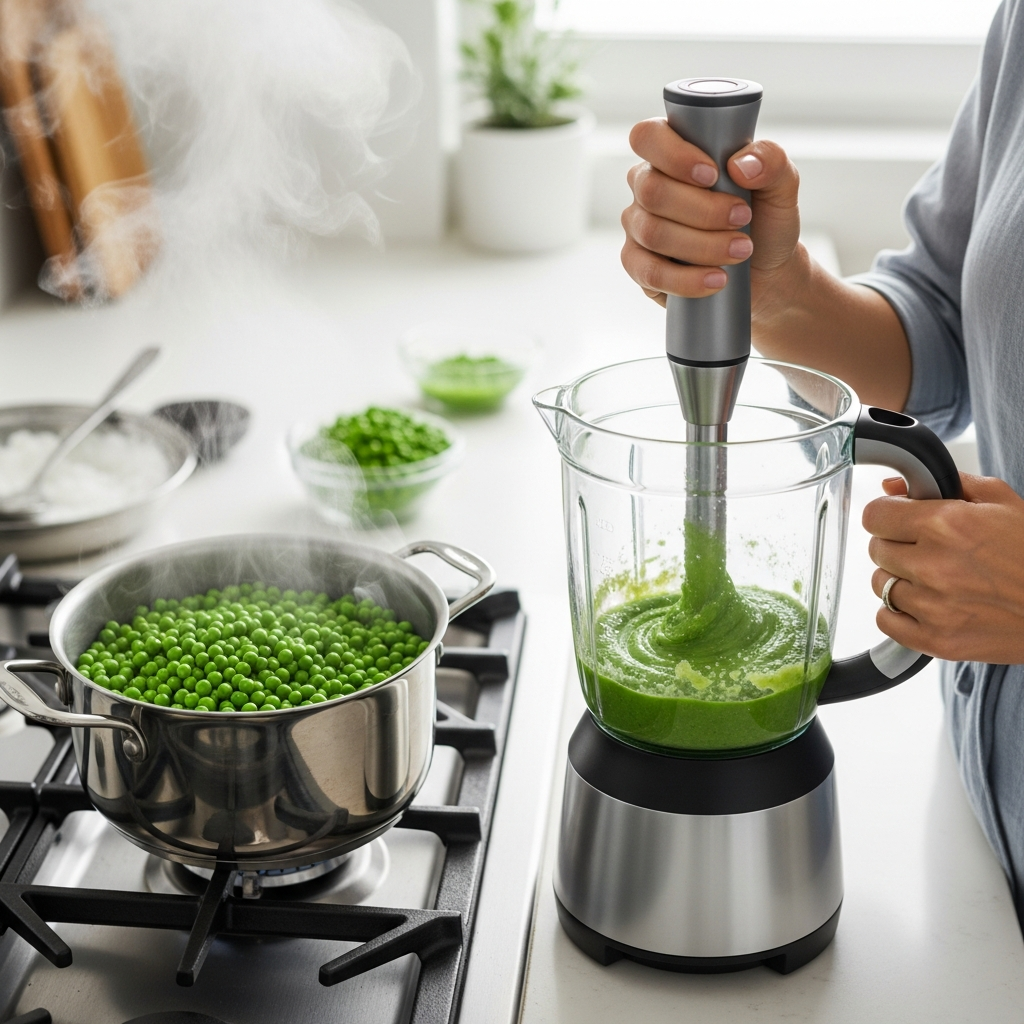
Creating silky smooth pea puree for baby requires attention to detail. Follow this green pea baby food recipe for perfect results every time.
- Prep Time: 5 minutes
- Cook Time: 5 minutes
- Straining Time: 5-10 minutes
- Total Time: 15-20 minutes
- Yield: 6-8 baby servings
- Age: 6+ months
Ingredients:
- 1 cup frozen peas (no salt added)
- 2-4 tablespoons breast milk, formula, or water
Step-by-Step Cooking Instructions
- Bring 2 inches of water to boil in a pot with steamer basket
- Add frozen peas directly to steamer basket (no thawing needed)
- Cover and steam for 3-5 minutes until bright green and tender
- Reserve 1/4 cup steaming water for blending
- Transfer peas to blender or food processor
- Add 2 tablespoons liquid
- Blend on high for 1-2 minutes
- Continue to straining step for smooth texture
Texture Guidelines by Age
| Age | Texture | Straining |
|---|---|---|
| 6 months (Stage 1) | Very thin, completely smooth | Required |
| 7-8 months (Stage 2) | Slightly thicker, still smooth | Recommended |
| 9-10 months | Can leave slightly textured | Optional |
| 11-12 months | Mashed or whole soft peas | Not needed |
How to Strain Pea Puree for Silky Smooth Texture
This step separates mediocre pea baby food from restaurant-quality puree. Many parents skip straining and wonder why their baby rejects the puree. Understanding how to strain pea puree for baby makes all the difference.
Why Pea Skins Require Straining
Pea skins do not break down completely, even with high-powered blending. These fibrous layers create grainy texture that babies often reject. Straining removes fibrous pieces while preserving nutrition, resulting in creamy puree that flows smoothly from the spoon.
Three Methods for Straining Pea Puree
Method 1: Fine Mesh Sieve (Recommended)
- Place fine mesh sieve over clean bowl
- Pour blended puree into sieve
- Use back of spoon or spatula to press puree through
- Scrape underside of sieve frequently to collect strained puree
- Discard skins remaining in sieve
Method 2: Food Mill
- Place food mill over bowl
- Add cooked peas directly (no need to blend first)
- Crank handle to push puree through while skins stay behind
- Excellent for large batches
Method 3: Cheesecloth
- Line colander with doubled cheesecloth
- Pour blended puree onto cheesecloth
- Gather edges and squeeze to extract smooth puree
- Most thorough method but most labor-intensive
- Work in small batches for easier straining
- Scrape bottom of sieve frequently
- Add liquid to puree if too thick to strain
- A little skin will not harm older babies (8+ months)
- Food mill provides fastest results for large batches

Delicious Pea Puree Combination Recipes
Once your baby tolerates plain pea puree, you can explore exciting combinations. These pairings enhance both flavor and nutrition while introducing new tastes.
Pea and Mint Puree (7+ Months)
Ingredients: 3/4 cup strained pea puree, 3-4 fresh mint leaves (finely minced)
Mint enhances the natural sweetness of peas while introducing your baby to herbs early. This classic pairing is gentle on digestion.
Pea and Zucchini Puree (7+ Months)
Ingredients: 1/2 cup strained pea puree, 1/2 cup steamed zucchini puree
Zucchini adds mild flavor and naturally smooth texture, delivering varied nutrition in an easy-to-digest blend.
Pea and Apple Puree (7+ Months)
Ingredients: 1/2 cup strained pea puree, 1/2 cup unsweetened applesauce
The vitamin C in apples helps your baby absorb more iron from the peas. Apple sweetness balances earthy pea flavor, making this popular with picky eaters.
Pea and Avocado Mash (8+ Months)
Ingredients: 1/2 cup strained pea puree, 1/4 ripe avocado (mashed)
Healthy fats from avocado support brain development. The creamy texture requires no cooking, saving you time.

Storing and Freezing Homemade Pea Baby Food
Proper storage preserves nutrition and saves time. Understanding how to store pea puree for baby ensures you always have healthy food ready.
Refrigerator Storage Guidelines
- Store in airtight containers
- Keeps fresh for 3-4 days maximum
- Keep in coldest part of refrigerator
- Label with preparation date
- Check for off-odors before each serving
Freezing Pea Puree for Meal Prep
- Pour cooled puree into ice cube trays
- Each cube equals approximately 1 ounce
- Freeze until solid (4-6 hours)
- Transfer frozen cubes to labeled freezer bags
- Store up to 3 months in freezer
- Squeeze out excess air from bags
Safe Thawing Methods
| Storage Method | Duration | Container |
|---|---|---|
| Refrigerator | 3-4 days | Airtight container |
| Freezer | 3 months | Ice cube trays, then bags |
| Thawed | 24 hours | Keep refrigerated |
| Room temperature | 2 hours maximum | Discard after |
Safety Tips and Common Concerns About Peas for Babies
Understanding safety considerations helps you feed your baby with confidence.
Are Peas a Choking Hazard?
Whole peas can pose a choking hazard due to their round shape. Pureed and strained peas are safe. For older babies (9+ months), smash each pea before serving. Never serve whole peas to babies under 12 months.
Pea Allergies and Legume Sensitivity
Pea allergies are relatively rare since peas belong to the legume family. Watch for rash, vomiting, swelling, or difficulty breathing. Wait 3-5 days after introducing peas before offering new foods.
Managing Gas and Digestive Discomfort
Peas may cause temporary gas due to fiber content. Start with 1-2 tablespoons and increase gradually. Straining removes some fiber, reducing gas potential.
Frequently Asked Questions
How Do I Make Pea Puree for My Baby?
Steam 1 cup frozen peas for 3-5 minutes until tender. Blend with 2-4 tablespoons breast milk, formula, or water until smooth. For silky texture, push puree through fine mesh sieve to remove skins. Cool to room temperature before serving. This recipe makes approximately 6-8 baby servings.
Can I Use Frozen Peas for Baby Food?
Yes, frozen peas are excellent for baby food. Flash-frozen at peak ripeness, they retain nutrients as well as or better than fresh peas. Choose plain frozen peas without added salt or seasonings. No thawing needed before cooking. Frozen peas offer year-round convenience and consistent quality.
Do I Need to Strain Pea Puree for Baby?
Straining is recommended for babies under 8 months. Pea skins do not fully break down when blended, creating grainy texture babies often reject. Push blended puree through fine mesh sieve using back of spoon. Older babies (8+ months) may tolerate unstrained puree with some texture.
Are Peas High in Iron for Babies?
Peas provide moderate iron content with approximately 1.2mg per half cup cooked. While not as high as meat, peas offer valuable plant-based iron for vegetarian babies. Pair peas with vitamin C-rich foods like sweet potato or apple to significantly enhance iron absorption.
When Can Babies Eat Peas?
Babies can eat pureed peas starting at 6 months when beginning solid foods. Ensure baby shows readiness signs: sitting with support, good head control, and interest in food. Start with thin, strained puree and gradually thicken texture as baby develops eating skills.
Do Peas Cause Gas in Babies?
Peas may cause temporary gas due to fiber content. Start with small portions (1-2 tablespoons) and increase gradually as baby's digestive system adjusts. Straining puree removes some fiber, reducing gas potential. Most babies tolerate peas well after the initial introduction period.
How Long Does Pea Puree Last in the Fridge?
Homemade pea puree lasts 3-4 days in the refrigerator when stored in an airtight container. For longer storage, freeze in ice cube trays for up to 3 months. Always label containers with the date, and discard any puree with off-odors or unusual appearance.
What Can I Mix With Pea Puree for Baby?
Popular pea puree combinations include mint (classic pairing), zucchini (mild vegetable blend), apple (sweet contrast that enhances iron absorption), and avocado (healthy fats for brain development). Introduce combinations after baby tolerates peas alone, typically around 7+ months for multi-ingredient purees.
Start Your Baby on Nutritious Pea Puree Today
Pea baby food offers exceptional nutrition that supports your baby's growth. With approximately 5 grams of protein per cup, plant-based iron, and brain-supporting folate, peas deserve a regular spot in your baby's meal rotation.
The convenience of frozen peas makes homemade pea puree accessible even for busy parents. Remember that proper straining transforms ordinary pea puree into silky-smooth baby food your little one will enjoy. Start with single-ingredient pea puree, then explore combinations as your baby's palate develops.
Every baby progresses at their own pace, so trust your instincts and follow your little one's cues. At PatPat, we celebrate parents who nourish their little ones with wholesome, homemade foods. Browse our collection of adorable feeding accessories to make mealtime even more enjoyable for your growing baby.




