


If the thought of introducing allergenic foods to your baby makes your heart race, you are not alone. For years, parents were told to delay peanuts, eggs, and other common allergens -- sometimes until age two or three. But the science has changed dramatically, and early allergen introduction is now what every major medical organization recommends. Here at PatPat, where we help families navigate every stage of babyhood, we want you to feel confident and informed as you take this important step.
The turning point came with the landmark LEAP study (Du Toit et al., 2015), which found that feeding peanut protein to high-risk babies starting between 4 and 11 months of age reduced peanut allergy by up to 81%. That single study reshaped how doctors think about food allergy prevention in babies. Today, both the American Academy of Pediatrics (AAP) and the American Academy of Allergy, Asthma and Immunology (AAAAI) endorse early introduction of all major allergens starting around 4 to 6 months.
This guide covers everything you need to know about when to introduce allergens to your baby: the top 9 allergens, a week-by-week allergen introduction schedule, preparation methods for each food, what to do if a reaction occurs, and special guidance for high-risk babies with eczema or family allergy history.
Why Doctors Now Recommend Early Allergen Introduction for Babies
For two decades, the standard advice was simple: keep allergenic foods away from babies. The AAP's year-2000 guidelines recommended delaying peanuts until age 3, eggs until age 2, and cow's milk products until age 1. It seemed logical -- why expose a tiny immune system to potential threats? But allergy rates kept climbing. Something was clearly wrong with the avoidance approach.
The LEAP Study That Changed Everything
The Learning Early About Peanut Allergy (LEAP) study, published in the New England Journal of Medicine in 2015, enrolled 640 high-risk infants in the United Kingdom -- babies who already had severe eczema, egg allergy, or both. Half were randomly assigned to eat peanut protein regularly starting between 4 and 11 months. The other half avoided peanut entirely.
The results were striking. By age 5, peanut allergy prevalence was 17.2% in the avoidance group compared to just 3.2% in the consumption group -- an 81% relative risk reduction. The follow-up LEAP-On study confirmed that this protection persisted even after a full year of peanut avoidance.
The EAT study (Perkin et al., 2016) extended this research to the general population, testing early introduction of six allergens. It found significant benefits for peanut and egg when families followed the protocol consistently.
The biological explanation is surprisingly straightforward. When a baby encounters food proteins through the gut (by eating), the immune system learns to recognize them as harmless -- a process called oral immune tolerance. Early, repeated oral exposure essentially trains the immune system to stand down rather than launch an allergic attack.
What the AAP and AAAAI Now Recommend
Today's guidelines represent a complete reversal from 25 years ago. The AAP now advises introducing allergenic foods alongside other complementary foods around 4 to 6 months -- not delaying them. The AAAAI and ACAAI jointly endorse early peanut introduction for high-risk infants. And the National Institute of Allergy and Infectious Diseases (NIAID) released specific addendum guidelines urging early peanut introduction based on each infant's risk level.
The message is clear: delaying allergenic foods is no longer recommended and may actually increase your baby's allergy risk.
What Are the Top 9 Allergens to Introduce to Babies?
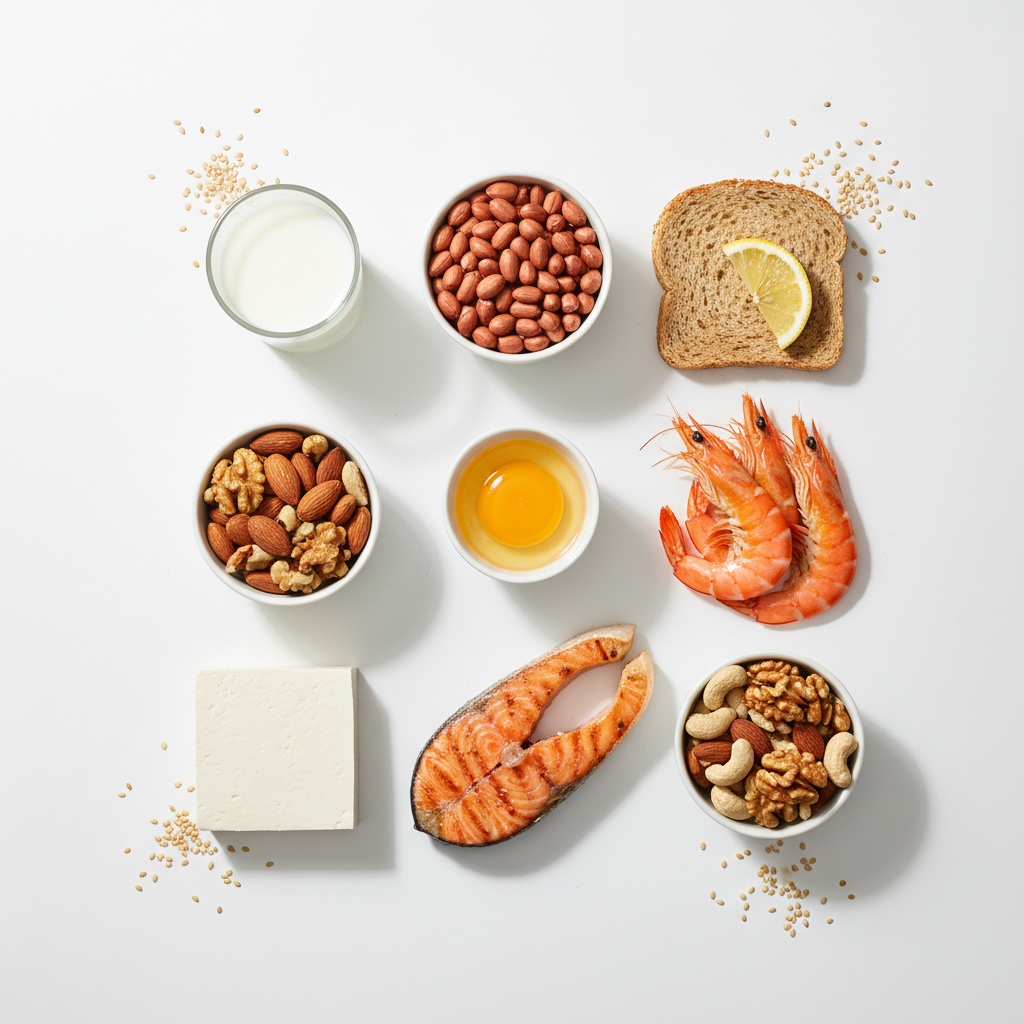
The Complete List of Top 9 Allergens
The Food Allergen Labeling and Consumer Protection Act (FALCPA), updated in 2023, recognizes nine major food allergens:
- Peanuts
- Tree nuts (almonds, cashews, walnuts, pecans, pistachios)
- Cow's milk (dairy)
- Eggs
- Wheat
- Soy
- Fish (salmon, cod, etc.)
- Shellfish (shrimp, crab, lobster)
- Sesame
Note that sesame was added as the 9th allergen in January 2023. Many older resources still reference only the "top 8." Peanut and tree nut allergies affect roughly 2-3% of U.S. children, while cow's milk and egg allergies are the most common in infants but are often outgrown by school age.
Which Allergens to Prioritize First
Peanut and egg have the strongest evidence base supporting early introduction benefits. Start with these two, along with dairy, since they have the highest prevalence and the most research behind them. For the remaining allergens -- tree nuts, sesame, wheat, soy, fish, and shellfish -- there is no strict medical order. Introduce them based on your family's diet, cultural food traditions, and personal convenience. The goal is to have all nine introduced by 12 months of age.
How to Introduce Each Allergen to Your Baby Safely
This section gives you specific, practical preparation methods for how to introduce allergens to your baby. Keep these principles in mind for every allergen: start with a small taste, wait 10 minutes before offering more, introduce new allergens at home (never at daycare or a restaurant), and do so during hours when medical help is available.
Peanut: How to Introduce Peanut Butter to Baby for the First Time
- Method 1 (Thinned peanut butter): Mix 2 teaspoons of smooth peanut butter with 2-3 teaspoons of warm water, breast milk, or formula. The consistency should be thin and runny. Offer a small amount on a spoon or stir into a familiar puree like banana or oatmeal.
- Method 2 (Peanut butter powder): Mix peanut butter powder (such as PB2) into purees or infant cereal. This is especially convenient for texture-sensitive babies.
- Method 3 (Bamba peanut puffs): These Israeli peanut snacks were used in the original LEAP study. Soften in breast milk or water for babies 4-6 months; older babies with a pincer grasp can eat them as-is.
- First exposure amount: Start with approximately 1/4 teaspoon of thinned peanut butter. If no reaction after 10 minutes, offer the remaining portion.
Egg: How to Give Baby Egg for Allergen Introduction
- Hard-boiled egg: Mash the yolk and white together with a little breast milk or formula. For baby-led weaning, offer a strip of hard-boiled egg as a finger food.
- Scrambled egg: Cook thoroughly and cut into small, soft pieces. Suitable from 6 months.
- Baked egg: Egg baked into muffins or pancakes is less allergenic because heat breaks down certain proteins. Some babies who react to scrambled egg can tolerate baked egg.
A common question: should you introduce egg yolk before egg white? Current guidance says to introduce the whole egg together. The allergenic proteins are mainly in the white, and there is no benefit to delaying it separately.
Dairy, Tree Nuts, Sesame, and the Remaining Allergens
| Allergen | Best Forms for Babies | Key Notes |
|---|---|---|
| Cow's Milk / Dairy | Plain whole-milk yogurt, ricotta, cottage cheese | Do not offer cow's milk as a main drink before 12 months (nutrition concern, not allergy). Small amounts in food are fine. |
| Tree Nuts | Smooth almond, cashew, or walnut butter thinned with water; mixed into purees | Never offer whole or chopped nuts -- choking risk until age 4+. |
| Sesame | Tahini (thinned), hummus, sesame oil drizzled on food | Sesame is often overlooked in older guides. Tahini for babies is an easy first form. |
| Wheat | Infant cereal with wheat, soft-cooked pasta, thin toast strips | Often one of the easiest allergens to introduce through everyday family meals. |
| Soy | Soft or silken tofu cubes, mashed edamame, soy yogurt | Soy formula neither prevents nor causes soy allergy. |
| Fish | Soft-cooked, flaked salmon or cod with bones removed | Excellent source of omega-3s. Easy to add to family dinners. |
| Shellfish | Well-cooked shrimp, finely minced | Start with milder shellfish like shrimp. Discuss with your pediatrician if there is a strong family history of shellfish allergy. |
Allergen Introduction Schedule for Babies 4 to 12 Months
Many parents want a clear allergen introduction schedule to follow. The timeline below is a practical framework -- not a rigid medical protocol. Adjust it based on your pediatrician's guidance and your baby's readiness.
Sample Week-by-Week Allergen Introduction Timeline
| Week | New Allergen to Introduce | Maintenance (Continue From Prior Weeks) |
|---|---|---|
| Week 1-2 | Peanut (2-3 exposures per week) | -- |
| Week 2-3 | Egg (2-3 exposures per week) | Peanut |
| Week 3-4 | Dairy / Yogurt | Peanut, Egg |
| Week 4-5 | Tree Nuts (almond or cashew butter) | Peanut, Egg, Dairy |
| Week 5-6 | Sesame (tahini) | All prior allergens |
| Week 6-7 | Wheat (cereal or toast) | All prior allergens |
| Week 7-8 | Soy (tofu) | All prior allergens |
| Week 8-10 | Fish and Shellfish | All prior allergens |
The golden rule: introduce one new allergen at a time, then wait 2-3 days before trying the next one. This observation window helps you identify the cause if a reaction occurs. Once an allergen has been safely introduced, you can freely combine it with other tolerated foods.
How Often to Give Baby Allergens After Introducing (Maintenance Dosing)
Introduction is only half the equation. Maintaining regular exposure is just as important. After a successful first taste, continue offering each allergen 2-3 times per week. The LEAP study's maintenance protocol involved approximately 6 grams of peanut protein per week -- equivalent to roughly 4 teaspoons of peanut butter spread across the week.
"Do I really have to give peanut butter three times a week forever?" This is one of the most common questions parents ask. The answer: regular exposure during the first year of life is the critical window. After age 1, you can be more flexible as long as the food stays in your baby's regular diet. Here is a simple rotation that fits naturally into weekly meals:
- Monday: Peanut butter on toast strips
- Tuesday: Scrambled egg
- Wednesday: Yogurt with a drizzle of tahini
- Thursday: Oatmeal with almond butter
- Friday: Flaked salmon with soft pasta
By weaving allergens into your regular family meals, maintenance becomes second nature rather than a chore.

Introducing Allergens to Babies with Eczema or Family Allergy History
If your baby has eczema or if food allergies run in your family, you may feel extra anxious about starting allergens. Ironically, these are exactly the babies who stand to benefit the most from early allergen introduction.
Why Eczema Increases Food Allergy Risk: The Dual Exposure Hypothesis
The dual allergen exposure hypothesis explains the connection between eczema and food allergy. When a baby's skin barrier is compromised -- as it is with eczema -- food proteins from the environment (crumbs, oils, dust) can enter through broken skin and trigger an allergic immune response. This is called sensitization through the skin. In contrast, when those same food proteins enter through the gut (by eating), they promote tolerance.
This means a baby with untreated eczema who has never eaten peanut may become sensitized to peanut protein through skin exposure alone -- and then react the very first time they eat it. Early oral introduction essentially races to build tolerance before skin sensitization can take hold. The LEAP study enrolled babies with severe eczema specifically because they are the highest-risk population, and the protective effect of early introduction was most dramatic in this group.
Treating eczema aggressively with emollients and appropriate medical therapy is itself a form of allergy prevention, because it restores the skin barrier and reduces the chance of environmental sensitization.
When to See a Pediatric Allergist Before Starting Allergens
- Mild eczema, no other risk factors: Proceed with early allergen introduction at home. No allergy testing required beforehand.
- Moderate-to-severe eczema OR existing egg allergy: The NIAID guidelines recommend evaluation by a pediatric allergist, which may include skin prick testing or blood testing for peanut-specific IgE, before introducing peanut.
- Family history of food allergy but no eczema: Early introduction is still recommended. Family history alone does not require allergy testing, but discuss your plan with your pediatrician.
The key takeaway for high-risk babies: the goal is still early introduction, not avoidance. Testing helps determine whether introduction should happen in a supervised medical setting versus at home -- but the destination is the same.
Signs of an Allergic Reaction in Babies and What to Do
Knowing the signs of an allergic reaction in your baby after eating a new food is essential. Most reactions are mild and manageable, but you need to recognize the difference between a minor response and a medical emergency.
Mild Symptoms vs. Severe Allergic Reactions in Infants
| Mild Symptoms (Monitor Closely) | Severe Symptoms -- Call 911 Immediately |
|---|---|
| A few hives around the mouth, face, or body | Widespread hives covering large areas of the body |
| Mild redness or rash near the mouth | Swelling of the lips, tongue, or throat |
| Slight itchiness | Difficulty breathing, wheezing, or persistent coughing |
| Minor stomach discomfort or one episode of vomiting | Repeated vomiting combined with other symptoms |
| Loose stool | Lethargy, limpness, or loss of consciousness |
| -- | Pale or blue skin coloring |
Symptoms typically appear within minutes to 2 hours of eating. Anaphylaxis in babies during first-time food introduction at home is rare, but knowing what to watch for gives you the confidence to act quickly if needed.
Immediate Steps When Your Baby Has a Reaction
For mild reactions: Stop offering the food. Monitor your baby closely for 1-2 hours. Mild hives often resolve on their own. Contact your pediatrician to report the reaction and get guidance, which may include a supervised food challenge or allergy testing.
A few common confusion points worth clearing up:
- Baby vomiting after a new food is not always an allergy. It can be a normal gag reflex, texture aversion, or simply overeating.
- A rash only around the mouth from tomato or citrus is typically contact irritation, not an IgE-mediated food allergy.
- Eczema flares within 24-48 hours of a new food may suggest a non-IgE food sensitivity and warrant discussion with your pediatrician.
- FPIES awareness: Food Protein-Induced Enterocolitis Syndrome is a less common, non-IgE reaction causing severe, delayed vomiting 2-4 hours after eating. Common triggers include milk, soy, rice, and oats. It is rare but parents should know it exists.
Practical Tools and Products for Early Allergen Introduction
DIY Allergen Introduction vs. Commercial Allergen Kits
You have two main approaches to early allergen introduction: doing it yourself with whole foods from the grocery store, or using a commercial allergen introduction product.
The DIY approach uses everyday items: smooth peanut butter, eggs, yogurt, tahini, nut butters, tofu, fish, and wheat cereal. It is the most affordable method, integrates naturally into family meals, and gives you full control over ingredients. The preparation methods in this guide give you everything you need. The tradeoff is that it requires more planning.
Commercial options include products like SpoonfulONE (daily powder or puffs containing multiple allergens, roughly $30-50/month), Ready Set Food (graduated system starting with individual allergens), and Mission MightyMe (puffs with multiple allergens for self-feeding babies). These products are convenient shortcuts, especially for busy parents who feel overwhelmed. However, they are not medically necessary. You can achieve the same result with whole foods.
Consider keeping an allergen introduction tracker -- a simple food diary noting which allergens have been introduced, dates, amounts, and any reactions. Several free baby food tracking apps also offer this feature.
Tips for Introducing Allergens During Baby-Led Weaning
Baby-led weaning and allergen introduction are fully compatible. For BLW families, offer allergens through finger foods: soft-cooked egg strips, yogurt for dipping, thin peanut butter spread on banana or toast strips, and soft tofu cubes. The key is ensuring textures and sizes are age-appropriate.
If your baby attends daycare, always introduce each new allergen at home first -- ideally over a weekend -- before including it in daycare meals. Communicate clearly with caregivers about which allergens have been safely introduced.
Frequently Asked Questions About Introducing Allergens to Babies
When should I start introducing allergens to my baby?
Current AAP and AAAAI guidelines recommend introducing allergenic foods around 4 to 6 months of age, once your baby shows readiness signs: sitting with support, good head control, and interest in food. The LEAP study demonstrated that early introduction -- not delayed exposure -- significantly reduces allergy risk. Consult your pediatrician to confirm your baby is ready.
Can introducing allergens early actually prevent food allergies?
Yes. The LEAP study showed that early peanut introduction reduced peanut allergy by 81% in high-risk infants. The EAT study found similar benefits for egg. The scientific consensus is that early, regular oral exposure helps the immune system build tolerance to food proteins rather than launching an allergic response.
How long should I wait between introducing new allergens?
Wait 2 to 3 days between each new allergen to identify the source if a reaction occurs. Once a food has been introduced without any reaction, combine it freely with other previously tolerated foods. You do not need to wait weeks -- a 2-3 day observation window is sufficient.
Can I introduce multiple allergens at the same time?
Introduce one new allergen at a time for the initial exposure. Once each allergen has been individually introduced without a reaction, you can serve meals containing multiple previously tolerated allergens together. For example, a meal with egg, dairy, and wheat is fine once all three have been separately cleared.
What if my baby has eczema -- should I still introduce allergens early?
Absolutely. Babies with eczema benefit the most from early allergen introduction because they are at the highest risk for food allergies. For moderate-to-severe eczema, consult your pediatrician or allergist, who may recommend testing before peanut introduction. But the goal remains early introduction, not avoidance.
Does cooking change how allergenic a food is?
For some allergens, yes. Baking or extensively heating egg and milk can break down certain proteins, making them less likely to trigger reactions. Some babies who react to scrambled egg tolerate baked egg in muffins. However, peanut, tree nut, fish, and shellfish allergens are heat-stable and remain allergenic regardless of how you cook them.
Do I need to avoid allergens while breastfeeding?
No. Current evidence does not support maternal allergen avoidance during breastfeeding as a way to prevent food allergies. Some research actually suggests that eating allergenic foods while breastfeeding may help promote tolerance in your infant. Continue eating a varied diet unless your doctor advises otherwise.
Is it too late to introduce allergens if my baby is already past 12 months?
It is never too late. While the optimal window for allergy prevention is 4 to 12 months, introducing allergens after 12 months is still safe and recommended. The foods should become part of your child's regular diet. If your child is over 12 months and has not tried allergenic foods, consult your pediatrician for personalized guidance.
Your Next Steps: Making Early Allergen Introduction Simple
Introducing allergenic foods to your baby can feel overwhelming, but the science is reassuring. Early allergen introduction is one of the most evidence-backed strategies you have for protecting your child from food allergies. The LEAP study, AAP guidelines, and years of follow-up research all point in the same direction: start early, stay consistent, and keep allergens in the regular diet.
Here is your quick-start action plan:
- Talk to your pediatrician about when to introduce allergens to your baby, especially if your baby has eczema or a family history of allergies.
- Start with peanut and egg -- the allergens with the strongest research supporting early introduction.
- Follow the allergen introduction schedule in this guide, introducing one new allergen every 2-3 days.
- Maintain regular exposure (2-3 times per week) for each successfully introduced allergen.
- Know the signs of mild versus severe allergic reactions, and always introduce new foods at home.
At PatPat, we know every feeding milestone matters. Whether you are mixing thinned peanut butter into your baby's first oatmeal or watching them happily mash a piece of scrambled egg, you are giving them a healthier start. Explore more of our parenting guides for practical advice on every stage of your baby's first year.
Additional Resources
- AAP HealthyChildren.org -- Baby Feeding and Nutrition
- FARE (Food Allergy Research and Education) -- Allergy reaction guidance and emergency planning
- AAAAI -- Food Allergy Conditions and Treatment




