


Are you wondering how to give your baby the best nutritional start with their first foods? Carrot baby food stands out as one of the most popular and beloved first purees for good reason. With its naturally sweet taste and vibrant orange color, carrot puree for baby offers a gentle introduction to solid foods while delivering powerful nutrients your little one needs for healthy development.
Making homemade carrot baby food is simpler than you might think. In just 25 minutes, you can prepare a batch of fresh, nutritious puree that costs a fraction of store-bought jars. Better yet, you control exactly what goes into your baby's food.
This comprehensive guide covers everything you need to know about how to make carrot baby food at home. You will learn why carrots are a nutritional powerhouse, understand important safety considerations including nitrate concerns, master the steaming technique for maximum nutrient retention, and discover delicious flavor combinations your baby will love. Whether you are just starting solids or looking for new recipe ideas, PatPat has you covered with expert guidance for this feeding milestone.
Why Carrots Are an Ideal First Food for Your Baby
When it comes to introducing solids, few vegetables match the benefits that carrots offer growing babies. Beyond their appealing sweet flavor, carrots deliver essential nutrients that support critical developmental milestones during your baby's first year.
Beta-Carotene and Vitamin A Benefits for Infant Development
Carrots rank among nature's richest sources of beta-carotene, the plant pigment responsible for their signature orange hue. Your baby's body converts this beta-carotene into vitamin A, a nutrient essential for healthy development. According to NIH research, vitamin A serves as an essential component of rhodopsin, the light-sensitive protein in the retina that enables vision.
The numbers are impressive: a 100-gram serving of raw carrots provides approximately 8,285 micrograms of beta-carotene. This translates to roughly 835 micrograms of vitamin A in Retinol Activity Equivalents, which fulfills about 93% of the recommended daily value.
For infants specifically, the NIH recommends 400 mcg RAE daily for babies 0-6 months and 500 mcg RAE for babies 7-12 months. A small serving of carrot puree helps your baby meet these needs while supporting:
- Healthy vision development during this critical growth period
- Immune system function to help fight infections
- Cellular communication and tissue growth
- Antioxidant protection for developing cells
Additional Nutrients in Carrots for Growing Babies
Beyond vitamin A, carrots provide a range of supporting nutrients. The fiber content promotes healthy digestion, which becomes especially important as your baby transitions to solid foods. Carrots also contain vitamin C, which enhances iron absorption when paired with iron-rich foods like meat or fortified cereals.
Other beneficial nutrients include potassium for heart function, vitamin K1 for bone health, and various B vitamins. The natural sweetness of carrots makes them appealing to babies who are naturally drawn to sweet flavors. Additionally, carrots are considered a low-allergen food and rarely cause allergic reactions, making them a safe early choice.
When Can Babies Eat Carrots and How to Know They Are Ready
Timing matters when introducing any new food to your baby. Understanding developmental readiness helps ensure a positive experience with carrot puree.
Signs Your Baby Is Ready for Carrot Puree Around 6 Months
The CDC recommends introducing solid foods at about 6 months old. The AAP also supports this timeline, noting that introducing foods before 4 months is not recommended.
Watch for these developmental readiness signs:
- Can sit upright with minimal support
- Has good head and neck control
- Opens mouth when food is offered
- Swallows food rather than pushing it back out (loss of tongue-thrust reflex)
- Shows interest in food by watching you eat or reaching for your plate
- Can bring objects to mouth and grasp small items
According to AAP guidelines, babies are generally ready when they have doubled their birth weight, typically around 4 months, and weigh about 13 pounds or more. However, most experts recommend waiting until closer to 6 months.
Age-Appropriate Textures from First Taste to Toddlerhood
As your baby grows, carrot preparation should evolve:
| Age | Texture | Preparation |
|---|---|---|
| 6-7 months | Thin, smooth puree (Stage 1) | Blend until completely smooth |
| 7-8 months | Slightly thicker puree (Stage 2) | Blend with less liquid |
| 8-10 months | Mashed or finely chopped | Fork-mash soft cooked pieces |
| 10-12 months | Soft finger foods | Small, soft cubes |
Understanding Nitrate Safety in Homemade Carrot Baby Food
If you have researched making carrot puree at home, you have likely encountered warnings about nitrates. Let us separate fact from fiction so you can make informed decisions.
What Are Nitrates and Why Do Parents Worry About Them
Nitrates are naturally occurring compounds found in soil that root vegetables like carrots absorb as they grow. According to Nationwide Children's Hospital, vegetables with higher nitrate levels include carrots, beets, squash, spinach, and green beans.
The concern stems from a rare condition called methemoglobinemia, sometimes called "blue baby syndrome." In this condition, nitrates can affect hemoglobin's ability to carry oxygen. However, understanding the actual risk level puts these concerns into proper perspective.
Homemade vs Commercial Baby Food: Which Is Safer?
Here is what the research actually shows: Dr. Greene's research reveals only one reported case of nitrate-related illness from home-prepared vegetables occurred in the U.S., documented in 1973 involving concentrated carrot juice rather than whole food puree.
The actual primary risk factor? Methemoglobinemia in babies is almost always caused by drinking infant formula made with nitrate-contaminated well water, not homemade baby food.
Commercial baby food companies do test for nitrate levels and source ingredients accordingly. However, the AAP has revised earlier positions and no longer recommends avoiding homemade root vegetable purees for babies over 6 months. Both homemade and commercial options are valid choices depending on your family's preferences.
Best Practices to Minimize Nitrate Exposure
Follow these guidelines for safe homemade carrot baby food:
- Wait until baby is at least 6 months old before introducing carrots
- Choose fresh, high-quality carrots (organic when possible)
- Use carrots within 1-2 days of purchase or freeze puree immediately after cooking
- If boiling, do not use the cooking water for thinning puree
- Store homemade puree properly: refrigerate up to 3 days or freeze for longer storage
- Rotate vegetables rather than serving carrots daily
- If using well water, have it tested for nitrate levels
How to Make Steamed Carrot Baby Food Step by Step
Steaming preserves the most nutrients while creating perfectly soft carrots for blending. Here is your complete guide to making carrot baby food at home.
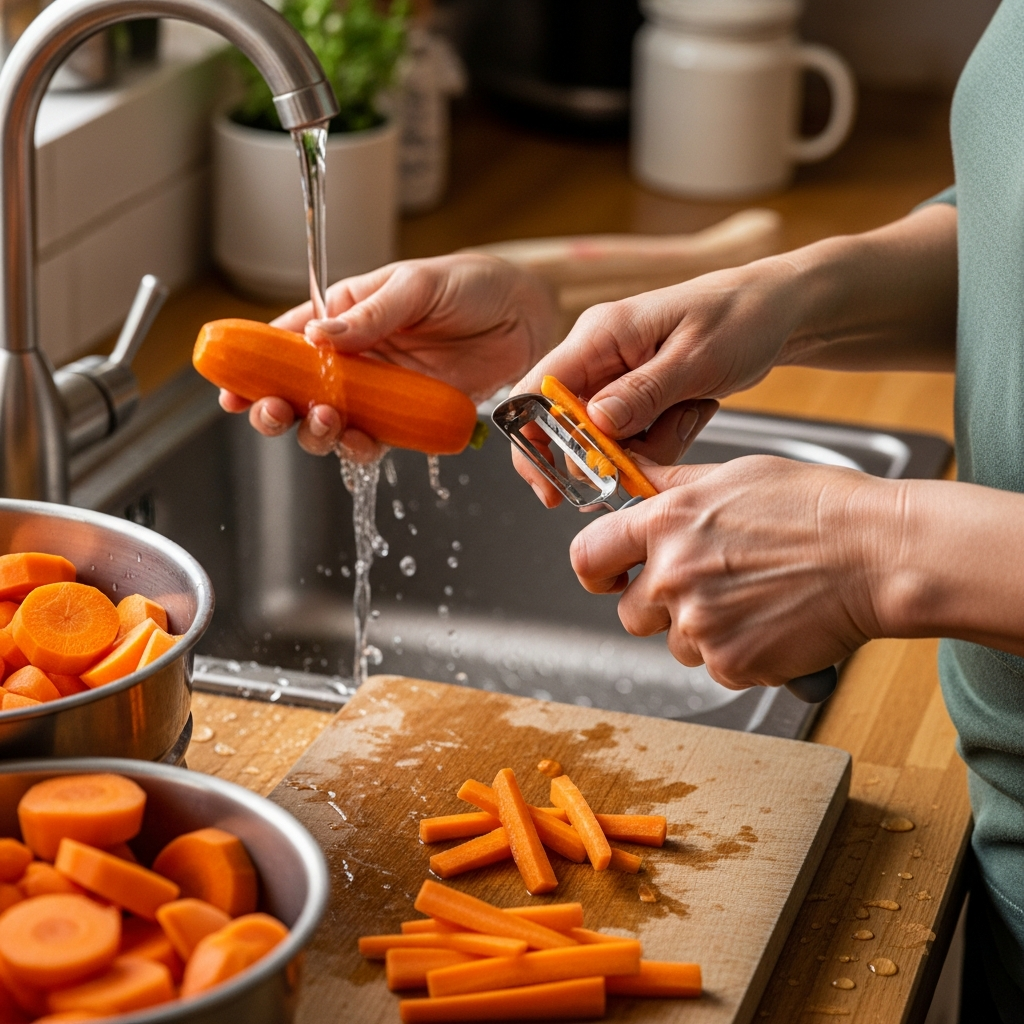
Ingredients and Kitchen Equipment You Will Need
Ingredients:
- 1 pound fresh carrots (about 6 medium)
- Water for steaming
- 2-4 tablespoons breast milk, formula, or water for thinning (optional)
Equipment:
- Vegetable peeler
- Sharp knife and cutting board
- Steamer basket or pot with steamer insert
- Blender, food processor, or immersion blender
- Ice cube trays or baby food storage containers
Steaming Carrots for Maximum Nutrient Retention
Why choose steaming? Research shows steaming retains up to 25% more vitamins than boiling because nutrients stay in the vegetable rather than leaching into water. Cooking actually helps break down carrot cell walls to release beta-carotene, making it more available for absorption.
Steamed Carrot Baby Food Recipe
Prep Time: 10 minutes | Cook Time: 15 minutes | Total: 25 minutes
Yield: Approximately 2 cups puree (16 one-ounce servings)
Step-by-Step Instructions:
- Wash and peel: Scrub carrots under running water, then peel thoroughly to remove potential pesticide residue and dirt.
- Cut uniformly: Slice carrots into 1/2-inch rounds or chunks for even cooking.
- Prepare steamer: Fill pot with 1-2 inches of water. Water should not touch the steamer basket.
- Heat water: Bring to a rolling boil over high heat.
- Steam carrots: Place carrots in basket, cover with lid, and steam for 10-15 minutes.
- Test doneness: Pierce with a fork. Carrots should be very soft with no resistance.
- Cool briefly: Let carrots cool for 2-3 minutes before blending.
- Blend smooth: Transfer to blender and puree until completely smooth.
Steaming Time Guide:
- Thin slices: 10-12 minutes
- Thick chunks: 15-18 minutes
- Whole baby carrots: 12-15 minutes
Blending to the Perfect Consistency for Your Baby's Stage
Transfer steamed carrots to your blender while still warm for the smoothest results. For Stage 1 puree, add 2-4 tablespoons of liquid per cup of carrots and blend on high for 1-2 minutes.
Liquid options for thinning:
- Breast milk: Adds familiar flavor and extra nutrition
- Formula: Maintains nutritional consistency
- Reserved steaming liquid: Contains some nutrients
- Plain water: Simple, neutral option
For older babies, blend less to leave some texture. Always taste-test the temperature before serving to ensure it is lukewarm, not hot.
Alternative Cooking Methods for Carrot Baby Food
While steaming is optimal, other methods work well depending on your time and flavor preferences.
Boiling Method and When to Use It
Boiling takes less attention than steaming and works when you need speed. Bring a pot of water to boil, add carrot pieces, and cook 15-20 minutes until soft. Important: do not use the cooking water for thinning puree, as nitrates can concentrate there.
Roasting for Enhanced Natural Sweetness
Roasting caramelizes carrots' natural sugars, creating a sweeter flavor that appeals to picky eaters. Preheat oven to 400 degrees Fahrenheit, toss carrot pieces with a tiny amount of olive oil, and roast 25-35 minutes. You may need extra liquid when blending roasted carrots.
Comparing Cooking Methods
| Method | Nutrient Retention | Time | Flavor | Best For |
|---|---|---|---|---|
| Steaming | Highest (90%+) | 15 min | Mild, natural | Everyday use, Stage 1 |
| Boiling | Moderate (70%) | 20 min | Mild | Quick preparation |
| Roasting | High (85%) | 35 min | Sweet, rich | Picky eaters, combinations |
Delicious Carrot Baby Food Combinations Your Baby Will Love
Once your baby tolerates plain carrot puree, combining with other foods adds variety and nutritional benefits.

Carrot and Apple Puree
This classic sweet combination delights most babies. Apples add vitamin C, which enhances iron absorption when paired with iron-rich foods. Use a 2:1 ratio of carrot to apple. Steam carrots first since they take longer, then add apple chunks for the last 5 minutes.
Carrot and Sweet Potato Puree
Double your beta-carotene boost with this vitamin A powerhouse combination. Both vegetables share similar cooking times, so steam them together. The naturally sweet, creamy texture appeals to babies, and the rich orange color makes mealtimes visually engaging.
Savory Carrot Combinations for Adventurous Palates
For babies 8 months and older, consider these options:
- Carrot and pear with ginger: Warming and aromatic
- Carrot and lentils: Adds plant-based protein and iron
- Carrot and chicken: Complete meal with protein
- Carrot and zucchini: Lighter summer combination
For babies 8+ months, consider adding mild spices like cinnamon, nutmeg, ginger, or cumin to introduce diverse flavors early.
Carrot Baby Led Weaning Guide for Self-Feeding Babies
Baby led weaning allows babies to feed themselves soft finger foods. Carrots require special preparation to ensure safety.
Preparing Safe Carrot Sticks for Baby Led Weaning
Critical safety note: Raw carrots are a choking hazard. Always cook carrots until very soft for baby led weaning. Test by squishing between your fingers; the carrot should compress easily.
Cut cooked carrots into finger-length sticks, approximately 2 inches long and 1/2 inch wide. This size allows babies to grasp with their whole hand while chewing the exposed end.
Age-Appropriate Serving Sizes and Cutting Techniques
- 6-8 months: Long sticks for palmar grasp
- 8-10 months: Shorter sticks as pincer grasp develops
- 10-12 months: Small cubes (1/4 inch) for pincer grasp practice
Safety reminders: Always supervise during meals. Have baby seated upright in a highchair. Never offer raw carrots until your child has molars and can chew effectively, typically around age 4.
Storing and Freezing Carrot Baby Food for Busy Parents
Batch cooking saves time while ensuring you always have nutritious options available.
Refrigerator Storage Guidelines
Transfer cooled puree to airtight containers immediately. Store in the refrigerator at 40 degrees Fahrenheit or below and use within 3 days. Always label containers with the preparation date. Discard any puree that has been touched by a used feeding spoon to prevent bacterial growth.
Freezing Carrot Puree for Long-Term Meal Prep
Freezing extends shelf life to 3 months while preserving nutrients. The ice cube tray method works perfectly:
- Pour puree into ice cube trays
- Freeze until solid (4-6 hours)
- Pop cubes out and transfer to freezer bags
- Label with contents and date
Each cube equals approximately 1 ounce, making portion control simple. Silicone trays release cubes more easily than rigid plastic.
Thawing options:
- Refrigerator overnight (safest method)
- Warm water bath for quick thawing
- Microwave in 15-second intervals, stirring between (check for hot spots)
Never refreeze thawed puree.
Frequently Asked Questions About Carrot Baby Food
Do I need to peel carrots for baby food?
Yes, peeling is recommended. Carrot skin can contain pesticide residue, dirt, and bacteria that washing alone may not fully remove. Peeling also creates a smoother puree texture. Even with organic carrots, peeling produces the best consistency for baby food.
Can I use frozen carrots to make baby food?
Absolutely. Frozen carrots are picked and flash-frozen at peak ripeness, often retaining nutrients comparable to fresh. Steam or boil them directly from frozen, adding 2-3 extra minutes to cooking time. Just avoid frozen carrots with added salt or seasonings.
What if my baby refuses to eat carrot puree?
Patience is key. Research shows babies may need 10-15 exposures before accepting a new food. Try mixing carrots with familiar foods, offering at different times when baby is hungrier, adjusting the texture, or trying roasted carrots for sweeter flavor. Never force feed. Take a break and try again later.
Is orange poop normal after eating carrots?
Yes, completely normal. Beta-carotene passes through the digestive system and can tint stool orange or yellow-orange. This harmless color change indicates your baby is digesting carrots properly and will return to normal once carrots clear their system.
Can I add breast milk or formula to carrot puree?
Yes, this is an excellent strategy. Adding breast milk or formula thins the puree while providing familiar flavor that eases the transition to solids. Add 1-2 tablespoons at a time until you reach the desired consistency. Note that puree containing breast milk or formula should be used within 24 hours and cannot be refrozen.
Are carrots allergenic for babies?
Carrots are considered low-allergen and rarely cause reactions. They are not among the top 9 allergens. However, babies with birch pollen allergies may occasionally experience oral allergy syndrome. Watch for symptoms like rash, swelling, or vomiting and contact your pediatrician with any concerns.
How much carrot puree should I feed my baby?
Start with 1-2 teaspoons for initial tastes, gradually increasing to 2-4 tablespoons per meal as interest grows. By 8-9 months, babies may eat 4-6 tablespoons of vegetables daily across meals. Let your baby's hunger cues guide portions. Remember that breast milk or formula remains the primary nutrition source until age 1.
When can my baby eat raw carrots?
Raw carrots pose a choking hazard and should wait until your child can chew thoroughly, typically around age 4 when they have a full set of molars. Until then, always cook carrots until soft enough to mash with gentle pressure. Finely shredded raw carrots may be introduced around ages 2-3 with close supervision.
Ready to Start Your Baby's Solid Food Journey?
PatPat offers adorable bibs, feeding sets, and mealtime essentials to make introducing solids fun and mess-free. Explore our collection of baby feeding products designed with both style and function in mind.
Final Thoughts on Making Nutritious Carrot Baby Food
Creating homemade carrot baby food gives you control over your little one's nutrition while saving money and avoiding unnecessary additives. The vitamin A from beta-carotene supports your baby's developing vision and immune system, making this simple orange puree a powerful first food choice.
Remember the key steps: choose fresh carrots, steam for maximum nutrients, blend to the appropriate consistency for your baby's stage, and store safely. Whether served as a smooth Stage 1 puree, combined with fruits like apple or sweet potato, or prepared as soft finger foods for baby led weaning, carrots offer versatility that grows with your baby.
The nitrate concerns you may have heard about are largely outdated. For healthy babies 6 months and older, homemade carrot puree prepared following basic food safety guidelines is both safe and nutritious. Trust your instincts, follow the guidance in this article, and enjoy watching your baby discover the delicious taste of carrots.
PatPat wishes you and your little one happy, healthy mealtimes as you explore the world of solid foods together. Your baby's feeding journey is just beginning, and nutritious homemade carrot baby food is a wonderful place to start.




