


Are you standing in your kitchen, wondering which vegetable to offer your baby first? You are not alone. Starting solids is one of the most exciting milestones in your baby's first year, and choosing the best first vegetables for baby can feel overwhelming when you want to get it right.
Here is the good news: introducing vegetables to your little one does not have to be complicated. Whether you are team puree or exploring baby-led weaning, vegetables offer the perfect combination of essential nutrients and gentle flavors that tiny taste buds can handle. At PatPat, we understand that feeding your baby well is about more than just nutrition. It is about building healthy habits that last a lifetime.
In this guide, you will discover six nutrient-packed vegetables that make excellent first foods, complete with step-by-step recipes, storage tips, and safety guidelines. By the end, you will feel confident navigating your baby's vegetable journey with ease.
When Should You Introduce Vegetables to Your Baby?
Developmental Signs Your Baby is Ready for First Foods
The American Academy of Pediatrics recommends starting solid foods around 6 months of age. However, age alone is not the only factor. Your baby should also show specific developmental signs of readiness.
Look for these key indicators:
- Head control: Your baby can hold their head steady and sit upright with support
- Loss of tongue-thrust reflex: They no longer automatically push food out of their mouth
- Interest in food: They watch you eat, reach for your plate, or open their mouth when food approaches
- Doubling birth weight: Most babies are ready when they have doubled their birth weight
Remember, developmental readiness matters more than hitting an exact age. Some babies are ready at 5.5 months, while others need until 7 months. Trust your baby's cues and consult your pediatrician if you are unsure.
Why Vegetables Make Excellent Starter Foods
Vegetables are among the best veggies to start baby on for several important reasons. First, most vegetables have mild, naturally sweet flavors that appeal to babies. Second, when properly prepared, vegetable purees for babies achieve the smooth texture that beginners need. Third, vegetables are packed with vitamins and minerals essential for your baby's rapid growth during this stage.
Perhaps most importantly, introducing vegetables early helps establish healthy eating patterns. Research suggests that early exposure to a variety of flavors can influence food preferences well into childhood and beyond.
The Vegetables-Before-Fruits Myth: What Science Actually Says
You have probably heard it from well-meaning relatives: "Start with vegetables before fruits, or your baby will only want sweet foods!" This advice has been passed down for generations, but here is what might surprise you: science does not support this claim.
According to pediatric nutrition research, there is no data supporting the idea that experience with fruits hinders vegetable acceptance. Dr. David Bergman, a Stanford University pediatrics professor, notes that many of these feeding practices are based on "medical lore" rather than scientific evidence.
The truth is, babies are born with a natural preference for sweet tastes because breast milk and formula are both naturally sweet. Offering fruit first will not create a new preference that was not already there.
What actually influences vegetable acceptance:
- Repeated exposure: Research shows babies need 8-10 exposures to a new food before accepting it
- Genetic taste sensitivity: Some babies are more sensitive to bitter flavors
- Parental modeling: Babies who see parents eating vegetables are more likely to accept them
- Positive mealtime environment: Stress-free feeding leads to better food acceptance
Myth vs. Fact: There is no scientific evidence that babies who taste fruit first will reject vegetables. The key to vegetable acceptance is repeated exposure, not introduction order.
So feel free to introduce vegetables and fruits in whatever order works best for your family. Focus instead on offering variety and keeping mealtimes positive.
6 Best First Vegetables for Baby with Easy Puree Recipes
Ready to start cooking? These six vegetables are perfect for first foods because they are nutritious, easy to prepare, and gentle on developing digestive systems. Each recipe includes step-by-step instructions to help you create delicious vegetable purees for babies.
1. Carrot Puree for Babies: Sweet and Nutrient-Rich
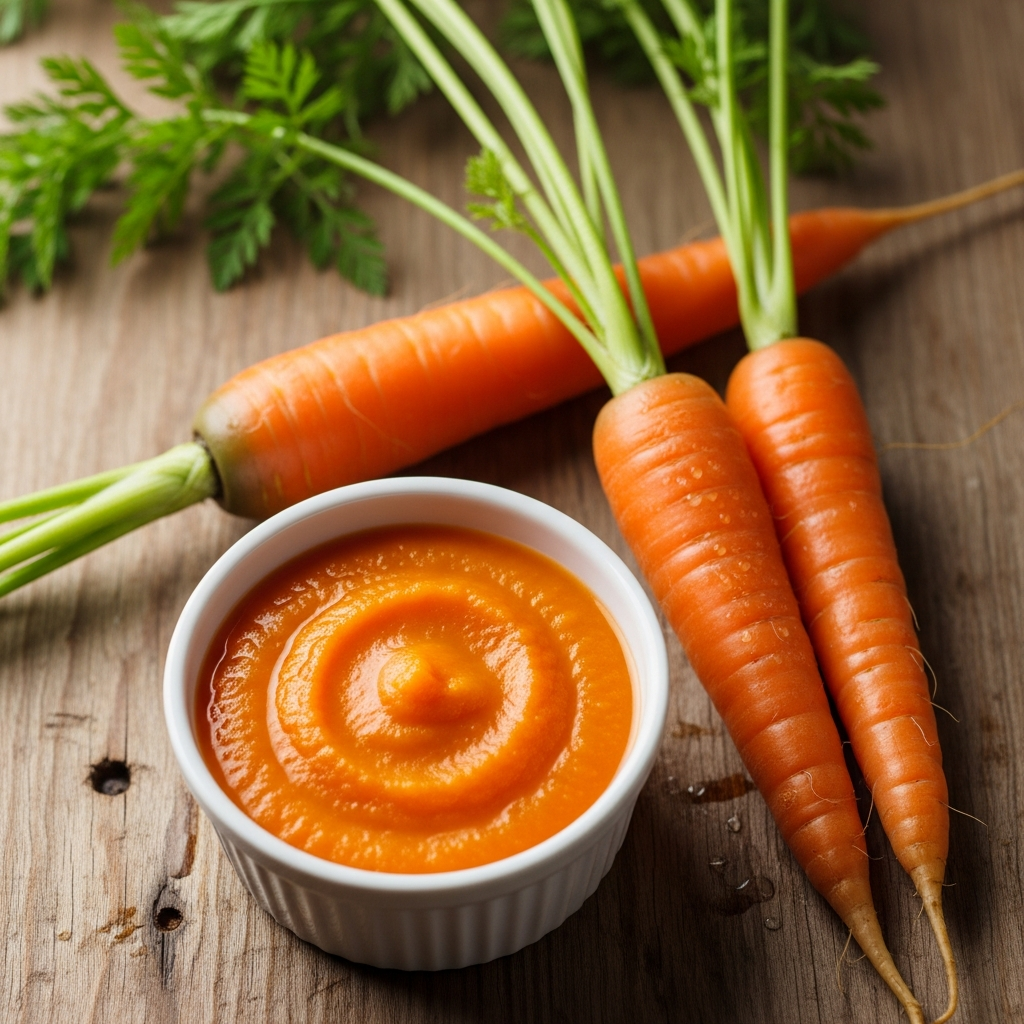
Carrots are one of the most popular first vegetables for baby, and for good reason. Their natural sweetness appeals to tiny palates, while their bright orange color signals an abundance of beta-carotene.
Nutritional Benefits:
- High in beta-carotene, which converts to Vitamin A for eye health and immune function
- Good source of fiber for digestive health
- Contains potassium and Vitamin K
- Natural sweetness makes it an easy first food
Step-by-Step Recipe:
- Choose organic carrots when possible; wash and peel thoroughly
- Cut into 1-inch pieces for even cooking
- Steam for 15-20 minutes until very soft (fork should pierce easily)
- Transfer to blender or food processor
- Add reserved cooking water, breast milk, or formula (1-2 tablespoons at a time)
- Blend until completely smooth for beginners
- Cool to room temperature before serving
| Serving Size | 1-2 tablespoons for beginners |
|---|---|
| Refrigerator Storage | Up to 3 days |
| Freezer Storage | Up to 3 months |
Pro Tips: Roasting carrots at 400F for 25 minutes intensifies their natural sweetness. Never add salt, sugar, or honey. Once your baby has tried carrots alone, combine with apple or sweet potato for variety.
2. Green Bean Puree Baby Food: A Gentle Introduction to Green Vegetables

Green bean puree baby food offers an excellent way to introduce your little one to green vegetables. Their low allergen risk makes them ideal for early introduction.
Nutritional Benefits:
- Excellent source of Vitamin K for bone health and folate for cell growth
- Provides fiber for healthy digestion
- Good source of Vitamin C and iron
- Very low allergen risk
Step-by-Step Recipe:
- Select fresh green beans; trim ends and remove any strings
- Wash thoroughly under running water
- Steam for 8-10 minutes until bright green and very tender
- Transfer immediately to ice bath to preserve color and nutrients
- Blend with cooking liquid until smooth
- For older babies (8+ months): mash with fork for texture
- Strain through fine mesh if needed for very young babies
| Serving Size | 1-2 tablespoons initially |
|---|---|
| Refrigerator Storage | 2-3 days |
| Freezer Storage | Up to 2 months |
Pro Tips: Frozen green beans work well and are often more affordable. The slight grassy taste is normal. Babies often need 8-10 exposures to accept new flavors. Pair with pear puree for a naturally sweet combination.
3. Pea Puree for Babies: Protein-Packed and Naturally Sweet

Pea puree for babies stands out as one of the highest-protein vegetables you can offer. Their natural sweetness and vibrant green color make them a winner at the high chair.
Nutritional Benefits:
- One of the highest protein vegetables, excellent for growth
- High in protein (8g per cup) and iron for brain development
- Contains Vitamins A, C, and K
- Good source of folate for cell growth
Step-by-Step Recipe:
- Use frozen peas (often fresher than "fresh" and more convenient)
- Steam for 3-5 minutes until bright green and tender
- Transfer immediately to blender while still warm
- Add liquid gradually (water, breast milk, or formula)
- Blend on high for 2-3 minutes for smoothest consistency
- Important: Press through fine mesh strainer to remove skins
| Serving Size | 1-2 tablespoons |
|---|---|
| Refrigerator Storage | 3 days |
| Freezer Storage | Up to 3 months |
Pro Tips: Straining is essential for babies under 8 months as skins are hard to digest. Peas pair wonderfully with sweet potato or carrot. As your baby grows (8-10 months), skip straining to introduce more texture.
4. Butternut Squash Baby Puree: Creamy and Vitamin-Rich

Butternut squash baby puree is a fall favorite that works beautifully year-round. Its naturally creamy texture requires minimal processing, making it perfect for busy parents.
Nutritional Benefits:
- Exceptionally high in Vitamin A, supporting vision and immune health
- Contains Vitamin C for iron absorption
- Rich in potassium for healthy muscle function
- Creamy texture ideal for first foods
Step-by-Step Recipe:
- Cut butternut squash in half lengthwise; scoop out seeds
- Oven method: Place cut-side down on baking sheet, roast at 400F for 45-50 minutes
- Stovetop method: Peel, cube, and steam for 15-20 minutes
- Scoop flesh from skin (if roasted)
- Blend until silky smooth, adding liquid as needed
| Serving Size | 1-2 tablespoons |
|---|---|
| Refrigerator Storage | 3-4 days |
| Freezer Storage | Up to 3 months |
Pro Tips: Buy pre-cut butternut squash to save preparation time. Roasting brings out natural sugars and deepens flavor. Acorn squash and delicata squash are excellent alternatives.
Time-Saving Tip: Prepare a large batch on weekends and freeze in silicone ice cube trays. Each cube equals approximately 1 ounce (2 tablespoons).
5. Sweet Potato Puree for Baby: A Nutrient-Dense Staple

Sweet potato puree for baby ranks among the most nutritious first foods you can offer. According to USDA research, orange-fleshed sweet potatoes are packed with beta-carotene, which converts to Vitamin A in your baby's body.
Nutritional Benefits:
- Extremely high in beta-carotene and Vitamin A
- Contains Vitamin C, potassium, and fiber
- Natural sweetness is universally appealing
- Supports immune system and healthy skin
Step-by-Step Recipe:
- Wash sweet potato thoroughly; pierce several times with fork
- Microwave method: Cook on high 5-8 minutes until soft throughout
- Oven method: Bake at 400F for 45-60 minutes until tender
- Steaming method: Peel, cube, steam 15-20 minutes
- Remove skin, transfer flesh to blender
- Puree until smooth, adding liquid for desired consistency
| Serving Size | 1-2 tablespoons |
|---|---|
| Refrigerator Storage | 3-4 days |
| Freezer Storage | Up to 3 months |
Pro Tips: Orange-fleshed sweet potatoes have more beta-carotene than white varieties. Baking creates a sweeter, more concentrated flavor. Sweet potato combines well with nearly any vegetable or fruit.
6. Zucchini Puree for Infants: Mild and Easy to Digest

Zucchini puree for infants is wonderfully gentle on developing digestive systems. Its mild, neutral flavor makes it perfect for mixing with stronger-tasting vegetables.
Nutritional Benefits:
- Very gentle on baby's digestive system
- Contains Vitamin C and potassium
- High water content helps with hydration
- Low fiber reduces digestive upset for beginners
Step-by-Step Recipe:
- Select small to medium zucchini (less bitter than large ones)
- Wash thoroughly; no need to peel unless using conventional produce
- Cut into 1-inch rounds or cubes
- Steam for 5-7 minutes until very soft
- Blend immediately while warm
- Add liquid sparingly (zucchini has high water content)
| Serving Size | 1-2 tablespoons |
|---|---|
| Refrigerator Storage | 2-3 days |
| Freezer Storage | Up to 2 months (texture may change slightly) |
Pro Tips: Yellow summer squash can be prepared the same way. Zucchini pairs well with apple, pear, or carrot. For babies 8+ months, saute lightly in olive oil before pureeing for added nutrition.
How to Store and Freeze Homemade Vegetable Purees Safely

Making vegetable purees for babies in batches saves time, but proper storage is essential for safety. The FDA recommends storing frozen homemade baby food for up to three months.
Refrigerator Storage Guidelines
- Store in airtight glass containers (preferred) or BPA-free plastic
- Use vegetable purees within 2-4 days depending on the vegetable
- Always smell and visually inspect before serving
- Keep refrigerator at 40F or below
- Refrigerate freshly cooked puree within two hours
Freezer Storage Best Practices
- Ice cube trays with lids are ideal for portion control
- Each cube equals approximately 1 ounce (2 tablespoons)
- Transfer frozen cubes to freezer bags; label with date and contents
- Use within 1-3 months for best quality and nutrition
- Never refreeze thawed puree
Safe Thawing Methods
- Refrigerator thawing (overnight): Safest method
- Warm water bath: Place sealed container in warm water
- Microwave: Use defrost setting, stir well, check temperature
- Never leave puree at room temperature to thaw
Introducing New Vegetables Safely: Allergy and Choking Prevention
The Wait Rule for New Foods
When introducing first vegetables baby has never tried, the CDC advises waiting 3 to 5 days between each new food. This allows you to identify any reactions.
Signs of Food Allergy to Watch For:
- Hives or skin rash
- Swelling of face, lips, or tongue
- Vomiting or diarrhea
- Difficulty breathing (seek emergency care immediately)
Most vegetables are low-allergen foods, but reactions can still occur. Keep a simple food diary to track introductions and any responses.
Texture Progression and Choking Safety
According to AAP guidelines, pieces of hard raw vegetables like raw carrots are choking hazards for infants and young children.
Age-Appropriate Textures:
| Age | Texture |
|---|---|
| 6-7 months | Very smooth, thin purees (yogurt consistency) |
| 7-8 months | Slightly thicker purees |
| 8-9 months | Mashed with soft lumps |
| 9-12 months | Finely chopped soft pieces, finger foods |
Choking Prevention Tips:
- Always supervise babies during meals
- Ensure baby is seated upright in highchair
- Avoid hard, raw vegetables until appropriate age
- Learn infant CPR before starting solids
Important: Whole peas, raw carrot pieces, and large chunks of any vegetable are choking hazards. Always puree or cook until very soft for babies under 12 months.
Creating a Varied Vegetable Diet: Weekly Meal Planning Tips
Color Variety Strategy
Aim for a rainbow of colors throughout the week. Each color provides different nutritional benefits:
- Orange vegetables (carrots, sweet potato, squash): Vitamin A
- Green vegetables (peas, green beans, zucchini): Vitamin K, folate
Sample First Week Schedule
| Day | Vegetable | Notes |
|---|---|---|
| Day 1-3 | Sweet Potato | Observe for reactions |
| Day 4-6 | Carrot | New introduction |
| Day 7 | Sweet Potato + Carrot | First combination |
Combination Ideas After Individual Introduction
- Carrot + Pea: Vitamin A meets protein
- Sweet Potato + Zucchini: Sweet meets mild
- Butternut Squash + Apple: Autumn flavors
- Green Bean + Pear: Green meets sweet
Tips for Reluctant Eaters
Do not give up too quickly! Research shows that after 7-8 repeated exposures, most infants accept an initially disliked vegetable. Here are strategies that work:
- Offer rejected vegetables again in 2-3 days
- Mix small amounts of new vegetables with accepted favorites
- Stay calm and positive; avoid pressure or forcing
- Let your baby see you enjoying the same vegetables
Frequently Asked Questions About First Vegetables for Baby
What is the best first vegetable to give a baby?
Sweet potato or butternut squash are often recommended as the best first vegetables for baby because of their naturally sweet taste, smooth texture when pureed, and high nutrient content. However, any single-ingredient vegetable puree that is age-appropriate can be an excellent first food. The key is choosing vegetables that can be cooked soft and pureed smooth.
Can I give my baby vegetables before fruits?
You can introduce vegetables and fruits in any order. The myth that babies will reject vegetables if they taste fruit first has been debunked by research. Studies show that repeated exposure to vegetables (8-10 times) matters more than introduction order. Focus on offering a variety of both vegetables and fruits rather than worrying about sequence.
How do I make carrot puree for my baby?
To make carrot puree for babies, wash and peel organic carrots, cut into 1-inch pieces, and steam for 15-20 minutes until very soft. Transfer to a blender with 1-2 tablespoons of cooking water, breast milk, or formula. Blend until completely smooth. Cool to room temperature before serving. Store refrigerated for 3 days or freeze for up to 3 months.
Are frozen vegetables okay for making baby food?
Yes, frozen vegetables are excellent for making baby food. They are often flash-frozen at peak ripeness, which can preserve more nutrients than fresh vegetables that have traveled long distances. Frozen peas, green beans, and butternut squash are convenient, affordable options. Just ensure they are plain vegetables without added salt, seasonings, or sauces.
How many times should I offer a vegetable before giving up?
Offer a new vegetable at least 10-15 times before deciding your baby does not like it. Research shows babies often need repeated exposure to accept new flavors, especially bitter or green vegetables. Wait 2-3 days between attempts, and try preparing the vegetable differently (mixed with accepted foods, different temperature, or varied texture).
Can I mix vegetables together for my baby?
Yes, you can mix vegetables together after your baby has tried each one individually without any reaction. Wait 3-5 days after introducing each new vegetable before combining. Popular combinations include carrot and pea, sweet potato and zucchini, and butternut squash with apple. Mixing can help babies accept less-favored vegetables when paired with favorites.
How long can I store homemade vegetable puree in the freezer?
Homemade vegetable purees can be safely stored in the freezer for 1-3 months. For best quality and nutrition, use within 1 month. Store in airtight containers or silicone ice cube trays, then transfer frozen cubes to labeled freezer bags. Always thaw in the refrigerator or using warm water, never at room temperature.
What vegetables should I avoid giving my baby?
Avoid giving babies raw, hard vegetables like raw carrots, celery, or whole cherry tomatoes due to choking risk. Limit high-nitrate vegetables like beets and spinach before 6 months. Avoid canned vegetables with added salt. Always cook vegetables until very soft and puree or mash appropriately for your baby's age and development stage.
Starting Your Baby's Vegetable Journey with Confidence
Introducing the best first vegetables for baby does not have to be stressful. You now have everything you need: six nutritious vegetables (carrots, green beans, peas, butternut squash, sweet potato, and zucchini) with easy-to-follow recipes, storage guidelines, and safety tips.
Remember these key takeaways:
- There is no magic order for introducing vegetables versus fruits
- Repeated exposure (8-10 times) matters more than first impressions
- Smooth textures and proper supervision keep mealtimes safe
- Batch cooking and freezing save time without sacrificing nutrition
Most importantly, keep mealtimes positive. Your baby is learning not just about flavors and textures, but about the joy of eating together as a family. Some days will be messier than others, and that is perfectly okay.
At PatPat, we love supporting families through every milestone, including the wonderfully messy adventure of starting solids. Ready to make mealtime even more fun? Check out our collection of adorable bibs and feeding essentials designed to make your baby's first foods journey easier and cuter.
What vegetable are you most excited to try with your little one? We would love to hear about your baby's first foods journey!
Additional Resources
- AAP Baby Feeding and Nutrition Guidelines
- CDC Infant and Toddler Nutrition Resources
- USDA FoodData Central for Nutrition Information
Disclaimer: This article is for informational purposes only and is not a substitute for professional medical advice. Always consult your pediatrician before introducing new foods to your baby, especially if there is a family history of food allergies.




