


Did you know that Americans consume approximately 22 million turkeys on Christmas Day? That staggering number represents just one fascinating piece of the rich culinary tapestry that defines our holiday celebrations. Whether you are hosting a festive dinner party, planning family entertainment, or simply love testing your culinary knowledge, you have come to the right place.
Welcome to PatPat's gourmet edition of Christmas food trivia questions! Finding engaging, fresh trivia for holiday gatherings can feel challenging when you want something beyond the usual "What color is Rudolph's nose?" questions. This carefully curated collection offers 60 unique questions spanning easy beginner-friendly facts to expert-level culinary challenges.
Your journey through this holiday food quiz covers six delicious categories: traditional Christmas dinner, decadent desserts, international food traditions, festive beverages, and gourmet challenges for true food enthusiasts. Whether you are organizing Christmas food trivia for family game night or an office party, these questions will spark conversations, create laughs, and maybe even teach everyone something new about the foods that make the season special.
How to Host the Perfect Christmas Food Trivia Night
For Family Dinner Tables
Keep things casual with a round-robin format where each person takes turns answering. Select age-appropriate questions from our easy category for younger children, then gradually increase difficulty. These Christmas food trivia questions make excellent conversation starters between courses.
For Holiday Parties and Office Events
Organize teams of four to five people for competitive fun. Use our suggested scoring system: one point for easy questions, two points for medium difficulty, and three points for challenging gourmet questions. Consider small prizes like holiday chocolates or festive ornaments for winning teams.
Tips for Maximum Engagement
- Read answers aloud only after everyone has guessed
- Share the fun facts accompanying each answer
- Mix difficulty levels to keep everyone involved
- Combine trivia with taste tests for interactive rounds
Easy Christmas Food Trivia Questions for Beginners
Let's start with approachable questions perfect for all ages. These easy Christmas food trivia questions cover familiar holiday traditions that most families encounter during the festive season. Great for kids ages six and up!

1. What snack is traditionally left out for Santa Claus on Christmas Eve in American homes?
Answer: Cookies and milk
This tradition became popular in America during the Great Depression, when parents wanted to teach children about giving during hard times. Different countries leave different treats: British children often leave mince pies, while Irish children leave Guinness!
2. What vegetable do children typically leave out for Santa's reindeer?
Answer: Carrots
Leaving carrots for reindeer became popular in the Netherlands, where children left food for Saint Nicholas's horse. When the tradition merged with Christmas, carrots became reindeer fuel for the long journey around the world.
3. What striped peppermint candy is shaped like a shepherd's staff?
Answer: Candy cane
The first candy canes were straight white sticks. A German choirmaster in the 1670s reportedly bent them into the "J" shape to represent shepherds' crooks and keep children quiet during long Christmas services.
4. What edible house is often built and decorated during Christmas?
Answer: Gingerbread house
Gingerbread houses became popular after the Brothers Grimm published Hansel and Gretel in 1812. German bakers created elaborate edible houses inspired by the witch's candy cottage in the story.
5. What warm chocolate drink often comes topped with marshmallows during winter?
Answer: Hot chocolate (or cocoa)
The Aztecs drank an early version of hot chocolate over 3,000 years ago, though they served it cold and bitter. Spanish conquistadors brought cocoa beans to Europe, where sugar was added to create the sweet drink we love today.
6. In the movie "Elf," what are the four main food groups according to Buddy?
Answer: Candy, candy canes, candy corns, and syrup
Will Ferrell actually ate real candy during filming. The spaghetti scene where Buddy eats pasta covered in maple syrup, chocolate sauce, and candy required multiple takes, and Ferrell reportedly felt sick afterward!
7. What red sauce made from tart berries is a staple side dish at Christmas dinner?
Answer: Cranberry sauce
Cranberries are native to North America and were used by Indigenous peoples long before European settlers arrived. The berries were called "crane berries" because their flowers resembled the head and bill of a sandhill crane.
8. What bird is the most popular main course for Christmas dinner in America?
Answer: Turkey
Turkey became the Christmas bird of choice because it was large enough to feed an entire family, relatively affordable, and not needed for other purposes like producing eggs or milk.
9. What popular Christmas drink is made with eggs, cream, and sugar?
Answer: Eggnog
Eggnog likely evolved from a medieval British drink called "posset," made with hot milk curdled with wine or ale. Colonial Americans added rum when wine became expensive, creating the boozy holiday tradition we know today.
10. What nut is famously roasted and sold by street vendors during the Christmas season?
Answer: Chestnuts
The Christmas song "Chestnuts Roasting on an Open Fire" was written by Bob Wells and Mel Torme in just 40 minutes during a summer heat wave in 1945. They wrote about winter to mentally escape the California heat!
Traditional Christmas Dinner Trivia: From Turkey to Trimmings
These Christmas dinner trivia questions explore the history and traditions behind your holiday feast. Discover why certain dishes became Christmas staples and how our dinner traditions evolved over centuries.
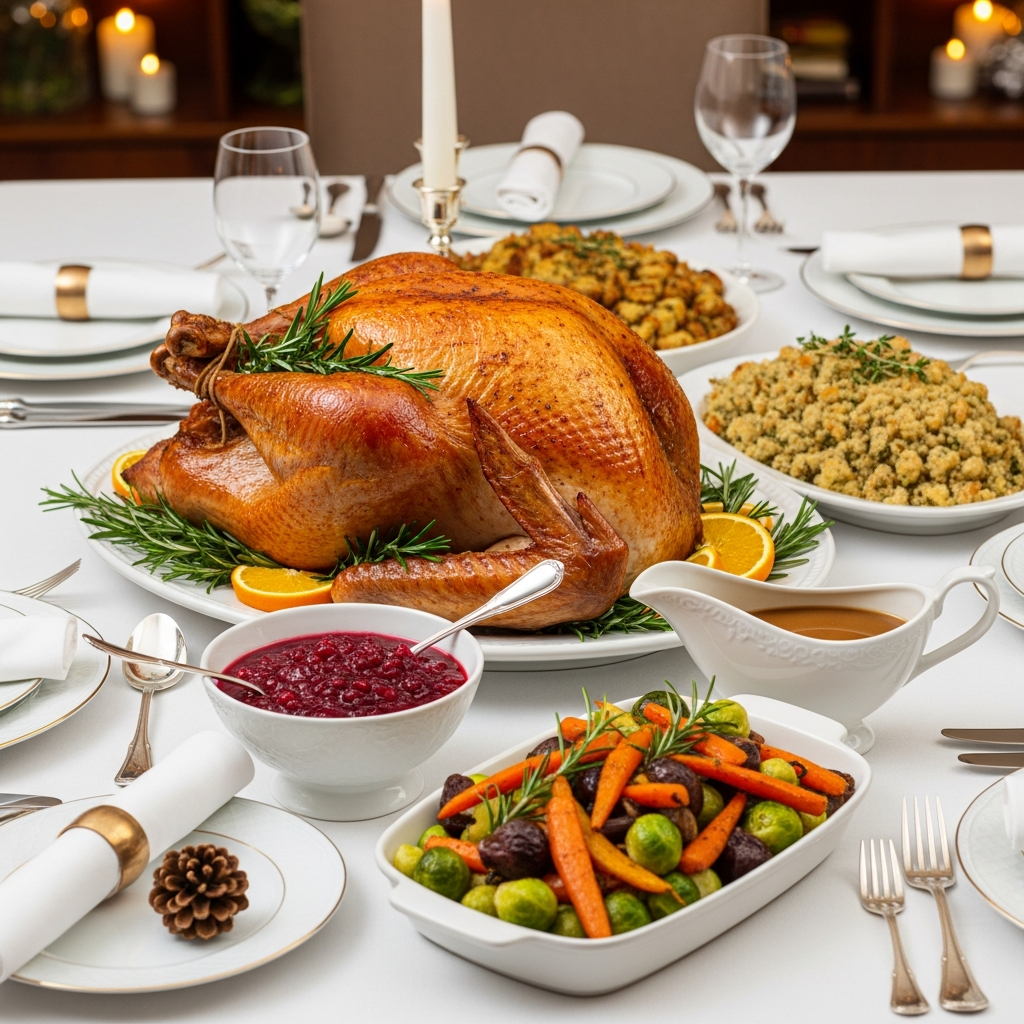
11. Before turkey became popular, what meat was the traditional centerpiece of English Christmas feasts?
Answer: Goose (and before that, boar's head)
Medieval Christmas feasts often featured a boar's head as the main course, symbolizing the triumph of Christ over sin. Goose later became preferred among the middle class because it was more affordable than swan or peacock, which nobility enjoyed.
12. Which British monarch is credited with popularizing turkey as the Christmas dinner centerpiece?
Answer: King Henry VIII
Henry VIII reportedly enjoyed turkey as early as the 1520s after the bird was brought to England from the Americas. However, turkey only became truly popular among common people during the Victorian era when improved transportation made it more accessible.
13. What is traditionally hidden inside a British Christmas pudding?
Answer: A silver coin (traditionally a sixpence)
Finding the coin supposedly brings good luck and wealth in the coming year. This tradition dates back to medieval Twelfth Night cakes. Whoever found the hidden bean became "King" or "Queen" for the evening's celebrations.
14. What herb is most traditionally associated with Christmas turkey stuffing?
Answer: Sage
Sage has been used in poultry stuffing since Roman times. The herb's slightly peppery, savory flavor complements rich meats perfectly. Traditional British stuffing also includes onions, breadcrumbs, and sometimes chestnuts.
15. What are "pigs in blankets" in British Christmas tradition?
Answer: Small sausages wrapped in bacon
American pigs in blankets are completely different - they're hot dogs wrapped in pastry or croissant dough. British versions became a Christmas staple in the 1950s and are now considered essential alongside roast turkey.
16. What percentage of American families choose ham over turkey for Christmas dinner?
Answer: Approximately 30%
Ham is particularly popular in Southern states where pig farming was historically more common than turkey raising. According to holiday dining statistics, while turkey remains the most popular choice, a significant portion of American families prefer ham for their Christmas celebration. The tradition of Christmas ham also connects to European customs, where preserved meats were slaughtered in autumn and ready to eat by December.
17. What is a turducken?
Answer: A turkey stuffed with a duck, which is stuffed with a chicken
While turducken gained popularity in Louisiana in the 1980s, the concept of stuffing birds inside other birds dates back centuries. Medieval feasts featured "cockentrice" - a pig sewn to a rooster - and a massive creation called "roti sans pareil" that nested 17 different birds!
18. What vegetable did President George H.W. Bush famously declare he hated, even at Christmas?
Answer: Broccoli
In 1990, Bush banned broccoli from Air Force One, stating "I'm President of the United States, and I'm not going to eat any more broccoli!" Broccoli farmers protested by sending truckloads of the vegetable to the White House.
19. What is the British term for the savory mixture placed inside a turkey?
Answer: Stuffing (Americans in the South often call it "dressing")
The distinction between "stuffing" and "dressing" often depends on geography. Generally, if it's cooked inside the bird, it's stuffing; if baked separately in a dish, it's dressing. Food safety experts actually recommend cooking it separately!
20. What small, round Brussels vegetable is often served at Christmas dinner despite being divisive?
Answer: Brussels sprouts
Brussels sprouts contain bitter-tasting compounds that some people are genetically more sensitive to, explaining why they're so divisive. Modern varieties have been bred to be less bitter, and roasting caramelizes their sugars for a sweeter flavor than boiling.
Sweet Indulgence: Christmas Desserts and Holiday Treats Trivia
From flaming puddings to delicate pastries, Christmas dessert trivia reveals the sweet stories behind our holiday favorites. Test your knowledge of festive treats from around the world!

21. What is the French name for the Yule log cake?
Answer: Buche de Noel
The cake represents the Yule log that families traditionally burned throughout Christmas in medieval Europe. When homes shifted from large open hearths to smaller stoves, Parisian bakers created this edible substitute in the 19th century.
22. What traditional British dessert is doused in brandy and set on fire before serving?
Answer: Christmas pudding (also called plum pudding)
The flaming tradition symbolizes Christ's passion. The pudding is traditionally made five weeks before Christmas on "Stir-up Sunday," with each family member stirring the mixture and making a wish. It contains no plums - the name comes from "plum" being an old word for raisins.
23. What German Christmas bread is dusted with powdered sugar to represent baby Jesus in swaddling clothes?
Answer: Stollen (or Christstollen)
Dresden stollen has been baked since the 1400s. Originally a plain, bland bread due to Catholic fasting rules that prohibited butter, Pope Innocent VIII granted special permission in 1491 to use butter. The recipe has remained largely unchanged since.
24. How long can a properly stored fruitcake theoretically remain edible?
Answer: Up to 25 years or more
The alcohol and sugar in fruitcake act as preservatives. One famous fruitcake baked in 1878 was kept as a family heirloom for over 130 years! During World War II, fruitcakes were sent to soldiers because they survived long shipping journeys.
25. What dome-shaped Italian sweet bread contains candied fruits and raisins?
Answer: Panettone
Legend says panettone was invented in Milan when a nobleman fell in love with a baker's daughter. He disguised himself as a baker and created this sweet bread to save her father's failing business. The name may come from "Pan de Toni" - Tony's bread.
26. What gives gingerbread its characteristic dark color?
Answer: Molasses (or treacle)
Gingerbread dates back to ancient Greece, but the medieval version we recognize came from European monks. Queen Elizabeth I is credited with inventing gingerbread men - she had them made to resemble visiting dignitaries!
27. What small, fruit-filled British pastry was once illegal to eat on Christmas Day?
Answer: Mince pies
Oliver Cromwell banned mince pies during the Puritan era (1640s-1660s) as part of his campaign against Christmas celebrations. The oval shape originally represented Jesus's manger, and early versions actually contained minced meat along with fruit!
28. What is "figgy pudding" mentioned in "We Wish You a Merry Christmas"?
Answer: A steamed pudding made with figs and often similar to Christmas pudding
The carol's demand "Now bring us some figgy pudding, we won't go until we get some!" reflects the Victorian wassailing tradition where carolers expected food and drink in exchange for their songs. Refusing was considered bad manners!
29. What country created the tradition of leaving a rice pudding for Christmas elves (tomte/nisse)?
Answer: Scandinavian countries (Sweden, Norway, Denmark)
The tomte or nisse is a mythical creature who protects the farm. Families leave out rice porridge (risgrynsgrot) on Christmas Eve to keep him happy - legend says an angry nisse might play tricks or bring bad luck to families who forget!
30. What spiced German cookie is traditionally shaped like hearts, stars, or pretzels?
Answer: Lebkuchen
Nuremberg became the lebkuchen capital because it sat at the crossroads of spice trade routes. The city has protected "Nurnberger Lebkuchen" status, similar to champagne - only cookies made in Nuremberg can officially bear the name.
Around the World: International Christmas Food Traditions
Explore international Christmas food traditions from every corner of the globe! This holiday food quiz section reveals how different cultures celebrate with unique culinary customs that might surprise you.

31. Why do millions of Japanese families eat Kentucky Fried Chicken on Christmas?
Answer: A highly successful 1974 KFC marketing campaign called "Kurisumasu ni wa Kentakkii" (Kentucky for Christmas)
The campaign was so successful that approximately 3.6 million Japanese families now eat KFC every Christmas. Orders must be placed weeks in advance, and wait times can exceed two hours! Japan adopted this tradition partly because turkey is uncommon there.
32. What Italian-American tradition involves eating seven types of seafood on Christmas Eve?
Answer: The Feast of Seven Fishes (La Vigilia)
This tradition comes from the Roman Catholic practice of abstaining from meat on Christmas Eve. The number seven represents the seven sacraments, though some families serve nine dishes (for the Trinity times three) or thirteen (for Jesus and the twelve apostles).
33. What fish is traditionally served at Polish Christmas Eve dinner (Wigilia)?
Answer: Carp
Polish families traditionally buy live carp days before Christmas and keep it swimming in the bathtub until Christmas Eve! Some families save a scale from the carp and keep it in their wallet all year for good luck.
34. What whole roasted pig dish is the star of Filipino Christmas celebrations?
Answer: Lechon
Lechon is slowly roasted over charcoal for hours until the skin becomes incredibly crispy. This iconic Filipino dish is central to Christmas celebrations, particularly the traditional Noche Buena feast on Christmas Eve. The crackling skin is highly prized and often served first to honored guests, with Anthony Bourdain once proclaiming it the "best pig ever."
35. What Scandinavian Christmas dish involves fish preserved in lye solution?
Answer: Lutefisk
Lutefisk is dried cod rehydrated in lye, giving it a jelly-like texture that many find challenging. The dish smells so strong that some American churches that serve it have designated "lutefisk kitchens" to contain the odor. Despite this, it remains beloved in Norwegian-American communities.
36. What is the main protein featured at Australian Christmas barbecues?
Answer: Prawns (shrimp)
Since Christmas falls during summer in Australia, families often celebrate outdoors with seafood barbecues. Australians consume an enormous amount of prawns during the holiday season, often starting with "prawn cocktails" as appetizers before the main feast.
37. What lavish Swedish Christmas buffet features dozens of traditional dishes?
Answer: Julbord
A proper julbord can include over 50 dishes! Traditional items include pickled herring, meatballs (kottbullar), Janssons frestelse (potato and anchovy casserole), and the notorious lutfisk. Swedes follow a specific eating order, starting with cold fish and ending with dessert.
38. What bread do Ethiopian Christians eat after their Christmas morning service (Ganna)?
Answer: Injera (served with Doro Wat, a spicy chicken stew)
Ethiopian Christmas falls on January 7th following the Julian calendar. Doro Wat contains exactly 12 hard-boiled eggs (representing the apostles) and 12 pieces of chicken. Families eat communally from a shared platter, tearing injera to scoop up stew.
39. What Venezuelan Christmas dish wraps meat, olives, and raisins in cornmeal dough and banana leaves?
Answer: Hallacas
Making hallacas is a family affair that can take days, with different generations handling different tasks. Each family has secret recipes passed down through generations. The dish represents Venezuela's cultural fusion of Indigenous, African, and Spanish influences.
40. What Spanish delicacy of fried dough strips is traditionally served with thick hot chocolate on Christmas morning?
Answer: Churros
Spanish hot chocolate is so thick you can stand a churro in it without it falling over! The tradition of churros con chocolate for Christmas breakfast started because families needed energy after staying up for Nochebuena (Christmas Eve) celebrations and Midnight Mass.
Raise Your Glass: Christmas Drinks and Beverages Trivia
From creamy eggnog to warming mulled wine, Christmas drink trivia toasts to centuries of festive beverage traditions. How much do you know about what fills your holiday glass?

41. What does the word "nog" in eggnog likely refer to?
Answer: A wooden cup or mug called a "noggin"
Another theory suggests "nog" comes from "grog," a British term for rum-based drinks. Regardless of origin, eggnog was originally a drink for the wealthy because eggs, cream, and imported spices were expensive. George Washington had his own potent recipe!
42. What is the German name for mulled wine?
Answer: Gluhwein (meaning "glow wine")
The name refers to the hot irons once used to heat the wine, which would glow red. German Christmas markets (Christkindlmarkt) serve millions of cups annually. Each market often has its own special mug that becomes a collectible souvenir.
43. What medieval Christmas drink involves going door-to-door with a bowl of spiced ale?
Answer: Wassail
The word comes from the Anglo-Saxon "waes hael" meaning "be in good health." Wassailers would carry a large bowl from house to house, offering drinks in exchange for gifts. The tradition evolved into modern Christmas caroling!
44. What Puerto Rican Christmas drink is similar to eggnog but made with coconut milk and rum?
Answer: Coquito
Coquito means "little coconut" in Spanish. Unlike eggnog, traditional coquito doesn't contain eggs, though some modern recipes include them. Families guard their secret recipes jealously, and competitions to determine the best coquito are serious business!
45. What three spices are typically found in mulled wine?
Answer: Cinnamon, cloves, and star anise (nutmeg and cardamom are also common)
Spiced wine dates back to ancient Rome, where it was called "Conditum Paradoxum." Medieval Europeans believed spiced drinks were medicinal and could ward off illness - particularly useful during cold winter months before central heating existed!
46. What ancient civilization first developed the chocolate drink that inspired modern hot chocolate?
Answer: The Aztecs (and Mayans before them)
The Aztec version called "xocolatl" was served cold, bitter, and sometimes mixed with chili peppers. Spanish conquistador Hernan Cortes brought cocoa beans to Europe, where sugar was added. It took another 300 years before anyone thought to add marshmallows!
47. What is the main alcohol in traditional British Christmas punch?
Answer: Brandy
Victorian Christmas punch often combined brandy, rum, and wine with citrus and spices. Charles Dickens popularized the "Smoking Bishop" punch in A Christmas Carol - a port-based punch that Scrooge promises to share with Bob Cratchit after his transformation.
48. What sparkling wine-based drink is popular for Christmas morning celebrations?
Answer: Mimosa (champagne and orange juice)
The mimosa was invented at the Ritz Hotel in Paris around 1925. Despite its French origins, it has become a quintessentially American brunch drink. The classic ratio is two parts champagne to one part juice, though preferences vary.
49. What Scandinavian Christmas drink is served warm and spiced, similar to gluhwein?
Answer: Glogg
Swedish glogg typically includes almonds and raisins that sink to the bottom of the cup and are eaten with a spoon after drinking. The drink is usually served in small cups because of its high alcohol content - it often includes vodka or aquavit in addition to wine.
50. What percentage of annual eggnog sales occur during the Christmas season?
Answer: Approximately 90%
Eggnog is one of the most seasonal beverages in existence. Sales peak dramatically during Thanksgiving and Christmas weeks, with over 30% of annual sales occurring in the final weeks of December. Dairy companies typically only produce it from October through December, and Americans consume approximately 135 million pounds of eggnog annually.
Expert Level: Challenging Gourmet Christmas Trivia for Food Lovers
Think you are a true culinary expert? This challenging gourmet trivia section tests even the most knowledgeable food enthusiasts with obscure facts, technical details, and historical deep-cuts about Christmas cuisine.

51. What is "Stir-up Sunday" in British Christmas tradition?
Answer: The last Sunday before Advent when families traditionally make Christmas pudding
The name comes from the Book of Common Prayer's collect for that day, which begins "Stir up, we beseech thee, O Lord." Each family member stirs the pudding mixture from east to west (honoring the Wise Men's journey) while making a wish.
52. What chemical reaction creates the brown crust on roasted Christmas meats?
Answer: The Maillard reaction
Named after French chemist Louis-Camille Maillard, this reaction between amino acids and reducing sugars creates hundreds of flavor compounds. It begins around 280F (140C) and is responsible for the delicious flavors in roasted coffee, toasted bread, and seared meat.
53. What is the French term for the elaborate Christmas Eve feast served after midnight mass?
Answer: Reveillon
The word comes from "reveiller" (to wake up or revive). The meal can last for hours and traditionally includes oysters, foie gras, and often features 13 desserts in Provence - representing Jesus and the 12 apostles at the Last Supper.
54. What internal temperature must turkey reach to be considered safe for consumption?
Answer: 165F (74C)
This temperature kills harmful bacteria like Salmonella. Professional chefs measure at the thickest part of the thigh, avoiding the bone. Interestingly, the breast meat tastes best at 150F, creating a cooking challenge - which is why spatchcocking (butterflying) the turkey has become popular.
55. Which English ruler banned Christmas celebrations, including mince pies and plum pudding?
Answer: Oliver Cromwell
Cromwell and the Puritans considered Christmas festivities sinful and pagan. From 1644 to 1660, Christmas was essentially illegal in England. Shops were forced to stay open, and soldiers patrolled streets to confiscate festive food. The ban was deeply unpopular and contributed to the monarchy's restoration.
56. What ancient Roman festival significantly influenced many Christmas food traditions?
Answer: Saturnalia
Saturnalia was a week-long festival of feasting, gift-giving, and revelry honoring the god Saturn. When early Christians adopted December 25th for Christmas, many Saturnalia customs - including elaborate banquets and exchanging food gifts - were absorbed into the new celebration.
57. What is the proper technique to successfully flame a Christmas pudding?
Answer: Warm the brandy gently before igniting, then pour over the pudding
Cold brandy won't ignite properly - it needs to be warmed (not boiled) to release alcohol vapors. Use at least 2 tablespoons of high-proof brandy. The flames are mostly blue and can be hard to see in bright light, so dim the room for maximum dramatic effect!
58. What medieval spice was once worth more than gold and featured prominently in Christmas dishes?
Answer: Black pepper (saffron was also extremely valuable)
In medieval Europe, peppercorns were so valuable they were used as currency and counted out individually. A pound of pepper could buy a farmer's freedom. Wealthy families displayed their status by heavily spicing Christmas dishes - the more exotic spices, the more prestigious the feast.
59. How many calories does the average Christmas dinner contain?
Answer: Approximately 3,000 to 6,000 calories
A full Christmas meal with appetizers, main course, sides, desserts, and drinks can exceed an average person's daily recommended intake (2,000-2,500 calories) in a single sitting. Research shows Americans can consume over 6,500 calories on Christmas Day when counting all meals and snacks. Some studies suggest the average person gains 1-2 pounds during the holiday season.
60. What was originally inside mince pies before they became a sweet dessert?
Answer: Actual minced (ground) meat, typically mutton
Medieval mince pies contained a mixture of meat, suet, fruits, and spices - a way to preserve meat before refrigeration. The meat gradually disappeared over centuries, leaving only the suet (beef fat), fruits, and spices. Traditional recipes today still include suet, which is why mince pies aren't technically vegetarian!
Surprising Christmas Food Facts You Never Knew
- The world's largest gingerbread house was built in Texas in 2013 and measured over 2,500 square feet - large enough to be a real home!
- Candy canes were originally straight white sugar sticks. The hook shape and red stripes were added later, possibly to hang them on Christmas trees.
- The first Christmas card (1843) depicted a family drinking wine, causing controversy among temperance movements.
- Ancient Romans exchanged date and fig pastries during Saturnalia - essentially the first "Christmas cookies."
- Rudolph's favorite food should be lichen, not carrots - it's what real reindeer actually eat!
- The tradition of the Christmas goose inspired Dickens to include it in A Christmas Carol, which then popularized turkey as a fancier alternative.
- Scientists have created a "Brussels sprout ice cream" to make the vegetable more appealing to children at Christmas.
- In Catalonia, Spain, families keep a "Caga Tio" (pooping log) that "poops out" candy when beaten with sticks on Christmas Eve!
Frequently Asked Questions About Christmas Food Trivia
How many questions should a Christmas trivia game include?
A well-paced trivia game typically includes 20-30 questions for a 30-45 minute session. Our 60-question collection allows you to select questions based on your audience and available time. For family dinners, 10-15 questions work well between courses. For parties, consider 25-30 questions with breaks between rounds for refreshments and conversation.
What age group is Christmas food trivia suitable for?
Christmas food trivia can be adapted for all ages. Our easy category works well for children ages six and up, while the challenging gourmet section appeals to adult food enthusiasts. When playing with multi-generational groups, mix difficulty levels so everyone has a chance to answer correctly and stay engaged.
Can I use these trivia questions for an office Christmas party?
Absolutely! These questions are perfect for office holiday parties. Organize teams of four to five people, use our point system (one point for easy questions, two for medium, three for hard), and offer small prizes like holiday treats or gift cards for winning teams. The international section often sparks great discussions among diverse workplaces.
What is the most popular Christmas food in America?
Turkey remains the most popular Christmas main dish in America, with approximately 22 million turkeys consumed on Christmas Day. However, ham is a close second, preferred by about 30% of families, especially in Southern states. Side dishes like mashed potatoes, stuffing, and cranberry sauce are nearly universal.
Why do people eat specific foods at Christmas?
Many Christmas food traditions have historical, religious, or practical origins. Turkey became popular because it was affordable and large enough to feed entire families. Dishes like mince pies and Christmas pudding evolved from medieval preservation techniques. Religious fasting before Christmas led to seafood traditions like the Italian Feast of Seven Fishes.
How can I make Christmas food trivia more interactive?
Enhance engagement by incorporating taste tests alongside questions - let guests try different holiday cookies or sample international treats. Use smartphone apps for real-time scoring, create visual rounds with food photos, or pair trivia with related activities like cookie decorating or eggnog tasting.
What are traditional Christmas foods around the world?
Christmas foods vary dramatically by culture. Japan celebrates with KFC fried chicken, Italy has the Feast of Seven Fishes, Sweden enjoys julbord (Christmas buffet), Poland serves carp, Australia features seafood barbecues, the Philippines showcases lechon (roasted pig), and Venezuela makes hallacas (stuffed corn dough). Each tradition reflects local ingredients and cultural customs.
Where did Christmas food traditions originate?
Many Christmas food traditions trace back to medieval European feasts, Victorian-era celebrations, and religious observances. The Romans' Saturnalia festival influenced festive feasting customs. Christian traditions of Advent fasting followed by Christmas feasts shaped the emphasis on indulgent meals. The Victorians, especially through influences like Dickens, standardized many traditions we follow today.
Make This Christmas Unforgettable with Food Trivia
You now have 60 carefully curated Christmas food trivia questions spanning everything from easy kid-friendly facts to challenging gourmet knowledge. Whether you choose a few questions for dinner table conversation or organize a full trivia tournament, these questions will add delicious entertainment to your holiday celebrations.
The magic of Christmas food extends far beyond taste - every dish carries centuries of tradition, cultural significance, and family memories. From the turkey on your table to the cookies left for Santa, understanding these traditions deepens our appreciation for the season and creates wonderful opportunities for family connection. Picture your loved ones cozied up in matching Christmas pajamas, sharing laughs over trivia while the holiday lights twinkle—moments like these make the season truly special.
Ready for More Holiday Fun?
PatPat hopes these Christmas food trivia questions bring joy, laughter, and maybe a few surprised faces to your holiday gatherings. Bookmark this page for your upcoming celebrations, share it with friends planning their own parties, and let us know in the comments which question stumped your family the most!
For more family-friendly holiday content, adorable kids' clothing perfect for Christmas photos, and festive Christmas pajamas to keep everyone comfy during those trivia nights, visit PatPat.com.
May your holidays be filled with delicious food, wonderful company, and plenty of fun trivia moments. Happy eating and happy holidays!


