


You are standing in the baby aisle, holding two adorable pajama sets. One is made from silky bamboo viscose, the other from cozy fleece. Both feel nice, both look cute, but which one will actually help your little one sleep safely and soundly through the night? This is a question that keeps many new parents awake, ironically enough, long after their babies have dozed off.
Here is a startling fact: about 3,500 babies die from SIDS each year in the United States, and overheating is identified as a contributing risk factor. The fabric you choose for your baby's sleepwear matters more than you might realize. It is not just about comfort; it is about safety.
In this comprehensive guide, we will compare bamboo vs fleece baby sleepwear based on temperature regulation, breathability, safety, and comfort. Whether you are preparing for a newborn or shopping for your growing infant, you will learn exactly which fabric suits your baby's needs for every season. At PatPat, we understand how important these decisions are for parents, which is why we have created this evidence-based comparison to help you make the best choice for your little one.
Understanding Baby Sleepwear Fabrics: Why Your Choice Matters
Before diving into the bamboo vs fleece debate, let us understand what each fabric actually is and why the material of your baby's pajamas deserves careful consideration.
What Makes Bamboo Viscose Unique for Babies
Bamboo fabric, specifically bamboo viscose or bamboo rayon, comes from processed bamboo pulp. What makes it special is its fiber structure. Bamboo fibers are naturally hollow, featuring microscopic gaps and holes that allow for excellent ventilation. This unique structure enables bamboo fabrics to wick away moisture and release excess heat effectively.
The result is a silky-soft texture that feels gentle against your baby's delicate skin. While bamboo does require chemical processing to become fabric, look for OEKO-TEX certified options to ensure the final product is free from harmful substances. If you are curious about exploring quality bamboo options for babies, breathable and certified choices are available that meet safety standards.
How Fleece Works: The Basics Parents Should Know
Fleece is typically made from polyester, a synthetic material derived from petroleum. It works by trapping air between its fibers to create insulation, which is why it feels so warm. Polyester fleece is soft and fuzzy on both sides, giving it that cozy feel parents love for cold weather.
However, there is an important distinction between polyester fleece and cotton fleece. Fleece can be safe if made with 100% natural fibers such as cotton that allows the body to breathe. Organic cotton fleece is considered a healthier choice for babies compared to synthetic options.
Why Fabric Choice Impacts Your Baby's Sleep Quality
Here is the critical point every parent needs to understand: babies cannot regulate their body temperature as well as adults can. Their temperature rises much faster, and they sweat less, which greatly reduces their ability to cool down.
This means the fabric touching your baby's skin for eight to twelve hours every night plays a significant role in whether they sleep peacefully or restlessly. The wrong fabric can lead to overheating, sweating, and disrupted sleep. For babies with sensitive skin or eczema, fabric choice becomes even more critical.

The Science Behind Bamboo: Temperature-Regulating Benefits for Baby Sleep
Let us explore why bamboo has become the fabric of choice for many pediatricians and sleep-conscious parents.
How Bamboo Fabric Keeps Babies Cool in Summer and Warm in Winter
Bamboo's thermoregulating properties work thanks to those microscopic gaps in its fibers. These micro-gaps allow for superior moisture absorption and ventilation, enabling the fabric to respond to your baby's body temperature. When your baby is warm, bamboo releases heat and keeps them cool. When temperatures drop, bamboo retains warmth to keep them cozy.
This dual-action temperature regulation means bamboo works effectively year-round. You do not need to completely overhaul your baby's wardrobe every season. A good bamboo pajama can transition from summer nights to winter evenings with just a change in layering.
Bamboo's Moisture-Wicking Properties: Keeping Baby Dry Through the Night
Babies sweat during sleep, often more than parents realize. Moisture against their skin can cause discomfort, chilling, and interrupted sleep cycles. This is where bamboo excels.
Bamboo fabric is able to wick moisture from baby's skin four times faster than cotton, leaving your baby's skin cool and dry. Some research indicates bamboo can absorb approximately 40 percent more moisture than cotton of similar weight. This moisture is then pulled away from your baby's body and allowed to evaporate quickly.
The result? A drier, more comfortable baby who sleeps longer and more peacefully.
Natural Hypoallergenic and Antibacterial Qualities
Bamboo contains a natural bio-agent called bamboo kun, which gives the fabric antibacterial properties. This helps reduce odor and bacteria growth in the fabric, meaning fewer washes and fresher pajamas.
Additionally, bamboo is naturally hypoallergenic, making it gentler on sensitive skin than many synthetic fabrics. For babies prone to skin irritation, allergies, or eczema, bamboo's smooth fibers reduce friction and minimize the chance of triggering reactions.
Fleece for Baby Sleepwear: When It Works and When to Be Cautious
Fleece is not inherently bad for babies. However, understanding when it is appropriate and when to choose alternatives is essential for safe sleep.
The Warmth Advantage: When Fleece Makes Sense
Fleece provides excellent insulation, making it appropriate for specific situations:
- Very cold environments where room temperature drops below 65 degrees Fahrenheit
- Outdoor activities in cold weather, such as stroller walks or car seat transitions
- Exceptionally cold nurseries that cannot be adequately heated
- As an outer layer over a breathable bamboo or cotton base layer
- Short-term use when maximum warmth is essential
Fleece is lightweight relative to its warmth, which makes it practical for layering without adding bulk.
Understanding Fleece Overheating Risks for Babies
Here is where parents need to pay close attention. Fleece pajamas are warm and cozy, but they can sometimes cause babies to overheat. Babies are more vulnerable to overheating, which increases the risk of Sudden Infant Death Syndrome (SIDS).
Polyester fleece does not allow the body to breathe, resulting in potentially dangerous overheating. Because fleece traps heat so effectively, it can quickly become too warm for babies, especially in heated indoor environments.
Signs of overheating to watch for include:
- Sweating, especially on the back of the neck or chest
- Flushed or red cheeks
- Rapid breathing
- Damp hair
- Restlessness or unusual fussiness
Synthetic vs Natural: What Fleece Is Made Of
Most fleece is 100% polyester, a petroleum-based synthetic material. Polyester tends to trap heat and moisture, leading to discomfort, especially in warm weather. It can also cause eczema flare-ups due to non-breathability and resulting sweat.
Some fleece blends include cotton for better breathability, and organic cotton fleece is considered safer. When choosing fleece, look for options that meet safety standards and consider whether a breathable alternative might be more appropriate for indoor sleep.
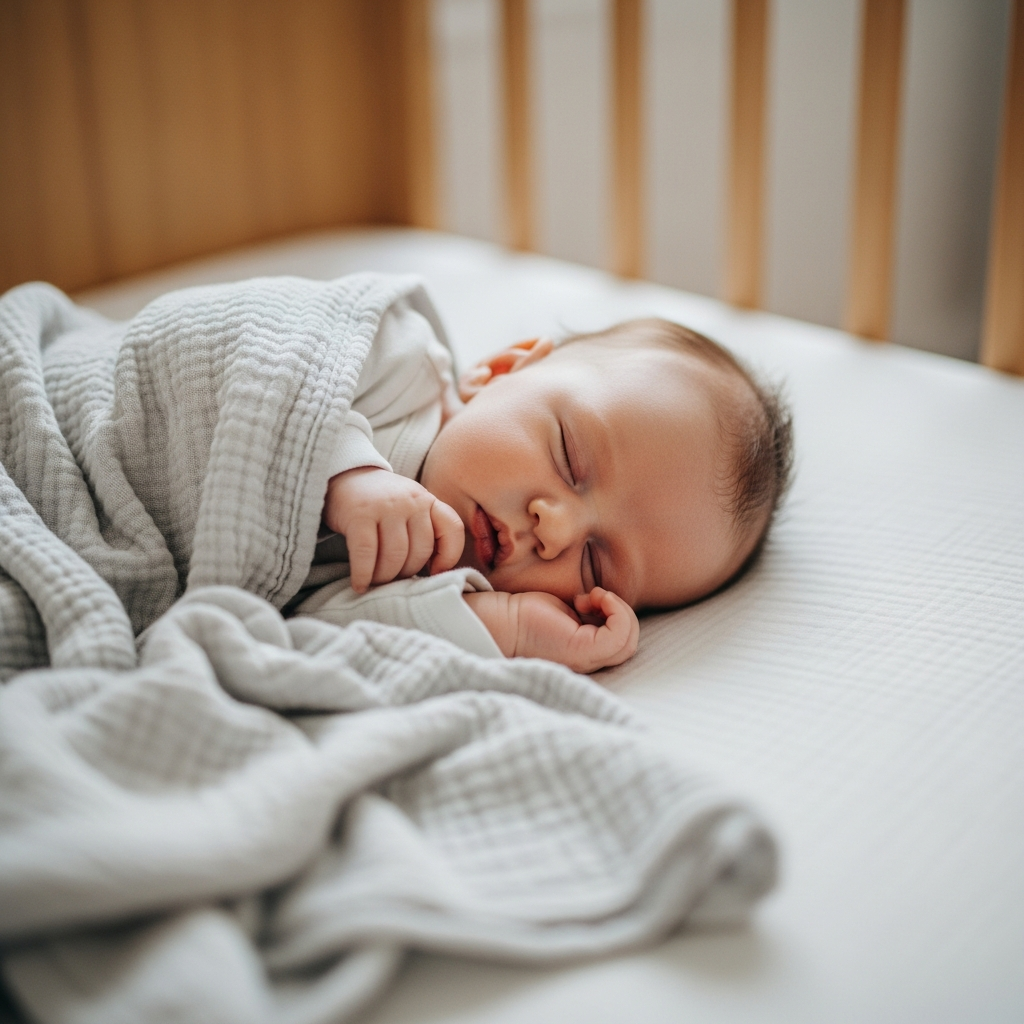
Safety First: What Pediatricians Say About Baby Sleepwear Fabrics
When it comes to your baby's sleep safety, expert recommendations matter. Let us look at what the research and pediatric guidelines tell us.
SIDS Prevention and the Overheating Connection
Studies have demonstrated an increased risk of SIDS with overheating. This connection makes breathable fabric choices an important part of safe sleep practices.
According to safe sleep research, the prone sleeping position increases the risk of overheating by decreasing the rate of heat loss and increasing body temperature. While back sleeping is the primary recommendation, fabric choice adds another layer of protection by helping maintain appropriate body temperature throughout the night.
AAP Safe Sleep Guidelines and Fabric Recommendations
The American Academy of Pediatrics provides clear guidance on dressing babies for sleep:
- Your baby only needs one more layer than you would wear in the same environment
- Room temperature should be comfortable for a lightly clothed adult, typically between 68 and 72 degrees Fahrenheit
- Avoid loose blankets; use wearable blankets or sleep sacks instead
- Do not cover your baby's head while sleeping
- Check for signs of overheating such as sweating, a hot chest, or flushed skin
These guidelines emphasize keeping babies comfortable but not overheated, which points toward breathable fabrics like bamboo for everyday sleep.
TOG Ratings Explained: Choosing the Right Warmth Level
TOG stands for Thermal Overall Grade and is a unit of measurement for insulation and warmth of sleepwear and bedding. Understanding TOG ratings helps you match sleepwear to room temperature.
| Room Temperature | Recommended TOG | What to Wear |
|---|---|---|
| 75 degrees F and above (24 degrees C+) | 0.5 - 1.0 TOG | Light bamboo onesie or bodysuit only |
| 69-74 degrees F (20-23 degrees C) | 1.0 TOG | Onesie with light sleep sack |
| 61-68 degrees F (16-20 degrees C) | 2.5 TOG | Long-sleeve pajamas with medium sleep sack |
| Below 61 degrees F (below 16 degrees C) | 3.5 TOG | Warm pajamas with insulated sleep sack |
One of the risk factors for Sudden Infant Death Syndrome (SIDS) is overheating. Dressing your little one appropriately for the room temperature using TOG ratings is one way you can minimize your baby's risk.
Bamboo vs Fleece by Season: A Practical Guide for Parents
Let us break down which fabric works best in different seasonal conditions.
Summer Sleep Solutions: Why Bamboo Wins in Warm Weather
During summer months, bamboo is the clear winner for baby sleepwear. Its breathability prevents overheating even on hot, humid nights. A lightweight bamboo sleep sack with a 0.5 to 1.0 TOG rating is ideal for warm rooms.
Bamboo's moisture-wicking properties become especially valuable in summer when babies sweat more during sleep. The fabric pulls moisture away from your baby's skin, keeping them dry and comfortable throughout the night.
For summer layering, consider versatile bamboo onesies as a base layer that can be worn alone on hot nights or paired with a light sleep sack when temperatures drop with air conditioning.
Winter Warmth: Can Bamboo Keep Up with Fleece?
Many parents wonder if bamboo can provide adequate warmth in winter. The answer is yes for most indoor conditions. Bamboo's thermoregulating properties work both ways, retaining warmth when temperatures drop while still allowing breathability.
For cold nights, the layering approach is safer than using thick fleece:
- Start with a bamboo long-sleeve onesie as a base layer
- Add bamboo pajamas over the onesie
- Top with a 2.5 to 3.5 TOG sleep sack
This method provides warmth while maintaining breathability, reducing the overheating risk that comes with heavy fleece. Fleece may only be appropriate for exceptionally cold homes where room temperature consistently drops below 65 degrees Fahrenheit.
Year-Round Versatility: The Case for Bamboo Wardrobes
One significant advantage of bamboo is its year-round versatility. Unlike fleece, which is only appropriate for cold weather, bamboo works effectively in all seasons. This reduces your overall wardrobe needs and simplifies decision-making for tired parents.
Bamboo sleepwear also packs well for travel, working in various climates without needing to bring separate summer and winter options. While bamboo may have a higher initial price point, its versatility often makes it more cost-effective over time.
Best Fabric for Babies with Eczema and Sensitive Skin
If your baby has eczema or sensitive skin, fabric choice becomes even more critical for comfortable sleep.
Why Dermatologists Recommend Bamboo for Eczema-Prone Babies
Dermatologists and parents agree that bamboo viscose is one of the best fabric choices for eczema and sensitive skin. Board-certified dermatologists recommend bamboo viscose because it helps regulate body temperature throughout the day and night.
Eczema affects around 20% of children, making this a concern for many families. Bamboo helps because:
- Its smooth fibers reduce friction that can trigger flare-ups
- Hypoallergenic properties minimize allergic reactions
- Moisture-wicking prevents sweat from irritating sensitive skin
- Antibacterial qualities reduce bacteria that can worsen eczema
Fabrics to Avoid If Your Baby Has Sensitive Skin
Synthetic fabrics, including polyester fleece, can irritate sensitive skin. Babies with sensitive skin, allergies, or eczema can be affected by polyester, which can cause eczema flare-ups due to non-breathability and resulting sweat.
Fabrics to approach with caution include:
- Polyester fleece and other synthetic materials
- Rough textures and stiff seams
- Non-breathable fabrics that trap heat and sweat
- Heavily dyed or chemically treated materials
Look for OEKO-TEX or GOTS certified fabrics to ensure safety from harmful chemicals.
Choosing the Softest, Gentlest Sleepwear for Delicate Skin
When shopping for a baby with sensitive skin, look for:
- Flat seams or seams on the outside to prevent rubbing
- Tagless designs to prevent neck irritation
- Organic or certified bamboo for extra purity
- Simple designs without excessive embellishments
Many parents find soft bamboo pajamas designed for sensitive skin help their babies sleep more comfortably and experience fewer nighttime flare-ups.
Making Your Decision: Bamboo vs Fleece Comparison at a Glance
Here is a clear summary to help you make the best choice for your baby.
| Feature | Bamboo | Fleece |
|---|---|---|
| Temperature Regulation | Excellent (both cooling and warming) | Good for warmth only |
| Breathability | Highly breathable | Low breathability |
| Moisture-Wicking | Excellent (4x faster than cotton) | Poor (traps moisture) |
| Overheating Risk | Low | Higher |
| Sensitive Skin | Ideal (hypoallergenic) | May irritate |
| Best Season | Year-round | Cold weather only |
| Sustainability | More eco-friendly | Synthetic (petroleum-based) |
| Price Point | Higher initial cost | Generally affordable |
| Durability | Very durable, softens with washing | Durable but may pill |
When to Choose Bamboo
Bamboo is the better choice for:
- Year-round sleepwear needs in typical home temperatures
- Babies with eczema, sensitive skin, or allergies
- Homes kept at normal room temperatures (68-72 degrees F)
- Parents who want versatile, multi-season pieces
- Babies who tend to run warm or sweat at night
- Families prioritizing eco-friendly options
When Fleece May Be Appropriate
Consider fleece only for:
- Very cold environments (consistently below 65 degrees F)
- Outdoor use or travel in cold climates
- As an outer layer over a bamboo base layer
- Short-term use when maximum warmth is essential
- Budget constraints for occasional cold-weather needs
Expert Tips for Safe, Comfortable Baby Sleep
Beyond fabric choice, here are practical strategies to ensure your baby sleeps safely and comfortably.
How to Tell If Your Baby Is Too Hot or Too Cold
Touch your baby's ears or neck to check temperature. If they feel warm, your baby might be too hot. Do not rely on hands and feet, as these are not reliable indicators of core body temperature.
Signs of overheating:
- Sweating on the back of neck or chest
- Flushed or red skin
- Damp hair
- Rapid breathing or heart rate
- Unusual fussiness or restlessness
Signs of being too cold:
- Cool chest or back
- Mottled skin
- Fussiness or difficulty settling
The ideal skin temperature feels warm but not sweaty to the touch.
The Layering Method: Building a Safe Sleep System
The layering approach gives you more control over your baby's temperature than using a single heavy garment:
- Start with a breathable base layer, such as a bamboo onesie or bodysuit
- Add a sleep sack appropriate for your room temperature
- Adjust layers as needed rather than using thick, heavy fabrics
This method works year-round by simply changing the TOG rating of your sleep sack while keeping the same comfortable base layers.
Care Tips to Maintain Fabric Quality
For bamboo:
- Wash in cold or warm water on a gentle cycle
- Avoid fabric softeners, which reduce moisture-wicking ability
- Tumble dry low or hang dry
- Bamboo actually gets softer with each wash
For fleece:
- Wash separately to prevent pilling
- Use cold water to maintain texture
- Avoid high heat when drying
When building your baby's sleep wardrobe, focus on comfortable, safe baby sleepwear options that prioritize breathability and your baby's individual needs.
Frequently Asked Questions
Is bamboo or fleece better for newborn sleep?
Bamboo is generally the better choice for newborns. Newborns have limited ability to regulate their body temperature, making breathable, temperature-regulating fabrics essential. Bamboo's moisture-wicking and thermoregulating properties help keep newborns comfortable without overheating. Fleece can trap too much heat for newborns, especially in heated indoor environments.
Can babies safely sleep in fleece pajamas?
Babies can sleep in fleece under specific conditions: when the room is very cold (below 65 degrees F), when using lightweight fleece as an outer layer, and when you closely monitor for signs of overheating. However, for everyday sleep in normal room temperatures (68-72 degrees F), breathable fabrics like bamboo are safer. Always check your baby's chest or back to ensure they are not too warm.
Why are bamboo baby pajamas more expensive than fleece?
Bamboo pajamas cost more due to the specialized processing required to create bamboo viscose fabric, the superior softness and durability of the material, and the temperature-regulating technology built into the fibers. However, bamboo's year-round versatility means you may need fewer pieces overall, and the fabric often lasts longer, providing better value over time.
What is the best fabric for a baby with eczema?
Bamboo is widely recommended by dermatologists for babies with eczema. Its smooth fibers reduce skin friction, the hypoallergenic properties minimize irritation, and moisture-wicking prevents sweat from triggering flare-ups. Look for OEKO-TEX certified bamboo sleepwear to ensure no harmful chemicals are present. Avoid synthetic fleece, which can trap heat and irritate sensitive skin.
Can bamboo pajamas keep my baby warm enough in winter?
Yes, bamboo can keep babies appropriately warm in winter for most homes. Bamboo's thermoregulating properties work both ways, retaining warmth when temperatures drop. For colder conditions, layer bamboo with a higher-TOG sleep sack. This approach provides warmth while maintaining breathability, reducing the overheating risk that comes with heavy fleece.
How do I know if my baby is overheating at night?
Check the skin on your baby's chest or back of neck, as hands and feet are not reliable indicators. Signs of overheating include sweating, flushed or red skin, damp hair, rapid breathing, and restlessness. If your baby feels hot or sweaty to the touch, remove a layer or switch to lighter sleepwear. The ideal temperature feels warm but dry.
What does TOG rating mean for baby sleepwear?
TOG (Thermal Overall Grade) measures a fabric's warmth without added weight. Lower TOG (0.5-1.0) suits warm rooms or summer; medium TOG (1.0-2.5) works for typical room temperatures; higher TOG (2.5-3.5) is for cooler environments. Match the TOG to your nursery temperature and what your baby wears underneath the sleep sack for safe, comfortable sleep.
Is bamboo fabric actually sustainable and eco-friendly?
Bamboo as a raw material is highly sustainable, growing quickly without pesticides or excessive water. However, processing bamboo into viscose fabric involves chemicals. Look for brands using closed-loop production systems that recycle chemicals. Despite processing, bamboo remains more eco-friendly than petroleum-based polyester fleece, and certifications like OEKO-TEX ensure the final product is safe for babies.
Conclusion: Choosing the Best Fabric for Your Baby's Peaceful Sleep
When comparing bamboo vs fleece for baby sleep, the evidence strongly supports bamboo as the safer, more versatile choice for everyday sleepwear. Its temperature-regulating properties, moisture-wicking abilities, and hypoallergenic nature make it ideal for keeping your baby comfortable and safe throughout the night.
Fleece has its place for specific cold-weather situations, but the overheating risks associated with synthetic polyester fleece make it less suitable for regular nighttime sleep. If you do choose fleece, opt for natural cotton fleece and always monitor your baby closely for signs of overheating.
Remember the key takeaways:
- Bamboo works year-round, while fleece is limited to cold weather
- Overheating is a SIDS risk factor, making breathable fabrics important
- Use TOG ratings to match sleepwear warmth to room temperature
- Layer breathable fabrics rather than using single heavy garments
- Check your baby's chest and neck, not hands and feet, for temperature
At PatPat, we believe every baby deserves safe, comfortable sleep. By understanding the differences between bamboo and fleece, you can make informed choices that support your little one's wellbeing. Sweet dreams start with the right fabric, and now you have the knowledge to choose wisely.





