


Is my baby too hot? Too cold? If you have found yourself tiptoeing into the nursery at 2 AM to check your little one's temperature, you are definitely not alone. This question keeps parents awake more than almost any other concern during that first year.
Here is the reality: approximately 3,500 infants die annually in the United States from sleep-related causes, and overheating is a recognized risk factor. But getting baby sleep temperature right does not have to be complicated or stressful.
This guide will walk you through everything you need to know about how to dress baby for sleep in any season. You will learn the ideal room temperature for baby, how to use TOG ratings effectively, and exactly what to put on your baby before bed. At PatPat, we believe every parent deserves clear, science-backed guidance to help their little ones sleep safely and soundly.
Whether you are preparing for your first baby or navigating the changing seasons with a growing infant, this comprehensive resource has you covered. Let us take the guesswork out of baby sleepwear together.
Why Room Temperature Matters for Safe Baby Sleep
Understanding why temperature matters so much begins with recognizing how different your baby's body works compared to yours. Unlike adults, babies cannot regulate their body temperature efficiently. They cannot shiver effectively to warm up or sweat well to cool down, which makes them highly dependent on their environment and clothing for thermal comfort.
The connection between overheating and infant safety is well-established. Research shows that thermal stress can impair arousal mechanisms and respiratory drive during sleep, making temperature control a critical safety consideration, not just a comfort one.
The Science Behind Baby Temperature Regulation
Newborns face unique thermoregulation challenges. Their high body surface area to weight ratio means they lose heat rapidly. In fact, the head alone accounts for up to 85% of heat loss in infants while sleeping.
Here is something that surprises many parents: cool hands and feet are completely normal. Your baby's immature circulatory system prioritizes blood flow to vital organs like the brain and heart, naturally leaving extremities cooler. This is why you should never judge your baby's temperature by touching their hands.
The good news? Temperature regulation improves significantly over the first few months. By three months, most babies have developed better metabolic control and a thicker layer of subcutaneous fat for insulation.
Ideal Room Temperature for Baby Sleep: The 68-72 Degree Sweet Spot
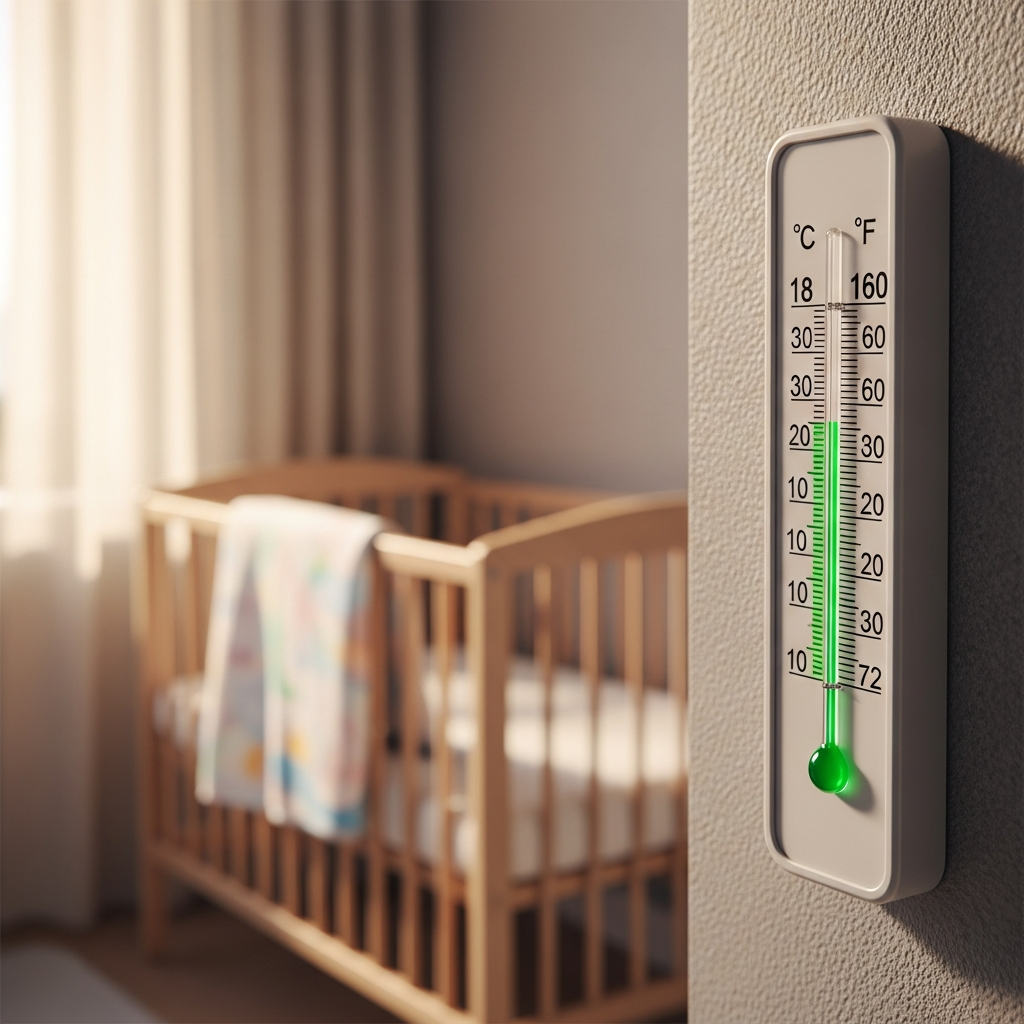
The American Academy of Pediatrics and pediatric sleep experts agree: the ideal room temperature for baby sleep is 68-72 degrees Fahrenheit (20-22 degrees Celsius). This range creates a thermoneutral environment where your baby can maintain normal body temperature without expending excess energy.
The Ideal Temperature: The ideal room temperature for baby sleep is 68-72 degrees Fahrenheit (20-22 degrees Celsius). This range prevents overheating while keeping your baby comfortable throughout the night.
Room Thermometer Placement Tips
Where you place your thermometer matters as much as having one. Follow these placement guidelines:
- Position at crib level: Temperature varies throughout the room, so measure where baby actually sleeps
- Away from windows: Drafts and sunlight create inaccurate readings
- Avoid heating vents: Direct airflow skews the temperature display
- Check at different times: Temperature can fluctuate throughout the night
What If You Cannot Reach the Ideal Temperature?
Not every home can maintain a perfect 68-72 degrees year-round. Here are practical solutions:
For homes without AC in summer:
- Use a fan to circulate air (not pointed directly at baby)
- Dress baby in minimal layers or a diaper only
- Choose lightweight muslin or cotton sleepwear
- Keep blinds closed during the day to reduce heat buildup
For drafty homes in winter:
- Use higher TOG sleep sacks for added warmth
- Add appropriate layers underneath
- Position the crib away from windows and exterior walls
- Consider a space heater with automatic shut-off (placed safely away from crib)
Understanding TOG Ratings: Your Complete Sleep Sack Guide
TOG stands for Thermal Overall Grade, and it measures how warm a sleep sack or blanket keeps your baby. Think of it as a warmth rating: the higher the TOG number, the warmer the garment. Understanding TOG ratings takes the guesswork out of dressing your baby for sleep.
TOG Rating Chart by Room Temperature

| Room Temperature | Recommended TOG | What to Wear Underneath |
|---|---|---|
| 75-81°F (24-27°C) | 0.2-0.5 TOG | Diaper only or short-sleeve bodysuit |
| 72-75°F (22-24°C) | 0.5-1.0 TOG | Short-sleeve bodysuit |
| 68-72°F (20-22°C) | 1.0-1.5 TOG | Long-sleeve bodysuit |
| 64-68°F (18-20°C) | 1.5-2.5 TOG | Long-sleeve bodysuit + light pants |
| 61-64°F (16-18°C) | 2.5-3.5 TOG | Long-sleeve bodysuit + footed pajamas |
How Many Sleep Sacks Do You Really Need?
Most parents find they need two to three sleep sacks of each TOG rating they will use regularly. This allows for laundry rotation and backup options. When selecting sleep sacks and layering pieces, breathable fabrics like bamboo help with temperature regulation throughout the night. Consider exploring bamboo sleepwear options for natural temperature control.
Year-round wardrobe planning:
- 1.0 TOG sleep sacks for climate-controlled homes (your baseline)
- 0.5 TOG for summer months or warmer rooms
- 2.5 TOG for winter if your home runs cooler
- Size up every few months as baby grows
Seasonal Baby Sleep Dressing Guide: What to Wear Year-Round
While your thermostat may keep indoor temperatures relatively stable, outdoor weather still affects your nursery. Learning how to dress baby for sleep in each season helps you adapt quickly to changing conditions.

How to Dress Baby for Sleep in Summer
Summer heat poses the greatest overheating risk. When temperatures climb, less is more:
- Single layer bodysuit or diaper only with lightweight sleep sack
- Muslin or cotton fabrics that breathe well
- 0.2-0.5 TOG sleep sacks for warm rooms
- No socks or hats indoors
Signs baby is too hot in summer: Sweaty neck, flushed cheeks, rapid breathing, damp hair at the nape of neck.
How to Dress Baby for Sleep in Winter
The biggest winter mistake? Over-bundling. Parents often add too many layers, creating dangerous overheating. Quality cotton and bamboo pajamas serve as the perfect base layer under sleep sacks during cooler months. Check out soft cotton pajamas designed for comfortable layering.
Winter layering strategy:
- Long-sleeve bodysuit as base layer
- Footed pajamas for extra warmth if needed
- 2.5 TOG sleep sack on top
- Never use loose blankets for babies under 12 months
Transitional Seasons: Spring and Fall Dressing Tips
| Season | Typical Room Temp | Recommended Setup |
|---|---|---|
| Summer | 72-80°F | Diaper or bodysuit + 0.5 TOG |
| Spring/Fall | 65-72°F | Long-sleeve bodysuit + 1.0-1.5 TOG |
| Winter | 64-68°F | Pajamas + 2.5 TOG |
Pro tip: Keep multiple TOG options ready during transitional seasons. Check the forecast before bedtime and adjust accordingly.
What Should Baby Wear Under a Sleep Sack?
The layering principle is simple but powerful: combine the right base layer with the appropriate TOG rating for your room temperature. Getting this combination right ensures your baby stays comfortable all night.
Sleep Sack Layering Examples by Temperature
Warm Room (75°F+):
- Diaper only + 0.5 TOG sleep sack
- OR short-sleeve onesie + light muslin swaddle
Comfortable Room (68-74°F):
- Short-sleeve bodysuit + 1.0 TOG sleep sack
- OR long-sleeve onesie + 0.5 TOG sleep sack
Cool Room (65-67°F):
- Long-sleeve bodysuit + 2.5 TOG sleep sack
- OR footed pajamas + 1.5 TOG sleep sack
Cold Room (Below 65°F):
- Long-sleeve bodysuit + footed pajamas + 2.5-3.5 TOG sleep sack
The One-Layer Rule Explained
You have probably heard the advice to dress baby in one more layer than you would wear. This rule provides a helpful starting point, but it is not absolute. Babies have different warmth preferences, and some naturally run warmer or cooler.
Use the one-layer rule as your baseline, then adjust based on:
- How your individual baby responds (check their chest temperature)
- Your specific room conditions
- Your baby's age (newborns need slightly more warmth)
Signs Your Baby is Too Hot or Too Cold at Night
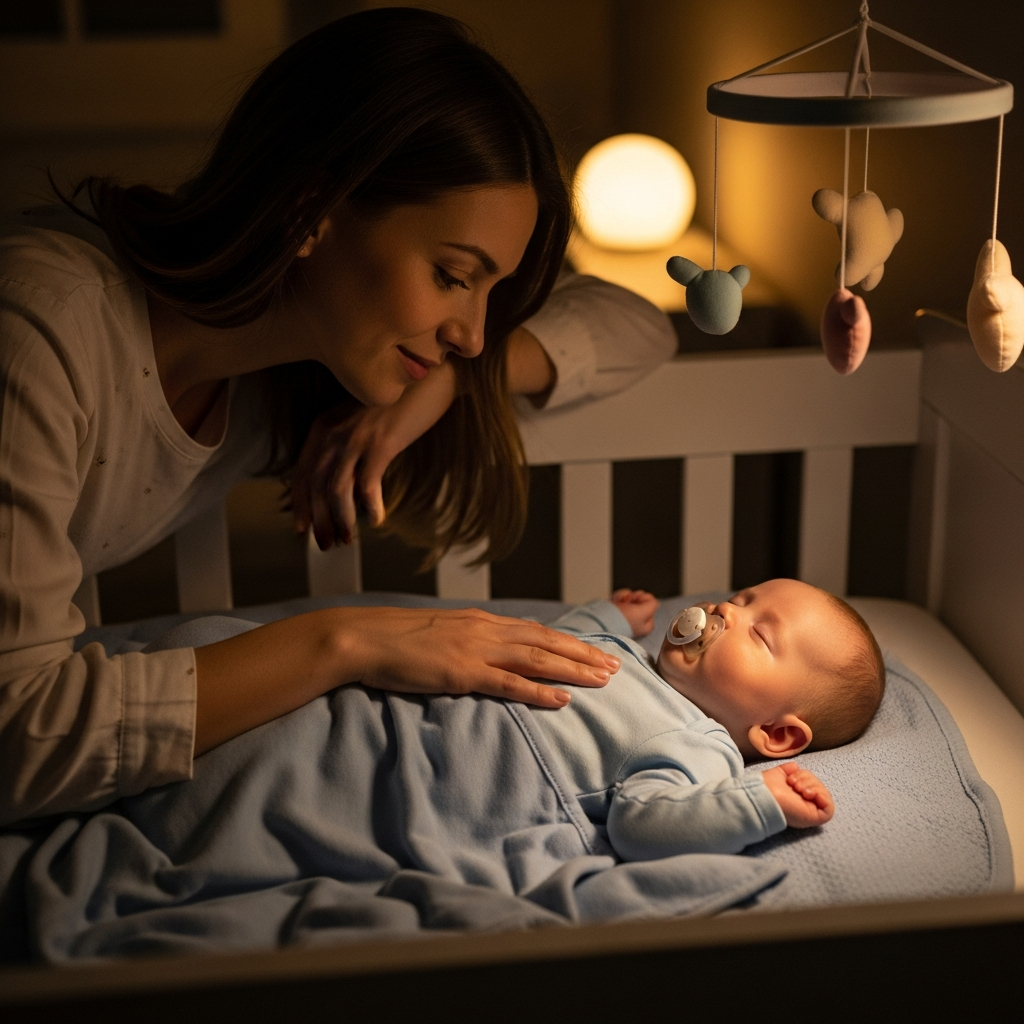
Knowing how to check your baby's temperature and recognizing warning signs gives you confidence to make adjustments. The key location to check? Your baby's chest or back, never their hands and feet.
How to Check If Baby is Overheating
Overheating is more dangerous than being slightly cool, so learn these warning signs:
- Sweaty neck or damp hair: Feel the back of neck and hairline
- Flushed or red cheeks: Visible sign of elevated temperature
- Rapid breathing: Faster than normal respiratory rate
- Hot chest or back: Should feel warm, not hot
- Restlessness or frequent waking: Discomfort disrupts sleep
- Heat rash: Small red bumps, especially in skin folds
Infant overheating is dangerous and increases SIDS risk, so always err on the side of removing a layer if you are uncertain.
Signs Baby May Be Too Cold
Being too cold is less immediately dangerous than overheating, but still uncomfortable:
- Cool chest or tummy (not just hands)
- Mottled skin appearance
- Fussiness despite other needs being met
- Blue-tinged lips (seek immediate medical care)
The Truth About Cold Hands and Feet
Babies have immature circulatory systems that prioritize blood flow to vital organs, leaving extremities naturally cooler. Cold hands are almost never a sign your baby needs more warmth. Instead, always check the chest or back of neck for an accurate reading.
When cold hands ARE concerning: If cold hands are accompanied by blue lips, mottled body skin, or lethargy, contact your pediatrician immediately.
From Swaddle to Sleep Sack: Navigating the Transition
The swaddle-to-sleep-sack transition is a major milestone that affects how you dress your baby for sleep. Timing this transition correctly is essential for safety.
When to Stop Swaddling Your Baby
The AAP recommends stopping swaddling as soon as your baby shows any signs of trying to roll over. This typically happens between 2-4 months, though some babies start earlier.
Signs baby is ready for transition:
- Attempting to roll from back to side or tummy
- Breaking out of the swaddle regularly
- Fighting the swaddle at bedtime
- Showing frustration with restricted arms
Making the Switch: Step-by-Step Transition Tips
A gradual transition helps maintain sleep quality:
- Start with one arm out: Leave one arm free for a few nights
- Progress to both arms out: Use a transitional swaddle or arms-out sleep sack
- Move to standard sleep sack: Once baby adjusts to arm freedom
Having a variety of comfortable sleepwear options makes the swaddle-to-sleep-sack transition smoother for both baby and parents. A well-stocked baby wardrobe with different weights and styles helps you adapt to your baby's changing needs.
Temperature tip during transition: Many babies feel slightly cooler without the snug swaddle wrap. You may need to temporarily increase the TOG rating or add a light layer until baby adjusts.
Baby Sleep Temperature Guide by Age: Newborn to Toddler
Your baby's temperature needs evolve as they grow. Understanding these changes helps you adjust your approach at each stage.
Newborn Sleep Temperature Tips (0-3 Months)
Newborns are most vulnerable to temperature fluctuations. During this stage:
- Keep room temperature consistently at 68-72°F
- Check temperature more frequently (every feeding is a good reminder)
- Use swaddles with appropriate TOG for your room
- Remember that hospital nurseries run warm, so home may feel cooler at first
Preemie considerations: Premature babies have even less developed thermoregulation. Follow your NICU team's specific guidance and keep rooms slightly warmer if recommended.
Infant Sleep Clothing (3-12 Months)
By 3-6 months, your baby's temperature regulation has improved significantly:
- Transition from swaddle to sleep sack (usually by 4 months)
- Size up sleep sacks as baby grows
- Active babies may generate more body heat
- Teething can cause slight temperature elevation
Toddler Sleep Temperature Needs (12+ Months)
After the first birthday, you have more flexibility:
- Blankets become safe after 12 months (though sleep sacks remain fine)
- Toddler pajamas can replace sleep sacks if preferred
- Continue avoiding overheating even as safe sleep rules relax
- Let your toddler's comfort guide adjustments
Frequently Asked Questions: Common Parent Questions Answered
What is the ideal room temperature for a sleeping baby?
The ideal room temperature for baby sleep is 68-72 degrees Fahrenheit (20-22 degrees Celsius). This range is recommended by the American Academy of Pediatrics to reduce the risk of overheating, which is associated with SIDS. Use a room thermometer at crib level to monitor accurately.
Is 72 degrees too hot for a baby to sleep?
No, 72 degrees Fahrenheit is within the safe and comfortable range for baby sleep. It sits at the upper end of the recommended 68-72 degree range. At this temperature, dress your baby in a short-sleeve bodysuit with a 0.5-1.0 TOG sleep sack, and check their chest to ensure they are not overheating.
How do I know if my baby is too hot or too cold at night?
Check your baby's chest or back, not their hands and feet. A comfortable baby will have a warm (not hot or sweaty) chest. Signs of overheating include sweating, flushed cheeks, damp hair, and rapid breathing. Signs of being too cold include a cool chest and mottled skin. Cold hands alone are normal and not a reliable indicator.
What should my baby wear under a sleep sack?
What baby wears under a sleep sack depends on room temperature and the sleep sack's TOG rating. In a 68-72 degree room with a 1.0 TOG sleep sack, a long-sleeve bodysuit is ideal. For warmer rooms, use a short-sleeve bodysuit or just a diaper. For cooler rooms, add footed pajamas under a higher TOG sleep sack.
What TOG rating sleep sack do I need?
Choose TOG based on your nursery temperature: 0.2-0.5 TOG for 75-81°F (warm), 1.0 TOG for 68-74°F (comfortable), and 2.5 TOG for 61-68°F (cool). Most parents need 2-3 different TOG ratings for year-round use. Consider a 1.0 TOG as your starting point if your home stays around 68-72 degrees.
Can a baby overheat in a sleep sack?
Yes, babies can overheat in a sleep sack if the TOG rating is too high for the room temperature or if they are over-dressed underneath. Always match the sleep sack's TOG to your room temperature, dress baby appropriately underneath, and never add blankets on top of a sleep sack. Check baby's chest regularly.
Is it safe for my baby to sleep in just a diaper?
Yes, in warm conditions (above 75°F), it is safe for baby to sleep in just a diaper with a lightweight 0.2-0.5 TOG sleep sack or a breathable swaddle. This is preferable to overheating. Ensure the room is safe (no drafts directly on baby) and check their chest temperature remains comfortably warm.
Why are my baby's hands cold at night but their body is warm?
Cold hands and feet are completely normal in babies and not a sign they are too cold. Babies have immature circulatory systems that prioritize blood flow to vital organs, leaving extremities cooler. Always check baby's chest or back to assess their true temperature. Adding mittens is unnecessary and not recommended for safe sleep.
Your Baby's Best Sleep Starts with the Right Temperature
Mastering how to dress baby for sleep does not have to be overwhelming. With the right room temperature (68-72°F), appropriate TOG-rated sleepwear, and knowledge of what signs to watch for, you can confidently create a safe, comfortable sleep environment for your little one.
Remember these key takeaways:
- Maintain nursery temperature between 68-72°F
- Match your sleep sack's TOG rating to your room temperature
- Check baby's chest or back for temperature, not hands or feet
- Err on the side of fewer layers rather than more
- Adjust with the seasons using our temperature charts
At PatPat, we understand that helping your baby sleep safely and soundly is one of your most important jobs as a parent. We hope this baby sleep temperature guide gives you the confidence to handle whatever season comes your way.
Sweet dreams to you and your little one.





