


Every March 17th, rivers run green, cities host massive parades, and millions don shamrock-themed attire. But beneath the festive surface lies a hidden spiritual meaning of St. Patrick's Day that most celebrants never discover. Here is a story of slavery and redemption, ancient symbols carrying profound theological truths, and a prayer so powerful it has protected believers for over 1,500 years.
The irony is striking: one of Christianity's most powerful missionary stories has been largely reduced to a drinking holiday. St. Patrick's Day is actually a feast day honoring a man whose faith transformed an entire nation. The true meaning of St. Patrick's Day encompasses themes of forgiveness, divine calling, and spiritual victory that resonate just as powerfully today as they did in 5th-century Ireland.
In this guide, you will discover the real story behind St. Patrick, the sacred symbolism hidden in familiar Irish images, and practical ways to share this rich spiritual heritage with your children. Whether you are deeply religious or simply curious about cultural traditions, understanding what St. Patrick's Day really celebrates will transform how you experience this beloved holiday.
The True Story of St. Patrick: From Slave to Saint
A Roman-British Boy Kidnapped by Pirates
St. Patrick was not Irish by birth. According to his own writings in his autobiographical Confessio, he was kidnapped at age sixteen from Roman Britain around 400 AD. Irish raiders captured the teenager and sold him into slavery in Ireland, where he spent six years in isolation herding sheep. This was no mythical figure but a real young man whose life was shattered by violence.
Finding Faith in Captivity
During those lonely years on the Irish hillsides, something remarkable happened. Patrick experienced a profound spiritual awakening. He later wrote that he prayed up to a hundred times a day, finding comfort and strength in faith despite his desperate circumstances. Then came a pivotal moment: a dream in which he heard a voice telling him a ship was waiting to take him home. Patrick walked nearly 200 miles to the coast and escaped.
The Divine Calling to Return
Years later, after becoming a priest and bishop, Patrick received another vision. He heard "the voices of the Irish" calling him to return. Consider the extraordinary nature of this decision: he chose to go back to the land of his captivity, to bless the very people who had enslaved him. According to historical records, Patrick spent approximately 30 years as a missionary in Ireland, converting thousands to Christianity and establishing churches throughout the land.
The St. Patrick true story embodies radical forgiveness. His biography demonstrates how suffering can be transformed into purpose, making his legacy far more inspiring than any leprechaun tale could ever be.
The Shamrock and the Holy Trinity: Faith Made Visible
Why St. Patrick Used the Shamrock
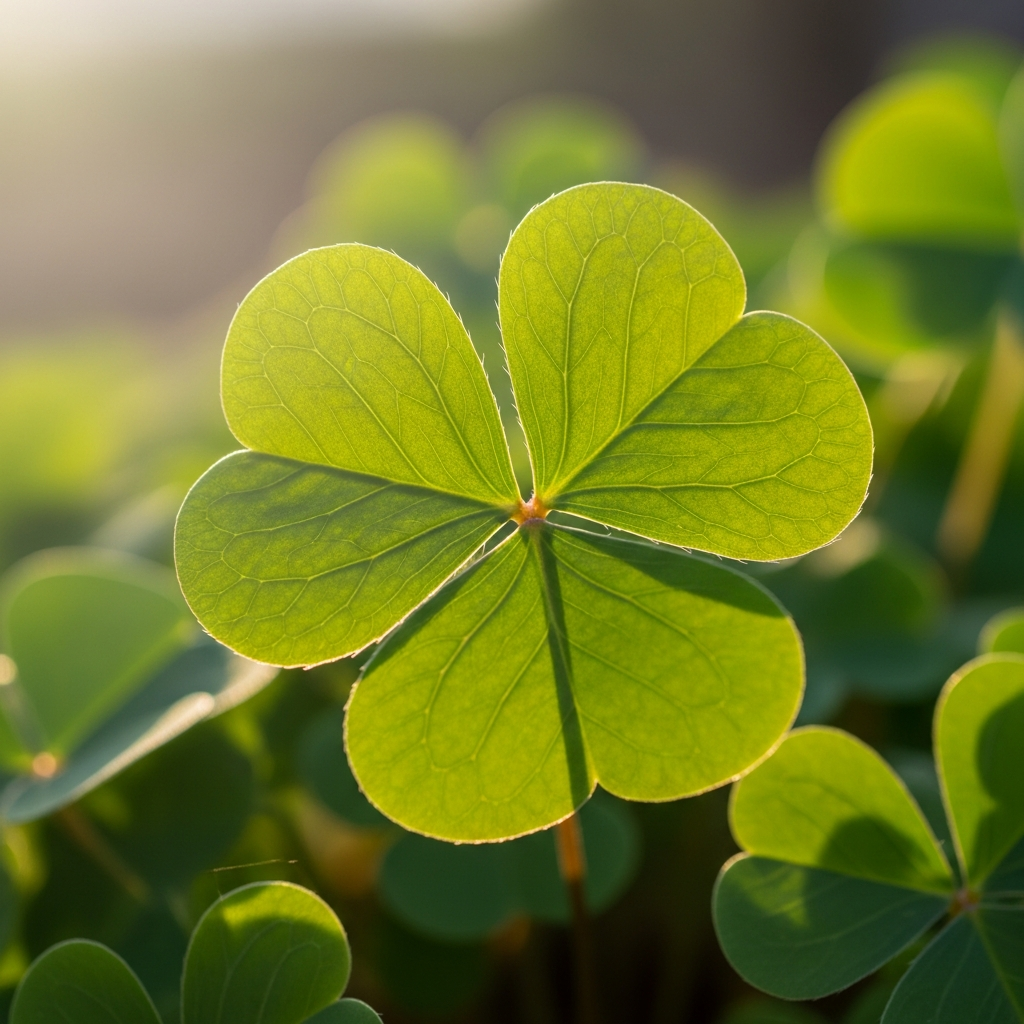
The shamrock spiritual meaning stems from St. Patrick's ingenious teaching method. He faced a significant challenge: how could he explain the Holy Trinity, the Christian doctrine that God exists as three persons in one being, to people unfamiliar with this concept? His solution was beautifully simple. Patrick reached down and picked a shamrock, a plant native to the Irish landscape.
Three distinct leaves, one single stem. Three persons, one God. The shamrock Holy Trinity teaching transformed an abstract theological idea into something anyone could see and understand. This visual approach proved remarkably effective, helping convert an entire nation to Christianity.
The Deeper Symbolism of Three Leaves
Each leaf of the shamrock represents one person of the Trinity:
- The Father: Creator of all things
- The Son: Jesus Christ
- The Holy Spirit: God's presence with believers
The unified stem shows that these three are not separate gods but one divine being. Some traditions also associate the three leaves with faith, hope, and love. What makes this teaching so powerful is that it reveals God's truth through nature itself, a hallmark of Celtic Christian spirituality.
Why This Teaching Method Still Resonates
Parents today can use the same technique St. Patrick employed 1,600 years ago. When your child asks about God, pick a clover from your yard. This hands-on, visual approach works across all ages. The shamrock reminds us that spiritual truths often hide in plain sight within creation, waiting to be discovered.
Celtic Christian Symbols and Their Hidden Meanings
The Celtic Cross: Where Circle Meets Cross
The Celtic cross stands as one of the most recognizable symbols of Irish Christian heritage. This distinctive design features a traditional cross with a circle surrounding the intersection. One theory suggests St. Patrick himself created this symbol by superimposing the Christian cross onto a pagan sun stone, demonstrating how Celtic Christianity often transformed rather than destroyed existing traditions.
The circle represents eternity, God's endless love with no beginning or end. The cross represents Christ's sacrifice. Together, they proclaim that God's love expressed through Christ extends into eternity. These high crosses, some standing over 20 feet tall, still mark ancient monastery sites throughout Ireland.
The Trinity Knot (Triquetra): Eternal and Unbroken
The Celtic trinity knot meaning goes far beyond decorative appeal. This symbol consists of three interlocking arcs with no beginning or end, representing the eternal nature of the Holy Trinity. According to ancient symbol studies, the triquetra symbolizes eternal spiritual life in Celtic Christian tradition.
You will find this symbol throughout the famous Book of Kells and other Celtic Christian manuscripts. Today, many wear trinity knot jewelry without realizing they carry an ancient symbol of faith. Understanding Celtic symbols hidden meanings transforms these designs from mere decoration into statements of spiritual heritage.
The Meaning Behind Celtic Christian Art
Celtic Christian art features several recurring elements:
- Spirals: Represent spiritual growth and life's journey
- Interlaced patterns: Show the interconnectedness of all creation
- Animal imagery: Often carry Christian symbolism (the lamb, the dove)
- Endless knots: Depict eternity and the continuity of faith
When families wear Celtic-inspired St. Patrick's Day outfits, they connect to centuries of faith expression. This awareness transforms simple clothing choices into meaningful cultural participation.
St. Patrick's Breastplate: The Power of Celtic Prayer
What Is St. Patrick's Breastplate (Lorica)?
St. Patrick's Breastplate is an ancient prayer of divine protection, also known as the Lorica. A lorica was a Roman soldier's armor, making this prayer essentially "spiritual armor." The Lorica is traditionally attributed to St. Patrick himself, though scholars debate its exact origins. Legend says Patrick prayed it when evading enemies who saw only a deer passing by, giving it the alternate name "The Deer's Cry."
The Prayer's Powerful Themes
The most beloved portion of this prayer surrounds the believer with Christ's presence:
"Christ be with me, Christ within me,
Christ behind me, Christ before me,
Christ beside me, Christ to win me,
Christ to comfort and restore me,
Christ beneath me, Christ above me,
Christ in quiet, Christ in danger,
Christ in hearts of all that love me,
Christ in mouth of friend and stranger."
The prayer invokes the Trinity's power and calls upon the forces of creation, including sun, moon, fire, and lightning, as testimony to God's strength.
How Families Can Use This Prayer Today
Consider incorporating this prayer into your family's St. Patrick's Day observance:
- Recite the "Christ be with me" portion as a morning blessing
- Pray it before travel or new adventures
- Teach children the key verses as protection prayers
- Use it during challenging times as a reminder of God's presence
This Celtic prayer tradition connects modern families to over 1,500 years of Christian devotion.

The Legend of Driving Out Snakes: What It Really Means
The Legend as Most Know It
Popular tradition holds that St. Patrick drove all snakes from Ireland into the sea after they attacked him during a 40-day fast on a mountain. It is a dramatic image that has captured imaginations for centuries. However, there is one significant problem with this story: Ireland has never actually had snakes. The island's post-Ice Age climate and geographic isolation prevented snakes from ever reaching its shores.
The Symbolic Meaning: Driving Out Paganism
The St. Patrick snakes meaning becomes clear when we understand the symbolism. In the Bible, the serpent represents evil, temptation, and the fall of humanity. In Celtic mythology, serpents held significance in druidic religion. "Driving out the snakes" is widely understood as a metaphor for St. Patrick converting Ireland from paganism to Christianity.
This symbolic interpretation makes the legend even more meaningful. Patrick did not simply remove something; he transformed an entire nation's spiritual landscape. The "snakes" represent the spiritual darkness that retreated before the light of the Gospel.
What This Means for St. Patrick's Legacy
Notably, Patrick's method was not destruction but transformation. He worked within Celtic culture, finding bridges between existing traditions and Christian teaching. The snake legend, while not literally true, carries profound spiritual truth: St. Patrick's Day celebrates a victory of faith over darkness, light over shadow.
Lost Traditions: How St. Patrick's Day Was Originally Celebrated
A Solemn Feast Day, Not a Party
March 17 marks St. Patrick's death, believed to have occurred around 461 AD. In the Catholic tradition, saints' feast days commemorate the day they entered eternal life. For centuries, St. Patrick's Day was a quiet, religious observance in Ireland, not a raucous celebration.
Here is a fact that surprises many: pubs in Ireland were actually required by law to close on St. Patrick's Day until the 1970s because it was considered primarily a religious observance. The first St. Patrick's Festival in Dublin was not held until 1996.
Traditional Spiritual Practices
Original St. Patrick's Day traditions included:
- Attending Mass: The day began with church services
- Lenten dispensation: Special permission to set aside Lenten fasting (St. Patrick's Day often falls during Lent)
- Wearing the shamrock: Pinning a fresh shamrock to clothing for church
- Visiting holy wells: Making pilgrimages to sites associated with St. Patrick
- "Drowning the shamrock": Placing the shamrock in the last drink of the day, then discarding it
How the Secular Celebration Evolved
The transformation from religious observance to cultural celebration largely occurred among the Irish diaspora in America. The first St. Patrick's Day parade took place in New York City in 1762, organized by Irish soldiers in the British army. Over time, the day evolved from honoring a saint to celebrating Irish heritage more broadly. Understanding why St. Patrick's Day is a religious holiday helps us appreciate what has been lost and inspires us to reclaim the spiritual heart of this celebration.
How Families Can Celebrate the Spiritual Meaning Today
Creating Meaningful Family Traditions
How can modern families celebrate St. Patrick's Day spiritually while still enjoying the festivities? Here are practical suggestions:
- Begin the day with St. Patrick's Breastplate prayer
- Share St. Patrick's story at breakfast
- Visit a church or cathedral with Celtic heritage
- Create a "gratitude shamrock" where each leaf represents a blessing
- Cook a traditional Irish meal while discussing Irish Christian history
Connecting Faith and Celebration
Wearing green is not just about luck; it connects to Ireland's identity as the "Emerald Isle" and the shamrock's importance in St. Patrick's teaching. When families dress in coordinated green attire, they participate in a tradition honoring Irish Christian heritage. St. Patrick's Day Matching family outfits allow everyone to celebrate together, creating visual unity that reflects the interconnected Celtic knot patterns of Irish Christian art.
Use the day to discuss faith, forgiveness, and purpose with your children. Explain why we wear shamrocks (not four-leaf clovers). Transform the celebration from superficial to intentional.
A Faith-Centered St. Patrick's Day Schedule
| Time | Activity |
|---|---|
| Morning | Prayer and St. Patrick story time |
| Afternoon | Creating Celtic crosses or shamrock crafts |
| Evening | Traditional Irish meal with heritage discussion |
| Bedtime | Praying a portion of St. Patrick's Breastplate |
Teaching Children the True Meaning of St. Patrick's Day
Age-Appropriate Ways to Share St. Patrick's Story
Different ages require different approaches when explaining St. Patrick's Day meaning to kids:
Toddlers and Preschoolers: Focus on the shamrock and the simple "three in one" concept. Use crafts and sensory activities. Keep it visual and hands-on.
Elementary Age: Tell the full adventure story: kidnapping, escape, and heroic return. Children this age love stories of challenge and triumph. Ask questions like, "Would you go back to help people who had been mean to you?"
Tweens and Teens: Dive deeper into themes of forgiveness, purpose, and faith under pressure. Discuss how Patrick found meaning in suffering and chose blessing over bitterness.
Visual Teaching Tools
- Use real shamrocks (or clovers) to explain the Trinity just as Patrick did
- Celtic cross coloring pages with discussion of symbolism
- Picture books about St. Patrick's life
- Create family Celtic knot art projects
Conversations That Matter
Use St. Patrick's Day as an opportunity for meaningful discussion:
- "Why do you think St. Patrick went back to Ireland after they had been so mean to him?"
- "What would be really hard to forgive? How did Patrick's faith help him?"
- "The shamrock teaches us that God is three and one at the same time. What else in nature might teach us about God?"
Making It Memorable
Children remember what they experience. Dressing up in festive St. Patrick's Day clothing makes the holiday tangible for little ones while creating opportunities for conversation about what the day truly means. Cook traditional Irish foods together while telling stories. Create a "St. Patrick's Day storybook" with family drawings. The spiritual significance becomes personal when connected to sensory experiences and family togetherness.
Frequently Asked Questions About St. Patrick's Day Spiritual Meaning
Is St. Patrick's Day a religious holiday?
Yes, St. Patrick's Day is a religious feast day in the Catholic Church and other Christian denominations. It commemorates the death of St. Patrick on March 17, circa 461 AD. The day was originally a holy day of obligation in Ireland, focused on prayer, Mass attendance, and honoring St. Patrick's missionary legacy. The secular celebrations developed later, primarily among Irish immigrants in America.
What is the true spiritual meaning of the shamrock?
The shamrock's spiritual meaning comes from St. Patrick using it to explain the Holy Trinity to the Irish people. The three leaves represent the Father, Son, and Holy Spirit, while the single stem shows they are one God. It transformed an abstract theological concept into a visible, natural illustration of Christian faith. The shamrock is not just a lucky charm but a sacred teaching tool.
Was St. Patrick actually Irish?
No, St. Patrick was not Irish by birth. He was born in Roman Britain around 385 AD to a Christian family. He became connected to Ireland when Irish raiders kidnapped him at age 16 and sold him into slavery there. After escaping, he returned to Ireland as a missionary, dedicating his life to the people who had once enslaved him.
What does St. Patrick's Breastplate prayer mean?
St. Patrick's Breastplate is an ancient prayer of protection attributed to St. Patrick, also called the Lorica. It invokes the Trinity and creation's power for spiritual defense. The most famous lines, "Christ be with me, Christ within me, Christ behind me, Christ before me," declare God's presence surrounding the believer in all directions as spiritual armor.
Did St. Patrick really drive snakes out of Ireland?
No, this is legend rather than history. Ireland has had no snakes since the Ice Age due to its climate and geographic isolation. The story is widely understood as symbolic: "snakes" represent paganism and druidic religion, and St. Patrick "drove them out" by converting Ireland to Christianity. The legend celebrates his success in transforming Ireland's spiritual landscape.
Why do we wear green on St. Patrick's Day?
Wearing green connects to Ireland's identity as the "Emerald Isle" and the shamrock's importance in St. Patrick's teaching. Green represents Irish Christian heritage, spring renewal, and the hope of faith. Originally, blue was associated with St. Patrick, but green became dominant due to the shamrock's significance and Irish nationalism.
How can I celebrate St. Patrick's Day in a meaningful, spiritual way?
Celebrate meaningfully by learning and sharing St. Patrick's true story, praying St. Patrick's Breastplate, using the shamrock to teach about the Trinity, attending church services, and discussing Irish Christian heritage with family. Balance festive celebration with intentional moments of reflection on faith, forgiveness, and purpose.
Why is St. Patrick's Day on March 17?
March 17 marks the traditional death date of St. Patrick, believed to be in 461 AD. In the Catholic tradition, saints' feast days are typically celebrated on their death date, which represents their entrance into eternal life. The date has been observed as St. Patrick's feast day since the early medieval period.
Embrace the True Spirit of St. Patrick's Day
The hidden spiritual meaning of St. Patrick's Day reveals a treasure far richer than gold at the end of any rainbow. Behind the parades and green festivities lies a story of a teenage slave who found faith in suffering, forgave his captors, and transformed a nation. The shamrock is not merely decoration but a teaching tool that has helped generations understand the Holy Trinity. Celtic crosses and trinity knots carry centuries of devotion in their interlaced lines.
This St. Patrick's Day, whether you are watching parades, enjoying family time, or gathering around the table, you now carry knowledge that transforms a holiday into a holy day. St. Patrick's legacy of faith, forgiveness, and spiritual transformation continues to inspire nearly 1,600 years after his death.
When you dress your family in coordinated coordinated family St. Patrick's Day outfits, you create more than photos; you create opportunities for connection, conversation, and the passing down of traditions that matter.
May the same faith that sustained a young shepherd on the Irish hillsides and transformed a nation bring meaning, joy, and blessing to your celebration.


