


If your child eats, sleeps, and breathes Barbie, you are far from alone — and child psychologists say that fascination is doing more good than you might think. Every morning might start with choosing which Barbie outfit to pack. Every bedtime story might somehow involve a Barbie adventure. If you have ever whispered to yourself, “Why is my daughter obsessed with Barbie?” — or wondered the same about your son — you have stumbled onto a question that developmental psychologists find genuinely fascinating.
Here is the surprising truth: research suggests that children who are deeply drawn to Barbie dolls are often engaging in some of the richest developmental play available to them. From building empathy and narrative skills to rehearsing social situations and exploring identity, the psychology behind kids who love Barbie points to cognitive and emotional growth, not a problem that needs fixing.
At PatPat, we see this firsthand. Parents searching for ways to support their child’s love of imaginative play are part of a much bigger picture — one shaped by decades of child psychology research, neuroscience discoveries, and evolving cultural conversations. This article brings you expert insights from developmental psychologists, play therapists, and neuroscientists to help you understand what your child’s Barbie obsession really means. We will cover the science of doll attachment, the specific skills Barbie play builds, how to navigate body image conversations, what healthy play looks like at every age, and practical tips to make the most of this developmental window.
Whether you are cheering on your child’s Barbie phase or quietly wondering if it is “too much,” this guide has you covered.
Why Do Kids Love Barbie So Much? The Science of Doll Attachment
To understand why kids love Barbie, you need to start with the brain. Doll play is not just idle fun — it triggers real neurological activity that shapes how children learn to understand other people.
Mirror Neurons and Why Children See Themselves in Barbie
A landmark study published in Frontiers in Human Neuroscience by researchers at Cardiff University found that doll play activated brain regions associated with social processing and empathy, even when children played entirely alone. This was a groundbreaking finding because it demonstrated that children do not need a live playmate to practice social thinking — a Barbie doll can serve as a “social partner” for the brain.
How does this work? When your child picks up a Barbie and starts narrating a scenario — “She’s going to visit her friend, but her friend is sad today” — their brain activates mirror neuron pathways. These are the same neural circuits that fire when we observe and interpret the emotions and actions of real people. In simple terms, your child’s brain treats Barbie play as genuine social practice.
Dr. Sarah Gerson, the developmental neuroscientist who led the Cardiff University research, noted that this activation of the posterior superior temporal sulcus (pSTS) — a brain region critical for social understanding — suggests that doll play may help children develop social processing skills like empathy. This means the child staging an elaborate Barbie birthday party is not just playing — they are building neural pathways for understanding feelings, intentions, and social dynamics.
The Open-Ended Play Factor That Keeps Kids Coming Back
Not all toys are created equal when it comes to sustained engagement. What makes Barbie uniquely powerful is what psychologists call “open-ended play” — there is no right answer, no final level, and no predetermined outcome. Your child is the author, director, and performer.
This connects to a well-established concept in psychology called self-determination theory. According to researchers Edward Deci and Richard Ryan, humans — including children — are most motivated when three needs are met: autonomy (control over decisions), competence (feeling capable), and relatedness (connection to others). Barbie play satisfies all three:
- Autonomy: Your child decides the story, the characters, and the outcome.
- Competence: They master dressing, posing, arranging, and narrating increasingly complex scenarios.
- Relatedness: Barbie serves as a social stand-in, and children often invite siblings or friends into the play world.
This is why a child can play with the same Barbie for hours across weeks and months without getting bored. The toy itself is a canvas. The child is the artist. Closed-ended toys like puzzles offer a single solution and a single satisfaction. Barbie offers infinite satisfaction because the possibilities never run out.
Barbie’s expansive ecosystem — careers, accessories, vehicles, dream houses — adds another layer. Each new element introduces fresh narrative fuel. A veterinarian Barbie opens a storyline about helping animals. A pilot Barbie leads to adventures around the world. This is not brand marketing trivia; it is a genuine developmental advantage, because children who have more narrative material build more complex stories, which in turn strengthens cognitive flexibility.
What Child Psychologists Say About Barbie and Development
So what do the professionals — the people who study children for a living — actually think about Barbie? The short answer: they are far more positive than you might expect.
Developmental Psychologists on Barbie as a Learning Tool
Developmental psychologists focus on how children build cognitive milestones, and many view Barbie play as a vehicle for one of the most important social-cognitive skills: theory of mind. This is the ability to understand that other people have thoughts, feelings, and perspectives different from your own.
Research published in developmental psychology journals has consistently linked pretend play with stronger theory of mind development. When your child makes one Barbie comfort another after a “bad day,” they are practicing perspective-taking — stepping outside their own experience to imagine what someone else might feel. The American Academy of Pediatrics has recognized the power of play in its clinical guidance, emphasizing that pretend play builds exactly these kinds of foundational social-cognitive abilities.
Dr. Doris Bergen, a professor of educational psychology, has spent decades studying pretend play and found that children who engage in rich pretend play scenarios — particularly with human-like dolls — tend to show enhanced language skills, better social skills, and more creativity than peers with less pretend play experience. Barbie, with her human form and open narrative potential, is particularly well-suited for this kind of play.
Play Therapists on the Emotional Value of Doll Play
Licensed play therapists bring a different perspective. In clinical settings, dolls — including Barbie dolls — are used as therapeutic tools to help children process emotions, navigate difficult experiences, and express feelings they cannot put into words directly.
The mechanism is what therapists call “emotional distancing.” When a child cannot say, “I’m scared about starting a new school,” they can make Barbie scared about starting a new school. The doll provides a safe emotional proxy, allowing the child to explore difficult feelings without the vulnerability of first-person disclosure.
“Children communicate through play the way adults communicate through words. When a child uses a doll to act out a scenario, they are telling you something important about their inner world — even if they do not realize it themselves.”
This does not mean your child’s Barbie play at home is a sign of distress. Quite the opposite. Everyday doll play provides a low-stakes emotional practice space. Your child processes minor frustrations, social dilemmas, and emotional puzzles through Barbie scenarios routinely — and that is a sign of healthy emotional development, not a red flag.
The takeaway from both clinical and developmental perspectives is clear: children’s deep engagement with Barbie is not something to worry about. It is something to support.
Pediatricians Weigh In on Doll Play and Healthy Development
Beyond psychologists and therapists, pediatricians also endorse doll play as part of a healthy childhood. The American Academy of Pediatrics has been increasingly vocal about the importance of play in its clinical guidance, emphasizing that unstructured, imaginative play — the exact kind that Barbie encourages — is essential for brain development, stress management, and building the parent-child bond.
Pediatricians often note that in a world dominated by structured activities and digital devices, toys that encourage open-ended storytelling represent a return to the kind of play that children’s brains are designed for. Dr. Michael Yogman, lead author of the AAP’s clinical report on play, has emphasized that play is fundamentally important for learning 21st-century skills such as problem-solving, collaboration, and creativity — all skills that Barbie play naturally develops.
The professional consensus across disciplines is remarkably consistent: doll play is not frivolous, Barbie play is not harmful, and the depth of your child’s engagement is a feature, not a bug.
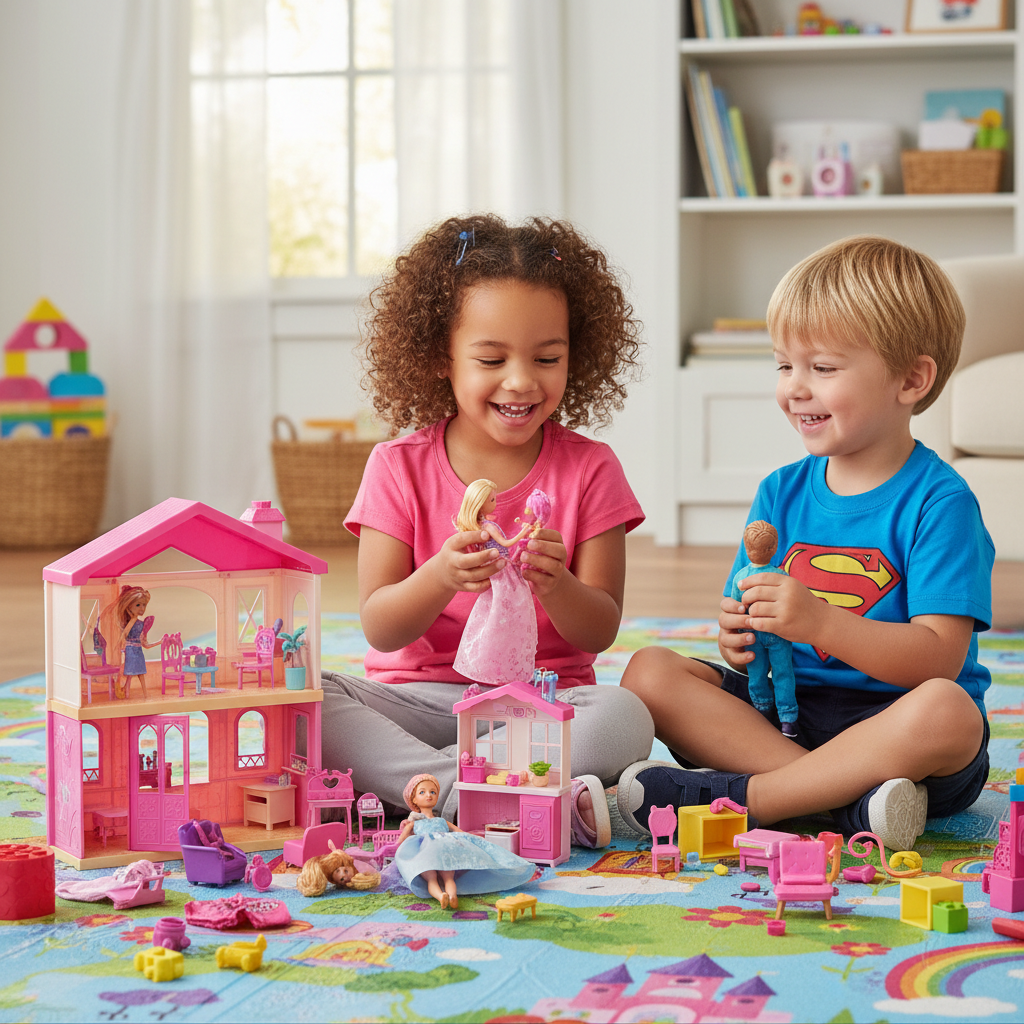
Cognitive and Emotional Benefits of Playing with Barbie Dolls
Knowing that experts approve is reassuring. But what exactly is your child gaining? Let us break down the specific benefits of playing with Barbie dolls by skill category.
Language, Storytelling, and Problem-Solving Skills
One of the most well-documented cognitive benefits of doll play is the development of narrative competence. When your child creates a Barbie story — complete with characters, a beginning, middle, and end, a conflict, and a resolution — they are practicing the same storytelling structure that underpins reading comprehension, writing, and even mathematical word problems.
Consider a simple scenario: a child sets up a Barbie school day. Barbie wakes up, picks an outfit, goes to class, has a disagreement with a friend at lunch, resolves the disagreement, and comes home. In that single play session, your child has practiced:
- Sequencing: Events happen in a logical order.
- Cause and effect: The disagreement happened because of a specific reason.
- Conflict resolution: Barbie had to figure out how to fix the problem.
- Vocabulary expansion: Children narrating Barbie play use richer and more varied language than in non-pretend contexts.
Research on pretend play and language development consistently shows that children who engage in more narrative-driven pretend play develop stronger verbal skills. A child who regularly creates elaborate Barbie storylines is essentially writing stories before they can write — building the cognitive scaffolding that formal literacy will later build upon.
Empathy, Emotional Regulation, and Social Rehearsal
When your child assigns emotions to Barbie — “She’s nervous about her job interview” or “She’s excited because her best friend is visiting” — they are building empathy. Specifically, they are practicing both cognitive empathy (understanding what someone else feels) and affective empathy (sharing in that feeling).
This distinction matters because both types of empathy are essential for healthy relationships, and both are strengthened through doll play. The Cardiff University research confirmed this, showing that the brain regions activated during doll play overlap significantly with those used during real social interaction.
Emotional regulation is another major benefit. Children frequently use Barbie scenarios to process their own feelings at a safe distance. A child who is anxious about a doctor’s visit might play out a Barbie doctor scenario, working through the anxiety in a controlled, self-directed way. This is not escapism — it is a sophisticated self-regulation strategy that children develop naturally through play.
Social rehearsal rounds out the picture. Every Barbie conversation your child narrates — negotiations between characters, apologies, invitations, disagreements — is practice for real social interactions. Children who rehearse social scenarios through doll play often show greater social confidence and better conflict resolution skills with peers.
Fine Motor Development and Spatial Reasoning
While the cognitive and emotional benefits grab headlines, the physical developmental benefits of Barbie play deserve attention too. Dressing and undressing a Barbie doll — buttoning tiny jackets, sliding on miniature shoes, snapping accessories into place — is a genuine fine motor workout. For preschoolers, these tasks challenge the same pincer grasp and finger dexterity that will later support handwriting.
Arranging Barbie’s world — positioning furniture in the dollhouse, parking the car in the right spot, setting up a scene on a table — also builds spatial reasoning and planning skills. Your child is making decisions about three-dimensional space, proportions, and organization, all while thinking they are just playing.
Key takeaway: The benefits of playing with Barbie dolls span language development, storytelling, problem-solving, empathy, emotional regulation, and social skills. This is not passive entertainment — it is active developmental work disguised as fun.
Barbie and Imaginative Play: Why It Matters More Than Screen Time
In a world where screens compete for every moment of your child’s attention, Barbie play offers something digital content simply cannot replicate. Understanding the difference between active imaginative play and passive screen consumption is one of the most important distinctions parents can make.
How Barbie Supports Open-Ended Play That Screens Cannot Replicate
The American Academy of Pediatrics states that play is not frivolous — it enhances brain structure and function, and ranks open-ended imaginative play at the top of its developmental value hierarchy. Barbie play fits squarely in this category.
When your child watches a Barbie show on YouTube or a streaming platform, they are a passive audience. The story is already written. The characters already make their decisions. The child absorbs but does not create. When the same child picks up a physical Barbie doll, the dynamic reverses completely. Now they are the storyteller, the decision-maker, the director. Their brain shifts from reception mode to creation mode.
Physical doll play also engages systems that screens cannot touch:
- Fine motor skills: Dressing, posing, and arranging dolls develops hand-eye coordination and dexterity.
- Spatial reasoning: Setting up Barbie’s world — furniture, vehicles, accessories — requires understanding of physical space.
- The internal narrator: During hands-on Barbie play, children generate a continuous stream of internal and external dialogue, strengthening executive function and working memory.
When Barbie Play Becomes a Healthy Alternative to Digital Overload
This is not about being anti-screen. Digital Barbie content can actually inspire great physical play — a child who watches a Barbie movie might immediately want to recreate scenes with their dolls. The key is balance and direction.
If your child gravitates toward Barbie videos, try using that interest as a bridge. After watching, ask: “What would happen if Barbie made a different choice?” Then hand them the doll. You are converting passive consumption into active creation, and that shift makes all the difference developmentally.
Setting up an inviting physical play space — with dolls, outfits, and accessories easily accessible — can also tip the balance naturally. Children gravitate toward what is available and appealing. When the Barbie world is ready and waiting, the screen loses some of its pull. The goal is not to eliminate digital content but to ensure that hands-on, child-directed play remains the primary mode of engagement.
Here is a real-world example that illustrates the difference: a six-year-old watches a Barbie animation where Barbie saves a horse. Passive mode — the child absorbs someone else's story. Now, that same child picks up her Barbie and creates her own horse rescue scenario. She decides the horse’s name, the danger, the solution, and the outcome. She narrates the dialogue out loud. She repositions the doll, the horse, and the accessories. She has gone from consumer to creator in a matter of minutes. That shift is not trivial — it represents a fundamentally different level of brain engagement.
Does Barbie Affect Body Image? A Balanced Expert Perspective
No honest conversation about the psychology behind kids who love Barbie can skip the body image question. It is a legitimate concern, and it deserves a thoughtful, evidence-based answer rather than a dismissive one.
The Research Landscape: Then and Now
Earlier studies — particularly those published before 2016 — did raise concerns. Some research suggested that exposure to Barbie’s traditional ultra-thin proportions could influence young girls’ body satisfaction. A frequently cited study by Dittmar, Halliwell, and Ive found that girls exposed to Barbie dolls reported lower body esteem compared to those exposed to other dolls or no dolls.
However, the research picture has evolved significantly. More recent studies emphasize that the doll alone is rarely the determining factor. A child’s body image is shaped by a complex mix of parental attitudes, media exposure, peer relationships, and overall family culture around appearance. The doll is one small piece of a much larger puzzle.
How the Modern Diverse Barbie Lineup Addresses Representation
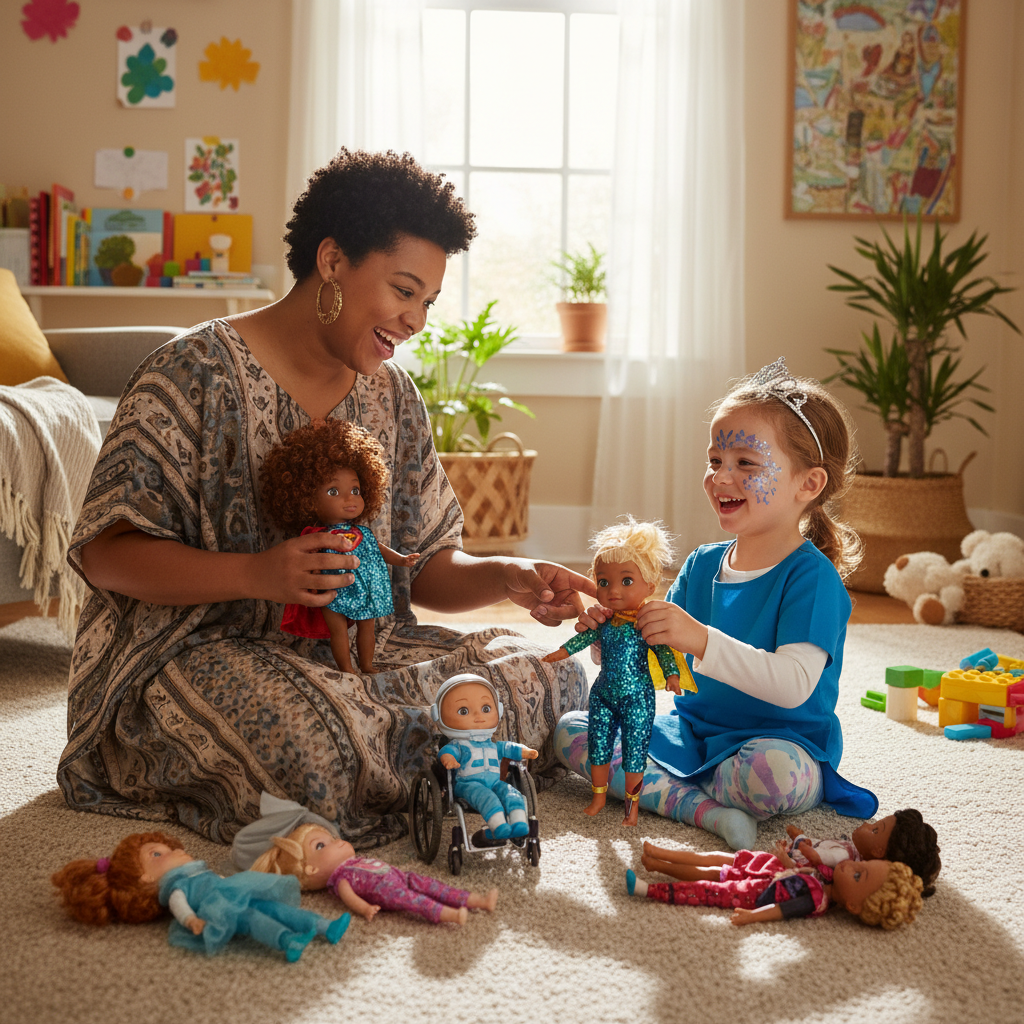
Mattel has made substantial changes since introducing the Barbie Fashionistas line, which features dolls with different body types, skin tones, eye colors, hair textures, and abilities. The Curvy, Tall, and Petite body types, along with dolls in wheelchairs, dolls with hearing aids, and dolls with vitiligo, have fundamentally expanded what Barbie looks like.
Research on representation in toys suggests that seeing yourself reflected in the dolls you play with can positively influence self-concept. When a child with dark skin plays with a Barbie who looks like her, or a child with a disability sees a Barbie in a wheelchair, the psychological message is powerful: you belong, and you matter.
Child psychologists emphasize that the parent-child conversation around the doll matters far more than the doll’s proportions. Talking openly about different body types, strengths, and what makes people beautiful in diverse ways transforms Barbie from a potential concern into a conversation starter. The doll becomes a tool for teaching body positivity, not a threat to it.
The balanced view: Body image concerns about Barbie are valid but should be understood in context. The modern diverse lineup, combined with open parent-child conversation, turns the body image question from a worry into an opportunity.
Barbie Play at Every Age: A Developmental Stage Guide
One of the most common questions parents ask is, “What age should kids play with Barbie?” The answer is that there is no single right age. The way children interact with Barbie evolves alongside their cognitive and social development, and each stage offers unique benefits.
| Age Range | Play Style | Developmental Benefits | What Parents Can Expect |
|---|---|---|---|
| Ages 3-5 | Sensory exploration, basic pretend play, dressing and undressing dolls | Fine motor coordination, basic narrative skills, early symbolic thinking | Simple, repetitive scenarios; more focus on physical manipulation than complex stories |
| Ages 6-8 | Multi-character stories, cooperative play with peers, ongoing “Barbie worlds” | Theory of mind, conflict resolution, extended narrative arcs, cooperative play | Elaborate storylines that continue across sessions; children become protective of their play worlds |
| Ages 9-12 | Customization, collecting, creative expression, digital-physical crossover | Identity formation, aesthetic judgment, organizational skills, creative expression | Shift toward designing, styling, and curating rather than pure narrative play |
Ages 3-5: Sensory Exploration and Early Pretend Play
At this stage, your toddler or preschooler is mostly fascinated by the physical aspects of Barbie. Dressing and undressing the doll is a fine motor workout. Brushing Barbie’s hair, putting on tiny shoes, and arranging accessories all develop hand-eye coordination and dexterity.
Pretend play at this age tends to be simple and repetitive: “Barbie goes to the store. Barbie comes home.” That repetition is not boring or concerning — it is how young brains consolidate new concepts. Each repetition strengthens the neural pathway just a little more.
Tip: Start with a small number of dolls and accessories. Too many choices can overwhelm a preschooler. Two or three dolls with basic outfits is plenty to spark rich early pretend play.
Ages 6-8: Complex Narratives and Social World-Building
This is where Barbie play truly explodes in complexity. Your early elementary child is now building multi-character stories with plot twists, emotional arcs, and social dynamics. They assign personalities to different dolls. They create rules for their Barbie world. And they often develop ongoing storylines that continue across days or even weeks.
This stage is a goldmine for theory of mind development. When your child makes one Barbie apologize to another, or has a Barbie character feel left out and then included, they are practicing exactly the social skills they need in the classroom and on the playground.
Ages 9-12: Identity Exploration, Creativity, and Collecting
Here is something many parents worry about needlessly: a 10-year-old or 11-year-old who still loves Barbie is not behind or immature. At this age, the relationship with Barbie often shifts from pure narrative play to creative expression — customizing outfits, designing hairstyles, building elaborate settings, or even creating digital content inspired by their dolls.
Child development experts are clear on this point: play does not have an expiration date. Pressuring children to “outgrow” toys before they are ready can be counterproductive, potentially cutting short a phase of creative development that is genuinely valuable. Let your child lead the transition.
It is also worth noting that many adult Barbie collectors trace their passion back to childhood play that was supported and encouraged rather than shut down prematurely. The multigenerational appeal of Barbie — grandmothers sharing their childhood dolls with granddaughters, parents bonding with children over Barbie movies — speaks to the enduring psychological connection that begins in these formative years. There is no age at which loving Barbie becomes “wrong.” The form of engagement simply evolves.
When Kids Want to BE Barbie: Identity Play, Self-Expression, and Dress-Up
At some point, many children cross a fascinating psychological line. They go from playing with Barbie to wanting to be like Barbie. They want to wear pink. They want the outfits, the accessories, the look. This is not superficial — it is a developmentally significant phase called identity play.
Why Dressing Like Barbie Supports Healthy Identity Development
Identity play is the process by which children try on different versions of themselves. Just as adults might adjust their clothing, language, or behavior in different social settings, children experiment with who they are through costume and imitation. When your child wants to dress like Barbie, they are not mindlessly copying a doll — they are exploring traits they admire: confidence, creativity, boldness, kindness.
Research on costume play and executive function has found that children who dress as characters they admire often demonstrate improved self-regulation and persistence. Psychologists refer to this as the “Batman Effect” — a phenomenon documented by researchers at the University of Minnesota, who found that children who impersonated a hardworking character persevered longer on a boring task than those who worked as themselves. The same principle applies to Barbie-inspired dress-up: embodying an admired character can genuinely boost a child’s confidence and persistence.
For children who want to bring their Barbie world into everyday life, Barbie-inspired clothing collections allow kids to express that connection through what they wear — turning self-expression into something they can carry with them all day.
This impulse to dress as a beloved character extends beyond the playroom. When your child wears a Barbie-themed outfit to school or to a birthday party, they are carrying their imaginative world with them. They are signaling their interests, expressing their personality, and building social connections with other children who share similar passions. Fashion play at this stage is not vanity — it is identity work, and it supports autonomy, decision-making, and self-confidence.
The key for parents is to support this phase rather than dismiss it. Let your child choose outfits that express their Barbie connection. Use the dress-up impulse as an opportunity to talk about what they admire about the character, what qualities they want to develop, and how self-expression through clothing is a valid and healthy form of communication.
A Parent’s Guide to Encouraging Positive Barbie Play
Now that you understand the psychology, here is how to maximize the developmental value of your child’s Barbie play. These strategies are grounded in research on child development and play therapy, and they are designed to be practical, not theoretical.
Five Evidence-Based Strategies for Enriching Barbie Play
- Play alongside your child. Research consistently shows that parental co-play amplifies the cognitive and emotional benefits of pretend play. You do not need to direct the play — just take on a Barbie character and follow your child’s lead. Ask, “What should my Barbie do next?” and let them guide the story.
- Ask open-ended questions during play. Instead of directing scenarios, try prompts like: “What is Barbie going to do about that?” or “How does she feel right now?” These questions deepen narrative complexity and emotional reasoning without taking control away from your child.
- Diversify the Barbie collection intentionally. Introduce dolls of different careers, body types, skin tones, and abilities over time. Each new doll expands the narrative universe and deepens your child’s exposure to representation and diversity. This does not mean buying dozens of dolls — it means choosing thoughtfully.
- Use Barbie play to listen. Children often process real experiences through doll play without realizing it. If your child’s Barbie is dealing with a “mean friend” or is “scared of something,” pay attention. They may be working through something personal. Do not interrogate — just listen and gently follow up later if needed.
- Protect unstructured play time. Resist the urge to make every Barbie session “educational.” The deepest developmental benefits come from free, child-directed play without adult goals or agendas. Sometimes the best thing you can do is step back and let your child’s imagination lead.
What to Do If You Have Concerns About Your Child’s Barbie Play
Most parenting concerns about Barbie play fall into predictable categories. Here is quick guidance for each:
- The play seems repetitive: Repetition is normal and healthy. Young children consolidate learning through repetition. Unless the repetition seems distressed or compulsive, it is typically a sign of active cognitive processing.
- Body image conversations arise: If your child makes a comment about wanting to “look like Barbie,” use it as a conversation starter, not a crisis. Talk about how people come in all shapes, sizes, and colors, and how Barbie’s newer dolls reflect that too.
- Your son wants to play with Barbie: The expert consensus is unanimous — doll play builds empathy, narrative skills, and social understanding regardless of gender. Restricting toy choices based on gender norms can limit developmental opportunities. Support your son’s interest.
- The play feels “too consuming”: Deep engagement is usually a positive sign. However, if your child consistently refuses all other activities, social interactions, and physical play for an extended period, a conversation with your pediatrician may be helpful. In the vast majority of cases, intense focus on Barbie is a phase that naturally broadens over time.
Frequently Asked Questions About Kids and Barbie
Is it normal for kids to be obsessed with Barbie?
Yes, it is completely normal. Child psychologists consider intense interest in Barbie a healthy form of focused play. Children develop deep attachments to toys that offer open-ended creative possibilities. This fascination typically reflects active cognitive and emotional development, not a problem. If the interest is joyful and does not displace all other activities, it is a positive sign.
Are Barbie dolls good or bad for child development?
Research shows that Barbie dolls offer significant developmental benefits, including improved narrative skills, empathy, social rehearsal, and creativity. Earlier concerns about body image have been addressed by modern diverse Barbie lines featuring different body types, skin tones, and abilities. Experts agree that the quality of play and parental engagement matter more than the doll itself. Barbie play is broadly positive when part of a varied play diet.
What age is appropriate for Barbie dolls?
Most children begin meaningful Barbie play around age 3, starting with simple dressing and basic pretend scenarios. Play complexity increases through ages 6-8, and many children continue through age 12 and beyond. Mattel officially recommends Barbie for ages 3 and up. There is no upper age limit — children naturally transition when they are developmentally ready.
Why does my son want to play with Barbie?
Boys are drawn to Barbie for the same developmental reasons as girls: imaginative storytelling, role-play, and social rehearsal. Child psychologists strongly support inclusive play and note that doll play builds empathy and communication skills regardless of gender. Restricting toy choices based on gender can limit developmental opportunities. Encouraging your son’s interest supports healthy emotional growth.
How does Barbie influence child behavior?
Barbie influences behavior primarily through imaginative play, which builds social skills, emotional regulation, and creative thinking. Children rehearse real-life scenarios, practice empathy, and develop problem-solving abilities during Barbie play. The character’s career-focused themes can also inspire aspirational thinking. Parental involvement in play amplifies these positive influences.
Should I be worried if my child only plays with Barbie?
Focused interest in one toy is common and usually healthy. Deep engagement with Barbie indicates rich imaginative capacity. However, if your child shows no interest in any other activity, social interaction, or physical play over an extended period, a conversation with your pediatrician may be helpful. In most cases, intense Barbie focus is a phase that naturally diversifies over time.
Does Barbie affect children’s body image?
Research findings are mixed. Some earlier studies suggested potential body image effects from traditional Barbie proportions, but recent research emphasizes that parental conversation and media literacy play a much larger role. Mattel’s expanded lineup now includes diverse body types, skin tones, and abilities. Experts recommend using the dolls as conversation starters about body positivity rather than avoiding them entirely.
What do psychologists say about doll play?
Psychologists broadly agree that doll play is one of the most valuable forms of childhood pretend play. Neuroscience research from Cardiff University found that doll play activates brain regions associated with empathy and social processing. Developmental psychologists note that doll play builds theory of mind, narrative skills, and emotional intelligence. Play therapists also use dolls as clinical tools for helping children process difficult emotions.
The Bottom Line: Your Child’s Barbie Love Is Good News
The psychology behind kids who love Barbie is not a mystery — it is well-documented, research-supported, and overwhelmingly positive. When your child stages elaborate Barbie adventures, assigns emotions to doll characters, dresses up in Barbie-inspired outfits, or spends an afternoon building a Barbie world from scratch, they are not wasting time. They are building empathy, practicing social skills, developing narrative abilities, strengthening fine motor coordination, and exploring who they are.
Child psychologists, developmental researchers, play therapists, and neuroscientists are remarkably aligned on this point: doll play — and Barbie play specifically — is among the most developmentally rich activities available to children. The concerns that once dominated the conversation have been met with thoughtful research, a more diverse product lineup, and clear expert guidance that puts parents in the driver’s seat.
So the next time your child asks for “just five more minutes” of Barbie time, consider saying yes. Join in when you can. Ask open-ended questions. Listen to the stories they create. And know that, according to the experts, this phase of childhood is building something real and lasting.
At PatPat, we believe that supporting your child’s imaginative world — whether through play, fashion, or everyday adventures — is one of the best investments you can make in their development. The Barbie years go fast. Enjoy them.




