


The moment you booked that first trip with your newborn, the anxiety probably kicked in. Will the baby cry the entire flight? Is a road trip even possible with a two-month-old? How on earth will anyone sleep in a hotel room?
Here is the truth that experienced parents know: traveling with a newborn is absolutely doable, and millions of families do it successfully every year. Yes, it requires more planning than your pre-baby adventures, but with the right preparation, your first family trip can actually be enjoyable rather than a survival mission.
We understand the unique challenges new parents face when planning travel with little ones. This comprehensive guide covers everything you need to know about traveling with a newborn, from car seat safety rules to flying tips, hotel sleep strategies, and complete packing lists. We have gathered insights from pediatricians, safety experts, and real moms who have navigated these exact situations.
Whether you are planning a road trip with your newborn, preparing for baby's first flight, or wondering how you will ever get your infant to sleep in an unfamiliar hotel room, this guide has you covered. Let us dive in and transform that travel anxiety into confident excitement.
When Is It Safe to Travel With a Newborn Baby?

Before you start booking flights or mapping out road trip routes, the first question every new parent asks is: when can my newborn actually travel? The answer depends on several factors, but most families can hit the road sooner than they expect.
What Pediatricians Say About Newborn Travel Age
According to the American Academy of Pediatrics, most healthy, full-term newborns can travel as early as two to four weeks old. The key considerations are your baby's overall health and whether they have any underlying conditions that require monitoring.
For air travel specifically, many pediatricians recommend waiting until four to six weeks when your baby's immune system has developed slightly more resilience. However, this is not a hard rule. If you have a healthy baby and a necessary trip, earlier travel is often possible with your doctor's approval.
Best Age to Travel With Baby for First-Time Parents
Interestingly, many experienced traveling parents report that newborns between two weeks and three months are actually easier travel companions than older babies. Why? Newborns sleep frequently, are not yet mobile, and have simpler needs. They have not developed stranger anxiety or strong schedule preferences yet.
| Baby Age | Travel Difficulty | Key Considerations |
|---|---|---|
| 0-2 weeks | Moderate | Pediatric clearance essential; mom still recovering |
| 2 weeks - 3 months | Easier | Sleep frequently; not mobile; feeding schedules flexible |
| 4-6 months | Moderate | More alert; may need entertainment; sleep patterns developing |
| 7-12 months | Challenging | Mobile; stranger anxiety; strong schedule preferences |
Health Considerations Before Your First Trip
Always schedule a pre-travel pediatric appointment, especially for international travel. Your pediatrician can assess whether your baby is healthy enough for the journey and advise on any destination-specific health precautions. Premature babies or those with respiratory conditions may need to delay travel until cleared by their doctor.
Real Mom Tip
"We called our pediatrician before booking anything. She gave us the green light at our 2-week checkup and even wrote a note for TSA just in case. Having that peace of mind made all the difference."
- Sarah, mom of twoRoad Trip With Newborn: Car Seat Safety and the 2-Hour Rule

Road trips offer flexibility that flying cannot match. You control the schedule, pack as much as you want, and stop whenever baby needs a break. However, car travel with a newborn comes with important safety guidelines that every parent should understand.
Understanding the 2-Hour Car Seat Rule for Newborns
The 2-hour car seat rule is one of the most important safety guidelines for traveling with your newborn by car. This recommendation states that babies should not remain in a car seat for more than two hours at a time without a break.
Why does this matter? According to research from the American Academy of Pediatrics, newborns have undeveloped neck muscles that cannot fully support their heads in a semi-reclined position. Extended time in this position can restrict the airway and potentially reduce oxygen levels, a condition called positional asphyxia.
How Often to Stop on a Road Trip With Baby
Aim to stop every one and a half to two hours when taking a road trip with your newborn. During these breaks, take baby completely out of the car seat for at least 15 to 20 minutes. Use this time for feeding, diaper changes, and allowing baby to stretch on a flat surface.
Strategic timing can make your road trip smoother. Many parents find success leaving right before a scheduled nap so baby sleeps through the first driving stretch. After your stop, baby may be ready for another sleep cycle.
Car Seat Installation Tips for Long Distance Travel
Proper rear-facing car seat installation is critical for safe newborn car travel. The Centers for Disease Control and Prevention recommends having your car seat inspected by a certified child passenger safety technician before any long trip. Key points include:
- The car seat should recline at a 30-45 degree angle for newborns
- Harness straps should be at or below shoulder level
- The chest clip should be positioned at armpit level
- Never use aftermarket padding or accessories not included with the seat
- The seat should not move more than one inch side-to-side at the belt path
Essential Car Accessories for Baby Road Trips
Beyond the car seat itself, a few key accessories make road trips with newborns safer and more comfortable:
- Car seat mirror: Allows you to see baby without turning around
- Window shades: Protect baby from direct sunlight and heat
- Portable changing pad: For clean changes at rest stops
- Temperature monitor: Keep the car between 68-72 degrees Fahrenheit
Real Mom Tip
"We learned to time our drives around nap schedules. Leave right before a nap, and baby sleeps the first two hours. Stop, feed, stretch, then back on the road for another nap cycle. We drove 12 hours this way."
- Michelle, mom of threeFlying With a Newborn: What Every Parent Needs to Know
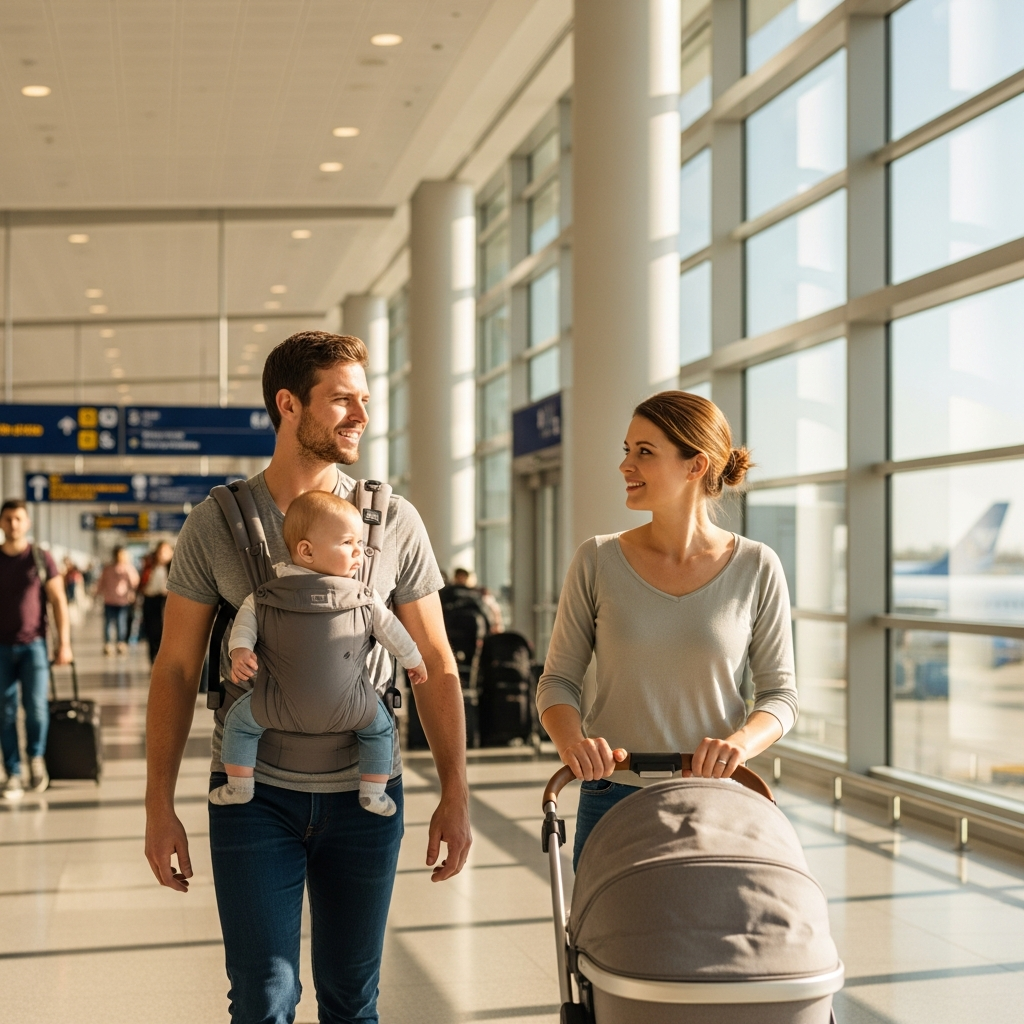
Flying with a newborn feels intimidating, but airlines transport thousands of infants daily. With proper preparation, your baby's first flight can go smoother than you imagine.
When Can a Newborn Fly on an Airplane?
Airline policies on when newborns can fly vary significantly. Most airlines allow babies to fly within their first two weeks of life, though some require them to be slightly older.
| Airline | Minimum Age to Fly |
|---|---|
| American Airlines | 2 days old |
| Delta | 7 days old |
| United | 7 days old |
| Southwest | 14 days old |
| JetBlue | 3 days old |
While airlines may allow very young newborns to fly, most pediatricians prefer waiting until two to four weeks when possible. Always check both airline policy and pediatric recommendation before booking.
Lap Infant vs. Buying a Seat: Which Is Safer?
The lap infant option allows children under two years old to sit on a parent's lap during the flight, typically free for domestic travel. However, this is not the safest option. The Federal Aviation Administration recommends that children be secured in an FAA-approved car seat for the safest flight experience.
During severe turbulence or emergency situations, a lap infant is vulnerable while a properly restrained baby in a car seat has crash protection. The tradeoff is cost, as you must purchase a separate seat for your baby to use a car seat onboard.
FAA Approved Car Seats for Airplane Travel
If you choose to bring a car seat on the plane, it must be FAA approved. Look for a label that specifically states the seat is "certified for use in motor vehicles and aircraft." Most infant car seats and convertible seats carry this certification.
The car seat must be installed in a window seat so it does not block other passengers' exit in an emergency. Some airlines require you to book the seat before the flight rather than hoping for an empty seat at the gate.
What Documents Do You Need to Fly With a Baby?
For domestic flights, you technically do not need documentation for your baby, but bringing a birth certificate is strongly recommended. It proves your baby's age for lap infant status and resolves any questions quickly.
International travel requires a passport for your baby regardless of age. The passport process for newborns takes time, so apply early if international travel is in your plans. Some countries also require specific vaccinations or medical documentation.
Preventing Baby Ear Pain During Takeoff and Landing

One of the biggest concerns parents have about flying with a newborn is ear pain during pressure changes. Understanding why this happens and how to prevent it can make your flight significantly more comfortable for everyone.
Why Do Babies Ears Hurt on Airplanes?
The Eustachian tubes that regulate ear pressure are smaller and more horizontal in babies than in adults. This means they do not equalize pressure as efficiently during the rapid altitude changes of takeoff and landing. The result can be discomfort or pain as the pressure builds in the middle ear.
Feeding Techniques to Relieve Ear Pressure
Swallowing is the most effective way to help equalize ear pressure in babies. When you swallow, the Eustachian tubes open briefly, allowing pressure to balance. This is why feeding during takeoff and landing is the top recommendation from pediatricians and experienced traveling parents.
Whether you breastfeed or bottle-feed, timing is key. Start feeding as the plane begins its descent, not when you are already landing. The pressure change happens gradually, so continuous swallowing throughout the descent provides the best relief.
Pacifiers, Bottles, and Other Ear Pain Solutions
If your baby is not hungry during takeoff or landing, pacifiers work as an effective alternative. The sucking motion encourages swallowing, which helps equalize pressure. Keep several pacifiers handy in case one gets dropped.
Additional tips for preventing baby airplane ear pressure include:
- Feed baby (breast or bottle) during takeoff and landing
- Offer a pacifier if not feeding to encourage swallowing
- Keep baby awake during descent when pressure changes most
- Use saline drops before the flight if baby is mildly congested
- Avoid flying if baby has an active ear infection
Real Mom Tip
"The flight attendant told me to start nursing right when we started our descent, not at the very end. The pressure change happens gradually, so I nurse through the whole landing process. Works every time."
- Jen, frequent flyer momTSA Rules and Airport Security With Baby

Navigating airport security with a newborn adds an extra layer to your travel day, but TSA has specific accommodations for families traveling with infants. Knowing the rules in advance makes the process much smoother.
TSA Rules for Baby Formula and Breast Milk
Great news for parents: formula, breast milk, and baby food are exempt from the standard 3.4-ounce liquid rule. You can bring larger quantities in your carry-on, though these items must be screened separately. The TSA website confirms that formula, breast milk, and juice for infants are allowed in "reasonable quantities" exceeding 3.4 ounces.
Inform the TSA officer that you are carrying breast milk or formula before screening begins. They may test the liquids using specialized equipment, but this process is quick and routine.
Getting Through Security With Strollers and Car Seats
Strollers and car seats must go through X-ray screening or be hand-inspected. Fold your stroller before reaching the conveyor belt if possible. Many parents find it easier to wear baby in a carrier through security and gate-check the stroller at the jet bridge.
You can wear your baby through the metal detector. If you set off the alarm, you may receive additional screening but typically will not need to remove your baby from the carrier.
TSA Security Checklist
- Pack formula/breast milk in clear, accessible bag
- Inform TSA officer of breast milk before screening
- Wear baby in carrier through metal detector
- Fold stroller before reaching X-ray conveyor
- Gate-check stroller at the jet bridge
- Have birth certificate ready if requested
Navigating the Airport With a Newborn
Give yourself extra time when flying with a newborn. Arrive at least 30 to 60 minutes earlier than you would for pre-baby travel. This buffer accounts for diaper changes, feedings, and the extra time needed at security.
Request the family lane at security if available. Many airports offer dedicated lanes for families with young children that tend to move more slowly but accommodate the extra needs of traveling with infants.
Hotel Stays With Newborn: Safe Sleep and Comfort Tips

Getting your newborn to sleep well in a hotel room is often the biggest challenge of traveling with a baby. Creating a safe, familiar sleep environment away from home requires some planning but is absolutely achievable.
Requesting a Hotel Crib vs. Bringing Your Travel Crib
Most hotels offer cribs upon request, but quality and safety standards vary widely. Some hotel cribs are outdated, have soft mattresses, or contain gaps that pose safety risks. Before relying on a hotel crib, call ahead to ask about the brand and model, then research its safety record.
Many traveling families prefer bringing their own pack n play or travel crib. You control the quality, your baby is already familiar with the sleep surface, and you eliminate the uncertainty of what you might receive at check-in.
Setting Up a Safe Sleep Environment in Hotel Rooms
The American Academy of Pediatrics safe sleep guidelines apply whether you are home or traveling. Baby should sleep on a firm, flat surface with no soft bedding, pillows, or bumpers. The same rules that protect your baby at home protect them in hotel rooms.
Inspect any crib before using it. Check for firm mattress support, no gaps between mattress and frame, working hardware, and no recalled models. If something seems wrong, request a different crib or use your own travel setup.
Helping Baby Sleep in an Unfamiliar Place
Maintaining your baby's regular bedtime routine is the most effective way to help them sleep in hotels. If you normally do bath, massage, pajamas, feeding, and then bed, replicate this sequence as closely as possible.
Create darkness using portable blackout curtains or by hanging blankets over windows. Hotel rooms often have more light bleed than home nurseries, and darkness signals sleep time to your baby's developing circadian rhythm.
A portable white noise machine masks unfamiliar sounds like hallway footsteps, elevator dings, or street noise. These unexpected sounds are often what wake sleeping babies in hotel rooms.
The Bathroom Sleep Trick Every Parent Should Know
One of the most popular tips among traveling parents is the bathroom sleep hack. Set up your pack n play in the hotel bathroom, creating a completely dark, quiet space for baby while you have the main room for quiet activities.
Position the crib away from the toilet and keep the bathroom door cracked for airflow. This setup allows baby to sleep soundly while parents watch TV, read, or enjoy room service without tiptoeing around in complete darkness.
Real Mom Tip
"The bathroom trick saved us. We set up the pack n play in the bathroom, kept the door cracked, and baby slept 6-hour stretches while we watched TV in the main room. Game changer for actually enjoying our vacation."
- Amanda, travel mom bloggerComplete Packing List for Traveling With a Newborn

Packing for a newborn trip requires balancing thorough preparation with the reality that you cannot bring your entire nursery. This comprehensive packing list covers what you actually need for car travel, flying, and hotel stays with your baby.
Diaper Bag Essentials for Flying
Your diaper bag is your lifeline during air travel. Pack it with everything you might need during the flight plus backup supplies in case of delays.
Diaper Supplies
- Diapers (10-12 for full travel day)
- Travel wipes pack
- Portable changing pad
- Diaper cream
- Disposable diaper bags
Clothing
- 3+ complete outfit changes for baby
- Spare shirt for parent
- Extra socks and hat
- Lightweight blanket
Feeding Supplies
- Bottles and extra nipples
- Formula (pre-measured portions)
- Breast pump and parts (if pumping)
- Nursing cover
- Burp cloths (4-5)
Comfort Items
- Pacifiers (3-4)
- Swaddle blanket
- Familiar small toy
- White noise machine or app
Health Essentials
A small first-aid kit for baby provides peace of mind and covers common travel situations:
- Infant Tylenol (for babies over 2 months, per pediatrician guidance)
- Gas drops
- Saline drops and nasal aspirator
- Baby thermometer
- Any prescribed medications
- Pediatrician contact information
What to Pack in the Car for Baby Road Trips
Road trips allow more packing flexibility. In addition to diaper bag essentials, include:
- Cooler with extra bottles and milk
- Portable bottle warmer or thermos with hot water
- Car seat mirror
- Window shades
- Portable changing station for rest stops
- Extra clothing layers for temperature changes
- White noise machine with car adapter
Must-Have Gear for Hotel Stays
Beyond your diaper bag contents, these items make hotel stays with newborns smoother:
- Travel crib or pack n play
- Portable blackout curtains or window clips
- White noise machine
- Baby monitor (for larger suites)
- Outlet covers for baby-proofing
- Sleep sack for safe sleep
Ready to Travel With Your Little One?
Browse PatPat's collection of soft, breathable bamboo baby pajamas that packs light and keeps baby comfortable on the go.
Real Mom Tips: Lessons Learned From First Trips With Baby

No amount of reading replaces the wisdom of parents who have actually traveled with newborns. Here are the top lessons learned from moms who have been exactly where you are now.
Managing Your Own Anxiety as a New Parent
Your baby picks up on your stress. If you are anxious and tense, your newborn will sense it and may become fussier. While easier said than done, approaching travel with calm confidence makes a real difference in how your baby responds.
Prepare thoroughly, then trust your preparation. You have packed what you need, planned your route, and anticipated challenges. Now take a breath and embrace the adventure.
What Experienced Moms Would Do Differently
We asked experienced traveling moms what advice they would give their first-time-traveler selves:
"Lower your expectations. Seriously. If everyone arrives safely and fed, it is a success." - Kate
"I packed WAY too much for our first trip. For the second, I realized baby really only needs diapers, food, and a place to sleep. Everything else is nice to have but not essential." - Lauren
"The best advice I got was to travel at baby's pace. Do not rush. Do not stress. Babies are more adaptable than we give them credit for." - Maria
"Accept that you will not sleep well the first night. Once I made peace with that, everything else felt easier." - Jessica
The Most Important Thing to Remember
Flexibility is everything when traveling with a newborn. Your detailed plans will change. Feeding schedules will shift. Naps will happen at unexpected times. Embracing this reality rather than fighting it transforms travel from stressful to manageable.
People are more understanding than you expect. Fellow travelers, flight attendants, and hotel staff have seen countless families with babies. Most want to help, not judge. Accept offers of assistance graciously and do not apologize excessively for having a baby.
Finally, remember why you are traveling. Whether visiting family, taking a needed vacation, or simply wanting to show your new baby the world, these experiences matter. The extra effort is worth it. Your confidence will grow with each trip, and before long, traveling with your child will feel like second nature.
Frequently Asked Questions About Traveling With a Newborn
Most healthy, full-term newborns can travel as early as 2-4 weeks old. Airlines typically allow babies to fly at 2-14 days old (policies vary by carrier). Always get your pediatrician's approval before booking, especially for international travel or if your baby was premature or has health conditions.
The 2-hour rule states babies should not stay in a car seat for more than 2 hours without a break. Newborns' neck muscles cannot support their heads properly in a semi-reclined position for extended periods, which can restrict breathing and reduce oxygen levels. Plan stops every 1.5-2 hours for feeding, diaper changes, and stretching.
Feed your baby during takeoff and landing to encourage swallowing, which equalizes ear pressure. Breastfeeding, bottle-feeding, or offering a pacifier all work effectively. Start feeding as descent begins, not just at landing, since pressure changes gradually throughout the approach.
While not always required for domestic flights, bringing a copy of your baby's birth certificate is strongly recommended. It proves your baby's age for lap infant status and resolves any questions quickly. International flights require a passport for the baby regardless of age.
The FAA recommends using an FAA-approved car seat on the aircraft, which requires purchasing a seat. While lap infant travel is allowed for children under 2, a car seat provides the safest protection during turbulence or emergency situations. Many families weigh the safety benefits against the additional cost.
Create a dark, quiet environment using portable blackout curtains and a white noise machine. Maintain your baby's regular bedtime routine. Many parents use the "bathroom trick" - setting up a pack n play in the bathroom for darkness and sound buffering while they stay in the main room.
Pack 10-12 diapers, travel wipes, portable changing pad, 3+ outfit changes for baby, spare shirt for yourself, bottles, formula or breast milk, pacifiers, burp cloths, and any needed medications. Also include a swaddle blanket and white noise machine or app for comfort.
Most pediatricians consider it reasonably safe to fly with an unvaccinated newborn if necessary, though they may recommend waiting until 4-6 weeks when the immune system is slightly stronger. Avoid peak travel times, wash hands frequently, and limit exposure to crowds when possible. Always consult your pediatrician for personalized guidance.
Your First Trip Awaits
Traveling with a newborn requires more planning than your pre-baby adventures, but it is absolutely achievable. Millions of families successfully take road trips, fly across the country, and stay in hotels with their newborns every single day. With the preparation outlined in this guide, you can join them confidently.
Remember the essentials: respect the 2-hour car seat rule on road trips, feed during takeoff and landing to prevent ear pain, create a safe sleep environment in hotels, and pack strategically without overdoing it. Most importantly, stay flexible and trust that you can handle whatever travel throws your way.
We believe that family adventures should not wait. Whether you are visiting grandparents, taking your first vacation as a new family, or simply exploring somewhere new, these early travel experiences create lasting memories. Your baby may not remember the trip, but you will cherish these moments forever.
Start with shorter trips to build confidence. Each journey teaches you something new about traveling with your little one. Before you know it, you will be the experienced parent offering advice to nervous first-timers at the airport gate.
Safe travels to you and your growing family. The world is waiting to meet your newest adventure partner.
Plan Your Family Adventure
Browse PatPat's collection of comfortable, travel-ready baby clothing perfect for your next trip. From soft pajamas to easy-change outfits, we have everything your little traveler needs.


