


You watch your toddler toddle toward an Easter basket, eyes wide with wonder at the colorful eggs tucked inside. It is a sweet moment, but something tugs at your heart. How do you share what Easter really means with someone who still thinks the moon follows them home?
If you have ever felt uncertain about explaining Easter to your toddler, you are not alone. Easter involves some big concepts, including death, resurrection, and everlasting love, that can feel overwhelming to translate for a two or three year old. But here is the good news: teaching Easter to toddlers does not require a theology degree. It requires simple words, patient repetition, and a willingness to plant seeds of faith that will grow over time.
In this guide, you will discover age-appropriate ways to explain the Easter meaning for kids, hands-on activities that bring the story to life, and practical tips for making this season meaningful for your whole family. At PatPat, we believe that special celebrations deserve both thoughtful preparation and adorable outfits, and we are here to help you create Easter memories that matter.
Why the Easter Story Can Feel Overwhelming for Toddlers
Before diving into how to share the Easter story, it helps to understand why it feels challenging in the first place. Easter is not like explaining a birthday party or a trip to the zoo. It involves abstract concepts that even adults sometimes struggle to fully grasp.
The key is remembering that your goal is not complete theological understanding. Your goal is planting seeds. Think of these early conversations as the first drops of water on soil that will be nourished for years to come.
What Toddlers Can and Cannot Understand
According to developmental research, children in the preoperational stage (ages 2-7) develop symbolic thought but cannot yet think abstractly or hypothetically. This means your toddler understands concrete things they can see, touch, and experience directly.
What toddlers can grasp:
- Emotions like love, happiness, and sadness
- Simple stories with clear beginnings and endings
- Concrete symbols they can hold or see
- Repetitive messages delivered over time
What toddlers cannot yet grasp:
- Abstract theological concepts like salvation or atonement
- Complex cause-and-effect relationships
- Symbolic meanings without concrete representation
Additionally, toddler attention spans are naturally short. Research shows that a 2-year-old can focus for approximately 4 to 6 minutes, while a 3-year-old may sustain attention for 6 to 8 minutes. This means your Easter conversations should be brief, simple, and repeated often rather than delivered in one long sitting.
If you have focused previous Easters mainly on bunnies and egg hunts, there is no need for guilt. Every Easter is a new opportunity to add meaning to your celebrations.
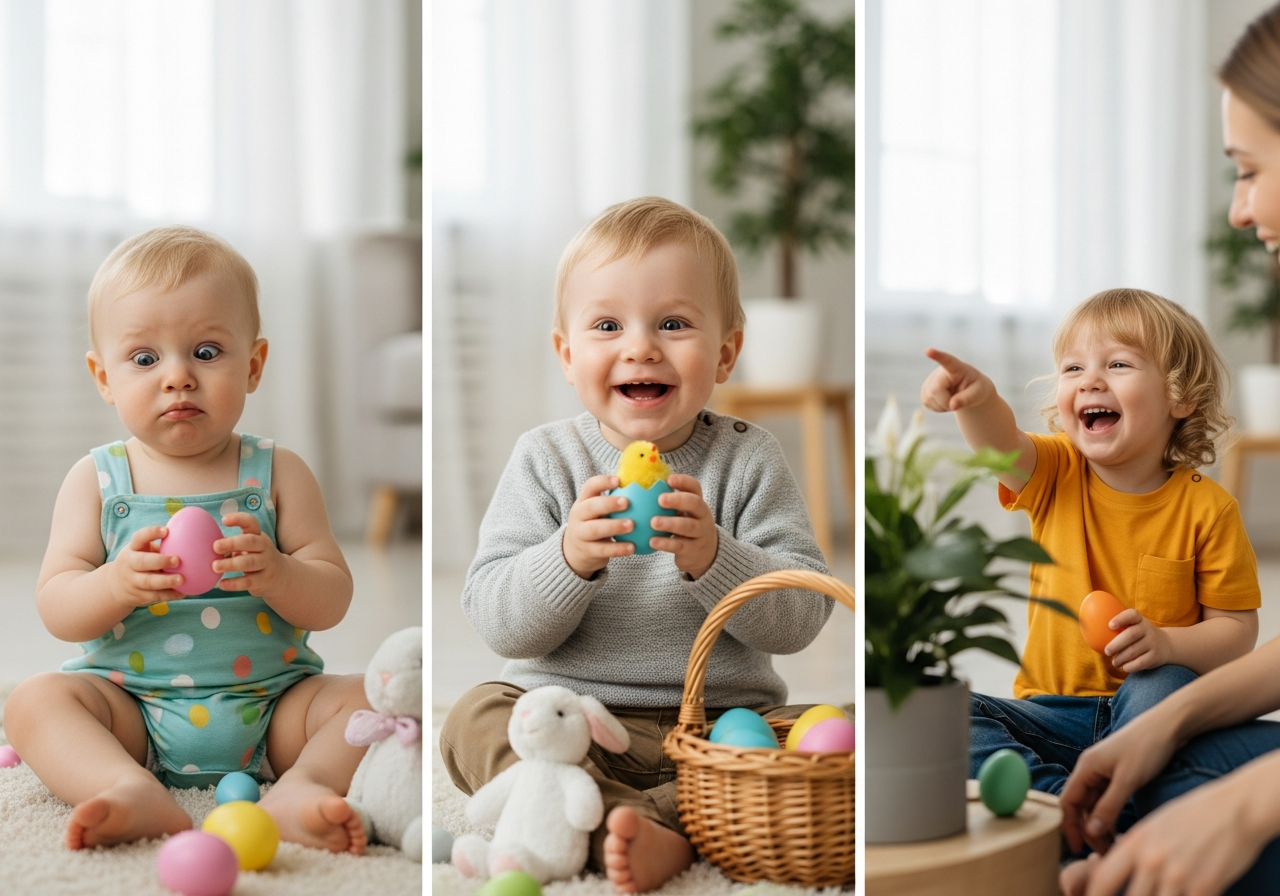
Age-Appropriate Approaches for 2, 3, and 4 Year Olds
Every child develops differently, but understanding general developmental stages helps you tailor your approach. Here is a breakdown of what works best at each age.
How to Explain Easter to a 2 Year Old
At two years old, keep everything extremely simple. Your toddler is learning through their senses and emotions, not logic.
What to say:
- "Jesus loves you so much."
- "Easter is a happy, happy day!"
- "Jesus made everything bright and new."
How to engage them:
- Point to pictures in board books and name what you see
- Sing simple songs with hand motions
- Keep conversations to 2-3 minutes maximum
- Use touch-and-feel books about spring and new life
At this age, your tone of voice and facial expressions communicate more than your words. When you talk about Easter with joy and warmth, your toddler absorbs that emotional connection.
How to Explain Easter to a 3 Year Old
Three year olds are ready for slightly more detail. They understand that stories have a beginning, middle, and end, and they are starting to ask "why" questions.
What to say:
- "Easter is the day Jesus woke up and was alive again!"
- "People were sad, but then they were SO happy."
- "Jesus went to sleep and then woke up in a special way."
How to engage them:
- Read picture books about the Easter story
- Do simple crafts together
- Have 5-minute focused conversations
- Connect Easter to things they observe in nature
What 4 Year Olds Can Grasp About Easter
By four, your child can follow a multi-day sequence and participate more actively in Easter traditions.
What to say:
- Introduce Palm Sunday: "People waved branches and cheered for Jesus like he was a king!"
- Mention the sad day simply: "Some people did not understand Jesus. It was a sad day for his friends."
- Emphasize the happy ending: "But then came the best part! Jesus was alive again, and everyone was so happy!"
How to engage them:
- Use resurrection eggs with simple symbols
- Answer their "why" questions honestly and simply
- Involve them in Holy Week activities
- Let them retell the story in their own words

Simple Ways to Tell the Easter Story to Your Toddler
Now let us get practical. Here are actual words you can use and approaches that work.
The Easter Story in Toddler-Friendly Words
You do not need to memorize a script, but having some simple phrases ready helps when your toddler asks questions. Here is a three-part approach that works well:
Part 1: The Happy Beginning (Palm Sunday)
"A long time ago, Jesus came to a big city. People were so happy to see him! They waved branches in the air and shouted, 'Hooray for Jesus!' It was like a parade."
Part 2: The Sad Middle (simplified)
"But some people did not understand how special Jesus was. They were not kind to him, and his friends were very sad."
Part 3: The Happy Ending (Easter Sunday)
"But guess what? Something amazing happened! Jesus came back. He was alive! His friends could not believe it. They were SO happy because Jesus was with them again. And Jesus is still alive and loves us very much."
Repeat this simplified version throughout the Easter season. Toddlers learn through repetition, and hearing the same core message helps it sink in.
Using Nature and Spring as Teaching Tools
Spring offers beautiful, concrete examples that help toddlers understand the concept of new life and resurrection.
Butterflies: "Look at the butterfly! It used to be a little caterpillar sleeping in a cocoon. Now it is beautiful and flying! Easter is like that. Jesus became alive in a new, wonderful way."
Seeds and flowers: "We put this tiny seed in the ground. It looked like it was sleeping. But look, now it is a flower! Easter reminds us that beautiful things can come from times that seem sad."
Baby animals: "Spring is when baby animals are born. Bunnies, chicks, and lambs! Easter is a time when we celebrate new life too."
These nature connections give your toddler something they can see and touch, making abstract concepts more accessible to their developing minds.
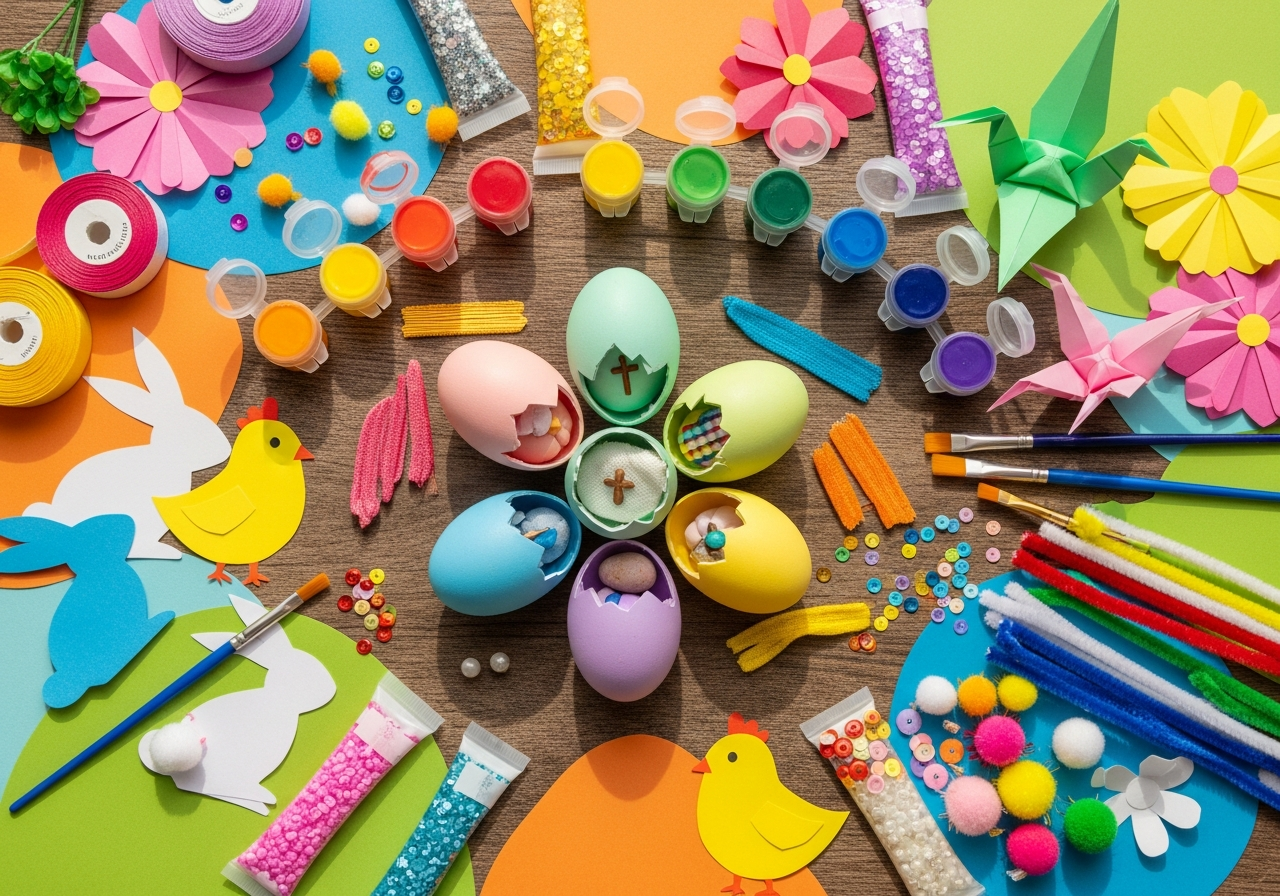
Hands-On Easter Activities That Teach the Story
Toddlers learn best by doing. Research from Michigan State University explains that hands-on learning with concrete objects leads to abstract thought, making activities an ideal way to teach Easter concepts.
Resurrection Eggs for Toddlers: A Simple Guide
Traditional resurrection eggs contain 12 items telling the Easter story, but that is too many for toddlers. Here is a simplified version using just 4-5 eggs:
| Egg Number | What is Inside | What to Say |
|---|---|---|
| 1 | Small leaf or paper palm | "People waved branches for Jesus!" |
| 2 | Small cross | "The cross reminds us that Jesus loves us." |
| 3 | Small stone | "A big stone was in front of Jesus' resting place." |
| 4 | White cloth | "The stone moved and the cloths were left behind." |
| 5 | Empty! | "The tomb was empty! Jesus is alive!" |
Open one egg at a time, keeping the experience short and joyful. You can purchase resurrection egg sets or easily make your own with plastic eggs and simple items from around your home.
Empty Tomb Crafts Even 2 Year Olds Can Make
Simple crafts reinforce the Easter message through hands-on creativity:
- Paper plate tomb: Fold a paper plate in half to create a cave shape. Cut a round "stone" from construction paper and attach with a brass fastener so it rolls away.
- Play dough empty tomb: Help your toddler mold a simple cave shape and a round stone. Roll the stone away and say, "He is alive!"
- Cotton ball garden: Glue cotton balls on paper to create a garden scene. Add a small cave cut from brown paper.
Remember that for toddlers, the process matters more than the product. Let them squish, glue, and create without worrying about perfection.
Sensory Play Ideas with Easter Themes
Sensory play engages multiple senses and helps build neural connections during the critical early childhood period when more than one million new neural connections form every second.
Spring sensory bin: Fill a bin with dried pasta, add butterfly and flower shapes, and include small eggs. Talk about new life as your toddler explores.
Water play: Use blue water with floating flowers and butterflies. Discuss how water helps things grow and how Easter is about new life.
Spring playdough: Make or buy playdough in spring colors. Provide flower and butterfly cookie cutters and talk about transformation and new beginnings.

Balancing Easter Bunny Fun with the Real Meaning of Easter
Many Christian families wonder: do we have to choose between Easter bunnies and the true meaning of Easter? The good news is you do not have to pick one or the other.
You Don't Have to Choose One or the Other
Eggs and bunnies represent spring, new life, and joy, themes that connect naturally to the Easter message. The key is making sure Jesus does not get lost in the shuffle of chocolate and egg hunts.
Practical ways to integrate both:
- Read the Easter story before the egg hunt begins
- Include resurrection eggs in the Easter basket
- Start Easter morning with a simple prayer or devotional
- Explain that eggs and bunnies celebrate new life, just like Jesus coming back to life
Keeping Jesus at the Center of Easter Celebrations
Schedule your priorities intentionally. If church is important to your family, make it the anchor of your Easter Sunday rather than fitting it around egg hunts and brunches.
Consider these Easter basket additions that reinforce the message:
- A children's Bible or Easter story book
- Resurrection eggs
- A cross necklace or bracelet
- Butterfly or lamb stuffed animals
During egg hunts, ask simple questions: "What do eggs remind us of? New life! Just like the new life Jesus has."
Best Easter Books for Toddlers to Teach the True Meaning
Books are powerful tools for teaching toddlers. Here are recommendations organized by age:
Board Books for Ages 1-2:
- The Story of Easter by Patricia A. Pingry - simple text with beautiful illustrations
- The Very First Easter by Paul L. Maier - durable pages with gentle storytelling
Picture Books for Ages 2-4:
- The Jesus Storybook Bible by Sally Lloyd-Jones - the Easter section is beautiful and accessible
- God Gave Us Easter by Lisa Tawn Bergren - approachable explanations for young minds
- The Garden, the Curtain, and the Cross by Carl Laferton - connects Easter to the bigger biblical story
Interactive Books:
- Lift-the-flap Easter story books
- Touch-and-feel books about spring and new life
- Easter story sticker books for older toddlers

Tips for Celebrating Holy Week with Toddlers
Easter is not just one day. Spreading the celebration across Holy Week helps reinforce the story and creates meaningful family traditions.
Palm Sunday Celebration Ideas for Families
Palm Sunday is one of the easiest days to celebrate with toddlers because it is joyful and active.
- Wave palm branches: Use real palms if available, or cut simple palm shapes from green paper. March around the house or yard shouting "Hosanna!"
- Stuffed animal parade: Line up stuffed animals and have your toddler wave branches as they march past.
- Simple song: Sing "Hosanna" with hand motions. Toddlers love repeating simple phrases with actions.
Age-Appropriate Good Friday Observance
Good Friday requires a gentle approach. The goal is acknowledging the sad part of the story without frightening your toddler.
- Keep it brief: "This was a sad day for Jesus' friends. But remember, the happy ending is coming on Easter Sunday!"
- Choose quieter activities like coloring or reading
- Plant seeds together as a symbol of hope: "We are planting these seeds because we know something beautiful is coming."
- Avoid detailed descriptions of suffering
Making Easter Morning Meaningful Before the Egg Hunt
Create simple traditions that center Jesus before the excitement of baskets and eggs takes over:
- Sunrise moment: Open the blinds together and say, "Good morning! Jesus is alive!"
- Short devotional: Read one page from an Easter book or watch a 2-minute child-friendly Easter video
- Family prayer: Hold hands and thank God for the happy day
- Then celebrate: Now enjoy the baskets, eggs, and treats with joy
These traditions can grow with your child. A two year old may simply listen while you pray, but by four, they might want to say their own thank-you to Jesus.

What to Wear: Dressing Your Toddler for Easter Celebrations
Easter Sunday is often a special dress-up day for families, whether you are heading to church, gathering with relatives, or capturing spring photos.
When choosing your toddler's Easter outfit, keep these practical tips in mind:
- Comfort first: Your toddler will be sitting through services, running during egg hunts, and posing for photos. Choose soft, breathable fabrics that allow movement.
- Think about the whole day: Will this outfit work for church, photos, an egg hunt in the grass, and a family meal? Layers help with changing spring weather.
- Easy bathroom access: Potty-training toddlers need outfits that are easy to manage quickly.
- Soft spring colors: Pastels, florals, and bright spring hues photograph beautifully and capture the season's spirit.
Finding the perfect Easter outfit can be part of the celebration fun. If you are looking for adorable, affordable options that keep toddlers comfortable through church services and Easter festivities, the kids Easter outfits collection at PatPat offers charming choices for the whole family.
And here is a secret from experienced parents: do not stress about keeping outfits perfectly clean during egg hunts. Grass-stained knees and chocolate-smudged cheeks are signs of a day well-lived. The memories matter more than the laundry.

Frequently Asked Questions About Explaining Easter to Toddlers
How do you explain the meaning of Easter to a toddler?
Use simple words and focus on love and joy. Say something like: "Easter is when we celebrate that Jesus is alive. People were so happy because Jesus loves us and is always with us." Keep explanations brief and repeat them throughout the season.
What is Easter in simple words for kids?
Easter is a celebration of new life and hope. For Christians, it celebrates the day Jesus came back to life after dying. You can tell toddlers: "Easter Sunday is a happy day because Jesus woke up and is alive!"
At what age do children understand the Easter story?
Children begin grasping simple Easter concepts around age 2-3, understanding that it is a happy, special day about Jesus. By age 4-5, they can follow the basic story sequence. Full theological understanding develops gradually over many years, so focus on planting seeds of faith early.
How do I explain the resurrection to a toddler?
Connect resurrection to concepts toddlers already understand. Say: "Jesus went to sleep and then woke up again. He is alive!" You can also use nature examples: "Like how a caterpillar becomes a butterfly, Jesus became alive in a new way."
Should I tell my toddler about Jesus dying on the cross?
For very young toddlers (under 3), focus on the joyful resurrection rather than the crucifixion. For older toddlers, you can gently mention: "Some people did not understand Jesus, and that made him very sad. But the happy part is he came back!" Avoid graphic details that could frighten young children.
How do I balance the Easter bunny with the religious meaning?
You can enjoy both. Make Jesus the focus first by reading the Easter story before egg hunts and including resurrection eggs in baskets. Explain that bunnies and eggs celebrate spring and new life, which connects to Easter's message of hope.
What are good Easter activities for teaching toddlers?
Resurrection eggs (with simplified symbols), empty tomb crafts, spring sensory bins, and reading Christian Easter books are excellent options. Simple activities like planting seeds or watching butterflies also teach the "new life" concept central to Easter.
How do I explain Good Friday to a toddler?
Keep it simple and hopeful. Say: "Good Friday was a sad day, but we call it 'good' because we know the happy ending. Easter Sunday is coming when we celebrate that Jesus is alive!" Avoid detailed descriptions of suffering.
Planting Seeds of Faith This Easter Season
Here is the truth that every parent needs to hear: your imperfect conversations about Easter still matter. You do not need perfect words or flawless explanations. What you need is a willingness to try, to repeat simple truths, and to let your own faith shine through your actions.
Research confirms that spiritual foundations are often established before age 13, with home-based practices having significant impact on a child's faith development. Every Easter story you share, every resurrection egg you open together, and every prayer you say as a family plants seeds that will grow over the years.
Embrace both the sacred moments and the messy ones this Easter. The chocolate-covered smiles, the grass-stained dress-up clothes, the questions that catch you off guard, all of these are part of building memories that will shape your child's understanding of faith.
This Easter, give yourself grace. Give your toddler simple words, loving repetition, and the gift of your presence. At PatPat, we are cheering you on as you create Easter traditions that will last a lifetime. May your celebration be filled with joy, wonder, and the beautiful truth that Easter proclaims: love wins, hope lives, and new life is always possible.


