


Picture this: Your children spot their first sea turtle gliding through crystal-clear water, your family rides a wave together on Waikiki Beach, and everyone gathers on warm sand to watch the sun paint the sky orange and pink. This is not a daydream. This is what a Hawaii family vacation delivers, day after unforgettable day.
Hawaii welcomes nearly 10 million visitors annually, and families represent one of the fastest-growing segments of travelers to the islands. Why? Because Hawaii with kids offers something rare: a destination that genuinely works for every age group. Toddlers splash in protected lagoons while teenagers learn to surf. Parents relax on world-class beaches while grandparents enjoy the comfortable climate. The aloha spirit embraces everyone.
What makes Hawaii particularly appealing for families is its unique combination of safety, accessibility, and adventure. As a U.S. state, you need no passport, familiar infrastructure surrounds you, and world-class medical facilities provide peace of mind. Yet within this comfortable framework, you discover active volcanoes, pristine coral reefs, ancient Polynesian culture, and landscapes that seem transported from another world entirely.
This comprehensive Hawaii travel guide covers everything you need to plan your perfect family adventure. We explore the best time to visit Hawaii for optimal weather and value, help you choose between islands based on your family's ages and interests, and detail the kid-friendly activities that create lifelong memories. You will find practical tips for accommodation, transportation, and packing, along with realistic budget expectations for 2026.
From timing your trip perfectly to packing matching family vacation outfits for those unforgettable beach photos, this guide from PatPat ensures your Hawaiian adventure exceeds every expectation. Whether you are planning your first Hawaii itinerary or returning to discover a new island, the following sections provide the roadmap to paradise.
Best and Worst Times for a Family Trip to Hawaii in 2026
Timing can make or break your Hawaii family vacation. Visit during the wrong week and you face premium prices, crowded beaches, and sold-out activities. Choose wisely, however, and you experience the same sunshine with fewer tourists and significant savings. Let us examine when to plan your Hawaiian getaway for maximum value and minimum stress.
Shoulder Season Sweet Spots: April Through June
The period from late April through early June represents perhaps the best time to visit Hawaii with kids. Weather conditions are nearly ideal, with temperatures consistently ranging from 75 to 85 degrees Fahrenheit and lower humidity than summer months. Trade winds provide natural cooling, and ocean conditions tend toward calm, making water activities safer and more enjoyable for young swimmers.
Value and crowd benefits during this window are substantial. Hotel rates typically run 20 to 35 percent lower than peak season, and you will find easier restaurant and activity reservations. Beaches feel spacious rather than packed, and popular attractions like Pearl Harbor have shorter wait times. Flight availability improves, often bringing better pricing as well.
For families with flexible school schedules, late April after Easter break offers exceptional value. May brings Lei Day celebrations and consistently excellent conditions. Early June before the summer rush begins provides a brief window of opportunity before families flood the islands once school releases.
Fall Family Travel: September Through November
Fall presents another excellent opportunity for the best time to visit Hawaii. With mainland children back in school, crowds thin dramatically. While hurricane season technically continues through November, Hawaii rarely experiences direct impacts. Water temperatures reach their warmest in September and October, and whale watching begins in late November as humpbacks return to breed.
Budget benefits during fall are substantial. Accommodation rates often reach their lowest points of the year, and airfare deals appear frequently. Activity operators tend toward greater flexibility with scheduling, and rental properties often drop minimum stay requirements. September in particular offers outstanding overall value.
Consider that brief afternoon showers occur more frequently during fall, though they rarely disrupt plans significantly. Some properties may close temporarily for maintenance during this slower period.
Peak Seasons to Avoid for Better Value
Certain periods demand premium pricing and bring crowded conditions that can diminish the family experience:
- Christmas and New Year (December 15 through January 5): Expect pricing 50 to 100 percent above normal rates, minimum stay requirements, and the need to book 6 to 12 months ahead. Beaches become crowded, wait times lengthen, and traffic congestion affects all islands.
- Summer Peak (June 15 through August 15): Mainland school vacation brings family crowds, higher attraction wait times, and premium airfare pricing. This period also brings the hottest and most humid conditions.
- Spring Break (March through April): College and family crowds overlap, creating moderate price increases and busier beaches. Timing varies by school district, so research your specific dates.
- Japanese Golden Week (Late April through Early May): This Japanese holiday period brings visitor surges to Waikiki and resort areas, affecting hotel availability and pricing.
Hawaii Monthly Weather and Crowd Overview
| Month | Temperature | Crowds | Prices | Special Notes |
|---|---|---|---|---|
| January | 76°F | Moderate | Medium | Peak whale watching |
| February | 76°F | Low-Medium | Low | Driest month, whale season |
| March | 77°F | High | High | Spring break crowds |
| April | 78°F | Medium | Medium | Easter timing affects crowds |
| May | 79°F | Low | Low | Best value period |
| June | 81°F | Low-High | Medium-High | Crowds build mid-month |
| July | 82°F | Very High | High | Peak summer season |
| August | 83°F | High | High | Humid, summer crowds |
| September | 83°F | Low | Lowest | Best overall value |
| October | 81°F | Low | Low | Halloween events |
| November | 79°F | Low-High | Medium | Whales return, Thanksgiving surge |
| December | 77°F | Very High | Very High | Holiday peak season |
Choosing Your Family's Ideal Island: Oahu, Big Island, or Maui
With your travel window identified, the next decision shapes your entire vacation experience: which Hawaiian island matches your family's personality? Each island offers distinct advantages depending on your children's ages, interests, and travel style. Let us examine the three most popular family destinations.
Oahu: Best Hawaiian Island for First-Time Visitors with Kids
Oahu earns its reputation as the best Hawaiian island for families visiting for the first time. The island combines excellent infrastructure with the widest variety of activities in a concentrated area. Direct flights arrive from most mainland cities, and once you land, family-friendly services surround you.
For families with young children, Oahu offers unmatched convenience. The Ko Olina lagoons provide protected swimming areas perfect for toddlers, while Waikiki Beach features gentle waves, lifeguards, and walkable restaurants. When someone needs a nap or a break from the beach, you find yourself minutes from air-conditioned shopping centers, the Honolulu Zoo, and the Waikiki Aquarium.
Top family attractions on Oahu include:
- Waikiki Beach: Gentle waves ideal for beginner swimmers and surfers
- Honolulu Zoo: 42-acre tropical zoo perfect for morning excursions
- Pearl Harbor: Educational experience for ages 7 and up
- Polynesian Cultural Center: Full-day cultural immersion for all ages
- Diamond Head: Manageable hike suitable for ages 5 and up
Disney Aulani Resort offers exceptional family programming, though excellent options exist across all price ranges. Choose Oahu if this is your first Hawaii family vacation, if you have mixed ages from toddlers through teens, or if you prefer resort area convenience combined with cultural experiences.
Big Island Hawaii: Best for Nature-Loving and Adventurous Families
The Big Island of Hawaii captivates families who prioritize education and outdoor adventure. Hawaii Volcanoes National Park alone justifies the trip, offering children the chance to walk on actual volcanic landscapes, explore lava tubes, and witness the raw power of Earth's geology firsthand.
Diverse climate zones create experiences impossible to find elsewhere. Your family can witness snow-capped Mauna Kea, drive through tropical rainforests, explore black sand beaches, and snorkel in crystal-clear bays all in a single day. The island feels less commercialized than Oahu, offering authentic Hawaiian experiences away from tourist crowds.
Top family attractions on Big Island include:
- Hawaii Volcanoes National Park: Walking on cooled lava, Thurston Lava Tube exploration
- Manta Ray Night Snorkeling: Magical experience for ages 6 and up
- Punaluu Black Sand Beach: Unique scenery with frequent sea turtle sightings
- Mauna Kea Stargazing: World-class astronomy programs for older children
- Coffee Farm Tours: Educational and delicious for ages 5 and up
The Big Island requires more driving than Oahu, so families should feel comfortable with car travel. Choose this island if your family prioritizes education and nature, if your children are ages 5 and up and enjoy outdoor adventures, or if you are repeat Hawaii visitors seeking something different.
Maui: Best Hawaiian Island for Beach Resorts and Water Activities
Maui delights families seeking the perfect balance of adventure and relaxation. World-renowned beaches offer excellent snorkeling in calm conditions, while the whale watching from December through April provides some of the best humpback encounters on the planet.
The island's manageable size allows families to explore diverse landscapes without excessive driving. Watch sunrise atop Haleakala volcano, drive the scenic Road to Hana with its waterfall stops, and return to your resort for afternoon beach time. Family resort infrastructure rivals Oahu, with excellent pools, kids clubs, and dining options.
Following the 2023 Lahaina wildfires, Maui tourism continues to recover. Lahaina Harbor began phased reopening in December 2025, and the Ka'anapali area operates fully as West Maui's activity hub. Visiting Maui supports local families rebuilding their community while providing your family with exceptional experiences.
Top family attractions on Maui include:
- Haleakala Sunrise: Unforgettable experience for ages 6 and up
- Baby Beach (near Lahaina): Calm waters for youngest swimmers
- Road to Hana: Adventure drive with waterfall stops
- Maui Ocean Center: World-class aquarium for rainy days
- Ka'anapali Beach: Resort beach with excellent snorkeling
Island Comparison Chart for Families
| Factor | Oahu | Big Island | Maui |
|---|---|---|---|
| Best Ages | All ages | 5+ recommended | 4+ recommended |
| First-Time Families | Excellent (Best) | Good | Very Good |
| Beach Quality | Very Good | Good | Excellent |
| Adventure Level | Moderate | High | Moderate-High |
| Resort Options | Excellent | Good | Excellent |
| Crowd Levels | Higher | Low | Moderate |
| Drive Times | Shorter | Longest | Medium |
| Direct Flights | Most | Good | Good |
| Rainy Day Options | Best | Limited | Good |
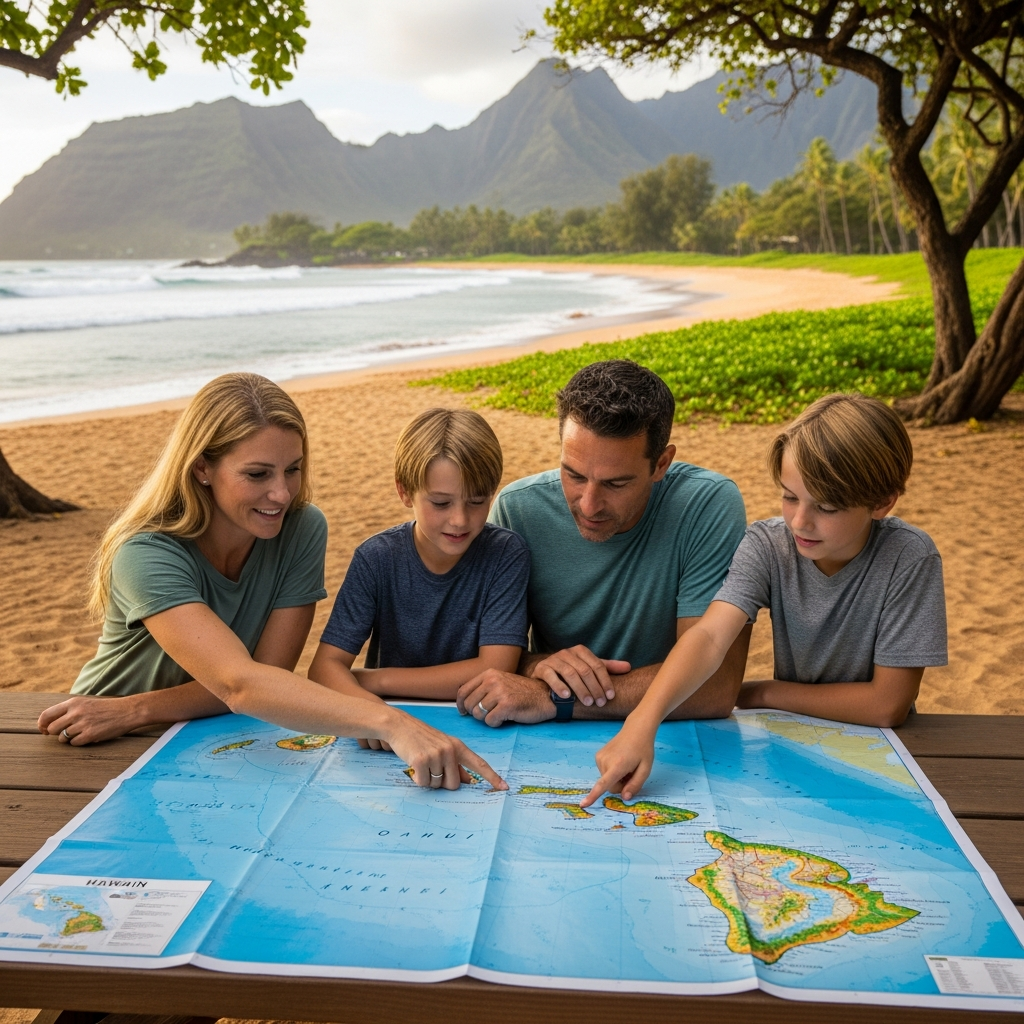
Top 5 Must-Do Kid-Friendly Activities in Hawaii
With your island selected, let us explore the kid-friendly activities that transform a good vacation into an unforgettable adventure. These five experiences consistently rank as family favorites across all the Hawaiian islands.
Learning to Surf on Waikiki Beach: A Rite of Passage
Nothing captures the spirit of Hawaii quite like standing on a surfboard for the first time. Waikiki Beach provides ideal conditions for family surfing: gentle, rolling waves break over a shallow reef, creating consistent swells that beginners can manage. Warm water year-round (77 to 82 degrees) means no wetsuits needed, and the soft sandy bottom forgives inevitable wipeouts.
Age recommendations vary by skill level. Children ages 4 to 5 typically ride tandem with instructors on the same board. Kids ages 6 to 8 succeed with beginner lessons on foam boards, while ages 9 and up can join standard group classes. Expect 60 to 90 minute sessions for beginners, with costs ranging from $100 to $150 per person for group lessons. Private family lessons run $300 to $500 but provide more personalized instruction.
Book lessons 1 to 2 weeks in advance during peak season. Morning sessions between 8 and 10 AM offer the calmest conditions. Bring reef-safe sunscreen applied 20 minutes before, rash guards for sun protection, and waterproof cases for capturing photos of those triumphant first rides.
Snorkeling at Hanauma Bay Nature Preserve
Hanauma Bay delivers one of the best snorkeling experiences available for families. This protected volcanic crater creates calm, clear waters teeming with colorful tropical fish visible even in shallow areas. Lifeguards patrol throughout the preserve, and motorized watercraft are prohibited, creating a safe environment for underwater exploration.
Before heading to Hanauma Bay, pack matching family swimsuits for those underwater family photos that will become treasured memories.
Children ages 4 to 5 can observe fish from the shallow beach area, while ages 6 to 8 succeed with proper equipment and close supervision. Ages 9 and up are ready for independent snorkeling with periodic check-ins. Even non-swimmers can enjoy knee-deep fish viewing.
Reserve your Hanauma Bay visit online through the city's official PROS ticketing system. Entry fees are $25 per person for ages 13 and up, and free for children ages 12 and under. The preserve closes Mondays and Tuesdays for reef recovery. Arrive early because parking fills by 10 AM, and bring cash for the snack bar.
Exploring Hawaii Volcanoes National Park
Hawaii Volcanoes National Park on the Big Island offers educational adventures impossible to replicate anywhere else on Earth. Children walk on actual volcanic landscapes, peer into massive craters, and explore the Thurston Lava Tube, an accessible walk-through tunnel formed by ancient lava flows.
The park's Junior Ranger program engages children ages 5 to 12 with activities and badges. Family-friendly trails include the Devastation Trail (easy 1-mile paved path suitable for strollers), Steam Vents viewing areas, and the Kilauea Iki Trail for more adventurous families with children ages 8 and up.
According to the National Park Service, the entry fee is $30 per vehicle, valid for 7 consecutive days. Plan minimum 4 to 6 hours for a family visit. The elevation creates cooler temperatures, so bring layers. Pack snacks and water because food options are limited. Morning visits are recommended as afternoons often bring clouds.
Honolulu Zoo and Waikiki Aquarium
These neighboring Oahu attractions provide perfect kid-friendly activities for younger children and offer welcome relief from beach activities. The Honolulu Zoo spans 42 acres with over 1,200 animals, including a popular African Savanna exhibit and the Keiki Zoo area with hands-on experiences. Shaded paths make comfortable walking, and the location within walking distance of Waikiki hotels adds convenience.
The Waikiki Aquarium focuses specifically on Hawaiian marine life, featuring touch pools that delight children of all ages. Its smaller, manageable size (1 to 2 hours) and air-conditioned environment make it ideal for afternoon visits when the mid-day heat peaks.
A combined visit strategy works well: arrive at the zoo when it opens at 9 AM for active animals, break for a picnic lunch at Kapiolani Park, then escape the afternoon heat at the Aquarium. Total day cost runs approximately $80 for a family of four.
Resort Pool and Beach Relaxation Time
While it might seem counterintuitive to highlight "doing nothing" as a must-do activity, downtime proves essential for successful Hawaii family vacations. Children need unstructured play time, parents need recovery from travel fatigue, and the tropical environment is best enjoyed slowly rather than rushed.
Maximize resort pool time by arriving at opening when crowds are lightest. Many resorts offer poolside kids activities, and lazy rivers plus water slides entertain children for hours. Beach relaxation strategies include establishing a "base camp" with umbrella and chairs, bringing sand toys for younger children, and scheduling at least 2 full beach days per week.
The key is balance. Plan no more than 1 structured activity per day, leave afternoons flexible, and build in complete rest days between adventures. Allow children to set some of the pace, and you will discover that the most treasured memories often emerge from unplanned moments.

Planning and Practical Tips for Traveling to Hawaii with Kids
The best Hawaii itinerary fails without smart execution. This section covers the practical details that transform your dream vacation into smooth reality.
Best Family Accommodation Types
Condo-style hotels and resorts work exceptionally well for most families traveling to Hawaii with kids. Full kitchens or kitchenettes save significantly on food costs, extra space allows children to spread out and play, and washer-dryer access handles inevitable laundry needs. Properties like Aston, Outrigger condo units, and Marriott Vacation Club offer excellent family options.
Kitchen access delivers substantial savings. Prepare breakfast and snacks in-room, store fresh fruit from farmers markets, accommodate picky eaters easily, and save $50 to $100 daily on restaurant meals. For families with infants, refrigeration for formula or medications requiring cold storage proves invaluable.
Full-service resort options include Disney Aulani for character experiences and exceptional kids clubs, Grand Wailea for epic water features, Hilton Hawaiian Village for its lagoon and multiple towers, and Four Seasons properties for elegant family programming.
When packing, include versatile options for every scenario, from beach cover-ups to mommy and me dresses perfect for that sunset luau dinner.
Rental Car Essentials
Rental cars are essential for families visiting Hawaii, providing flexibility for nap-time returns, space to carry beach gear and strollers, and freedom to explore beyond resort areas. On Big Island and Maui, a car is virtually mandatory. On Oahu, it remains highly recommended even if staying in Waikiki.
Reserve early because rental car shortages continue in 2026. Book through major companies for reliability, and add child car seats or bring your own. Consider SUVs or minivans for storage capacity. Full insurance often proves worth the peace of mind for family vacations.
Cost expectations for 2026 include Oahu at $80 to $120 per day, Maui at $90 to $130 per day, and Big Island at $75 to $110 per day. Weekly rentals offer better daily rates. Remember to budget for resort parking at $25 to $50 per night.
Complete Hawaii Family Packing Checklist
Clothing Essentials:
- Lightweight, breathable clothing (plan for 2 outfits per day)
- Multiple swimsuits per person for rotation while drying
- Rash guards for sun and reef protection
- Comfortable walking shoes and reef-safe sandals
- One nice outfit per person for luau or dinner
- Light jacket for air conditioning and elevation
Sun and Beach Protection:
- Reef-safe sunscreen SPF 30+ (required by Hawaii law)
- Wide-brimmed hats for entire family
- Quality sunglasses with straps for children
- Beach tent or umbrella
- Sand-free beach towels
Family-Specific Gear:
- Waterproof phone case or GoPro
- Portable first aid kit
- Motion sickness medication for boat tours
- Favorite snacks (food prices in Hawaii run high)
Ocean Safety Rules for Children
Essential ocean safety rules protect your family during Hawaii adventures. Never turn your back on the ocean, as waves can surge unexpectedly. Swim only at beaches with lifeguards on duty, and check daily surf reports before beach visits. Teach children about rip currents and the strategy of swimming parallel to shore. When in doubt, stay out.
Understand the wave warning system: yellow flags indicate moderate hazards while red flags signal high surf and dangerous conditions. Box jellyfish typically appear 8 to 10 days after each full moon, so check calendars and beach postings.
Sun protection requires vigilance in Hawaii's intense tropical sunshine. Apply sunscreen 20 to 30 minutes before exposure, reapply every 2 hours, and seek shade during peak hours from 10 AM to 2 PM. Hydrate frequently because dehydration happens quickly in warm, humid conditions.
Budgeting Your Hawaiian Family Vacation: 2026 Cost Estimates
Understanding realistic costs helps families plan appropriately and avoid unpleasant surprises. Here is what to expect for a family of four visiting Hawaii in 2026.
Complete Cost Breakdown (7 Nights, Family of Four)
Flights (Round-trip from Mainland US):
- West Coast departures: $350 to $600 per person
- Midwest departures: $500 to $800 per person
- East Coast departures: $600 to $1,000 per person
- Family of 4 total: $1,400 to $4,000
Accommodation (7 nights):
- Budget vacation rental: $150 to $200/night = $1,050 to $1,400
- Mid-range condo hotel: $250 to $350/night = $1,750 to $2,450
- Family resort: $400 to $600/night = $2,800 to $4,200
Rental Car (7 days including insurance and parking): $770 to $2,065
Food and Dining:
- Budget approach (groceries plus some dining): $700 to $1,050
- Moderate approach (mix of dining out): $1,225 to $1,750
Activities and Attractions: $500 to $1,500 total
Total Hawaii Family Vacation Cost Ranges
| Budget Level | Estimated Total (7 Nights, Family of 4) |
|---|---|
| Budget | $5,000 to $7,000 |
| Moderate | $8,000 to $12,000 |
| Comfortable | $12,000 to $18,000 |
| Luxury | $18,000 to $30,000+ |
Smart Strategies for Saving Money
Accommodation Savings: Book 4 to 6 months ahead for best rates. Choose ocean-view rather than oceanfront rooms for 30% savings. Select properties with kitchens to save $50 to $100 daily on food. Look for shoulder season deals in September through November.
Flight Savings: Book 6 to 8 weeks before travel for best domestic pricing. Be flexible with departure airports and consider early morning or late-night flights. Southwest Airlines offers free checked bags, potentially saving $100 or more per family.
Food and Dining Savings: Shop at Costco immediately after arriving at the airport. Prepare breakfast in-room daily to save $60 to $80. Pack picnic lunches for beach days and seek happy hour specials for family dinners. Farmers markets provide fresh, affordable produce.
Activity Savings: Focus on free attractions including beaches, hikes, and sunsets. Prioritize 2 to 3 paid activities rather than many. Many beaches and parks offer free entry, and hotel concierges often provide activity package discounts.
2026 Hawaii Travel Updates: New Fees and Policy Changes
2026 brings specific changes that families need to understand before booking. These updates affect your budget and planning in important ways.
New Visitor Fees and Tax Changes
The most significant change for 2026 involves the "Green Fee" increase to accommodation taxes. Act 96 raises the Transient Accommodations Tax from 10.25% to 11% starting January 1, 2026. Combined with county taxes of approximately 3% and general excise tax, total accommodation taxes now approach 18 to 19%.
This Green Fee is expected to generate nearly $100 million annually, directed toward climate change mitigation including combating erosion and protecting against wildfires. For families, this means budgeting an additional $15 to $30 per night beyond base room rates.
State park entry fees now apply to tourists: $10 per vehicle or $5 per person for walking or biking access. Hawaii residents remain exempt with valid ID. Annual passes are available for frequent visitors.
Maui Recovery Status and Travel Updates
Maui tourism continues recovering following the August 2023 Lahaina wildfires. The Ka'anapali area operates fully as West Maui's activity hub, and most major resorts and attractions function normally. Lahaina Harbor began phased reopening in December 2025, with tour operators gradually returning.
Visiting Maui in 2026 directly supports local economic recovery. Travel spending helps families rebuilding their community. Most attractions remain unaffected, and beach areas plus resorts are fully accessible. Responsible visitors contribute meaningfully by spending at local businesses and tipping service workers generously.
Some Lahaina town access may remain limited as reconstruction continues. Snorkeling, whale watching, and sunset cruises all operate normally from the Ka'anapali area. Check current conditions closer to your travel date for the latest updates.
Sample 7-Day Hawaii Family Itinerary for First-Time Visitors
This practical Oahu itinerary demonstrates how to balance activities, beach time, and family needs during a week-long Hawaii itinerary.
Days 1-2: Arrival and Waikiki Beach Introduction
Day 1 - Arrival: Arrive at Honolulu Airport and allow 30 to 45 minutes for hotel transfer. Check in and settle (request early check-in if available). Enjoy a light lunch near the hotel, then spend an easy afternoon at the hotel pool. Take a sunset walk along Waikiki Beach followed by early dinner at a casual restaurant. Plan for early bedtime to manage jet lag.
Day 2 - Waikiki Beach Day: Start with leisurely breakfast, then spend the morning at Waikiki Beach with beginner surf lessons around 10 AM. Break for lunch at a beachside restaurant, followed by hotel pool time or rest from 2 to 4 PM. Enjoy late afternoon Waikiki shopping and sunset dinner at family-friendly spots like Duke's or Marukame Udon.
Days 3-4: Attractions and Adventures
Day 3 - Hanauma Bay: Depart early at 7 AM to beat crowds. Watch the required orientation video and spend the morning snorkeling until 11:30 AM. Pack a picnic lunch because food options are limited. Return to the hotel for afternoon rest, then enjoy sunset at Ala Moana Beach Park followed by casual Waikiki dinner.
Day 4 - North Shore Adventure: Depart at 8 AM for the scenic 1-hour drive north. Stop at Dole Plantation for the pineapple maze and ice cream. Continue to North Shore for lunch at Giovanni's Shrimp Truck. Spend the afternoon at Turtle Beach watching sea turtles, with a quick stop at Waimea Bay for views. Return via the scenic route for dinner in Waikiki.
Days 5-7: Cultural Experiences and Departure
Day 5 - Zoo, Aquarium, and Luau: Arrive at Honolulu Zoo at opening time (8:30 AM) and explore until 11:30 AM. Enjoy a picnic lunch at Kapiolani Park, then visit Waikiki Aquarium from 1 to 3 PM. Spend the afternoon at the beach or pool. For the luau dinner, pack Matching Family Dresses in tropical prints to capture the spirit of aloha in your photos. Paradise Cove or Chief's Luau offers excellent family experiences with sunset seating.
Day 6 - Pearl Harbor and Diamond Head: Visit Pearl Harbor early at 7 AM (book tickets in advance). The USS Arizona Memorial experience suits ages 4 and up. Depart by 11 AM and have lunch en route to Diamond Head. Complete the Diamond Head hike at 1 PM (ages 5 and up, bring water). Return to the hotel for pool time, then enjoy a final Waikiki sunset dinner. Pack and prepare for departure.
Day 7 - Departure: Enjoy final beach or pool time in the morning. Check out per hotel schedule and arrive at the airport 2 to 3 hours before your flight. Consider late checkout if available.
Creating Unforgettable Family Memories in Paradise
Your Hawaii family vacation awaits, filled with possibilities for adventure, relaxation, and connection. The key takeaways from this comprehensive guide will serve you well as you plan:
- The best time to visit Hawaii for families falls during shoulder seasons: April through June and September through November offer excellent weather, smaller crowds, and better value.
- Choose your island based on your family's specific needs. Oahu works best for first-time visitors and mixed ages. Big Island suits nature-loving families with older children. Maui provides the ideal beach resort experience.
- Balance structured activities with unplanned beach and pool time. Children need downtime, and the most treasured memories often emerge spontaneously.
- Budget realistically for 2026, including new Green Fee taxes that add approximately 18 to 19% to accommodation costs.
- Book accommodations and key activities well in advance, especially for peak periods.
Hawaii creates memories that last generations. Children remember experiences over possessions, and few experiences compare to watching your family catch their first wave, spot their first sea turtle, or witness their first volcanic landscape. The aloha spirit embraces families warmly, and the islands offer something meaningful for every age and interest.
As you prepare for your Hawaiian adventure, start with the essentials: book your flights and accommodations, then select matching family vacation outfits that will make every beach moment picture-perfect. PatPat offers the perfect selection to capture your family's Hawaiian memories in style.
Begin your planning today. The perfect Hawaiian adventure awaits your family.




