


Imagine standing on the deck of a catamaran as a 45-foot humpback whale breaches just 100 yards away. Its massive body twists in mid-air, water cascading off barnacle-covered fins, before crashing back into the sapphire waters of the Auau Channel with a thunderous splash that echoes across the ocean. Your children gasp in wonder, their eyes wide with amazement. Your partner grabs your arm tightly. And in that single, breathtaking moment, you realize this will become one of your family's most treasured memories for decades to come.
This is not a rare occurrence in Maui. It happens thousands of times each winter when up to 12,000 humpback whales migrate to Hawaiian waters from the frigid seas of Alaska, making these islands one of the best whale watching destinations on the entire planet. The warm, protected waters surrounding Maui create the perfect sanctuary for these magnificent creatures to breed, give birth, and nurse their young.
If you are searching for the best whale watching Maui has to offer, you have come to exactly the right place. This comprehensive guide covers absolutely everything families need to know about experiencing these magnificent creatures during the 2026 whale watching season. Whether you are traveling with curious toddlers, adventurous teenagers, or multiple generations of grandparents, we will help you plan an unforgettable adventure that everyone in your family will cherish.
At PatPat, we understand the profound importance of creating lasting family memories during your travels. That is precisely why we have put together this detailed resource covering the best times to visit, the most reputable tour operators, essential family-friendly tips, and even completely free shore-based viewing spots that rival the boat experience. By the time you finish reading this guide, you will know exactly how to plan your perfect whale watching experience tailored to your family's unique needs.
Let us dive in together and discover what makes Maui the undisputed whale watching capital of the world.
When Is the Best Time for Whale Watching in Maui?
Timing can absolutely make or break your whale watching experience. Understanding precisely when humpback whales arrive, when populations peak, and when they begin their journey back north will help you maximize your chances of witnessing spectacular behaviors like breaching, tail slapping, and heartwarming mother-calf interactions that will leave your family speechless.
Understanding the 2026 Whale Watching Season
The Maui whale watching season 2026 officially runs from mid-December 2025 through mid-May 2026, giving visitors approximately five months to witness these incredible marine mammals. However, not all months offer the same quality of experience, and understanding these differences can significantly impact your trip planning.
Humpback whales travel over 3,500 miles from their Alaskan feeding grounds, making one of the longest migrations of any mammal on Earth. This incredible journey takes approximately 4-6 weeks of nearly continuous swimming, with some whales completing the trip in as little as 36 days. They choose Hawaiian waters, particularly the warm, shallow Maui Nui Basin, for three essential activities that are critical to their species' survival: breeding, giving birth, and nursing their young.
The Hawaiian Islands Humpback Whale National Marine Sanctuary, created by Congress in 1992, protects these magnificent creatures and their critical habitat. This sanctuary encompasses the shallow waters surrounding the main Hawaiian Islands, typically less than 600 feet deep, making it one of the world's most important humpback whale habitats and a conservation success story that has helped the North Pacific population grow from approximately 2,000 to more than 21,000 whales over the past two decades.
The whales' arrival pattern follows a predictable sequence each year. Mother whales nursing their calves typically arrive first, followed by juveniles and mothers with yearlings who are learning the migration route. Adult males arrive next, roughly double the number of adult females who follow. Finally, pregnant females arrive last, having fed in Alaska until the last possible moment to build energy reserves for nursing.
Month-by-Month Whale Activity Guide
Here is exactly what you can expect each month of the season, helping you choose the perfect time for your family visit:
| Month | Whale Activity Level | Best For | Crowd Level | Average Sightings Per Tour |
|---|---|---|---|---|
| December | Moderate - Early arrivals | Fewer crowds, better prices, holiday timing | Low | 3-8 whales |
| January | High - Population building rapidly | Peak activity begins, excellent sightings | Medium-High | 10-20 whales |
| February | Peak - Highest concentration | Best overall experience, most behaviors | High | 20-40+ whales |
| March | High - Mothers with newborn calves abundant | Calf watching, nursing behaviors | High | 15-35 whales |
| April | Moderate - Whales departing northward | Last chance viewing, fewer crowds | Medium | 5-15 whales |
| May | Low - Season ending | Limited opportunities, lowest prices | Low | 1-5 whales |
Pro Tip: February is widely considered the absolute best month for whale watching in Maui, but January and March offer nearly identical experiences with slightly fewer crowds and often better tour availability. If your schedule allows flexibility, aim for the last two weeks of January through the first two weeks of March for optimal conditions.
What makes February so special? During this peak month, whale density reaches its maximum, meaning you might see dozens of whales during a single two-hour tour. Competition for mates intensifies, leading to more dramatic surface behaviors. Male whales perform aggressive displays, compete in heat runs, and sing their haunting songs beneath the surface. Mothers with new calves are learning to nurse in the protected waters, and the combination creates an unparalleled wildlife spectacle.
Best Time of Day for Whale Watching Tours
Morning tours, particularly those departing before 10 AM, consistently offer the best conditions for families, especially those with young children or members prone to motion sensitivity. Here is exactly why morning departures are worth the early wake-up call:
- Calmer seas: Hawaii's famous trade winds typically remain light until late morning. After about 11 AM, winds pick up significantly, creating choppier conditions and higher waves that can make the experience less comfortable.
- Less seasickness risk: Smoother waters directly translate to happier kids and adults. If anyone in your family has experienced motion sickness before, morning tours reduce this risk by roughly 50% compared to afternoon departures.
- Softer light: Morning light creates better conditions for photography, with warm golden tones that make whale images and family photos more stunning.
- Active whales: Whales are often more surface-active during morning hours, with research suggesting breaching and other aerial behaviors may be more common before midday.
- Better visibility: Morning clarity often provides clearer water visibility and easier whale spotting before afternoon winds create surface chop.
That said, afternoon and sunset tours can be absolutely magical for families with older children and adults with strong sea legs. The late afternoon light creates dramatic photography opportunities, and whale activity often intensifies as whales prepare for their nighttime behaviors. Sunset tours offer the added bonus of watching the sun sink into the Pacific while surrounded by these magnificent creatures.
When to Go: Best Whale Watching Harbors and Departure Points
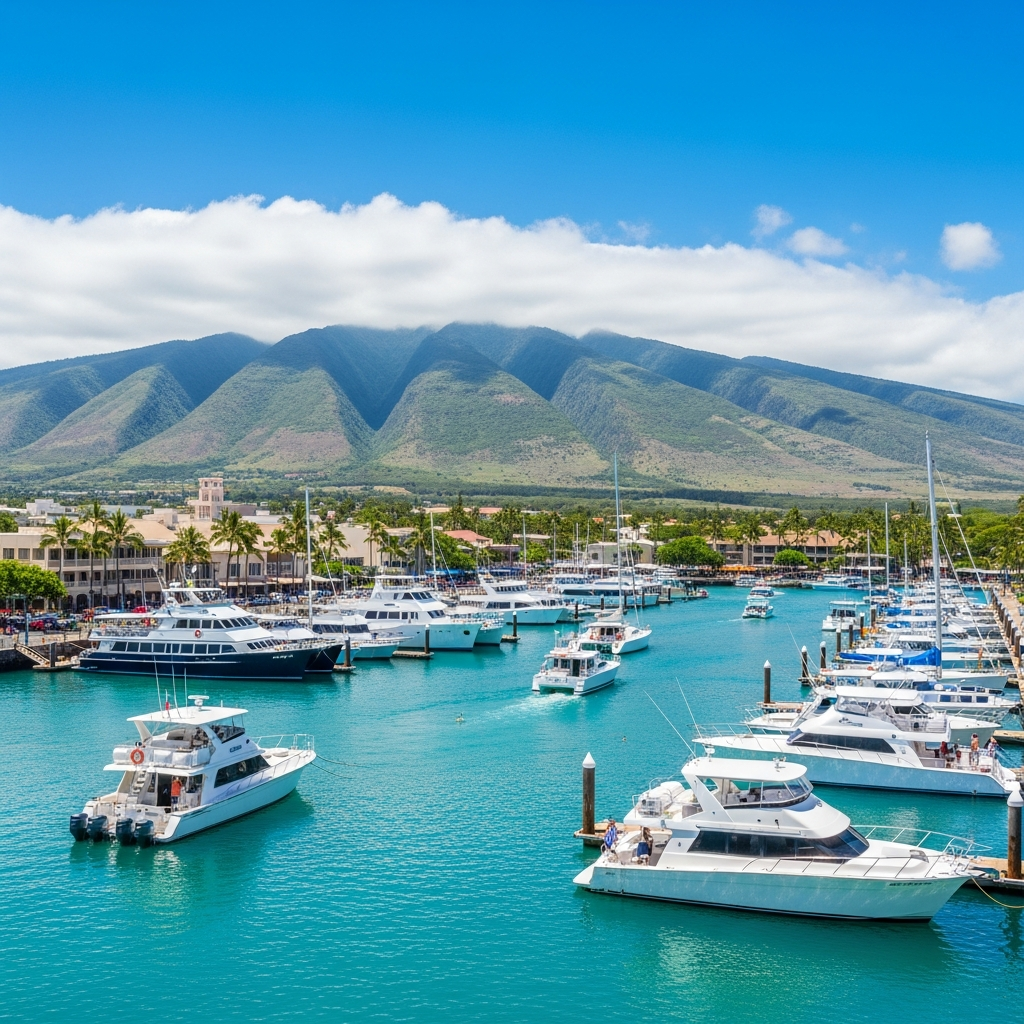
Maui offers three primary departure points for whale watching tours, each with distinct advantages. Your choice should depend primarily on where you are staying and what kind of experience you want for your family.
Lahaina Harbor: The Historic Whale Watching Hub
Lahaina Harbor sits in the heart of historic Lahaina Town on Maui's famous west side, directly beneath the West Maui Mountains. This location offers several significant advantages for families planning whale watching excursions:
- Quick access to whales: The Auau Channel between Maui and the island of Lanai is a prime whale gathering area, often requiring only 10-15 minutes of travel before first sightings. This shorter travel time means more time watching whales and less time in transit.
- Entertainment before and after: Historic Front Street offers extensive shopping, world-class dining, art galleries, and activities that can turn your whale watch into a full-day adventure. Kids especially love the banyan tree court, ice cream shops, and waterfront restaurants.
- Multiple tour operators: The harbor hosts the widest selection of vessels and experiences, from large stable catamarans to adventurous rafts, giving you maximum flexibility to find the perfect fit for your family.
- Convenient for West Maui guests: Easy 5-15 minute access from Kaanapali, Kapalua, and Lahaina hotels means less time driving and more time enjoying your vacation.
- Historic significance: Lahaina was once the whaling capital of the Pacific, and today it celebrates the living whales that have returned to these waters. The irony is not lost on visitors who appreciate the transformation from exploitation to protection.
Parking Tips: Arrive 30-45 minutes early during peak season, as street parking fills quickly. Paid lots are available near the harbor, typically charging $3-5 per hour. Consider using a rideshare service like Uber or Lyft to avoid parking stress entirely, especially during busy January-March weekends when finding a spot can take precious time away from your tour preparation.
Maalaea Harbor: Gateway to South Shore Sightings
Maalaea Harbor serves families staying in South Maui and the central valley area, offering its own unique set of benefits that make it the preferred choice for many visitors:
- Maui Ocean Center nearby: Combine your whale watch with a visit to Hawaii's premier aquarium, creating a full marine education day that kids absolutely love. The aquarium features extensive humpback whale exhibits that perfectly complement your on-water experience.
- Access to different whale populations: South shore sightings often feature different whale groups than west side tours, and deeper water encounters offer opportunities to see different behaviors including deep diving and feeding preparations.
- Multiple operator options: Home to Pacific Whale Foundation, Pride of Maui, and several other reputable operators, Maalaea offers excellent tour selection.
- Best for South Maui guests: Families staying in Kihei, Wailea, or Makena will find Maalaea significantly more convenient than driving to Lahaina, with typical travel times of 10-20 minutes versus 40-60 minutes to the west side.
- Central location: If you are staying in Kahului or the central valley, Maalaea provides equally convenient access from your accommodations.
- Less crowded harbor: While Lahaina can feel hectic during peak season, Maalaea maintains a more relaxed atmosphere that some families prefer.
Parking: Harbor parking costs approximately $1-2 per hour with convenient digital payment options. Arrive 20-30 minutes early for the best spots, especially during morning departures when multiple tours may be loading simultaneously.
Kaanapali Beach: Convenient Resort Departures
For families seeking maximum convenience and minimal logistics, several operators offer direct beach departures from famous Kaanapali Beach. This option eliminates driving entirely for resort guests:
- No driving required: Simply walk from your resort to the boat, eliminating parking hassles, rental car logistics, and the stress of navigating unfamiliar roads.
- Smaller vessels: Beach departures typically use smaller boats with fewer passengers, creating a more intimate experience with better views from every seat.
- Quick access to whale grounds: Direct route to the whale-rich Auau Channel means maximum time with the whales.
- Great for families with young children: Less time managing car seats, diaper bags in a rental vehicle, and bathroom breaks during travel means a smoother experience for everyone.
- Seamless resort experience: Return from your tour and immediately access your resort's pool, restaurant, or room without any additional transportation logistics.
Trilogy Excursions and several other operators launch directly from Kaanapali Beach, offering a seamless experience for West Maui resort guests. These tours typically include beach meeting points near Whalers Village, with staff helping guests wade to the boat in shallow water.
Best Whale Watching Tours in Maui for 2026
Choosing the right tour operator can significantly impact your family's experience, turning a good outing into an extraordinary memory. Here is everything you need to know about the best whale watching tours Maui offers this season, with detailed information to help you make an informed decision.
Types of Whale Watching Vessels
Understanding vessel types helps you select the perfect fit for your family's needs, comfort levels, and adventure thresholds:
| Vessel Type | Stability | Capacity | Best For | Seasickness Risk | Typical Price Range |
|---|---|---|---|---|---|
| Large Catamaran | Most stable | 50-149 passengers | Families with young kids, first-timers, anyone prone to motion sensitivity | Low | $45-90 adult |
| Sailing Catamaran | Stable | 30-60 passengers | Eco-conscious families, those wanting a more authentic sailing experience | Low-Medium | $80-150 adult |
| Raft/Zodiac | Less stable | 12-28 passengers | Adventure seekers, older kids (7+), those wanting closest possible encounters | Medium-High | $75-95 adult |
| Traditional Sailboat | Moderate | 20-40 passengers | Romantic trips, older families, photography enthusiasts | Medium | $70-120 adult |
Critical Family Recommendation: For first-time whale watchers with children under 7, we strongly recommend choosing a large, stable catamaran. The extra stability makes a tremendous difference in comfort, enjoyment, and your ability to focus on the whales rather than managing uncomfortable family members. The additional deck space also gives children room to move around safely while maintaining clear sightlines to the water.
However, if your family includes adventurous older children and adults who are comfortable with more motion, raft tours offer an unparalleled experience. The lower profile puts you closer to water level, and the smaller group size means the captain can maneuver more readily to optimal viewing positions.
Top Family-Friendly Tour Operators
Here are the most reputable operators for family whale watching in Maui, each with their own unique strengths:
Pacific Whale Foundation (PacWhale Eco-Adventures)
This nonprofit-owned operation has been protecting Hawaii's whales since 1980, making them the longest-running whale watch operator in Maui. Their eco-tours are based on over four decades of marine research, and every ticket purchase directly supports whale conservation efforts.
- Vessels: Large, stable power catamarans with reduced capacity (67% of maximum carrying capacity) ensuring comfortable viewing for all passengers
- Family Focus: Excellent for children of all ages with educational naturalist guides who specialize in engaging young audiences
- Departures: Multiple daily from Maalaea Harbor, offering more scheduling flexibility than most operators
- Price Range: Adult tours from approximately $90-145; children $75-95 depending on tour type
- Guarantee: Impressive 97% whale sighting success rate; free return trip within one year if no whales seen
- Unique Features: Research-grade hydrophones allow guests to hear whale songs, and naturalists share current research findings during the tour
- Conservation Impact: Tour proceeds fund ongoing research, education, and conservation programs throughout the Pacific
Trilogy Excursions
A beloved family-owned sailing company established in 1973 by the Coon Family, Trilogy has earned a legendary reputation for exceptional hospitality, sustainable practices, and genuinely warm Hawaiian spirit.
- Vessels: Beautiful sailing catamarans with limited capacity (35-40 guests maximum), ensuring everyone has an excellent view and personal attention
- Departures: Kaanapali Beach (8 AM, 10:30 AM, 1 PM) and Maalaea Harbor (8:30 AM, 11 AM, 2 PM), plus sunset options
- Unique Features: Onboard hydrophones to hear whale songs; complimentary food and beverages included (cinnamon rolls on morning tours, wraps on midday tours, plus two adult beverages on return for guests 21+)
- Family Perks: Infants always sail free; child and teen specials available; multi-generational groups particularly welcome
- Conservation: Portion of every ticket price goes directly to supporting the Hawaiian Islands Humpback Whale National Marine Sanctuary
- Hospitality: Known for remembering guests' names, celebrating special occasions, and creating genuinely personal experiences
- Parking: Sheraton Maui parking available for Kaanapali departures ($15); Maalaea Harbor parking $1/hour
Ultimate Whale Watch and Snorkel
For families seeking adventure and the closest possible whale encounters, this small-group raft operation delivers heart-pounding excitement while maintaining strict safety and wildlife protection standards.
- Vessels: High-performance rafts with maximum 28 guests for intimate, thrilling experience
- Age Requirement: Children must be 4 years or older; not suitable for pregnant women or those with back/neck injuries
- Departures: Lahaina's Mala Boat Ramp and Kaanapali Beach, with tours ranging from 1.5 to 2 hours
- Price Range: Adults approximately $75-88; children (4-12) approximately $52-56
- Guarantee: Free return trip if no whales sighted during your tour
- Why Choose This Option: The low profile of the raft puts you almost at eye level with the water, creating a dramatically different perspective. When whales surface nearby, the experience feels incredibly intimate.
- Best For: Families with adventure-loving kids ages 7 and up who want bragging rights about their close whale encounters
Pride of Maui
A family-owned business offering a relaxed, spacious experience on their impressively large catamaran, Pride of Maui excels at combining whale watching with snorkeling for a full ocean adventure.
- Vessel: Massive catamaran with 2,500+ square feet of deck space, two restrooms, warm freshwater showers, submerged boarding ladders, shaded seating, indoor cabin, and even a water slide
- Tour Type: Combined whale watching and snorkeling (approximately 3.5 hours), maximizing your time on the water
- Departures: Maalaea Harbor North Dock
- Price Range: Starting from approximately $130 per person, including all snorkel gear
- Guarantee: Whale sighting guarantee during peak season (January-March); complimentary return pass if no whales seen
- Family Features: Extensive deck space gives kids room to move; snorkel gear available in child sizes; patient staff helps first-time snorkelers
- Perfect For: Families who want to maximize their ocean time by combining two activities in one memorable outing
Tour Pricing and Duration
Here is what to budget for your family whale watching adventure, with realistic price ranges across different tour types:
- Standard 2-hour tours on large catamarans: Adults $40-90; Children $25-60
- Premium sailing tours with food and beverages: Adults $80-150; Children $50-100
- Small group raft adventures: Adults $75-95; Children $50-65
- Combo whale watch and snorkel tours: Adults $100-150; Children $70-100
- Sunset whale watch cruises: Adults $70-120; Children $45-80
Essential Booking Tips:
- Book 2-3 weeks in advance during peak season (January-March); popular morning tours can sell out weeks ahead
- Morning tours fill fastest because they offer calmest conditions; book these first if seasickness is any concern
- Check cancellation policies carefully, as weather-related cancellations are common during winter months
- Book directly with operators for best rates rather than through hotel concierges, who may add booking fees
- Look for advance booking discounts; Trilogy and others offer special pricing when booking 7+ days ahead
- Consider weekday departures if your schedule is flexible; weekends are busiest
Complete Family Guide: Whale Watching in Maui with Kids
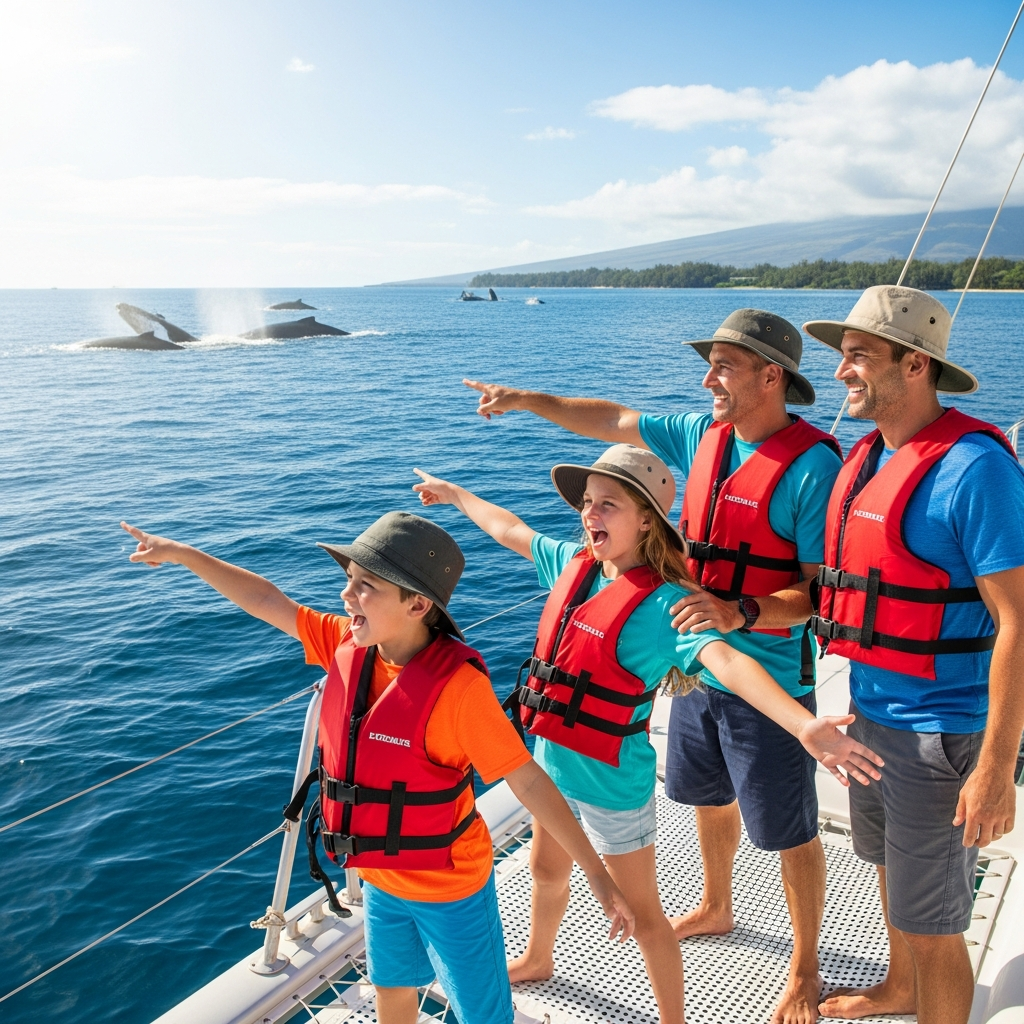
Taking children whale watching requires extra planning and consideration, but the payoff is extraordinarily worthwhile. Watching your child's face light up when a whale breaches nearby is a parenting moment you will never forget. Here is your complete guide to whale watching Maui with kids of all ages.
Age-by-Age Guide: Is Your Child Ready?
Infants (0-12 months)
While technically allowed on most large catamarans, whale watching with infants requires careful consideration and honest self-assessment:
- Sun exposure concerns are significant, even with shade structures; babies' skin is extremely sensitive
- Feeding schedules can be challenging to maintain on a moving boat with distractions
- Engine noise and crowd excitement may overwhelm sensitive babies
- Choose large catamarans with shaded, enclosed cabin areas where you can retreat if needed
- Morning tours offer calmest conditions, reducing stimulation
- Bring a carrier or sling for hands-free comfort and security
- Reality check: You may spend more time managing baby's needs than actually watching whales, and that is completely okay
- Consider shore-based whale watching as an alternative that allows more flexibility
Toddlers (1-3 years)
Toddlers can genuinely enjoy whale watching with proper preparation and realistic expectations:
- Attention spans are naturally short, so choose 2-hour maximum tours; avoid 3+ hour combo tours
- Select stable catamarans with safe, enclosed deck areas and railings they cannot climb through
- Bring plenty of familiar snacks and small toys for downtime between sightings
- Point out "big fishies jumping" to build excitement in toddler-friendly language
- Be prepared to head inside to the cabin if your child becomes overwhelmed by sun, wind, or stimulation
- Bring changes of clothes as splash and spray are common
- Consider life jackets even if not required; some children feel more secure wearing them
- Manage expectations: your toddler may be more interested in the boat's steering wheel than the whales
Preschoolers (4-5 years)
This age marks the sweet spot for first whale watching experiences, with children old enough to understand and remember the adventure:
- Children this age can understand anticipation and delayed gratification when waiting for whale sightings
- Able to follow safety instructions and stay in designated areas
- Bring child-sized binoculars (inexpensive ones work fine) and whale identification cards to make them active participants
- This is an excellent age for creating lasting memories that children will remember into adulthood
- Engage them in whale spotting as a game: "Who can find the next whale?"
- They can understand basic whale facts and will proudly share them later
School-Age (6-12 years)
The ideal age range for whale watching, when children can fully appreciate and participate in the experience:
- Can actively participate in spotting whales, often seeing them before adults do
- Understand and appreciate different whale behaviors and what they mean
- Adventure-seeking families can consider raft tours for kids 7+ who are comfortable with motion and some excitement
- Encourage photography and journaling to process the experience
- This age group particularly loves the educational component with naturalist guides
- May ask excellent questions that deepen the experience for the whole family
- Consider giving them responsibility for family photos or a whale sighting log
Teenagers (13+)
Teens can fully participate in any tour type and often become the most enthusiastic whale watchers once they experience the first breach:
- May initially seem uninterested but are often deeply moved by close whale encounters
- May strongly prefer more active raft or zodiac tours over "boring" big boats
- Photography focus keeps them engaged; consider letting them bring a good camera
- Hydrophone experiences fascinate this age group; hearing whale songs creates lasting impressions
- Appreciate the science and conservation aspects if guides present them well
- Social media sharing opportunities motivate active participation and attention
Seasickness Prevention Strategies for Kids
Motion sickness can absolutely ruin an otherwise perfect day on the water. Here is how to prevent it and ensure everyone in your family enjoys the experience:
- Choose wisely from the start: Book morning tours when seas are calmest, and select large, stable catamarans over smaller vessels
- Medication options: Consult your pediatrician about non-drowsy motion sickness remedies like children's Dramamine or Bonine, given 30-60 minutes before departure as directed
- Natural alternatives: Sea-Bands (acupressure wristbands) work surprisingly well for many children and have no side effects; ginger candies or ginger ale can also help
- Strategic seating: Sit in the middle or back of the boat where motion is least pronounced; avoid the front (bow) where bouncing is most intense
- Fresh air is essential: Stay on deck with a clear view of the horizon rather than going inside where there are no visual references
- Horizon focus: Encourage children to watch the horizon rather than looking at screens, books, or the moving boat floor
- Food matters: Eat a light meal beforehand; avoid heavy, greasy, or acidic foods that can make nausea worse
- Stay hydrated: Bring water bottles and encourage frequent small sips throughout the tour
- Avoid reading: Looking at phones, tablets, or books while the boat is moving dramatically increases motion sickness risk
If Your Child Feels Sick Despite Prevention: Move immediately to the center of the boat where motion is minimal. Find fresh air on deck. Have them focus on the horizon. Use any sick bags provided by the crew without embarrassment, as this happens regularly. Alert crew members, who are experienced with seasick passengers and can offer assistance. Know that the feeling usually passes within 15-20 minutes, especially once the child's body adjusts to the motion.
What to Pack for a Family Whale Watching Trip
Sun Protection (Critical)
- Reef-safe sunscreen (SPF 50+) applied generously 15-20 minutes before boarding
- Hats with chin straps for every family member, as wind absolutely will steal unsecured hats
- UV-protective rash guards for extra coverage, especially for children
- Sunglasses with secure straps or sports bands to prevent loss
- Lip balm with SPF protection
Comfort and Entertainment
- Light layers including a windbreaker or light jacket, as temperatures drop 10-15 degrees on the water
- Change of clothes for young children in case of splash or accidents
- Familiar snacks like crackers, fruit, and granola bars that settle stomachs
- Refillable water bottles for each family member
- Small toys or activity books for downtime between whale sightings
- Lovey or comfort item for younger children
For families who want to capture beautiful vacation photos while staying comfortable on the water, consider packing matching family vacation outfits that coordinate perfectly for those magical moments when whales breach in the background. Coordinated looks in moisture-wicking fabrics photograph beautifully against the ocean backdrop, and the photos become treasured keepsakes that capture the joy of your adventure together.
Documentation and Entertainment
- Waterproof camera or phone case, which is absolutely essential given spray and potential drops
- Binoculars if not provided by your tour operator
- Whale identification card to help kids recognize different behaviors
- Small notebook for older kids to record observations
Medical and Safety
- Motion sickness remedies (given in advance per package directions)
- Any regular medications family members need
- Basic first aid items like bandages and antiseptic wipes
- Hand sanitizer
Making Whale Watching Educational and Memorable
Transform your whale watching trip into a learning adventure that deepens appreciation and creates lasting memories:
- Before the trip: Watch whale documentaries together as a family; read age-appropriate books about humpback whales; look at whale photos and discuss what you might see
- During the tour: Encourage children to ask the naturalist guide questions; guides love curious kids and will often give them special attention
- Create games: Play whale behavior bingo or compete to spot different behaviors first; offer small prizes for first sightings
- After the trip: Make a whale watching journal with drawings, photos, and memories; write a story from the whale's perspective
- Discuss conservation: Talk about why protecting whales and their ocean habitat matters for the future; discuss how your family can help
- Learn Hawaiian: The Hawaiian word for whale is "kohola" (koh-HOH-lah), a beautiful word for children to learn and use
- Visit the Maui Ocean Center: Before or after your tour, the aquarium offers excellent whale exhibits that add context to your experience
Free Whale Watching: Best Shore Viewing Spots in Maui
Not ready for a boat tour? Traveling with a newborn? Have a family member who cannot handle boat motion? Maui offers exceptional whale watching from shore, completely free of charge. This option works perfectly for families with infants, boat-hesitant children, budget-conscious travelers, or those wanting to complement their boat tour with additional shore-based experiences.
Top 5 Shore-Based Whale Watching Locations
1. Papawai Point (Scenic Lookout)
- Location: Highway 30 between Maalaea and Lahaina (Mile Marker 8)
- Why it is exceptional: Elevated vantage point with designated whale watching area, interpretive signs explaining whale behavior, and consistently excellent sighting opportunities
- Facilities: Paved parking pullout with room for approximately 15 vehicles; no restrooms, so plan accordingly
- Family tip: Pack a picnic lunch, bring camp chairs, and settle in with binoculars; during peak season you can easily spot multiple whale groups from this single location
- Best time: Morning hours when waters are calmest and whale activity is high
2. McGregor Point
- Location: Near Papawai, Mile Marker 9 on Highway 30
- Why it is exceptional: High cliff vantage point with excellent visibility stretching miles across the Auau Channel
- Facilities: Limited parking for approximately 8 vehicles; no restrooms
- Family tip: Outstanding photography location due to elevation; bring a camera with zoom capability
- Safety note: Keep children away from cliff edges; the view is spectacular but requires supervision
3. Kalama Beach Park (Kihei)
- Location: South Kihei Road in the heart of Kihei
- Why it is exceptional: Perfectly combines beach play with whale watching opportunities, making it ideal for families
- Facilities: Full facilities including restrooms, picnic tables, playground, parking, and nearby restaurants
- Family tip: Kids can play in the sand and splash in the waves while parents scan the horizon; everyone stays happy
- Multi-generational appeal: Grandparents can sit comfortably in the shade while kids play and everyone watches for whales
4. Wailea Beach Path
- Location: Running through the Wailea Resort Area along the oceanfront
- Why it is exceptional: Beautiful scenic oceanfront walking path with multiple viewing points, benches, and the backdrop of luxury resorts
- Facilities: Resort amenities nearby including restrooms, restaurants, and beach access
- Family tip: Morning walks offer the best whale watching combined with beautiful sunrise light and fewer crowds
- Added bonus: The path itself is a beautiful walk even without whale sightings
5. Kapalua Coastal Trail
- Location: Northwest Maui near the Ritz-Carlton
- Why it is exceptional: Stunning clifftop views, multiple observation points, and some of the most dramatic coastal scenery on the island
- Facilities: Access from Kapalua Bay with parking; restrooms at beach access points
- Family tip: Combine whale watching with tide pool exploration at Dragon's Teeth for a full nature experience
- Difficulty: Easy to moderate walking on maintained paths; suitable for strollers in most sections
Tips for Successful Shore-Based Whale Watching
- Best time: Morning hours when waters are calmer and visibility is clearest; whales are also more active
- Essential gear: Binoculars make a massive difference from shore, turning distant spouts into clear sightings
- How to spot whales: Scan slowly and methodically for spouts (misty blows that can reach 15 feet high), breaches, or splashes against the blue water
- Be patient: Watch for 15-20 minute periods before moving to a new location; whales surface repeatedly in the same general area
- Bring comfort items: Chairs, blankets, snacks, and drinks make extended watching sessions pleasant for everyone
- Free and flexible: Shore watching allows you to come and go as needed, making it perfect for families with unpredictable schedules

What You Will See: Amazing Humpback Whale Behaviors in Maui
Understanding whale behaviors enhances your experience immeasurably, turning random splashes into meaningful observations. Here is what to watch for and what each behavior means, so you can share this knowledge with your children during your adventure.
Common Whale Behaviors and What They Mean
Breaching
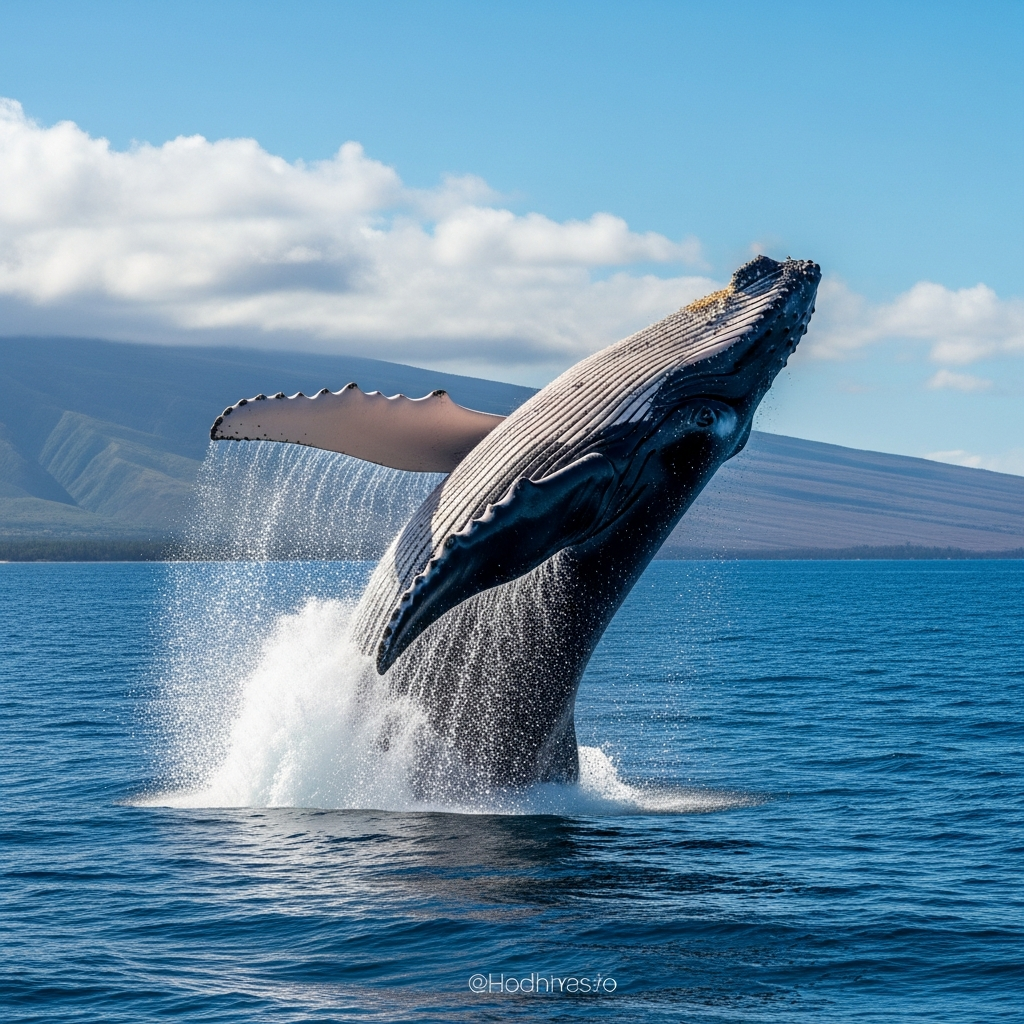
The most spectacular and dramatic behavior you might witness. Humpbacks leap belly-up completely clear of the water, sometimes twisting their massive 40-ton bodies in mid-air, then arch backward and return with a tremendous splash that can be seen and heard for miles. Scientists believe whales breach for multiple reasons including communication across distances, removing parasites from their skin, and simply playing. Keep your camera ready because breaches often come in series, with some whales breaching dozens of times in succession. The power required to launch a 40-ton body completely out of the water is almost incomprehensible.
Tail Slap (Lobtailing)
Whales lift their incredibly powerful tail flukes and slap the water surface repeatedly, creating explosive splashes and thunderous sounds. The noise can travel for miles underwater, likely serving as communication with other whales in the area. This behavior often signals excitement, agitation, or the presence of other whale groups nearby. Mothers sometimes tail slap to discipline calves or get their attention.
Pectoral Fin Slap (Pec Slap)
Humpbacks possess the longest pectoral fins of any whale species, spanning an impressive 15 feet in length. Watching them roll on their sides and slap these massive fins repeatedly on the water's surface is mesmerizing. Scientists believe this behavior helps with communication, temperature regulation, and possibly removing parasites. The rhythmic slapping can continue for extended periods.
Spy Hopping
When a whale raises its head vertically out of the water, slowly rotating to look around above the surface, it is called spy hopping. The whale appears to be surveying its surroundings, possibly observing boats, other whales, or simply satisfying curiosity about the above-water world. Children find this behavior especially thrilling because it genuinely feels like the whale is looking directly at them with its small, intelligent eye.
Blowing (Spouting)
The most common behavior you will observe throughout your whale watching experience. When whales exhale at the surface, they create a distinctive misty spray that can reach 10-15 feet high and is visible from considerable distances. Look for repeated spouts to track whale locations, as humpbacks typically surface several times to breathe before diving deep. Each whale's blow pattern is slightly different, and experienced guides can sometimes identify individuals by their spouts.
Fluke Up Dive
When whales prepare for a deep dive, they often raise their tail flukes high out of the water in a graceful arc before disappearing beneath the surface. Each whale's tail pattern is absolutely unique, like human fingerprints, with distinctive markings, scars, and coloration that allow researchers to identify individuals across decades of observation. This behavior creates the classic whale watching photograph that graces calendars and postcards worldwide.
Singing (Heard via Hydrophone)
Male humpback whales produce complex, haunting songs that can last for hours and be heard for miles underwater. Tours equipped with hydrophones allow guests to hear these otherworldly sounds directly. The songs evolve throughout the breeding season, with all males in a region singing the same basic song while making gradual modifications. Scientists continue studying these songs to understand their purpose in breeding and communication.
Mother and Calf Interactions
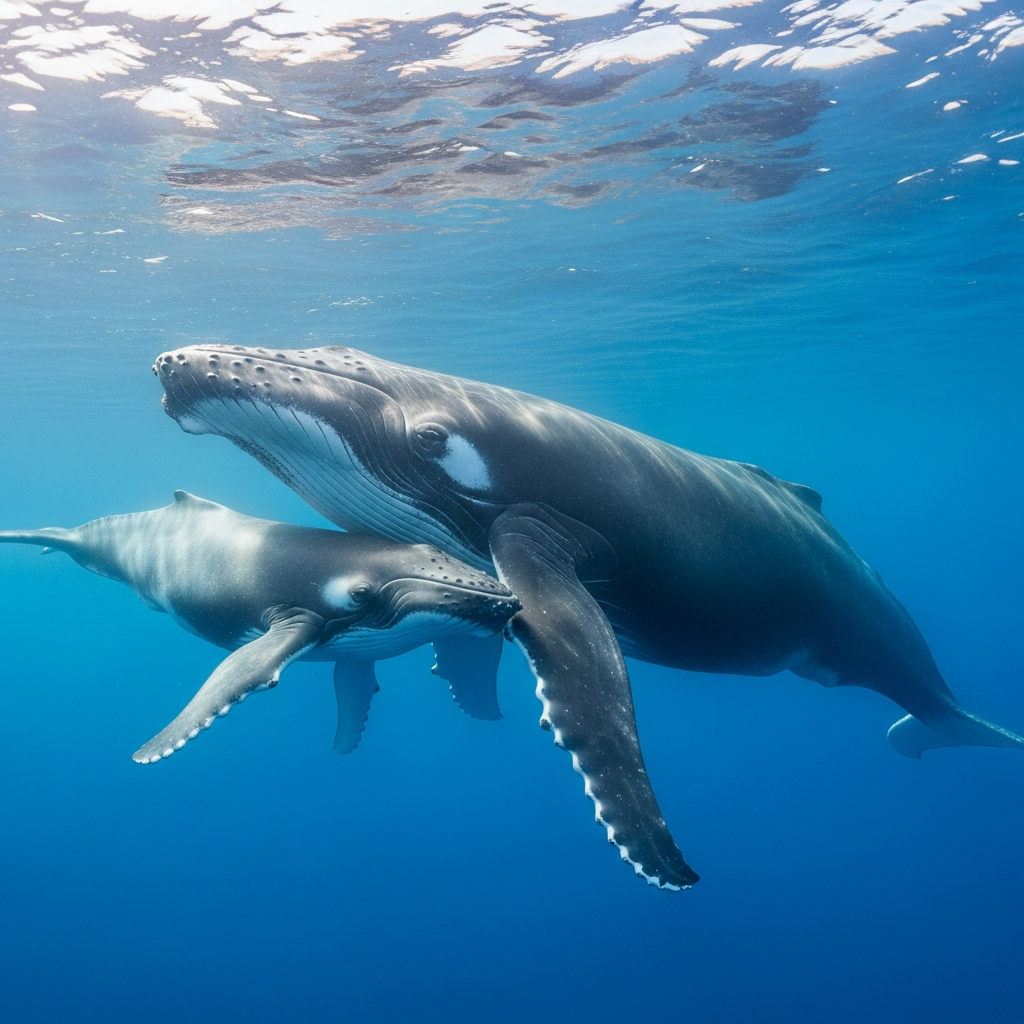
Maui's warm, shallow, predator-free waters make perfect nurseries for newborn calves, and witnessing mother-calf interactions is among the most heartwarming experiences in nature. During February through April, you will likely see mothers with calves displaying tender behaviors that resonate deeply with parents:
- Calves learning to breach, often with adorably uncoordinated splashy attempts that make everyone smile
- Nursing behavior, as calves consume up to 100 pounds of rich milk daily to fuel their rapid growth
- Protective mothers keeping calves close to their sides, positioned just above the massive pectoral fin
- Playful calf antics as young whales build strength and coordination for the challenging migration north
- Mothers patiently allowing calves to rest by lying across their backs near the surface
- Escort whales (usually males hoping to mate) accompanying mother-calf pairs
Newborn humpback calves are approximately 12-15 feet long at birth and weigh about one ton. By the time they leave Hawaiian waters for Alaska several months later, they will have doubled or tripled in size. Watching this rapid growth and the tender bond between mothers and calves creates emotional, memorable moments for families.
Remember that federal regulations require boats to maintain a 100-yard minimum distance from all humpback whales in Hawaiian waters. However, whales are naturally curious creatures and often approach stationary boats on their own initiative. When this happens, it is called a "mugging," and these close encounters create the most incredible whale watching memories. Tour captains must remain stationary when whales approach, allowing these magical moments to unfold naturally.
Practical Tips for an Unforgettable Whale Watching Experience
These final practical tips will help ensure your family has the best possible experience on the water, avoiding common pitfalls and maximizing enjoyment.
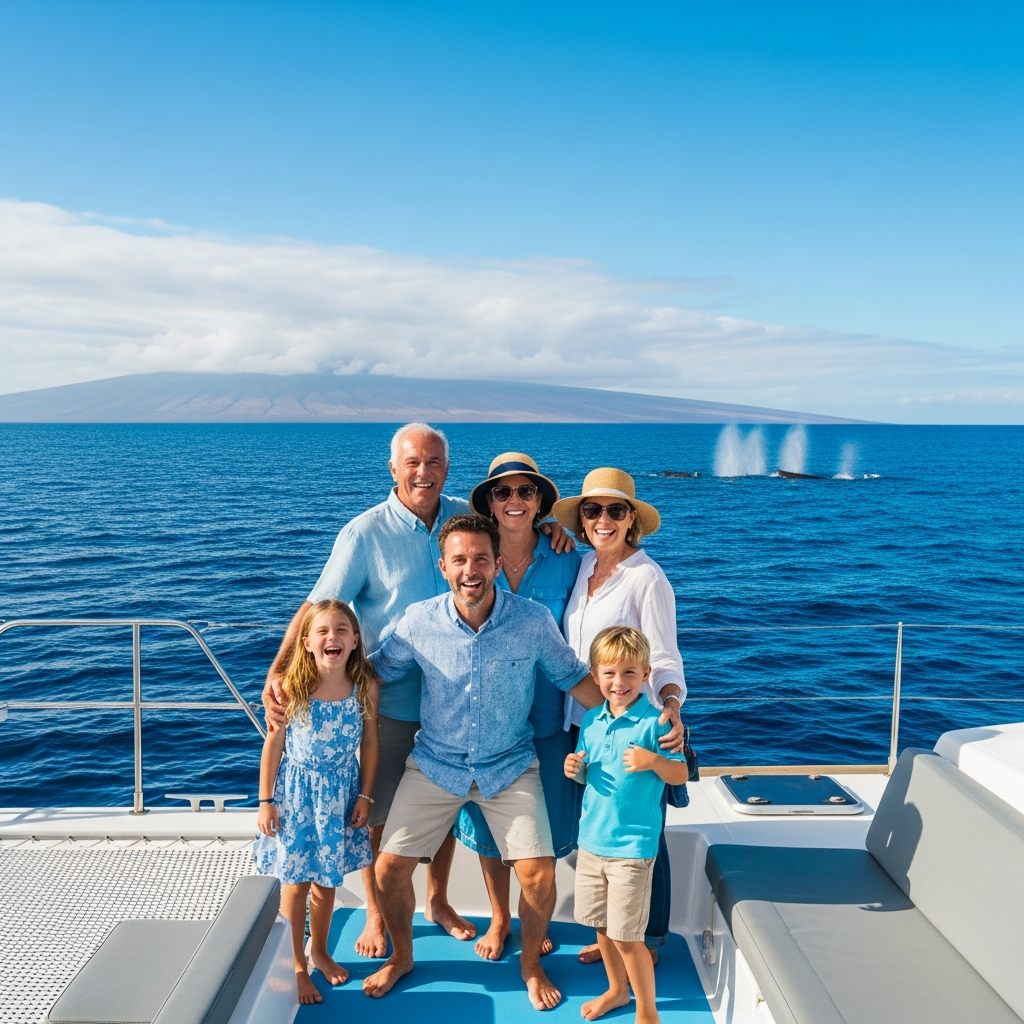
What to Wear for Whale Watching in Maui
Clothing Recommendations:
- Layered approach: Start with a moisture-wicking T-shirt plus a light jacket or windbreaker that can easily be removed and put back on
- Long pants or comfortable shorts depending on temperature and sun sensitivity
- Closed-toe shoes with rubber grip soles, as decks can be wet and slippery from spray
- Hat with chin strap or clips; the wind absolutely will take unsecured hats overboard within minutes
- Swimsuit underneath your clothes if booking a combo whale watch and snorkel tour
For families who want to make their whale watching trip extra special while creating wonderful photo memories, consider wearing matching family swimsuits underneath your layers. Coordinated family looks photograph beautifully against the stunning Maui ocean backdrop, and when the captain announces a snorkel stop, your family will be ready for coordinated underwater photos as well. The memories captured in matching outfits become treasured keepsakes that perfectly represent the togetherness of your Hawaiian adventure.
Why Layers Are Essential:
- At the harbor: Warm, calm, possibly hot standing in the sun while boarding
- On open water: 10-15 degrees cooler due to wind chill and ocean breezes
- Expect spray: You will likely get at least somewhat wet from boat movement or exciting whale activity nearby
- Conditions change: Morning tours may start cool and end warm; afternoon tours often get windier
What NOT to Wear:
- Flip flops: They are slippery on wet decks and can fly off your feet unexpectedly
- Flowing dresses or skirts: Wind creates constant wardrobe management problems
- Expensive jewelry: Salt water exposure causes significant damage to precious metals and stones
- All-white outfits: Salt spray and sunscreen inevitably leave visible marks
- Brand new sneakers: Salt water and spray will age them instantly
Booking Tips and Avoiding Disappointment
- Book early: Reserve your preferred tour 2-3 weeks in advance during peak season (January through March); the most popular morning departures can sell out weeks ahead
- Morning tours fill first: If seasickness is any concern for any family member, book morning tours as your absolute first choice
- Check policies carefully: Understand cancellation and rescheduling policies before booking, especially weather-related provisions
- Understand guarantees: Most operators offer free return trips if no whales are sighted, but understand the terms and limitations
- Read recent reviews: Check current season feedback on TripAdvisor or Google for real-time insights about conditions and service
- Have backup dates: Weather can cancel tours without warning, so build flexibility into your schedule if possible
- Book direct: Tour operator websites typically offer better rates than hotel concierges or third-party booking sites
- Consider travel insurance: Trip insurance can protect against weather cancellations that affect your whale watching plans
Photography Tips for Capturing Whale Moments
- Equipment basics: Smartphone with burst mode works surprisingly well for whale photography; a camera with 200mm+ zoom lens is ideal for close-up shots
- Waterproof protection: A waterproof phone case or camera housing is an essential investment given ubiquitous spray and potential drops
- Camera settings: Use fast shutter speed (1/1000 or faster) for breaching shots to freeze the action; sports mode works well
- Be ready: Keep camera powered on with settings ready at all times; breaches happen suddenly and last only seconds
- Watch other boats: If another whale watching vessel has stopped, whales are likely nearby; be ready to capture the action
- Include your family: Do not forget to put the camera down sometimes and simply marvel at the experience; the best memories are often felt, not photographed
- Let kids participate: Give children their own camera or old phone for their unique perspective; kid-level shots are often surprisingly good
- Take videos too: Video captures the sounds and excitement in ways still photos cannot
Frequently Asked Questions About Whale Watching in Maui
The best time for whale watching in Maui is during peak season from January through March, with February widely considered the optimal month for maximum whale activity and sighting frequency. The full whale watching season runs from mid-December to mid-May, but whale concentrations are highest during the winter months when humpbacks gather in Maui's warm, protected waters to breed and give birth. For the calmest ocean conditions and lowest seasickness risk, book morning tours departing before 10 AM when trade winds are typically light.
Yes, toddlers can successfully go whale watching in Maui with appropriate planning and realistic expectations. Select large, stable catamarans rather than smaller rafts, book morning tours when seas are calmest, and limit tour duration to 2 hours maximum given short attention spans. Many tour operators warmly welcome children of all ages on their larger vessels. Consider your individual child's comfort level with boat motion, and pack plenty of familiar snacks and small toys to keep them engaged during downtime between whale sightings.
Whale watching tours in Maui typically cost between $40 to $90 for adults and $25 to $60 for children, depending on the tour operator, vessel type, and tour duration. Standard 2-hour tours on large catamarans are most affordable, while smaller raft tours offering more adventurous experiences or premium sailing tours with food and beverages included cost more. Most tours include complimentary beverages, light snacks, and expert naturalist narration. Book directly with tour operators for best rates rather than through hotel concierges who may add booking fees.
Both Lahaina Harbor and Maalaea Harbor offer excellent whale watching experiences with high sighting rates. Lahaina Harbor is ideal for families staying in West Maui (Kaanapali, Kapalua, Lahaina) with quick 10-15 minute access to the whale-rich Auau Channel between Maui and Lanai. Maalaea Harbor works better for visitors staying in South Maui (Kihei, Wailea, Makena) and offers access to slightly different whale populations plus proximity to Maui Ocean Center. Choose based primarily on your accommodation location to minimize driving time and maximize vacation enjoyment.
Absolutely and unequivocally yes. Maui offers some of the best whale watching in the entire world, with approximately 12,000 humpback whales migrating to Hawaiian waters each winter specifically to breed and raise their young. The warm, shallow, protected waters of the Maui Nui Basin create ideal conditions for frequent close encounters with these magnificent creatures. Most tour operators guarantee whale sightings during peak season, and witnessing a 45-foot, 40-ton whale breach just yards from your boat is genuinely a once-in-a-lifetime family experience that creates memories lasting forever.
Yes, Maui offers excellent shore-based whale watching opportunities that are completely free of charge. Top viewing spots include Papawai Point (scenic lookout between Lahaina and Maalaea), McGregor Point with its elevated cliff views, Kalama Beach Park in Kihei combining beach play with whale watching, and the beautiful Wailea Beach Path. Bring binoculars for best results, visit during calm morning hours when whale activity peaks, and scan the horizon patiently for telltale spouts and breaches. Shore watching is perfect for families with young infants, visitors hesitant about boat tours, or anyone wanting to supplement their on-water experience.
Some children may experience motion sickness on whale watching tours, but the condition is largely preventable with proper preparation and smart choices. Choose morning departures when ocean conditions are calmest, select large stable catamarans with wide beams rather than smaller rafts, and consider age-appropriate non-drowsy motion sickness remedies given 30-60 minutes before departure (always consult your pediatrician first). Sea-Bands acupressure wristbands offer natural prevention. Have children sit mid-boat where motion is minimal, keep them on deck with fresh air and horizon views, and avoid heavy or greasy meals beforehand.
Federal regulations strictly require all vessels to maintain a 100-yard (300-foot) minimum distance from humpback whales in Hawaiian waters at all times. However, these regulations apply to boat approaches, not whale approaches. Humpbacks are naturally curious creatures and frequently approach stationary boats on their own initiative, creating incredible close encounters called "muggings" that whale watchers treasure. When whales approach, captains must cut engines and remain stationary, allowing these magical moments to unfold naturally while respecting wildlife protection laws.
Start Planning Your Family Whale Watching Adventure
Whale watching in Maui offers one of nature's most spectacular shows, and sharing this experience with your family creates memories that genuinely last a lifetime. From the heart-stopping thrill of seeing a massive humpback breach against the blue Pacific sky to the tender moment of spotting a mother gently guiding her newborn calf through crystal waters, these experiences connect us to something profoundly bigger than ourselves.
Whether you choose a large stable catamaran from Pacific Whale Foundation, a premium sailing adventure with Trilogy complete with cinnamon rolls and complimentary beverages, an adrenaline-pumping raft tour that puts you at water level, or simply pack a picnic lunch and binoculars for a peaceful morning at Papawai Point, you are absolutely guaranteed an unforgettable experience. The best whale watching Maui offers is waiting for your family.
Here is your action plan to make it happen:
- Choose your dates wisely: Aim for January through March for peak season, with February being the optimal month for maximum whale activity
- Select your tour carefully: Match the vessel type and tour duration to your children's ages, comfort levels, and adventure thresholds
- Book early and direct: Reserve 2-3 weeks ahead for popular morning tours during peak season; book directly with operators for best rates
- Prepare your family thoroughly: Watch whale documentaries together, discuss seasickness prevention strategies, and pack wisely with layers and sun protection
- Be present for the moment: Put down the camera sometimes and simply marvel at these magnificent creatures with your family beside you
At PatPat, we believe the best family memories are made when everyone is comfortable, coordinated, and ready for adventure together. From the boat deck to the beach, from sunrise whale watching to sunset snorkeling, we are here to help your family look and feel your best during your Hawaiian vacation. These moments matter, and the photos you take in your coordinated family outfits will remind you of this magical adventure for years to come.
The whales are waiting in Maui's warm waters. Your family adventure begins now.




