Christmas is a season full of lights, music, stories, and family traditions. Some of these traditions have roots in history that can be traced through books and records. Others come from legends and stories that families pass down because they bring joy and meaning. Below are 20 fun Christmas facts for kids, clearly marked to show which ones are based on historical events and which ones come from traditions or stories. This distinction helps parents teach, and it helps kids understand that “Christmas magic” can mean different things to different people.
1. Santa’s Sleigh Speed
A playful “what-if”: if Santa visited every child in one night, he’d need impossible speeds—fun math, not real science.
Why it matters: A kid-friendly way to talk about time zones, distance, and “Christmas magic.”

2. Reindeer Games
In the real world, female reindeer usually keep their antlers through winter while males shed them—so Santa’s team might be girls or youngsters.
Why it matters: It brings real animal science into a holiday story.
It also makes a fun thing to check on reindeer Christmas pajamas: most prints give every reindeer a big set of antlers, so ask your kids whether the herd on their pajamas would be girls or boys by Christmas Eve. On this Fair Isle set the reindeer are worked into a knit-style pattern; its listing says the kids’ and baby pieces are flame-resistant and each set comes with buffalo plaid socks.

3. First Christmas Card
Nineteenth-century records point to 1843 London, when Sir Henry Cole asked artist John Callcott Horsley to print a festive card—helping start the tradition of mailing holiday greetings.
Why it matters: Connects art, printing, and how families share cheer.

4. World’s Largest Christmas Stocking
Communities have stitched giant stockings for charity and record attempts; the exact “largest” changes as new records are set.
Why it matters: Shows how festive fun can support good causes.

5. Christmas Trees in Space
Astronauts have marked the holidays in orbit—Skylab crews improvised a tiny “tree” in the 1970s, and on the ISS you’ll sometimes see stockings and small decorations.
Why it matters: Traditions travel wherever people go.

6. A Christmas Carol
Literary history notes that Dickens’s 1843 story helped popularize a warm, family-centered Christmas focused on generosity and redemption.
Why it matters: Literature can shape how we celebrate.
7. Santa’s Secret Helpers
Popular imagination and children’s stories gradually filled Santa’s workshop with cheerful elves; films and books made them household characters.
Why it matters: Shows how imagination becomes tradition.

8. Christmas in Australia
Because it’s summer there, barbecues, beach days, and light cotton outfits join carols and trees.
Why it matters: Highlights how seasons and place shape celebration.
9. Mistletoe Tradition
Customs evolved over centuries: old plant lore blended with later British practices to create the “kiss under the mistletoe” many people enjoy today.
Why it matters: A living example of traditions changing over time.

10. Famous Reindeer Names
From a poem: the 1823 “’Twas the Night Before Christmas” listed the classic eight—Dasher, Dancer, Prancer, Vixen, Comet, Cupid, Donner, Blitzen. Rudolph arrived later (1939) and became famous through songs and TV.
Why it matters: Poetry helped define Santa lore—and new characters can join the canon.
11. Candy Cane Symbolism
Despite viral stories about hidden meanings, those “secret code” explanations are modern myths; canes became favorites through taste, stripes, and mass production.
Why it matters: Encourages kids to enjoy tales—and still check facts.
Candy-cane stripes are also a classic Christmas pajama print, and some, like this hooded onesie, light up after the lamps go off. More styles are in glow in the dark Christmas pajamas.


12. The First Christmas Tree in America
Early American accounts often point to Charles Follen’s decorated tree in 1832; German immigrants helped popularize the practice across the U.S.
Why it matters: Roots a living-room tradition in real history.
Trees have since moved from the living room onto pajamas. This dark green set is covered in them, with a button-front collared top, pockets on the adult pants and adult sizes up to 4XL; more versions are in Christmas tree pajamas.

13. Jingle Bells
Published in the 1850s as “One Horse Open Sleigh,” it wasn’t written as a Christmas song—but families adopted it for the season. In 1965, astronauts even played it in space.
Why it matters: Music can move from local to global to outer space—literally.

14. Christmas Eve Around the World
From Nochebuena feasts in Spain and Latin America to candlelit services elsewhere, many families exchange gifts or share special meals on December 24.
Why it matters: Invites kids to compare global traditions.
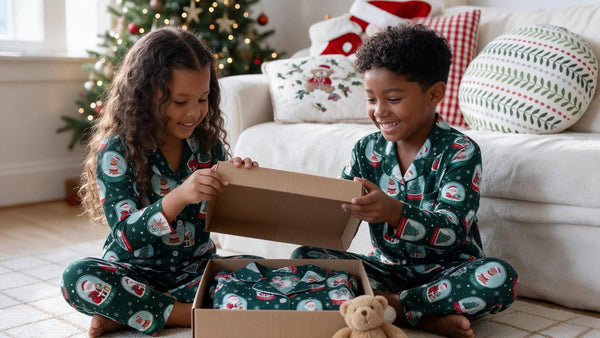
In many American homes, Christmas Eve is also the night kids open a new pair of pajamas. Our article on why families wear matching Christmas pajamas looks at where that habit comes from.
15. The Christmas Pickle
Most researchers see the “German pickle ornament” origin story as a playful American novelty rather than an old European custom.
Why it matters: Fun to play along, even if the origin is fuzzy.
16. Poinsettia Plants
Native to Mexico, poinsettias spread widely after diplomat Joel Poinsett shared them in the 1800s. A well-known Mexican legend tells of humble greens that blossomed red on Christmas Eve—one reason the plant feels magical today.
Why it matters: Adds botany, geography, and generosity to holiday décor.

17. Twelve Days of Christmas
In many church calendars, the Christmas season runs twelve days, from December 25 through January 5, ending on the eve of Epiphany (January 6)—that’s the “twelve days.” The famous song plays with the idea using over-the-top gifts.
Why it matters: Explains why celebrations can extend into January.
18. Frosty the Snowman
A 1950 hit song later inspired a beloved 1969 TV special, helping make snowmen a staple of holiday pop culture.
Why it matters: Music and TV can turn characters into traditions.
Snowmen are still one of the best-loved winter prints. Our roundup of best-selling snowman Christmas pajamas includes Frosty the Snowman styles.
19. Norway’s Gift to Britain
Since 1947, Norway has sent a tall spruce to London’s Trafalgar Square as thanks for wartime support. The lighting has become part of the city’s holiday season.
Why it matters: A standing lesson in gratitude and friendship.
20. The Christmas Spider
An Eastern European folktale tells of a spider’s web that turned to silver and gold by morning—one charming origin story for tinsel on trees.
Why it matters: Folklore adds wonder (and a reason to dust!).
PatPat’s Perfect Pajamas for Your Family’s Holiday Moments
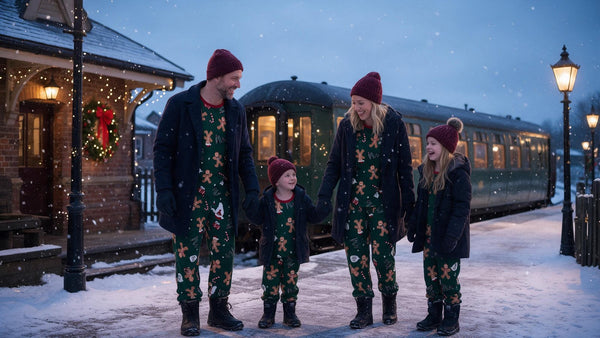
As you enjoy these stories, both historical and legendary, you can also create traditions of your own. One simple idea is to create a matching moment for photos, bedtime stories, or Christmas morning breakfast. PatPat offers soft, festive sets of matching Christmas pajamas that make it easy for everyone in the family to feel included — parents, big kids, and even the littlest ones.

A simple way to use this list is a pajama night with one fact per print: everyone changes into their Christmas pajamas after dinner, and each person reads out the fact that matches what they are wearing. The reindeer fan gets fact 2, the candy-cane print has to defend or debunk fact 11, the tree print gets America’s first Christmas tree, and whoever wears Santa has to work out fact 1, the sleigh-speed math. This navy Santa set is stretch fleece with a drawstring waist; it glows in the dark and comes with Christmas socks.

Frequently Asked Questions About Christmas
1. Why is it called Christmas?
The name “Christmas” comes from Old English Cristes Maesse, meaning “Christ’s Mass,” the church service celebrating Jesus’ birth.
2. What are the top 5 Christmas songs?
Lists vary, but family favorites include “All I Want for Christmas Is You,” “Jingle Bells,” “Silent Night,” “Last Christmas,” and “White Christmas.”
3. What is Christmas called in the Bible?
The Bible doesn’t use the word “Christmas.” It recounts Jesus’ birth in the Gospels of Matthew and Luke without naming the holiday.
4. Why is December 25 called the Big Day?
It’s the widely observed date the Western church adopted centuries ago to celebrate Jesus’ birth, so many families treat it as the main celebration day.
5. What are the 9 lessons of Christmas?
A Christmas Eve service with nine Bible readings tracing the story from creation to Christ’s birth, interwoven with carols.
6. Who started Christmas Day?
No single founder. By the 4th century, the Roman church set December 25 to honor Jesus’ birth, and the feast spread.
7. Who brought Christmas to America?
European settlers—especially Germans, Dutch, and English—brought traditions that blended into today’s American celebrations.
8. Who made Christmas illegal in 1647?
England’s Puritan-led Parliament banned Christmas festivities in 1647; celebrations returned with the Restoration in 1660.
Conclusion: Christmas Fun and Cozy Traditions
Christmas is about togetherness, memories, and meaning. Some parts of the holiday can be traced in real history, while others come from stories that families choose to keep because they’re joyful. Both are important. Whether you’re teaching kids about the significance of poinsettias in Mexico, singing Jingle Bells at the top of your lungs, or cuddling up in matching Christmas pajamas on movie night, what lasts is the feeling of being loved and being home.