


Somewhere on your phone right now there are four hundred photos from this summer, and you'd struggle to find five you'd actually print.
That's not a photography problem. It's a planning problem. The families whose photos look effortless didn't get lucky — they picked a concept, dressed for it, showed up at the right hour, and knew two or three things about where to stand. None of it requires a real camera or a hired photographer. It requires a plan and about forty minutes.
So here are twelve Moana-inspired family photoshoot ideas for summer 2026, each with the outfit pairing, the location, and the specific direction that makes it work — plus the lighting, posing, and phone technique that separate a keeper from the other three hundred and ninety-five. Every look comes from PatPat's Moana family collection, chosen because a coherent palette does more for a photo than almost anything else you can control.
Let's get you five you'll frame.
Before You Shoot: The Five Things That Matter Most
Read this first, because these five decisions determine 90% of your result, and they're all free.
1. Golden hour, always. The hour after sunrise or before sunset. Soft, warm, flattering, no squinting, no harsh shadows under eyes. Midday sun is the single most common reason family photos look bad. If you can only control one variable, control the time of day.
2. One palette, varied silhouettes. Everyone inside the same color family — turquoise, coral, sunset orange, palm green — but in different pieces. This is the entire reason themed collections photograph so well. It reads composed instead of costumed, and it stops one loud outfit from hijacking the frame.
3. Motion over posing. Especially with kids. "Everybody smile" produces the stiff photo you never look at again. "Run to me," "spin," "whisper a secret to your sister" produce the ones you print. Direct action, capture the in-between.
4. Get low. Shoot from the children's eye level or below, not from adult standing height looking down. It's the difference between documenting kids and being in their world.
5. Take more than you think. For every keeper there are ten that didn't work — a blink, a look away, a gust of hair. That's normal. Shoot in bursts and choose later.
Everything below assumes these five. Now the concepts.
1. The Wayfinder Silhouette at Sunset
The signature Moana shot: a child standing at the water's edge, looking out to the horizon, backlit by the setting sun.
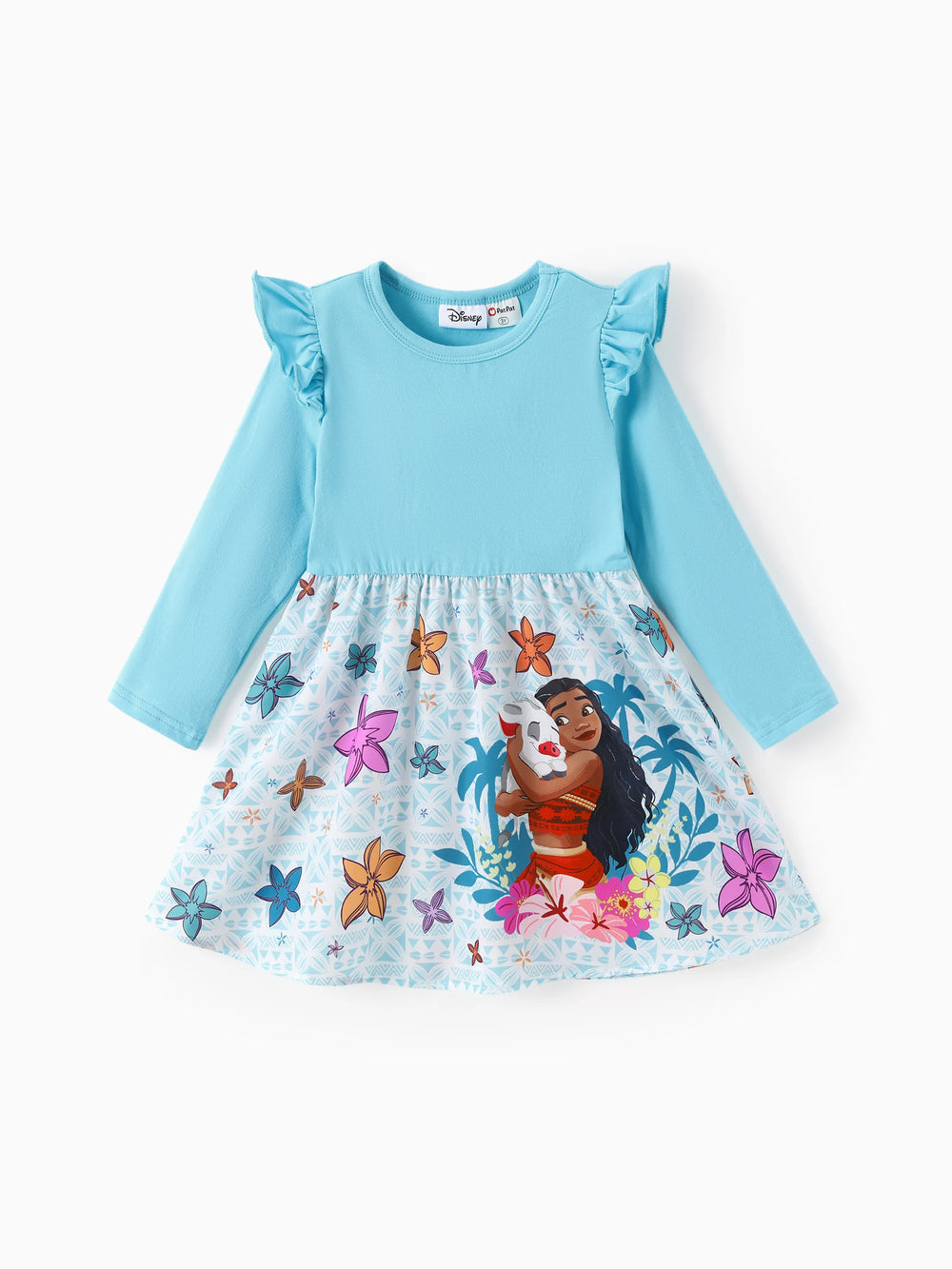
Put her in the turquoise ruffle flutter-sleeve dress — the flutter sleeves catch the sea breeze and read beautifully against a bright sky. Stand her sideways to the sun, ask her to look out at the water (not at you), and shoot from low so her outline sits against the horizon.
The direction that makes it: don't ask her to pose. Ask her "what do you think is all the way out there?" and shoot while she's actually wondering. The contemplative wayfinder look only happens when she's genuinely thinking.
Lighting: expose for the sky and let her go slightly dark for a true silhouette, or expose for her face for a backlit glow with detail. Both work; try both.
2. The Mother-Daughter Twirl
The photo you'll actually print this year is almost certainly this one.
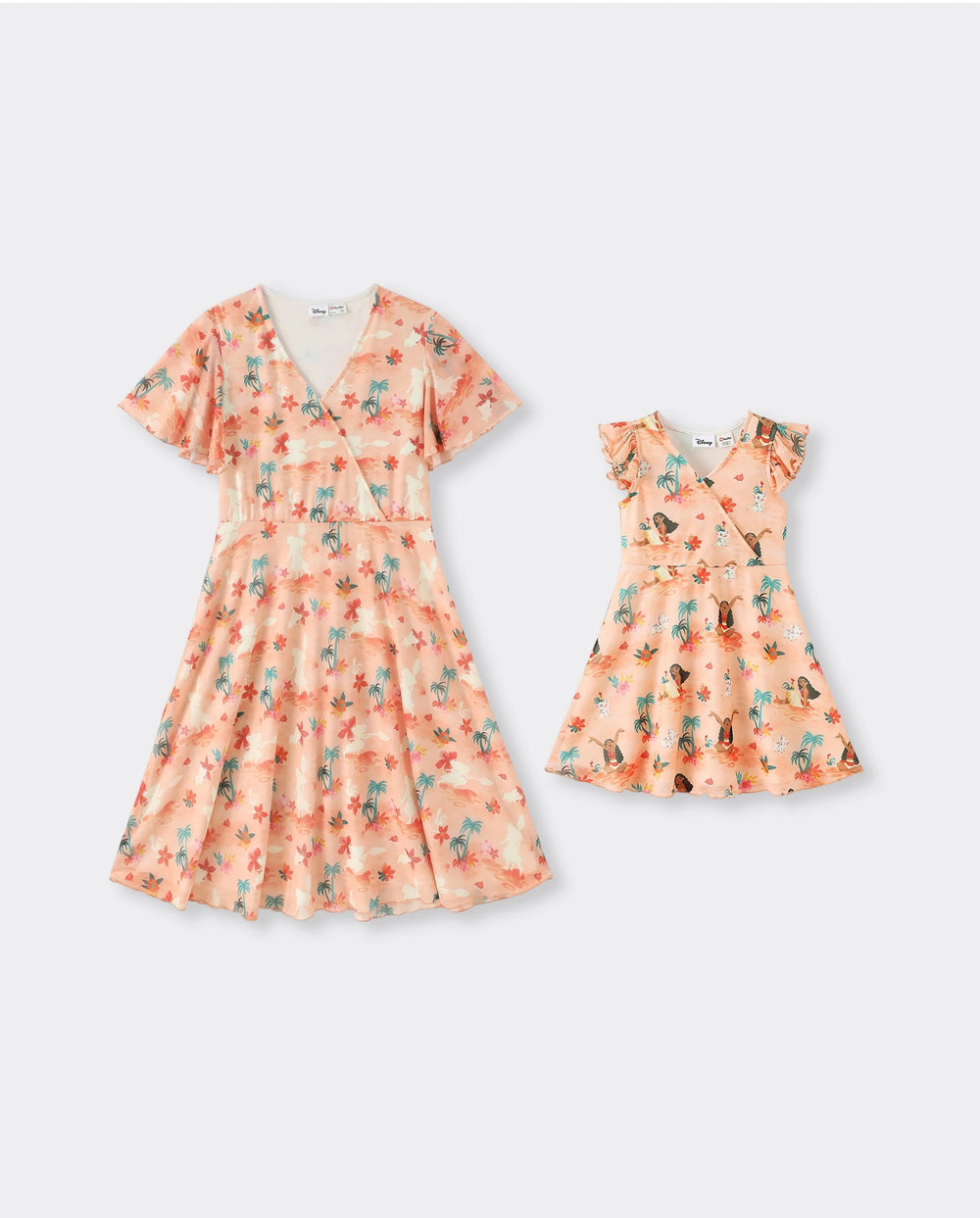
The orange tropical floral V-neck mommy-and-me dress is built for movement — the fabric flares when either of you spins. Hold hands, spin outward, and have someone catch the moment the skirts are widest.
The technique: movement shots need a fraction more light to freeze cleanly, so shoot this one earlier in golden hour rather than at the very end. Burst mode, then pick the frame where both skirts are open.
For more mother-daughter pairings, our full guide to mommy and me beach outfits goes deeper on coordinating the two of you.
3. The Whole-Family Walking Shot
The most natural group photo isn't posed at all — it's everyone walking together, away from or toward the camera.
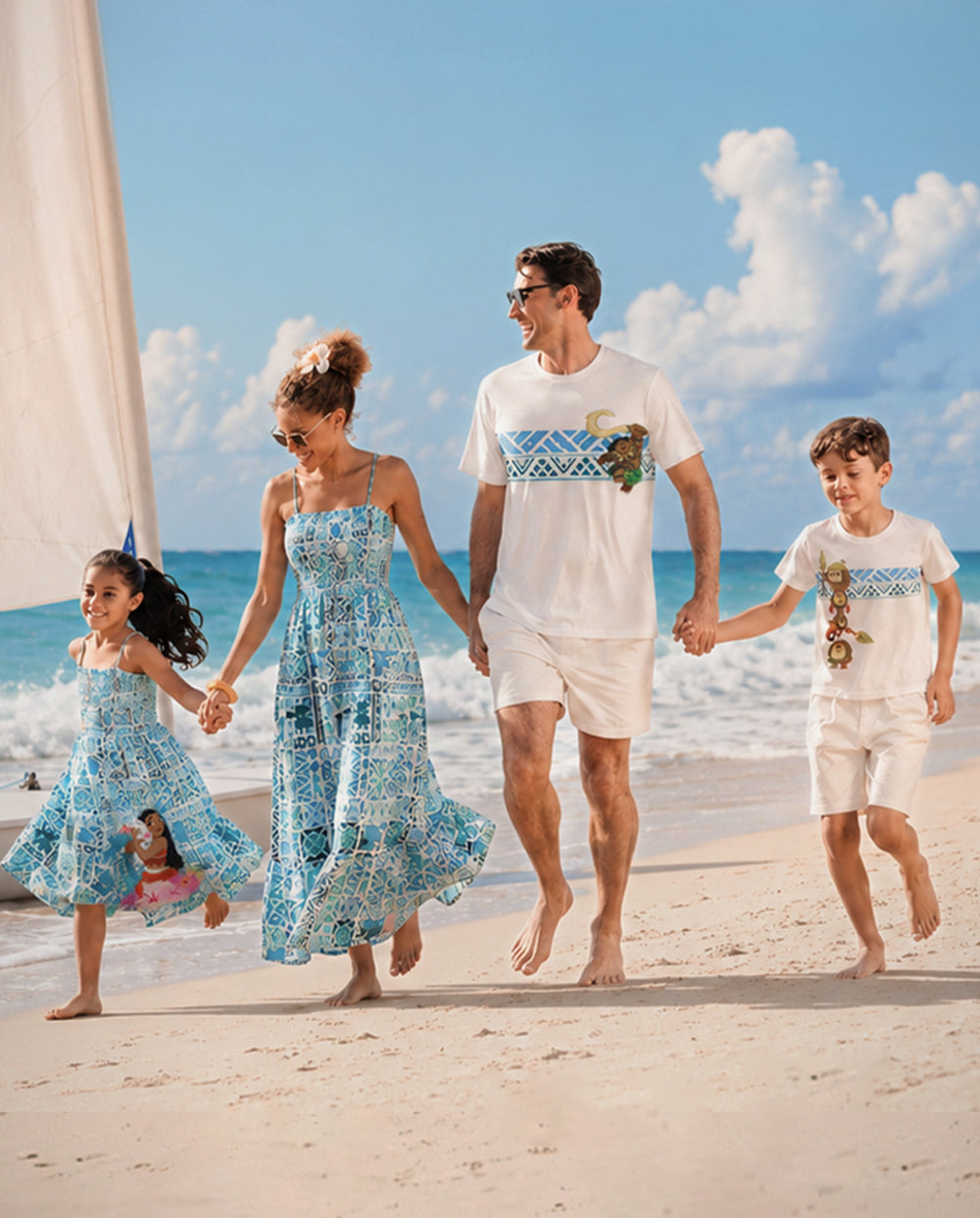
The blue Moana island-print family matching set coordinates the whole group without anyone looking staged, and blue-and-white reads clean against sand and sky. Line everyone up holding hands, then have them walk and talk to each other — not to the camera.
The trick: give them something to do while they walk. "Swing your arms," "count to ten together," "everybody skip on three." The task keeps kids from freezing, and the candid energy is the whole point.
Composition: leave space in front of the direction they're walking, not behind them. It gives the image somewhere to go.
4. The Golden-Hour Beach Portrait
The classic, warm, everyone-in-frame beach portrait — the one that becomes the holiday card.
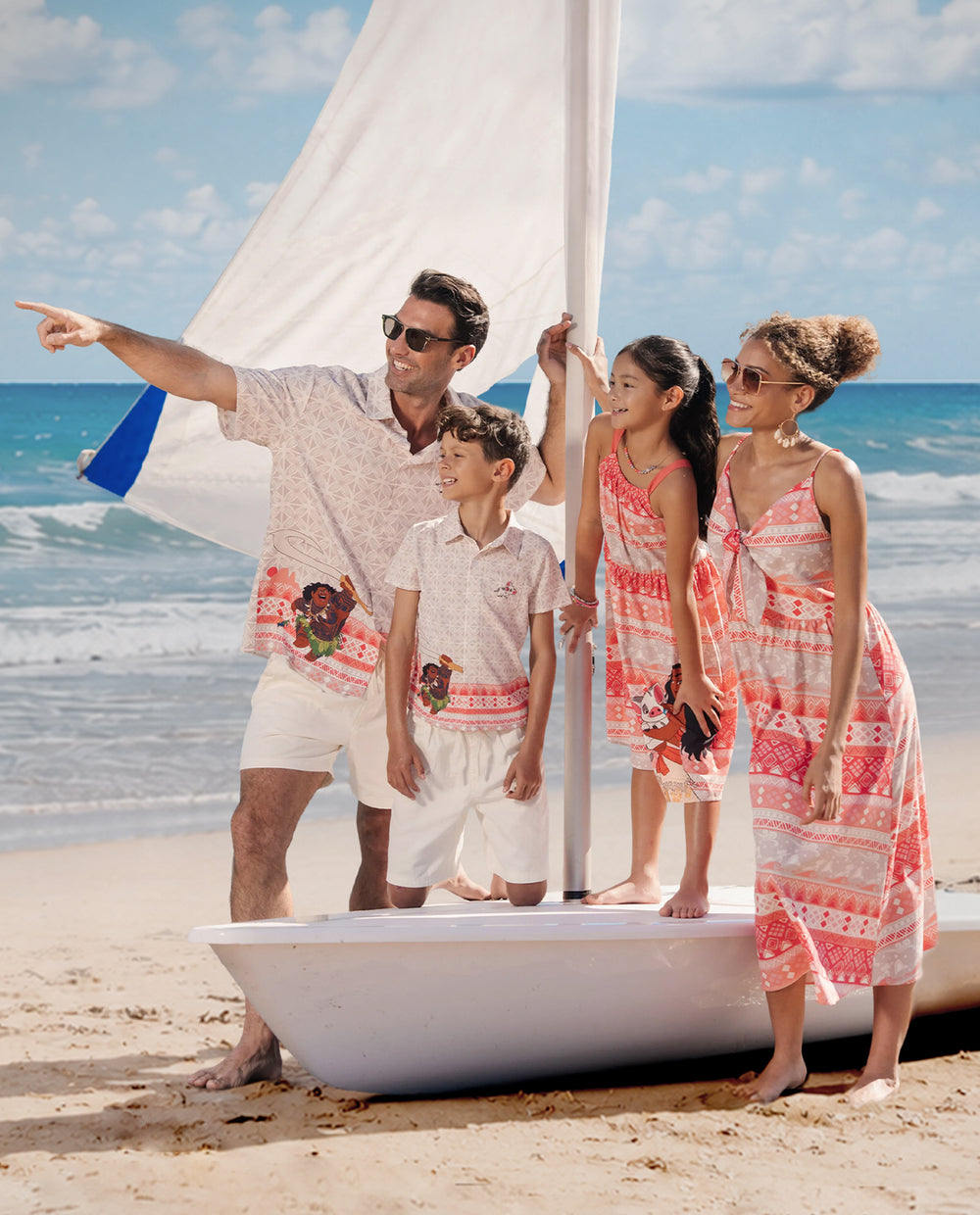
The coral pink family matching set glows in warm light — coral and sunset tones amplify golden hour rather than fighting it. Sit or kneel to get everyone's faces on a similar level, and put the sun behind the group.
Posing that doesn't look posed: avoid the straight line. Stagger heights — one parent kneeling, a kid on a hip, a child in front. Triangles read more naturally to the eye than rows.
5. The Sandcastle Overhead
A top-down shot of kids building or playing in the sand is unexpected and genuinely charming.
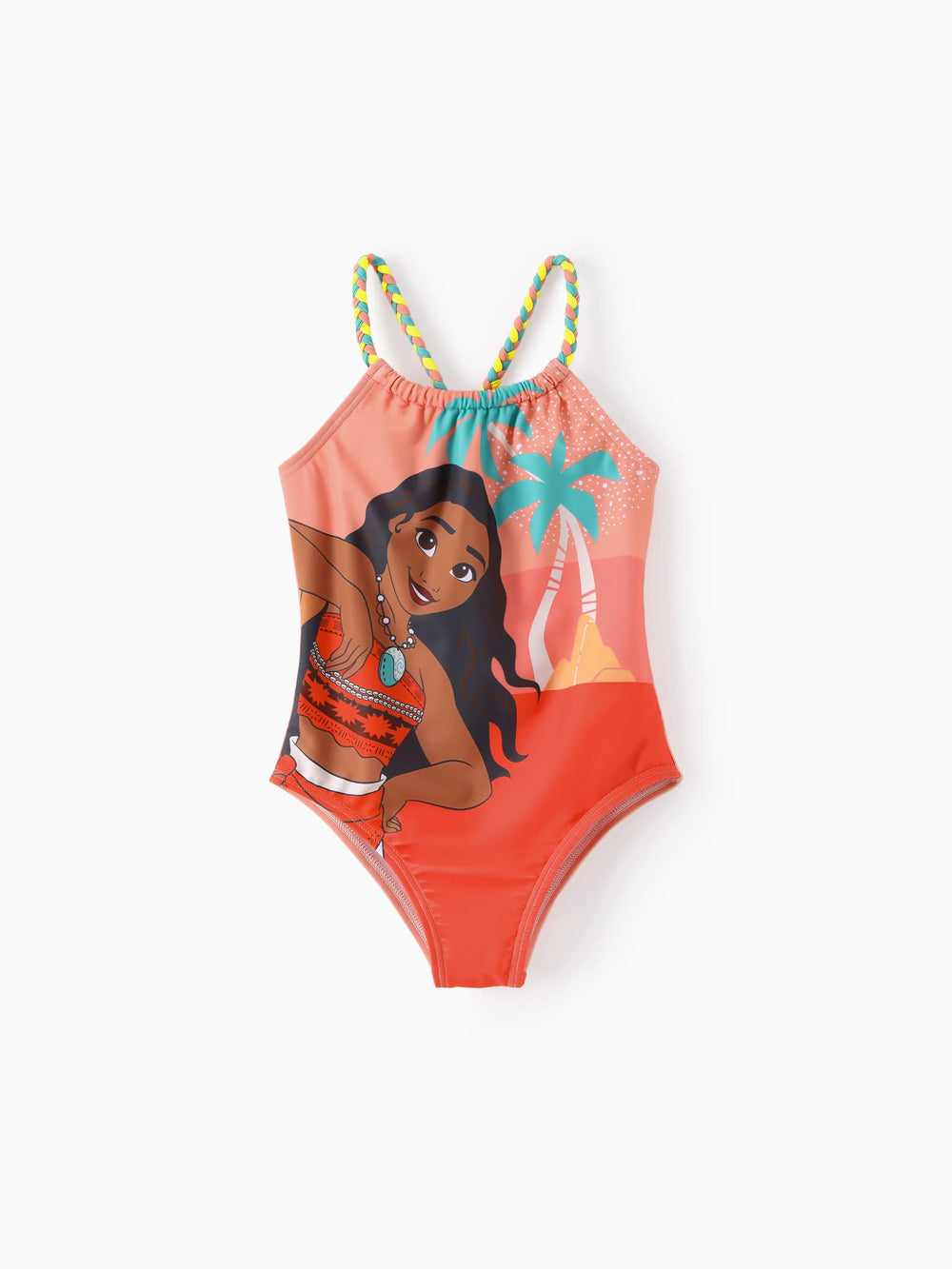
Dress her in the coral off-shoulder floral swimsuit, stand directly above, and shoot straight down while she's absorbed in building. The circular sandcastle, the toys, the little hands — it composes itself.
Why it works: she's not performing, so you get a real expression. Overhead also flattens the busy beach background into clean sand, which makes the photo feel intentional.
6. The Splash Sequence
Action in shallow water is high-energy and full of joy, and it's more forgiving than it looks.
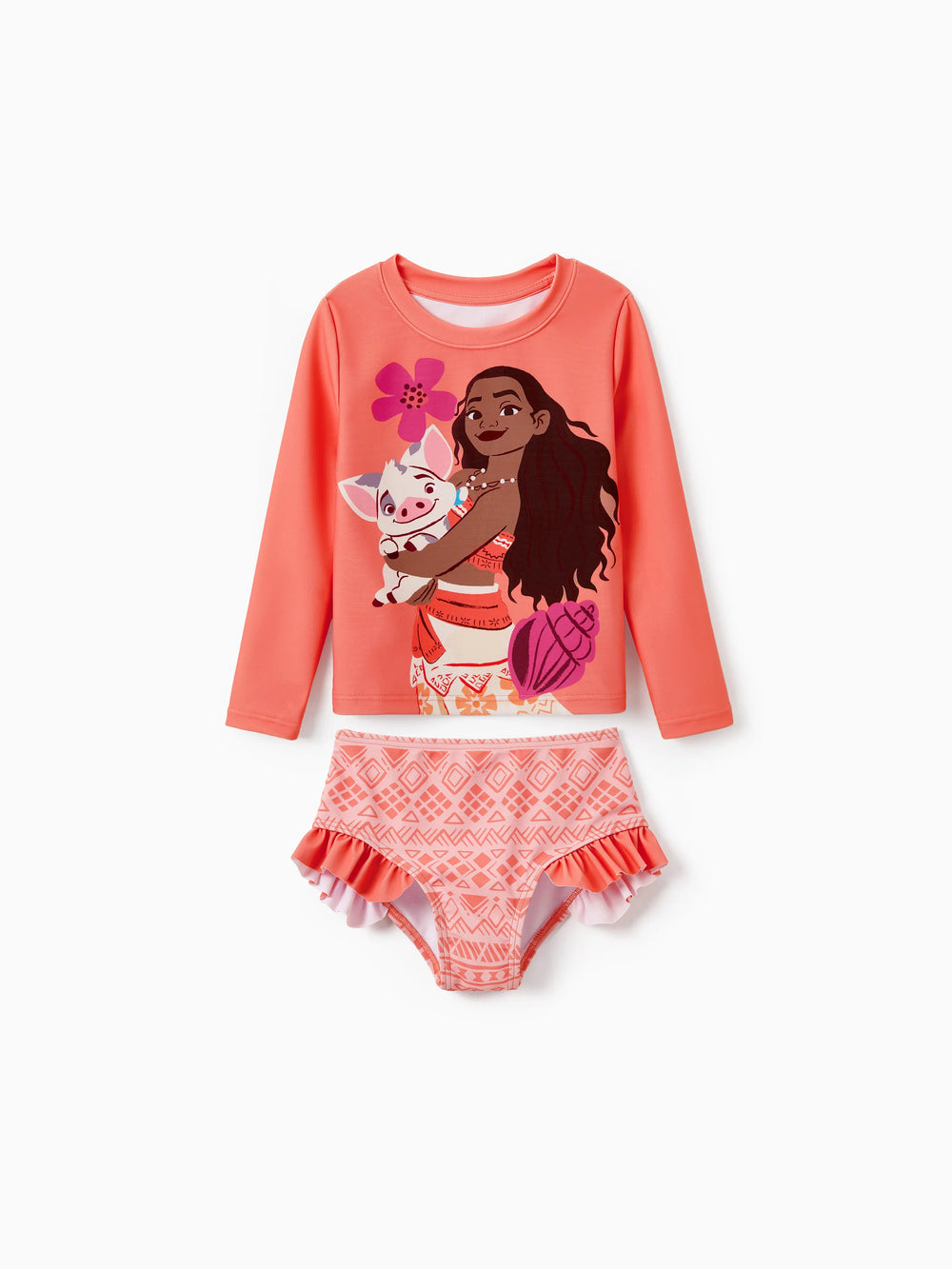
The orange-red UPF long-sleeve swimsuit keeps her sun-safe while she plays, and the bright tone pops against water. Get low, shoot toward the light so the water droplets catch and sparkle, and fire in burst mode as she jumps or kicks.
Technique: backlit water spray is the whole point of this shot — position yourself so the sun is behind the splashing, and the droplets light up like sparks.
7. The Cozy At-Home Setup
Not every good family photo happens outside. A soft, warm indoor session is intimate in a way beaches can't be.
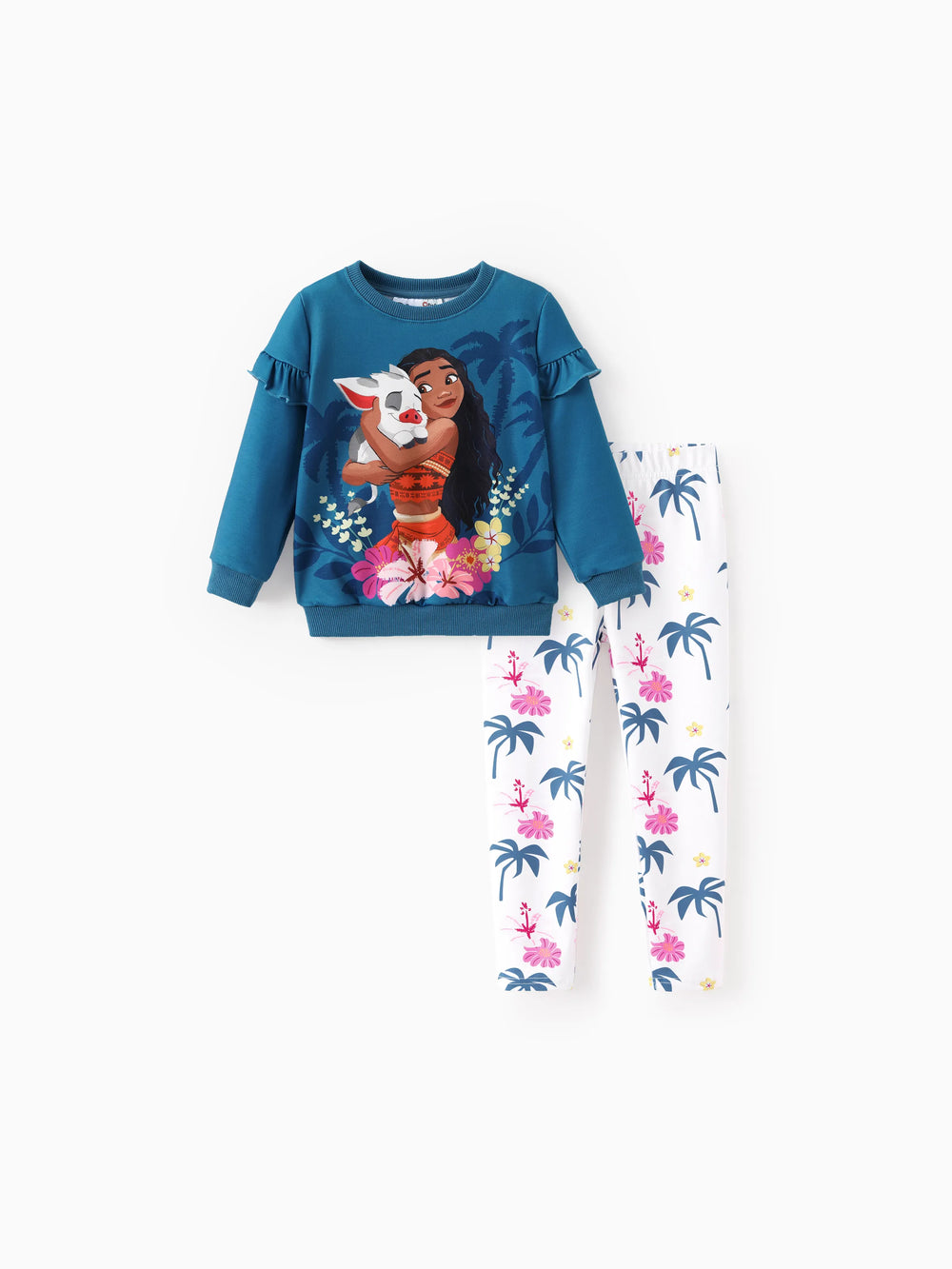
Dress the kids in the blue ruffled sweatshirt and leggings set, build a blanket nest near a big window, and shoot in the soft daylight coming through. Reading together, a pillow fight, morning cuddles — the ordinary stuff photographs beautifully in window light.
Lighting: turn off all the indoor lights and use only the window. Mixed light (warm bulbs plus cool daylight) is what makes home photos look off. Position everyone facing the window so the light falls evenly on their faces.
8. The Backyard Tropical Setup (DIY)
You can build a convincing tropical scene at home for almost nothing.
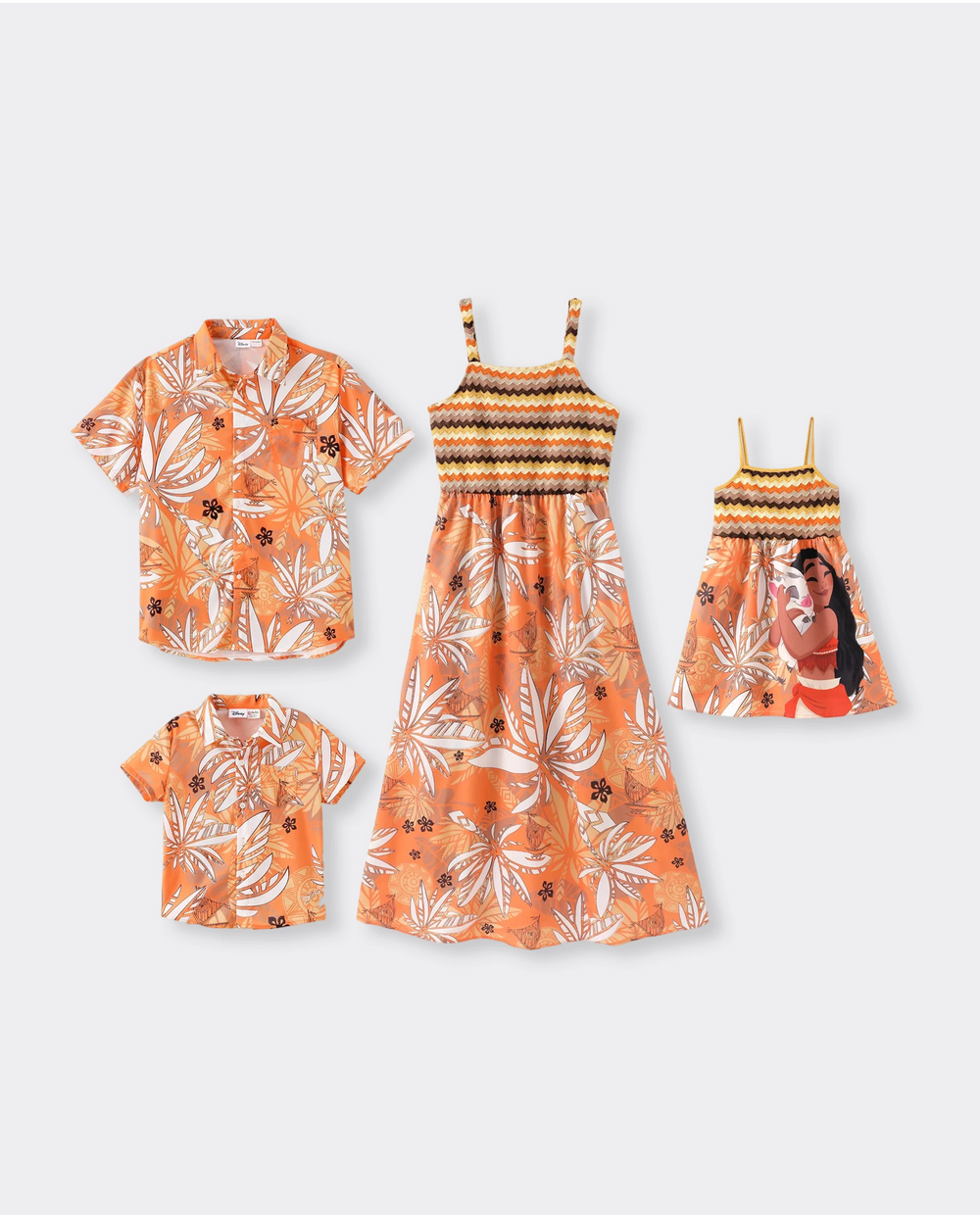
The yellow palm-leaf crochet family set suits a garden setting — sunny, textural, a little more elevated than a tee. Build the backdrop with what you have: large potted plants or borrowed palm fronds, a few tropical flowers, a woven mat on the grass.
DIY backdrop rules: keep it simple and keep it close-toned. Two or three big leaves near the frame read as "tropical" far better than a cluttered scene. Shoot in open shade — the side of the house that's out of direct sun — for even, flattering light with no squinting.
9. The Generational Trio
Three ages in one frame — child, parent, grandparent — is one of the most meaningful photos you can plan, and most families never think to set it up.
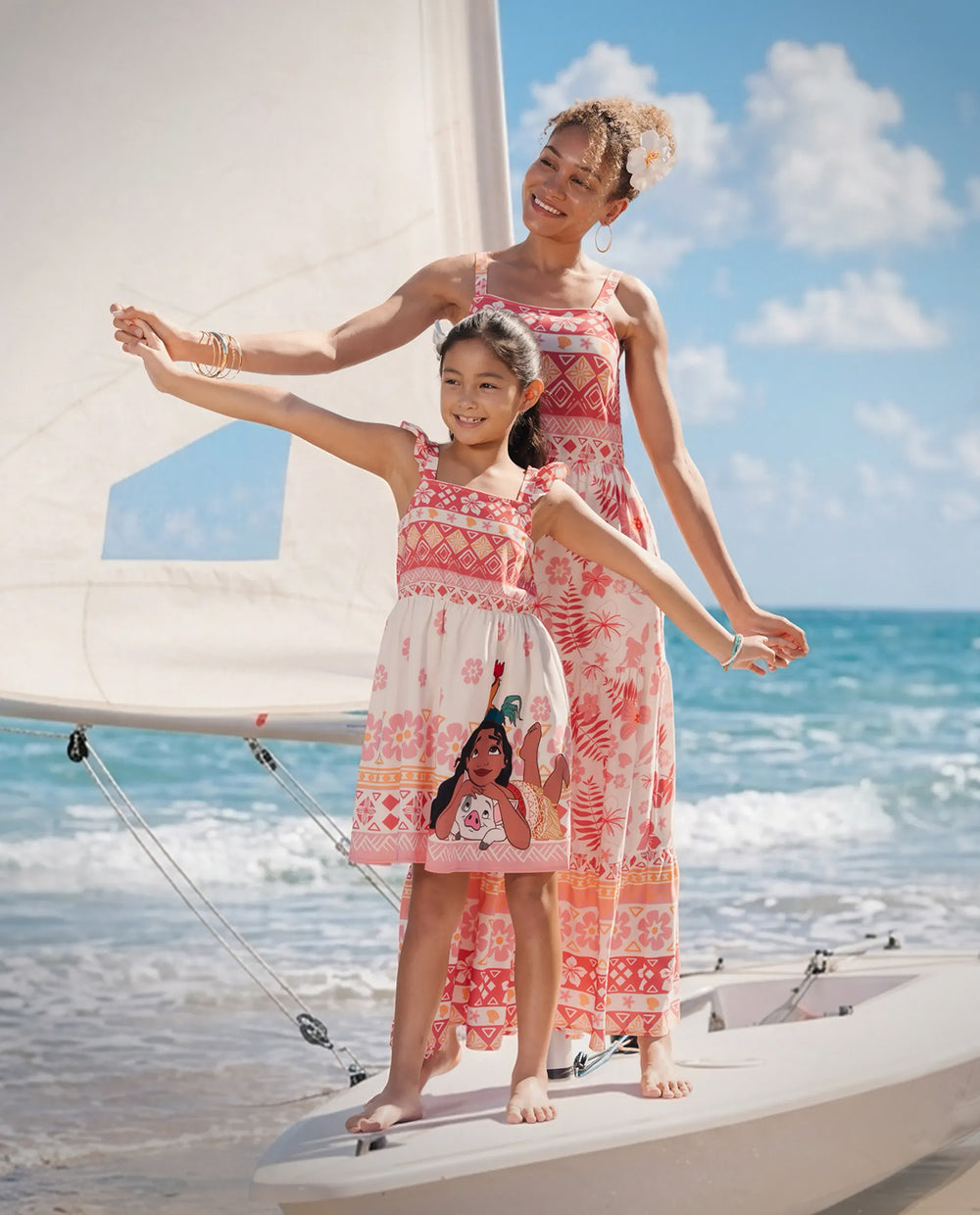
The pink ruffle-strap floral mommy-and-me dress extends naturally to a grandmother in the same palette — three generations in coordinated tones is quietly powerful. Sit them close, hands touching, and shoot at eye level.
Direction: ask the grandparent to tell the child something, and photograph the child listening. The connection between the two outer generations is the photo; the middle generation holds it together.
Do this one early in a trip, not the last day — you never regret taking it, and circumstances change.
10. The Matching-Tee Candid
The lowest-effort concept on the list, and sometimes the best.
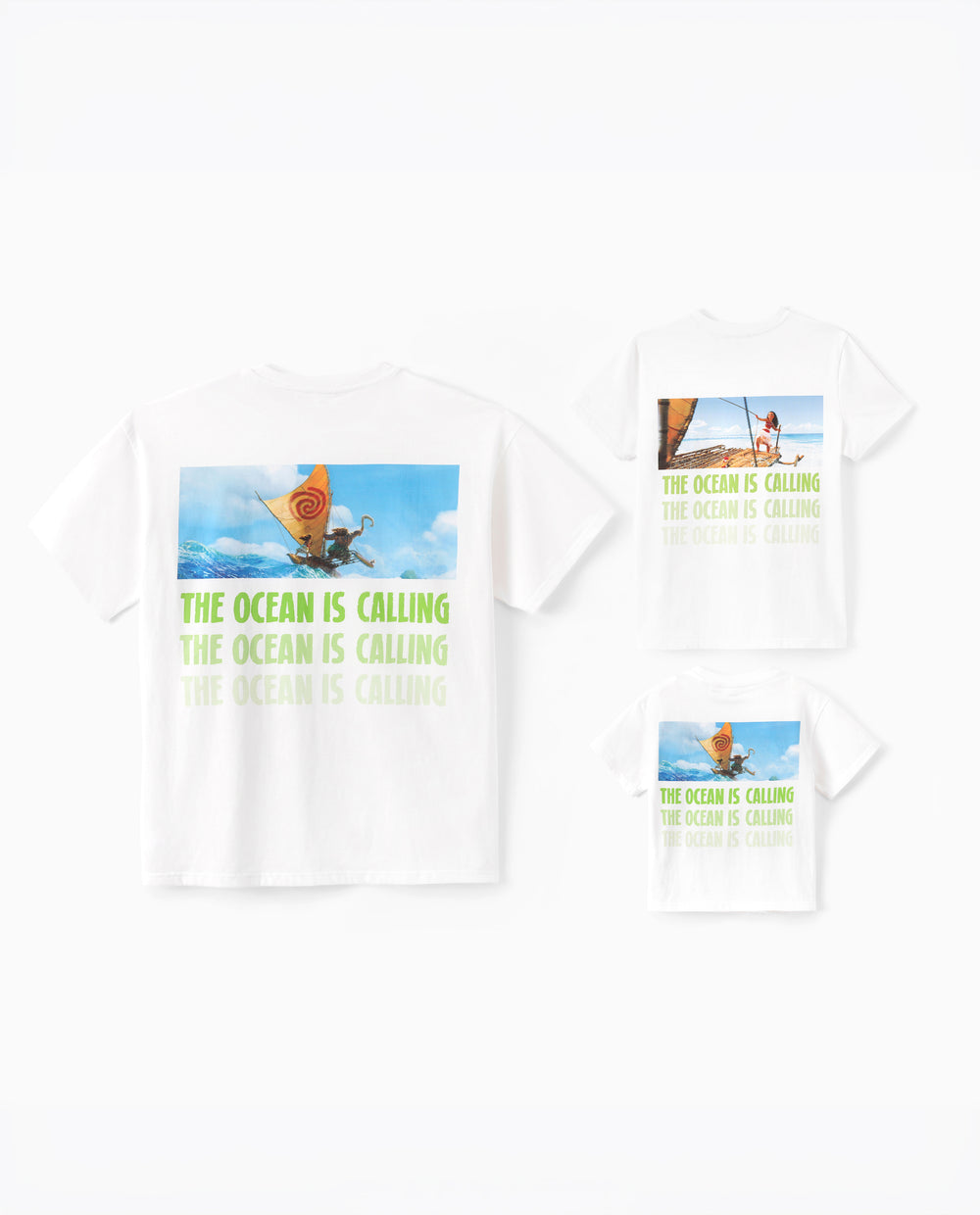
Put everyone in the white "The Ocean Is Calling" family matching tee and just… live. Make breakfast, play a game, pile on the couch. The matching tees do the coordinating, so you can forget about the outfits entirely and shoot the real moments.
Why it works: the more you plan the outfit, the less you have to plan the moment. A no-fuss coordinated look frees you to catch genuine expressions instead of managing clothes.
Choosing the Right Location for Your Shoot
The setting does half the work, and you have more options than "the beach."
Open water and shoreline. The default for a Moana theme, and hard to beat at golden hour. Look for a stretch with clean sand and few people — arrive early precisely because empty backgrounds are worth more than perfect timing. Tide out means more usable sand and reflective wet-sand foreground; check a tide chart before you commit to a time.
A field or tall grass. Underrated and gorgeous in warm light. Grass backlit at golden hour glows, the setting is uncluttered, and coral and turquoise pop against green. Bonus: no sand to manage and no crowds to wait out.
A garden or greenery wall. For a tropical feel without traveling, a wall of foliage or a lush garden corner reads lush and on-theme. Shoot in open shade so nobody squints, and let a few big leaves frame the edges.
Your own home. Window light is genuinely beautiful and endlessly available. A big window, a clean corner, and soft daylight beat a mediocre outdoor location in bad light every time.
A pool or splash pad. For water energy without a beach trip. Bright, contained, and full of movement — ideal for the splash sequence, and easy to control who's in the background.
The location rule that matters most: scout the light, not just the spot. A plain location in beautiful light beats a stunning location in harsh light. Visit at the hour you plan to shoot, a day before if you can, and see where the sun actually falls.
When Things Go Wrong (Because They Will)
Every family shoot hits at least one of these. Here's how to save it rather than abandon it.
A kid refuses to cooperate. Stop shooting them. Photograph the siblings, the parents, the details — and let the holdout watch everyone else have fun. Nine times out of ten they want back in within five minutes. Never force it; forced photos look forced forever.
Someone's crying or overtired. Call it. A shoot with a melting-down child produces nothing you'll keep, and pushing sours the whole memory. Reschedule for after a nap and a snack. The forty-minute window only works when it starts from a good baseline.
The light turned harsh. If clouds clear and the sun goes hard, move into open shade — the shadow side of a building, under a tree, beneath an umbrella. Even light in shade beats brilliant light with harsh shadows across faces.
Wind is wrecking everyone's hair. Turn it into the photo instead of fighting it. Position the family so the wind blows hair back and away from faces, not across them, and lean into movement shots where flying hair looks intentional.
Nobody's smiling naturally. Stop asking for smiles. Ask a question, tell a bad joke, have them tickle each other, or count down from ten and shoot on "three" before the posed face reassembles. Real expressions live in the seconds around a prompt, not in the held smile.
The background is cluttered. Change your angle before you change your spot. Crouch to put faces against open sky, shoot toward the water instead of the boardwalk, or move in closer to crop the mess out. A tighter frame fixes most background problems instantly.
11. The Solo Character Portrait
Every kid deserves one portrait that's just theirs — the hero shot.
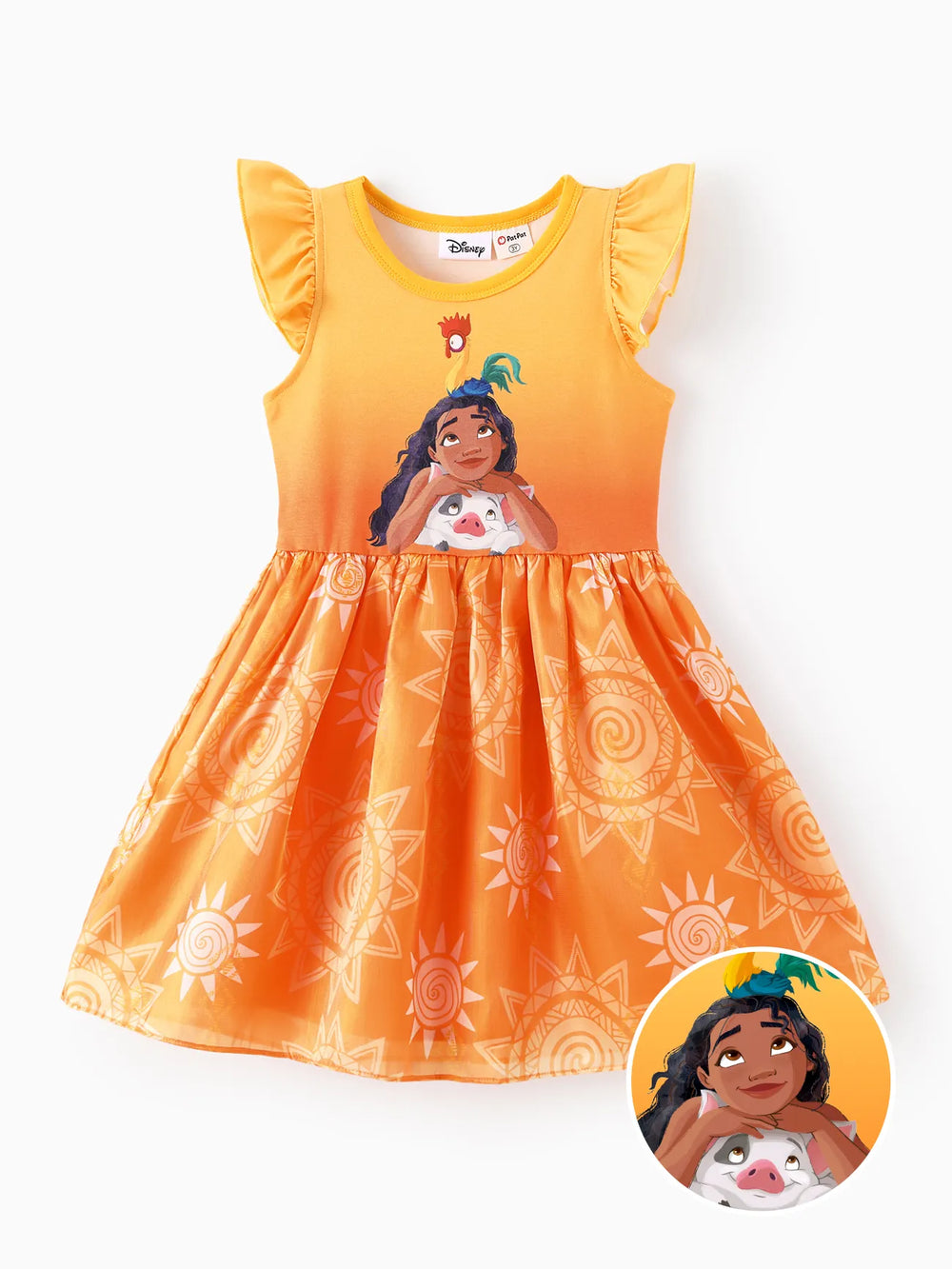
The orange sun-print ruffle-sleeve tulle dress has the volume for a proper portrait — full skirt, dramatic in a spin, striking standing still. Find a clean background (open water, a wall of greenery, plain sky), fill the frame with just her, and get her talking so the expression is real.
Framing: for a portrait, get closer than feels natural and shoot slightly above her eye line — it opens the eyes and is universally flattering. Leave the busy backgrounds for the group shots.
12. The Siblings Set
Two or more kids together, coordinated but distinct, is a photo the whole extended family will want.
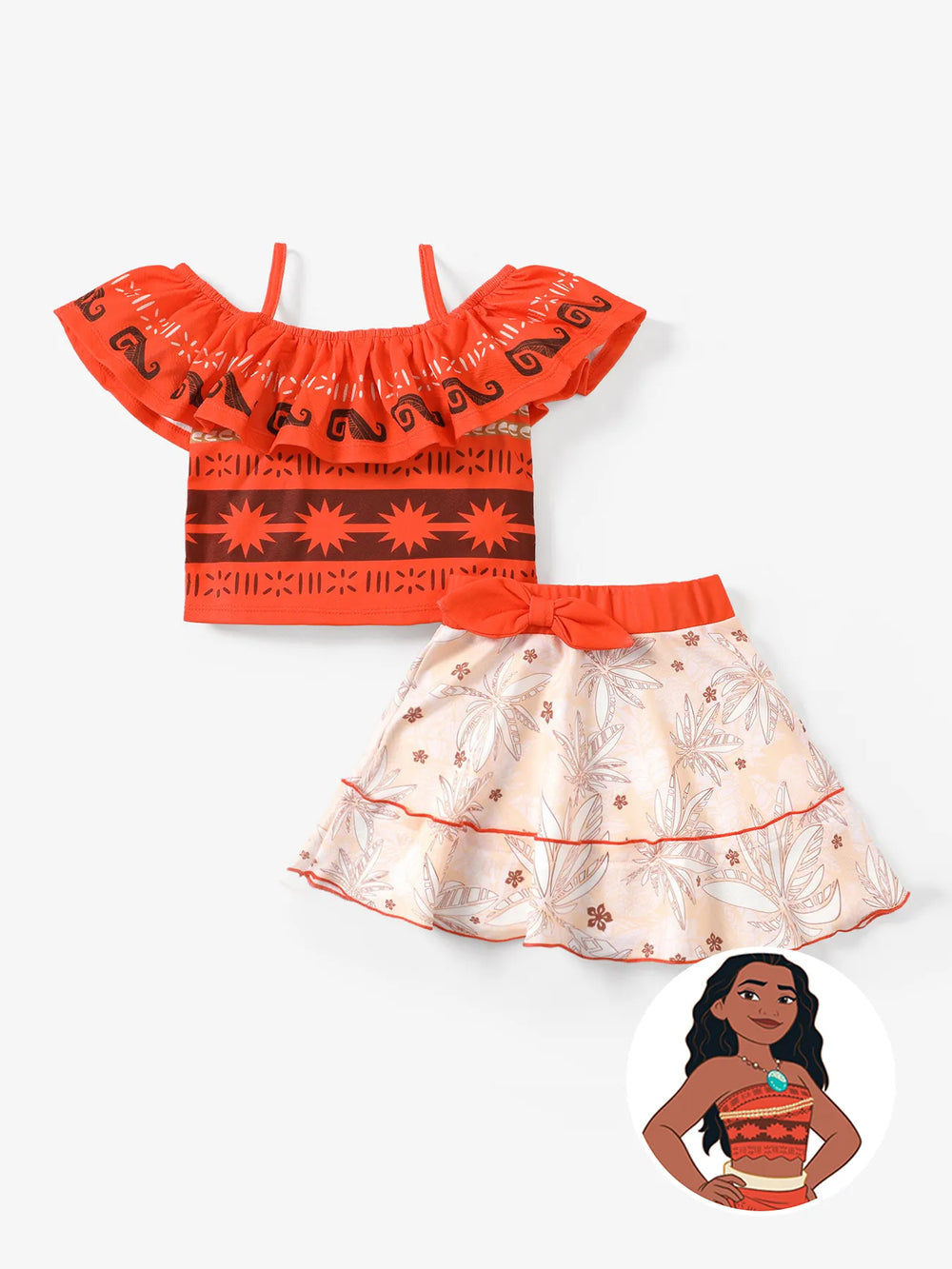
Put one sibling in the orange-red palm-leaves ruffled set and another in a coordinating tone from the same palette. Sit them close — backs together, or one whispering to the other.
Direction for siblings: don't ask them to hug on command; it always looks forced. Instead give them a shared secret or a joke ("tell each other the silliest word you know"), and shoot the real laughter that follows.
How to Direct Kids of Different Ages
The same instruction lands completely differently depending on age, so adjust.
Babies (under 1): you can't direct them, so direct the light and the timing. Shoot after a nap and a feed, in soft window or golden-hour light, and let a parent play just off-camera to draw the gaze. Take a lot; keep few.
Toddlers (1–3): forget cooperation, chase absorption. Give them something to do — dig, splash, carry a shell — and photograph them doing it. Direct instructions rarely work; interesting tasks always do.
Little kids (4–6): this is the sweet spot for playful direction. They love a game. "Freeze like a statue," "show me your bravest face," "spin until I say stop." Turn the shoot into play and they'll give you everything.
Big kids (7+): they've hit the stage of the fake camera smile. Break it by making them laugh — ask a ridiculous question, or have them say something silly instead of "cheese." Candid beats posed at every age, but especially here.
The universal rule: keep it under forty minutes. Every child, at every age, is done before you think they are. Get your priority shots first, while patience is high.
Phone Photography Settings That Actually Help
You don't need a real camera. You need to use the one you have properly.
Tap to focus, then lock exposure. Tap the face you want sharp; on most phones, holding the tap locks focus and exposure so it won't shift mid-shot.
Turn on gridlines and use the thirds. Put faces on the upper third, not dead center. It's an instant upgrade and it's a free setting.
Use burst mode for anything moving. Hold the shutter, get twenty frames, keep one. This is how you catch the peak of a jump or the widest point of a twirl.
Portrait mode for solo shots, standard for groups. Portrait mode blurs backgrounds beautifully for one subject, but it struggles with multiple people at different distances — switch it off for the group shot.
Clean the lens. It lives in a pocket and a sandy bag. A quick wipe removes the haze that softens every photo you've been taking without noticing.
Avoid digital zoom. It just crops and degrades. Walk closer instead; your feet are better than the zoom.
What to Do With the Photos After
The shoot isn't finished when you put the phone down. This is the step almost everyone skips, and it's why the photos live forever in a camera roll.
Cull the same day. Go through while it's fresh, pick the top ten, and favorite them. If you wait a week you'll never do it, and the keepers drown in the burst frames.
Edit lightly and consistently. A small lift in brightness and warmth suits these tropical tones. Pick one look and apply it across the set so the collection feels cohesive rather than random.
Print something physical. A photo book, a framed print, a set of cards. A printed photo gets seen a thousand times more than a digital one, and a themed summer shoot makes a genuinely lovely little book.
Make the annual comparison. If you do a Moana-palette shoot each summer, the same setup year over year becomes a growth series — the single most treasured kind of family photo there is.
Styling the Details: Simple Props That Read as Moana
You don't need much, and overdoing props is the fastest way to make a photo look like a costume party. A light touch does more.
Flowers. A single tropical bloom behind a child's ear does more than an armful of accessories. It reads instantly island, it's free from any garden or grocery store, and it photographs beautifully at close range.
Shells and sand toys. Real ones the kids collect during the shoot double as activity and prop — the overhead sandcastle shot is built entirely on this. Let them gather, then photograph them absorbed in it.
A woven mat or basket. For the backyard or at-home setups, natural textures ground the tropical theme without a full backdrop build. One woven element in frame does a lot of quiet work.
Bare feet. The most on-theme "accessory" there is, and it costs nothing. Bare feet on sand or grass reads relaxed and island; shoes formalize a photo in a way that fights the mood.
Water itself. A splash, a trailing hand in a tide pool, wet hair after a swim — moving water is the strongest Moana motif you have, and it needs no purchasing at all.
What to skip: anything plastic, branded, or costume-shop. The goal is a family who looks like they belong in that palette, not a themed event. If a prop makes you think "party supply," leave it out of frame.
Studio Look vs. Candid Look: Which to Aim For
Broadly, family photos fall into two camps, and knowing which you want before you start saves a lot of frustration mid-shoot.
The composed look is the holiday-card photo — everyone in frame, coordinated, looking their best, usually at golden hour. It wants a little planning: chosen outfits, a scouted spot, staggered posing in a loose triangle. Shoot this one first, while everyone's fresh and patient, then relax.
The candid look is the one you'll treasure more in ten years — kids mid-laugh, a parent lifting a toddler, siblings whispering. It can't be forced; it can only be set up and then caught. Give everyone something to do, keep shooting through the in-between moments, and resist the urge to interrupt a good one to "fix" it.
The smart move is to get the composed shot early as insurance, then spend the rest of the session chasing candids with the pressure off. That order — safety shot first, real moments second — is how you come home with both the card photo and the ones you'll actually love. (And the coordinated palette is doing quiet work in both: it's what lets a chaotic candid still look like it belongs in the same set as the posed one.)
Your Pre-Shoot Checklist
Ten minutes of prep is the difference between a shoot that flows and one that stalls halfway through.
Lay out every outfit the night before. Confirm the palette actually coordinates when the pieces are side by side, and that nothing needs washing or ironing. Discovering a stain at golden hour is a shoot-ender.
Charge the phone and clear the storage. A dead battery or a "storage full" warning at the peak moment is entirely avoidable and entirely infuriating.
Feed and rest everyone first. Hungry, tired kids photograph exactly as badly as you'd expect. Snacks in the bag, a nap beforehand, and low expectations about duration.
Pick your three must-have shots in advance. You won't get all twelve concepts in one session, and that's fine. Choose the three that matter most to you and get those while patience is high; treat everything else as a bonus.
Scout the light, not just the spot. Know where you're standing and which direction the sun will be. Decisions made in advance are decisions you're not making while a toddler sprints toward the water.
Bring a bribe and a backup. A small treat for cooperation and a full change of clothes for the inevitable spill. Both buy you time you'll be grateful for.
The Real Point of a Family Photoshoot
Here's the thing worth remembering when you're wrangling three kids into golden-hour light and someone's already crying. The goal was never a perfect photo. It was an afternoon where the whole family showed up, dressed for something, and spent forty minutes being silly together. The photo is just the thing you keep afterward.
That's also why the outfits matter less than you'd think and more than you'd expect — not because they need to be perfect, but because dressing for it is what tells everyone the afternoon is special. A coordinated palette does the quiet work of making the pictures feel composed, and then gets out of the way so the real moments can happen.
Ready to plan your shoot? Browse PatPat's Moana family collection for coordinated looks sized toddler through adult — dresses, matching sets, swimwear, and cozy layers. Then tag PatPat in your favorites; we love seeing how wayfinder families frame their summer.
Family Photoshoot FAQ
What should my family wear for a summer photoshoot? Keep everyone in one color palette — turquoise, coral, sunset orange, palm green — but in different pieces rather than identical outfits. Coordinated-but-varied reads composed in photos, while matching-exactly can look staged. A themed collection makes this easy because everything already shares a palette.
What time of day is best for family photos? Golden hour — the hour after sunrise or before sunset. The light is soft and warm, nobody squints, and there are no harsh shadows. Midday sun is the most common reason family photos disappoint.
How do I get natural photos of kids instead of stiff posed ones? Direct action, not smiles. Ask them to run, spin, whisper, or play a game, and shoot the in-between moments. Get down to their eye level, use burst mode, and keep the whole session under forty minutes before patience runs out.
Do I need a professional camera for good family photos? No. A phone used well beats a good camera used poorly. Shoot in golden-hour light, tap to focus and lock exposure, use gridlines and burst mode, clean the lens, and walk closer instead of zooming.
What are good Moana-inspired photoshoot ideas? A sunset wayfinder silhouette at the water's edge, a mother-daughter twirl in matching dresses, a whole-family walking shot, an overhead sandcastle scene, and a backlit water-splash sequence are all strong, on-theme concepts that work with coordinated tropical outfits.
How do I photograph three generations together? Coordinate everyone within one palette, sit them close with hands touching, and shoot at eye level. Ask the grandparent to tell the child something and capture the child listening — and take this photo early in a trip rather than saving it for the last day.
Keep reading: Mommy and Me Beach Outfits: Moana-Inspired Sets · Moana Family Outfits: 7 Ways to Style for Summer Adventures · 8 Beach Day Outfits for the Whole Family · Best Mommy and Me Moana Outfits



