The short answer
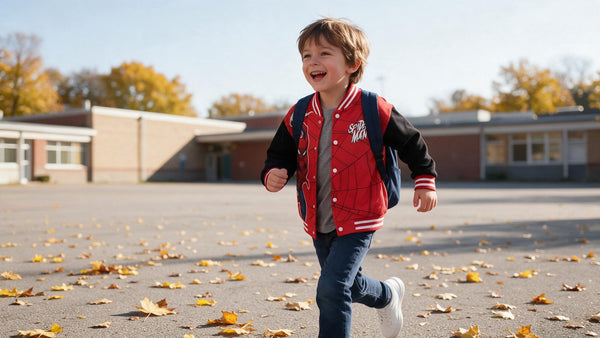
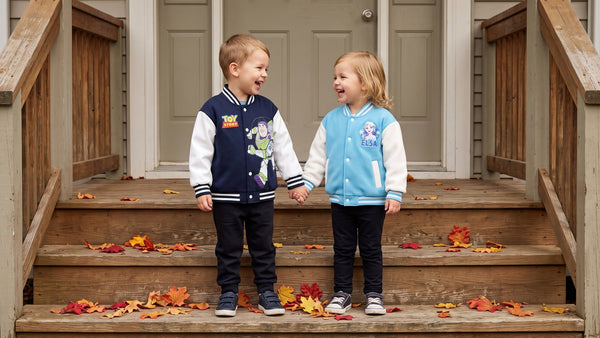
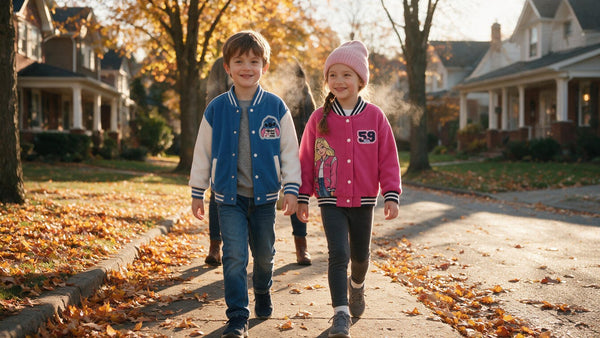
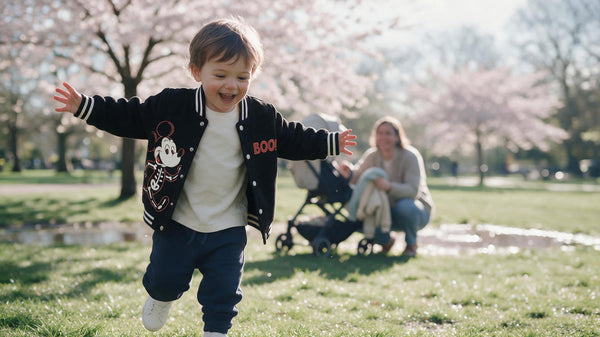
If your child fights the coat every single morning, the fix is rarely a better argument. It is usually a jacket they actually want to put on. A kid who won't wear a coat will often beg to wear one with Elsa or Mickey on it, and that is the whole idea behind our Disney Jackets: the character gets the jacket on, and the jacket does the rest of the job. Pair the right jacket with a two-minute routine at the door and most families see the standoff shrink within a week or two.
Three things decide whether a character jacket ends the battle or just becomes a new thing to fight about:
- It has to feel good. Soft knit, no scratchy label, no stiff collar. A child who says "it's itchy" is often telling the truth.
- It has to be easy. A snap front a four-year-old can manage herself beats a zipper she can't start.
- It has to be their character. Not the one you think is cute. The one on their backpack, their cup and their birthday cake.
If you only want one place to start, it is the Minnie Mouse lightweight bomber in hot pink. It is a soft sweatshirt knit with a snap front and a tagless label, it runs from 3Y to 9-10Y, and it is the jacket parents mention most in our reviews.
 Minnie Mouse lightweight bomber jacket, hot pinkShop now
 Mickey Mouse lightweight bomber jacket, redShop now
 Daisy Duck lightweight bomber jacket, pinkShop now
Why the morning coat battle happens in the first place
It helps to know what you are actually fighting, because "my child is being difficult" is almost never the whole story. In our experience, and in what parents tell us, the refusals fall into four groups.
"I'm not cold"
Often they are not, yet. A child who has been running around the kitchen and getting dressed is warm inside the house, and they cannot imagine being cold in ten minutes at the bus stop. Telling them "you will be cold later" asks them to plan ahead in a way small children simply don't do well. This is why arguing about the weather rarely works and why giving the jacket a reason to go on, other than temperature, often does.
"It's itchy" or "it feels weird"
Take this one seriously. A stiff outer shell, a scratchy label at the neck, a heavy puffer that pins the arms down or cuffs that ride up are all real reasons a child resists. Some children are more sensitive to texture than others, and the jacket that feels fine to you can feel like sandpaper to them.
"I want to do it myself"
Between about two and five, children are working hard at being independent. Being stuffed into a coat by an adult in a hurry is exactly the kind of thing they push back on. A jacket they can put on themselves turns the same moment into something they are proud of.
"I don't like that one"
Sometimes the objection is about the coat itself. It is last year's, it is the color their sibling wore, it is "for babies". Children have opinions about what they wear long before they can explain them.
A character jacket answers the last group directly and, if you choose well, the other three as well. That is why the fabric, the front closure and the fit matter as much as the print.
Why a favorite character changes the conversation
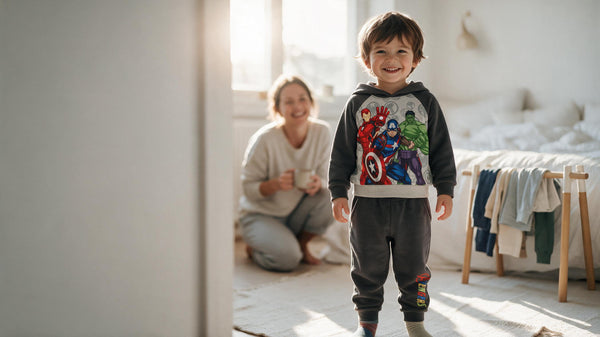
The coat stops being something you are making them do and becomes something they get to wear. That shift is small, but it is the whole trick. Instead of "put your coat on", you are saying "do you want to wear Minnie today?", and the answer is usually yes.

We see this in what parents write after the jacket arrives. A few reviews from the Disney jackets on our site:
- "Bought this for my daughter for 1st day of Kindergarten. She loves it so much. She even wears it over her sweaters now that it is colder weather." (Sarah L., on the Minnie Mouse bomber)
- "My niece absolutely loves this jacket. If her parents allows her, she would sleep in it." (Katie W., on the Elsa snap-button jacket)
- "She lovesssss this jacket! It's super cute and decent quality." (Emily M., on the Minnie Mouse bomber)
Notice what those parents are describing. Nobody is talking about warmth ratings. They are describing a child who reaches for the jacket on their own, which is exactly what you want at 7:45 on a school morning.
Two cautions from experience. First, the character has to be the right one, and tastes change fast between three and seven. Ask yourself what they chose for their last birthday cake or backpack, not what they loved a year ago. Second, a character jacket works best as a layer they wear every day, not a "special" coat saved for outings. The more ordinary it becomes, the less there is to negotiate.
The jacket we would start with: the Minnie Mouse bomber
If you are looking for a Minnie Mouse jacket that solves the morning problem rather than just looking cute in photos, this is the one we point parents to first, and the details explain why.

- Soft, not stiff. It is a midweight sweatshirt knit, 96% polyester and 4% spandex. It moves like a sweatshirt, not like a shell jacket, which matters for the "it feels weird" crowd.
- Nothing scratchy. Flat seams and a heat-pressed tagless label, so there is no label at the back of the neck.
- A snap front. White snaps down the front rather than a zipper. Many preschoolers can press snaps closed on their own long before they can start a zipper.
- Room to grow into. Sizes run from 3Y to 9-10Y, so a child at the top of one size can move up without the style disappearing.
- Easy to wash. Machine wash, no bleach, tumble dry low. It is pre-shrunk, so the size you buy is the size you keep.
- Officially licensed. The Minnie artwork is licensed by Disney Merchandise, with her name in script on the chest and a pink and white colorblock body.
Parents seem to agree: the hot pink Minnie bomber averages 4.9 stars across 1,936 ratings on Amazon. It is also a lightweight jacket, which is worth being clear about. It is the right weight for a mild morning, the walk to the car, or over a sweater on a dry cold day. It is not a snow coat.
The same knit bomber comes as Mickey Mouse in red and Daisy Duck in pink, in the same sizes, which is useful when you have two or three children who all want "their" character and nobody wants to be left out.
A five-minute morning routine that ends the standoff
The right jacket does most of the work, but a little routine around it makes the difference between "most mornings" and "every morning". This is what has worked for families we hear from.

- Put the jacket where they will see it. Hang it at child height by the door the night before, character facing out. A jacket they can reach is a jacket they can choose.
- Offer two options, not a question. "Minnie or the blue one?" works far better than "do you want your coat?", because both answers end with a jacket on.
- Teach the flip. Lay the jacket on the floor, open, upside down with the collar at their feet. They put their arms in the sleeves and flip it over their head. Preschoolers love this, and a light knit jacket flips far more easily than a puffer.
- Let them do the snaps. Start the bottom snap for them if needed and let them finish. It takes longer the first week and saves you every week after that.
- Let cold be the teacher when it is safe. On a short walk on a mild day, it is fine to carry the jacket and let them ask for it. Children learn faster from feeling chilly for two minutes than from being told about it.
For toddlers in car seats, closures and how a jacket should fit a two- to five-year-old, our toddler jacket guide goes into more detail.
Match the jacket to the reason they refuse
Once you know which kind of refusal you are dealing with, the choice gets easier. Here is how the Disney jackets we carry line up against the common objections.
| What your child says | What usually helps | Disney jackets to look at |
|---|---|---|
| "It's itchy" or "it feels weird" | Soft knit, tagless label, flat seams | Minnie, Mickey and Daisy lightweight bombers (sweatshirt knit, tagless) |
| "I'm too hot" | A lighter layer they can take off and carry | The lightweight bombers rather than a puffer |
| "I can't do it" | Snaps instead of a zipper | Minnie and Mickey bombers; the Elsa, Belle and Moana snap-button jackets for toddlers |
| "It's cold" (and it really is) | A brushed fleece interior | Stitch polar fleece bomber; Elsa ThermalHug™ fleece jacket; Mickey and Minnie velvet varsity with a brushed interior |
| "I don't like that one" | Their current favorite character | The full range of Disney jackets for kids, compared character by character |
Two of those rows deserve a closer look.
For the child who can't manage a zipper yet
Snap fronts are the quiet hero of the morning routine. The toddler Elsa snap-button jacket and the Belle varsity jacket both have ribbed cuffs and hem that keep the sleeves from sliding over little hands, and they run from 2Y to 5-6Y. The snaps on these jackets are large enough to find by feel, which matters when a three-year-old is doing it with mittens nearby and a sibling shouting.
 Elsa snap-button varsity jacket, blueShop now
 Belle snap-button varsity jacket, yellowShop now
 Minnie and Daisy sequin sleeve jacket, pinkShop now
For mornings that really are cold
If the honest answer is that a light knit is not enough, move to a brushed fleece instead of a bulky coat. The Stitch polar fleece bomber runs from 3Y all the way to 12-13Y, so it is one of the few character jackets an older child will still wear. The Elsa jacket uses PatPat's ThermalHug™ brushed fleece, and the Mickey and Minnie varsity jackets have a smooth velvet outside with a soft brushed interior. All three keep the snap-and-go ease of the lighter bombers. For how much warmth each fabric really gives, see our kids fleece jacket guide.
 Stitch polar fleece bomber jacket, blueShop now
 Elsa ThermalHug fleece jacket, light blueShop now
 Mickey and Minnie velvet varsity jacket, greenShop now
Getting the size right so it stays on
A jacket that is too tight across the shoulders or too short in the sleeves quickly becomes the jacket they refuse. Because these are layering jackets, think about what goes underneath.
- Over a T-shirt or light top: your child's usual size is normally right.
- Over a sweater or sweatshirt most of the winter: go up one size, and check the sleeves still clear the wrists.
- Between sizes: choose the larger one. PatPat lists sizes by age, and the measurements behind each size are on the PatPat size chart.
Our guide to how a kids bomber jacket should fit walks through sizing up and what to check at the shoulders, sleeves and hem.
When a character jacket is not the whole answer
A favorite character can end a lot of arguments, but it is honest to say where it stops.

- Car seats. The American Academy of Pediatrics advises against bulky coats under a car seat harness, because the padding compresses in a crash and leaves the harness too loose. Thin knit and fleece jackets are much less of a problem than puffers, but check the harness fit with the jacket on, or buckle up first and lay the jacket over them backwards.
- Real winter weather. Most of the jackets in this article are layers. For snow, wind or long stretches outdoors below freezing, a child needs a proper winter coat, with the character jacket as the layer underneath or the jacket for in-between days. The AAP's general advice for cold weather is several thin layers rather than one heavy one.
- A refusal that never changes. If a child consistently refuses every jacket, every texture, every time, it can be worth mentioning to your pediatrician, since strong reactions to the feel of clothing sometimes go along with other sensory sensitivities.
For a fabric-by-fabric look at how warm these jackets are, see are bomber jackets warm.
Frequently asked questions
Why does my toddler refuse to wear a coat? Usually for one of four reasons: they don't feel cold yet, the coat is uncomfortable, they want to put it on themselves, or they simply don't like that coat. A soft jacket with a character they love and a front they can close on their own addresses all four.
Do character jackets really help kids wear their coat? In many families, yes. The jacket becomes something the child wants to wear rather than something they are made to wear, and parents regularly tell us their child reaches for it on their own. It works best when the character is their current favorite and the jacket is comfortable.
Is the Minnie Mouse bomber warm enough for winter? It is a lightweight sweatshirt-knit jacket, good for mild mornings, the walk to the car or school, and over a sweater on a dry cold day. For snow or long periods outdoors in freezing weather, use it as a layer under a heavier winter coat.
What sizes does the Minnie Mouse jacket come in? The hot pink Minnie Mouse bomber runs from 3Y to 9-10Y. The matching Mickey Mouse bomber in red and Daisy Duck bomber in pink come in the same sizes.
Can my child put on a Disney jacket by themselves? Most of the jackets mentioned here close with snaps rather than a zipper, which many preschoolers can manage on their own. Combined with the coat flip trick, many children can be fully dressed for the door without help.
Are Disney jackets safe to wear in a car seat? Thin knit and fleece jackets are far less bulky than puffers, but the AAP advises against bulky clothing under a harness. Check that the harness is snug with the jacket on, or put the jacket on backwards over the buckled harness.
About this article
Written and fact-checked by the PatPat Editorial Team. How we research, source and review what we publish is set out on our editorial standards page.
Method. Fabrics, closures, size runs and care details come from the product pages of the Disney jackets in stock at PatPat in November 2026. The customer quotes are verified-buyer reviews shown on our Disney jackets pages, reproduced as written with punctuation lightly tidied, and the Amazon rating is the figure listed for the hot pink Minnie Mouse bomber. PatPat is the seller of these jackets. The reasons children refuse coats and the morning routine are editorial guidance drawn from what parents tell us, not clinical advice. ThermalHug™ is PatPat's own name for its brushed fleece. Stock levels change daily, so a size mentioned here may have sold out.
Sources. Bulky clothing under a car seat harness, and thin layers instead: AAP, Winter Car Seat Safety Tips. Dressing children in layers for cold weather: AAP, Cold Weather Safety.
Last updated 26 November 2026 · Next review November 2027