


Hay algo mágico en doblar esos bodies y pijamas increíblemente pequeños por primera vez. Mientras preparas la habitación del bebé y cuentas las semanas hasta que llegue, lavar la ropa de tu pequeño se convierte en un ritual importante y un paso crucial para proteger su piel delicada.
Esta es la realidad que muchos padres no se dan cuenta: la ropa nueva para bebés contiene químicos ocultos de fabricación que pueden irritar la piel sensible de tu recién nacido. Desde acabados resistentes a las arrugas a base de formaldehído hasta tintes residuales y manipulación en fábrica, esos adorables conjuntos necesitan una limpieza adecuada antes de que toquen a tu bebé. Esta guía completa de PatPat cubre todo lo que necesitas saber sobre cómo lavar la ropa de bebé antes del primer uso, desde elegir el detergente adecuado hasta instrucciones de cuidado específicas para cada tela que mantienen esas prendas diminutas suaves y seguras.
Ya seas un padre primerizo navegando la fase de preparación o estés ampliando tu familia, estos pasos respaldados por expertos te darán la confianza de que cada abrazo es tan seguro como dulce.
Por qué lavar la ropa de bebé antes del primer uso es importante para la salud de tu recién nacido
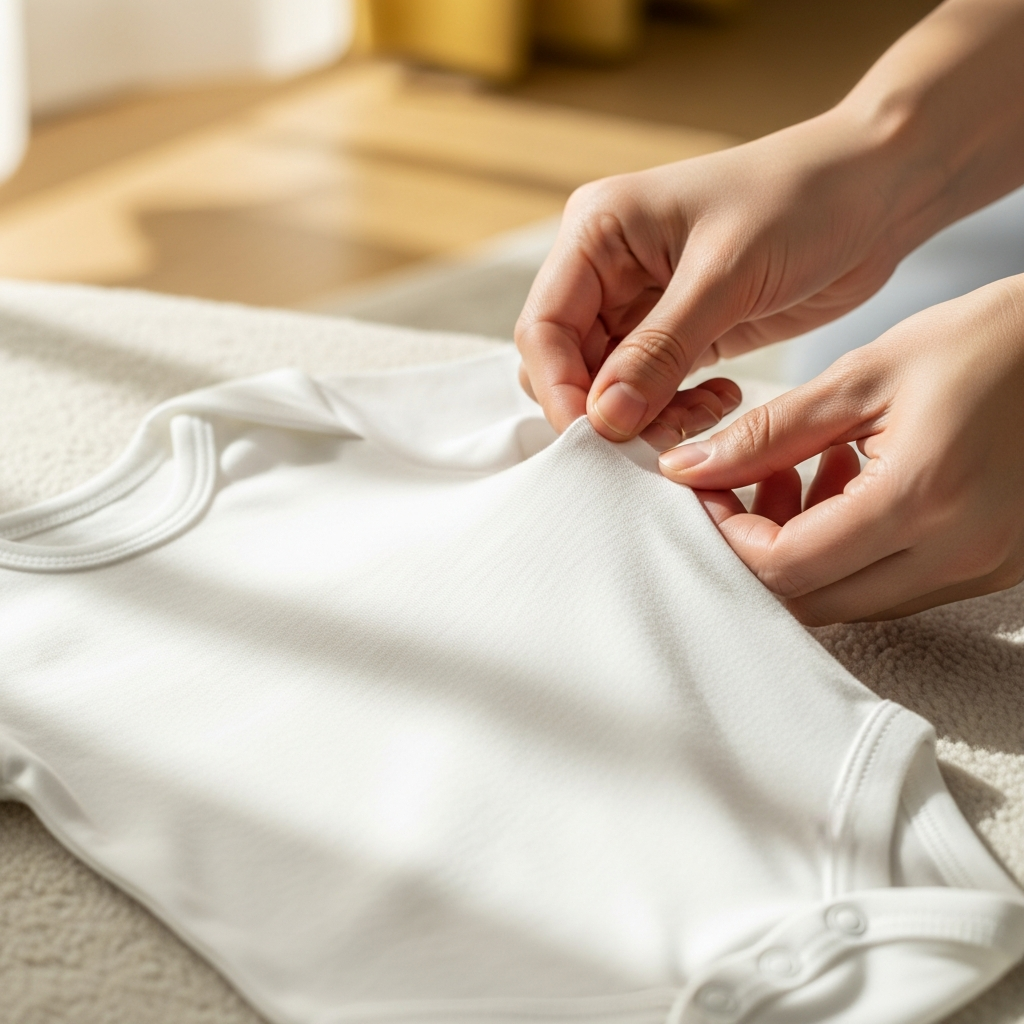
Podrías preguntarte si realmente es necesario prelavar cuando esa ropa de bebé se ve tan fresca y limpia en el paquete. La respuesta es un rotundo sí, y las razones van más allá de lo que podrías esperar.
Químicos ocultos en la ropa nueva para bebés
La ropa nueva pasa por numerosos procesos de fabricación que dejan residuos químicos. Una investigación publicada por los Institutos Nacionales de Salud encontró que se detectó formaldehído en el 20% de las muestras de ropa, incluyendo artículos comercializados para bebés y niños pequeños. El formaldehído se usa comúnmente como acabado resistente a las arrugas en textiles.
Más allá del formaldehído, la ropa nueva puede contener:
- Tintes residuales que pueden transferirse y causar reacciones en la piel
- Agentes de apresto que dan a las telas su apariencia "crujiente"
- Químicos de acabado usados durante la fabricación
- Polvo, bacterias y residuos de manipulación de fábricas, envíos y tiendas
Cómo la exposición a químicos afecta la piel del recién nacido
La piel de tu bebé es notablemente diferente de la tuya. Según una investigación publicada en Allergy, Asthma & Immunology Research, el estrato córneo del bebé (la capa más externa de la piel) es hasta un 30% más delgado que la piel adulta, con la epidermis siendo aproximadamente un 20% más delgada en general.
Esta piel más delgada y permeable significa que tu recién nacido es más vulnerable a irritantes y a la absorción de químicos. Los bebés con condiciones como eczema enfrentan riesgos aún mayores de reacciones a residuos químicos en ropa sin lavar.
¿Deberías lavar la ropa del bebé antes de usarla? Sí, siempre debes lavar la ropa del bebé antes del primer uso. La ropa nueva contiene químicos de fabricación como formaldehído, tintes y agentes de acabado que pueden irritar la piel sensible del recién nacido. El prelavado elimina estos residuos junto con cualquier bacteria por manipulación y almacenamiento.
Cuándo comenzar a lavar la ropa del bebé durante el embarazo
Planificar la preparación del lavado de ropa del bebé requiere algo de organización, pero hay un momento ideal que la mayoría de los padres encuentra perfecto.
La línea de tiempo ideal para el prelavado por trimestre
La mayoría de los expertos recomiendan lavar la ropa del bebé durante el tercer trimestre, específicamente entre las semanas 32 y 36. Este momento funciona bien por varias razones:
- Semana 32-36: La ventana óptima para lavar y organizar la ropa del bebé
- Para la semana 36: Completa el lavado para contemplar llegadas anticipadas
- Después del baby shower: Lava todos los artículos regalados dentro de la semana siguiente a recibirlos
- Evita lavar demasiado temprano: La ropa lavada a las 20 semanas puede estar meses guardada y acumular polvo
Abrazando el instinto de anidación
Si sientes un impulso abrumador de organizar, limpiar y preparar el espacio de tu bebé, estás experimentando el instinto de anidación. Este es un impulso biológico natural que alcanza su punto máximo en el último trimestre del embarazo. Lavar la ropa del bebé proporciona confort psicológico y preparación práctica. Muchas parejas encuentran que se convierte en una actividad significativa para fortalecer el vínculo mientras doblan calcetines y bodies diminutos juntos.
Guía rápida de tiempos:
- Regalos de baby shower: Dentro de la semana siguiente a recibirlos
- Compras nuevas: 2-4 semanas antes de la fecha prevista
- Ropa heredada: Tan pronto como la recibas, antes de mezclarla con prendas nuevas
Elegir el detergente más seguro para lavar la ropa de recién nacido
Seleccionar el detergente adecuado es una de las decisiones más importantes en la rutina de lavado de tu bebé. La buena noticia es que tienes más opciones de las que podrías pensar.
Cualidades esenciales del detergente para ropa de bebé seguro
Al comprar detergente, busca estas características clave:
- Sin fragancia: Las fragancias sintéticas son irritantes comunes para la piel
- Hipoalergénico: Formulado para reducir reacciones alérgicas
- Sin tintes: Sin colorantes innecesarios
- Recomendado por dermatólogos o pediatras: Los avales profesionales añaden credibilidad
- Opciones a base de plantas: Disponibles para padres ecológicos
Entendiendo las etiquetas e ingredientes de los detergentes
No todos los detergentes "suaves" son iguales. Aquí hay distinciones clave para entender:
- "Sin aroma" vs "sin fragancia": Sin aroma puede contener fragancias enmascarantes; sin fragancia significa sin químicos de fragancia en absoluto
- Ingredientes a evitar: Agentes blanqueadores ópticos, fosfatos, lejía con cloro
- Opciones sin enzimas: Lo mejor para bebés con piel muy sensible
Alternativas económicas que funcionan
Aquí hay algo que puede sorprenderte: según la Academia Americana de Pediatría (AAP), muchos padres lavan con éxito los artículos del bebé junto con la ropa familiar regular sin problemas. No necesitas necesariamente un detergente especial para bebés. Un detergente regular sin fragancia y sin tintes suele funcionar perfectamente.
La AAP sugiere elegir un detergente efectivo y solo cambiar a una fórmula más suave o hipoalergénica si tu bebé presenta signos de irritación en la piel. El detergente especial para bebés es más importante para bebés diagnosticados con eczema o alergias documentadas.
Lista de verificación de detergentes para ropa de bebé:
- Sin fragancia (no solo sin aroma)
- Fórmula hipoalergénica
- Libre de tintes y agentes blanqueadores ópticos
- Probado por dermatólogos o recomendado por pediatras
Guía paso a paso para lavar la ropa del bebé por primera vez
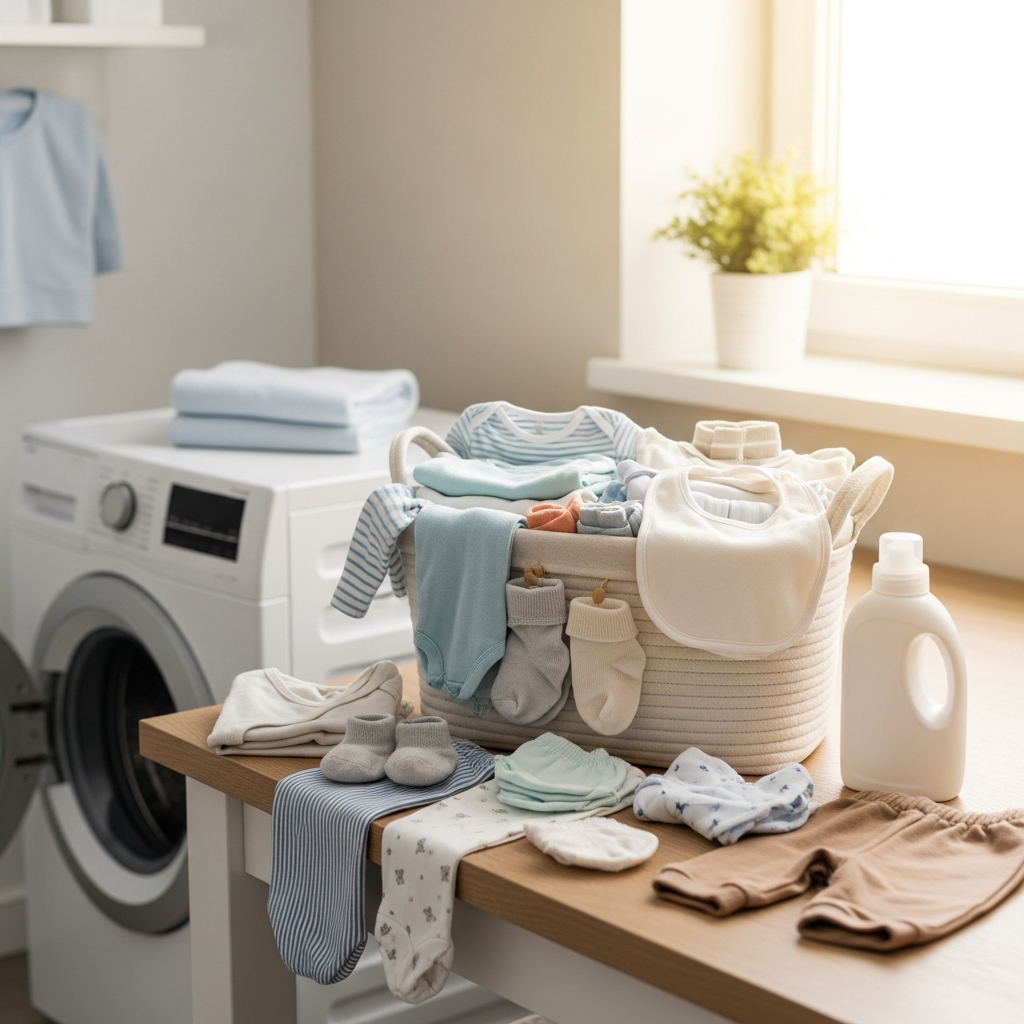
Ahora la parte práctica. Sigue estos pasos para asegurarte de que la ropa de tu bebé esté limpia, suave y lista para esos primeros momentos preciosos.
Preparando la ropa para el primer lavado
Antes de poner cualquier cosa en la máquina, tómate unos minutos para preparar:
- Separa por color: blancos, claros y oscuros
- Agrupa por tipo de tela: algodón, bambú, materiales delicados
- Quita todas las etiquetas, pegatinas y etiquetas de precio
- Revisa los bolsillos y abrocha broches, botones y cremalleras
- Voltea las prendas estampadas al revés para preservar los diseños
Ajustes óptimos de la máquina para ropa de recién nacido
Los ajustes de tu lavadora importan más de lo que podrías pensar:
- Temperatura del agua: Fría a tibia (30-40C o 86-104F) para la mayoría de las prendas
- Selección de ciclo: Ciclo suave o delicado
- Tamaño de carga: Evita sobrecargar; la ropa necesita espacio para agitarse correctamente
- Ciclo de enjuague extra: Siempre agréguelo para eliminar todo residuo de detergente
- Velocidad de centrifugado: Media a baja para evitar estrés en la tela
El proceso completo de lavado
Siga estos ocho pasos para ropa de bebé perfectamente limpia:
- Separe la ropa de bebé por color y tipo de tela
- Retire todas las etiquetas y cierre los cierres
- Cargue la ropa de forma suelta en la lavadora
- Agregue la cantidad recomendada de detergente seguro para bebés (a menudo menos que en cargas normales)
- Seleccione ciclo suave con agua fría o tibia (30-40C)
- Agregue un ciclo de enjuague extra para asegurar que no quede residuo de detergente
- Una vez terminado, retire rápidamente para evitar el moho
- Seque según las instrucciones de la etiqueta de cuidado
La noticia más alentadora de la investigación es que todo el formaldehído desapareció después de un solo lavado en las prendas probadas. Un ciclo de lavado adecuado realmente hace una diferencia significativa.
Lavado de diferentes tipos de telas para bebés: algodón, bambú y materiales orgánicos
No toda la ropa de bebé es igual, y diferentes telas requieren diferentes cuidados.
Lavado de ropa de bebé de algodón
El algodón es la tela más tolerante en el armario de su bebé:
- Puede tolerar agua tibia (30-40C)
- El encogimiento previo al lavado es normal, así que considere comprar un poco más grande
- Use ciclo normal o suave
- Evite secar a alta temperatura para minimizar el encogimiento adicional
Cuidado de la ropa de bebé de bambú
La tela de bambú requiere un cuidado más delicado que el algodón, pero te recompensa con una suavidad excepcional. Al elegir ropa para bebés, muchos padres descubren los beneficios de la ropa de bebé de bambú por su suavidad natural y transpirabilidad, cualidades que la hacen ideal para bebés con piel sensible.
Consejos para el cuidado del bambú:
- Lave con agua fría (hasta 30C) para mantener la suavidad
- Evite el suavizante, ya que recubre las fibras de bambú y reduce la transpirabilidad
- Secar al aire o en secadora con la temperatura más baja
- El bambú resiste naturalmente las bacterias y los olores
Algodón orgánico y telas especiales
El algodón orgánico a menudo viene pre-encogido, pero siempre revise las etiquetas. Evite la lejía y los químicos agresivos, que pueden dañar las fibras orgánicas. Las prendas de lana necesitan cuidado especial a mano, y los detalles de seda requieren limpieza puntual o cuidado profesional.
| Tipo de tela | Temperatura del agua | Configuración del ciclo | Configuración de secadora |
|---|---|---|---|
| Algodón | Tibia (30-40C) | Normal/Suave | Baja temperatura |
| Bambú | Frío (hasta 30C) | Suave/Delicado | Secar al aire o a la temperatura más baja |
| Algodón orgánico | Tibia (30-40C) | Suave | Baja temperatura |
| Lana | Frío (lavado a mano) | N/D | Secar en plano |
Errores comunes de lavado que pueden dañar la ropa y la piel del bebé
Incluso los padres bien intencionados cometen estos errores comunes. Aquí está qué evitar y cómo solucionarlo.
Error 1: Usar suavizante en la ropa de bebé
Problema: Los suavizantes recubren las fibras, reducen la absorbencia y pueden irritar la piel sensible.
Solución: Omitir completamente el suavizante. Usar bolas de secado de lana para suavidad natural, o agregar media taza de vinagre blanco al ciclo de enjuague.
Error 2: Omitir el ciclo de enjuague extra
Problema: El residuo de detergente en la tela puede causar irritación y sarpullidos en la piel.
Solución: Siempre agregar un ciclo de enjuague extra, especialmente para artículos de recién nacido.
Error 3: Sobrecargar la lavadora
Problema: La ropa no se limpia adecuadamente y el detergente no se enjuaga completamente.
Solución: Lavar cargas pequeñas con espacio para que la ropa se mueva libremente.
Error 4: Usar agua caliente para toda la ropa de bebé
Problema: El agua caliente causa encogimiento y puede dañar telas delicadas.
Solución: Usar agua fría a tibia (30-40C) a menos que se desinfecten artículos usados.
Error 5: Lavar la ropa de bebé con ropa de adulto
Problema: El residuo de detergente y suavizante para adultos se transfiere a la ropa de bebé.
Solución: Lavar la ropa de bebé por separado, al menos durante los primeros meses.
Error 6: Ignorar las etiquetas de cuidado
Problema: Cada tela tiene requisitos específicos de cuidado; ignorarlos daña la ropa.
Solución: Siempre revisar las etiquetas de cuidado antes del primer lavado.
Lavar ropa de bebé regaladas, de segunda mano y de tiendas de segunda mano de forma segura
La ropa de bebé proviene de muchas fuentes, y cada situación requiere un enfoque propio.
Prelavado de regalos de baby shower
Incluso los regalos bellamente empaquetados necesitan lavado antes de usarse:
- Lavar todos los artículos regalados, incluso si parecen sellados
- Revisar si hay etiquetas removidas que indiquen devoluciones
- Lavar sin importar la marca o la calidad percibida
- Considerar que los regalos pueden haber estado almacenados durante meses antes de la compra
Desinfección de ropa de bebé de segunda mano y de tiendas de segunda mano
Los hallazgos de tiendas de segunda mano y tesoros de consignación requieren cuidado extra:
- Primer lavado: Usar agua caliente (60C o 140F) para desinfectar
- Agregar vinagre blanco al ciclo de enjuague para eliminar olores
- Revisar manchas, desgaste y cierres dañados antes de lavar
- Considerar un segundo lavado con detergente seguro para bebés después de desinfectar
- Inspeccionar por artículos retirados del mercado o características de seguridad obsoletas
Cómo manejar ropa heredada de familiares y amigos
Incluso la ropa de fuentes confiables requiere lavado:
- Consulta sobre las condiciones de almacenamiento (el garaje, ático o sótano pueden albergar moho)
- Revisa si hay olores a humedad que indiquen moho o hongos
- Separa por talla y temporada inmediatamente después de lavar
Aunque la ropa heredada es maravillosa para armar el guardarropa de tu bebé, puede que quieras complementar con algunos esenciales nuevos. Una colección bien organizada de ropa para bebé incluye una mezcla de tallas para que crezca con tu pequeño durante su primer año.
Secado y almacenamiento de la ropa de bebé para mantenerla fresca
Tu trabajo de lavado no termina cuando la lavadora se detiene. Un secado y almacenamiento adecuados mantienen la ropa fresca hasta que llegue el bebé.
Métodos seguros para secar la ropa de bebé
- Sécalo en secadora a baja temperatura: Mejor para básicos de algodón
- Sécalo al aire: Ideal para bambú y artículos delicados
- Evita el calor alto: Previene el encogimiento y daño a la tela
- Retira rápidamente: Previene arrugas y crecimiento de moho
Organizando y guardando la ropa de bebé lavada antes de que llegue el bebé
Un almacenamiento inteligente mantiene tu trabajo de preparación intacto:
- Guarda en cajones o contenedores limpios y libres de polvo
- Usa divisores de cajones para organizar por talla
- Mantén en bolsas selladas si los guardas por períodos prolongados
- Etiqueta las tallas claramente para fácil acceso
- Guarda los artículos de uso frecuente (0-3 meses) a una altura accesible
Lista de verificación para almacenamiento:
- Cajones o contenedores limpios y secos
- Organiza por talla (Recién nacido, 0-3M, 3-6M)
- Separa los artículos de uso diario de los conjuntos para ocasiones especiales
- Mantén una pequeña cesta con lo esencial para recién nacido lista para la bolsa del hospital
Tus preguntas sobre el lavado de ropa de bebé respondidas
¿Debes lavar la ropa de bebé antes de que el bebé la use?
Sí, siempre lava la ropa de bebé antes del primer uso. La ropa nueva contiene químicos de fabricación como formaldehído, tintes y agentes de acabado que pueden irritar la piel sensible de tu recién nacido. El prelavado también elimina bacterias por el manejo durante la producción, envío y almacenamiento.
¿Se puede lavar la ropa de bebé con detergente regular?
Puedes usar detergente regular si no tiene fragancia ni colorantes. Muchos pediatras confirman que no siempre es necesario un detergente especial para bebés. Sin embargo, para bebés con eczema o piel muy sensible, un detergente hipoalergénico recomendado por dermatólogos ofrece protección extra.
¿A qué temperatura debes lavar la ropa de recién nacido?
Lava la ropa de recién nacido en agua fría a tibia (30-40C o 86-104F). El agua fría es más suave con las telas y previene el encogimiento, mientras que el agua tibia elimina eficazmente los residuos. Reserva el agua caliente (60C o 140F) solo para sanitizar artículos de segunda mano.
¿Cuántas veces debes lavar la ropa nueva de bebé antes de usarla?
Un lavado completo con detergente seguro para bebés y un ciclo de enjuague extra es suficiente para la ropa nueva del bebé. Si tu bebé tiene piel sensible o eczema, o si detectas un olor químico fuerte, un segundo lavado puede brindar mayor tranquilidad.
¿Está bien lavar la ropa del bebé junto con la ropa de adultos?
Es mejor lavar la ropa del bebé por separado, especialmente durante los primeros meses. La ropa de adultos puede contener residuos de detergente, suavizante u otras sustancias que pueden irritar la piel del bebé. Después de 3 a 6 meses, la mayoría de las familias combinan la ropa usando detergente seguro para bebés para todas las prendas.
¿Debo usar suavizante en la ropa del bebé?
No, evita usar suavizante en la ropa del bebé. Este recubre las fibras del tejido, reduciendo la absorción y pudiendo irritar la piel sensible. Para prendas más suaves, usa bolas de lana para secadora o añade media taza de vinagre blanco al ciclo de enjuague como alternativa natural para suavizar.
¿Cuándo debo empezar a lavar la ropa del bebé durante el embarazo?
Comienza a lavar la ropa del bebé durante tu tercer trimestre, idealmente entre las semanas 32 y 36. Este tiempo te permite estar preparada para llegadas anticipadas y evita que la ropa permanezca mucho tiempo acumulando polvo. Lava los regalos del baby shower dentro de la semana siguiente a recibirlos.
¿Cómo se elimina el olor químico de la ropa nueva para bebés?
Elimina los olores químicos lavando con detergente seguro para bebés, añadiendo media taza de bicarbonato de sodio al ciclo de lavado e incluyendo un enjuague extra. Para olores persistentes, remoja la ropa en una solución de agua fría y vinagre blanco antes de lavar, luego seca al aire bajo la luz del sol.
Reflexiones finales: Preparándote para tu pequeño
Prelavar la ropa de tu bebé es una de las primeras formas de proteger a tu pequeño, incluso antes de que llegue. Siguiendo estos simples pasos, usando un detergente sin fragancia e hipoalergénico, seleccionando el ciclo suave y siempre agregando un enjuague extra, aseguras que cada abrazo sea seguro y cómodo.
Mientras doblas esos pequeños bodies y organizas los cajones de la habitación del bebé, tómate un momento para disfrutar de este tiempo especial de preparación. El instinto de anidación que sientes es natural y con propósito. Pronto, estas prendas cuidadosamente lavadas estarán llenas con tu nuevo miembro de la familia, y toda esta preparación valdrá absolutamente la pena.
¿Listo para empezar a armar el guardarropa de tu bebé? Explora la colección de PatPat de opciones de ropa suave y segura para bebés diseñada pensando en la comodidad de tu recién nacido. Desde pijamas acogedores hasta adorables prendas esenciales para el día a día, encontrarás todo lo que necesitas para esos preciosos primeros momentos.




