


You've finally booked that family trip. Excitement builds. Then reality hits: what on earth do you pack for a baby? If you've ever stood in front of your closet feeling completely overwhelmed, wondering how one tiny human could possibly need so many things, you're not alone. Most parents pack two to three times more than necessary because they simply don't know what their baby actually needs for the destination's climate. According to the American Academy of Pediatrics travel safety guidelines, proper preparation is key to safe and stress-free family travel.
Here's the thing nobody tells you about traveling with baby checklist planning - the season you're traveling in changes absolutely everything. A baby packing list for a July beach vacation looks completely different from what you need for a December trip to Grandma's house. And getting it wrong means either lugging around unnecessary weight or desperately searching for baby mittens at midnight in an unfamiliar town.
This comprehensive guide eliminates all that guesswork. Whether you're planning a spring break getaway, summer beach vacation, fall Thanksgiving visit, or winter holiday adventure, you'll find exactly what to pack for baby travel right here. At PatPat, we've helped millions of parents dress their little ones in comfortable, practical clothing for every occasion. We've combined that expertise with extensive research and real parent feedback to create the most complete baby travel packing list organized by season you'll find anywhere.
By the end of this guide, you'll have season-specific checklists, age-appropriate adjustments, and space-saving packing hacks that make traveling with your baby feel manageable - maybe even enjoyable. Let's turn packing panic into packing confidence.
Quick tip before we dive in: The secret to stress-free baby travel isn't packing more - it's packing smarter. The parents who travel most successfully focus on versatile items that work across multiple situations rather than trying to prepare for every possible scenario. Keep that mindset as you build your lists.
All-Season Baby Travel Essentials Every Parent Needs

Before we dive into seasonal specifics, let's establish your foundation. These baby trip essentials form the backbone of any successful trip, regardless of whether you're headed to sunny Florida or snowy Vermont. Think of this as your "non-negotiable" list - the items that come with you every single time.
Feeding Supplies for On-the-Go Parents
Hungry babies wait for no one, and travel delays happen constantly. Your feeding setup needs to be accessible, organized, and prepared for anything.
- Bottles and extra nipples - Pack one more bottle than you think you need. Trust this advice.
- Formula containers or pre-measured portions - Single-serve formula dispensers are absolute lifesavers during flights and long drives
- Breastfeeding supplies - Nursing cover, breast pump if needed, storage bags for pumped milk
- Portable bottle warmer or insulated thermos - Hot water in a thermos works perfectly for warming bottles anywhere
- Silicone travel bibs - These roll up small and wipe clean instantly
- Snack containers - For older babies eating solids, spill-proof containers are essential
- Portable highchair or seat cover - Restaurant highchairs aren't always clean or available
Pro tip: Pre-measure formula into individual containers before leaving. When baby screams for food at 2 AM in a hotel room, you'll thank yourself for this preparation.
Diapering Kit That Prevents Travel Disasters
Few things derail a trip faster than running out of diapers or facing a blowout without proper supplies. Build a diapering kit that handles anything.
The standard recommendation is 6-8 diapers per day for babies under one year, but travel adds variables. Pack an extra day's worth for unexpected delays. Here's your complete list:
- Diapers - Calculate your daily usage plus two extra days' worth for short trips
- Portable changing pad - Waterproof, foldable versions fit in any diaper bag
- Diaper cream - Transfer to a travel-size container or buy travel size
- Wet bag - Waterproof bags for dirty diapers and soiled clothes are non-negotiable
- Baby wipes - Pack more than you think. Then add more. Wipes solve countless travel problems beyond diapering
- Hand sanitizer - For you, after changes in less-than-ideal locations
- Disposable changing pads - Perfect for airplane bathrooms and questionable changing stations
Distribution matters too. Pack diapers in multiple locations - your carry-on, checked bag, and diaper bag. If one bag gets lost, you're not stranded.
Sleep Items for Restful Nights Away from Home
Sleep disruption is parents' number one travel complaint. Setting up familiar sleep conditions helps baby adjust faster and sleep better in new environments.
Essential sleep items for travel include:
- Travel crib or pack and play - Many hotels provide these, but confirm availability beforehand
- Familiar sleep sack or swaddle - This brings the comfort of home and signals bedtime
- White noise machine or app - Drowns out unfamiliar hotel sounds
- Portable blackout curtains - Suction cup window covers work wonders for nap time
- Comfort object - Favorite stuffed animal or lovey (pack two if possible)
The secret to travel sleep success? Bamboo sleep sacks provide natural temperature regulation that works in any climate. When room temperatures fluctuate - and hotel rooms are notorious for this - breathable bamboo fabric keeps baby comfortable without overheating or getting too cold. It's the single most versatile sleep item you can pack.
Health and Safety Must-Haves
Nobody wants to think about their baby getting sick on vacation, but preparation prevents panic. A well-stocked baby first aid kit takes up minimal space and provides enormous peace of mind.
| Item | Why It's Essential |
|---|---|
| Digital thermometer | First tool for assessing any illness |
| Infant pain reliever/fever reducer | Check dosage with pediatrician before trip |
| Saline drops and nasal aspirator | Airplane air is brutally dry |
| Bandages and antiseptic | For minor cuts and scrapes |
| Prescription medications | Bring more than needed in case of delays |
| Pediatrician contact info | Including after-hours number |
| Insurance cards and vaccination records | Copies stored digitally and physically |
Baby-safe sunscreen (for babies 6 months and older) and insect repellent round out your health kit. Even if you're not planning outdoor activities, unexpected sun exposure happens.
Entertainment and Comfort Items
A bored baby is a cranky baby, and travel involves plenty of waiting time. Pack entertainment strategically:
- Age-appropriate toys - Choose items that don't require batteries or make excessive noise
- Teethers and chew toys - Essential during teething phases and helpful for ear pressure during flights
- Board books - Durable and engaging for all ages
- Sensory toys - Crinkle toys, textured items that engage multiple senses
- Comfort items - Whatever helps your baby feel secure in unfamiliar environments
The key is packing items that serve multiple purposes. A teether soothes gums, helps with ear pressure during flights, and provides entertainment. A soft lovey provides comfort and can double as a makeshift pillow.
Spring Baby Packing List for Unpredictable Weather

Spring travel brings a unique challenge: temperatures that swing wildly within a single day. You might start your morning in a 45-degree chill and end your afternoon in 70-degree warmth. For spring break trips and Easter getaways, the baby packing list for spring break requires serious layering strategy.
Layering Clothes for Variable Temperatures
The key to spring baby travel success is thinking in layers that add or remove easily. Here's the system that works:
Base layer: Start with soft, breathable onesies or bodysuits. Bamboo fabric excels here because it adapts to temperature changes - warm when it's cool, breathable when it warms up. Pack 3-4 base layers per day you're traveling.
Middle layer: Light sweaters, cardigans, and thin fleece pieces. These should be easy to pull on and off without disturbing a sleeping baby. Pack 2-3 middle layer options.
Outer layer: A light jacket or windbreaker that's water-resistant handles most spring conditions. One versatile outer layer usually suffices.
For spring, plan on 2-3 complete outfits per day. Variable weather means more wardrobe changes - baby might sweat through a morning outfit and need something warmer by evening. That extra outfit preparation prevents stressful situations.
Rain Gear and Wet Weather Essentials
Spring showers arrive without warning. Even if the forecast looks clear, pack rain preparations:
- Waterproof stroller cover - Essential for keeping baby dry during unexpected downpours
- Baby rain jacket or poncho - For babies who can sit up independently
- Extra socks and shoes - Wet feet make unhappy babies
- Quick-dry clothing options - Synthetic or bamboo blends dry faster than pure cotton
- Waterproof diaper bag - Or a rain cover for your existing bag
- Umbrella stroller attachment - Hands-free coverage while pushing
Spring travel essentials for babies also include transitional sleepwear. Pack both lighter sleep options and something warmer - spring nights can still get quite cold depending on your destination.
Spring Break Travel Tips
Spring break often means traveling to warmer destinations while leaving cold weather at home. This creates a unique packing challenge - you need cold weather items for departure and return, plus warm weather items for your destination.
The smart approach:
- Wear heavier items through the airport to save luggage space
- Pack one warm outfit in carry-on for the return flight
- Layer baby in removable items that can adjust from cold airport to warm beach
- Check car seat requirements for rental vehicles at your destination
For Easter travel specifically, consider packing a special outfit for any celebrations. Choose something comfortable that photographs well - soft pastels in stretchy fabrics let baby move while looking adorable in family photos.
Summer Baby Packing List for Beach Vacations and Hot Weather

Summer vacation packing shifts focus dramatically toward sun protection and keeping baby cool. For beach vacation packing list for baby preparation, overheating prevention and UV protection become your top priorities. Here's everything you need for hot weather adventures.
Sun Protection for Sensitive Baby Skin
Baby skin is significantly more sensitive to sun damage than adult skin. The American Academy of Pediatrics recommends keeping babies under 6 months out of direct sunlight entirely and using mineral sunscreen for older babies.
Your sun protection essentials include:
- Wide-brim sun hat - Look for UPF 50+ rated fabric and a chin strap
- Baby sunglasses with strap - Protect developing eyes from UV damage
- Mineral sunscreen - Zinc oxide or titanium dioxide formulas are gentlest on baby skin
- Rash guard or full-coverage swimwear - UV protective clothing reduces sunscreen needs
- Pop-up shade tent - Creates instant shade anywhere
Important timing: Apply sunscreen 15-30 minutes before sun exposure for maximum effectiveness. Reapply every two hours and immediately after water activities.
Lightweight Clothing That Keeps Baby Cool
Fabric choice matters enormously in summer heat. Summer baby travel outfit ideas should focus on breathability and natural temperature regulation.
Best summer fabrics for baby:
- Bamboo - Naturally temperature-regulating, keeping babies 2-3 degrees cooler than synthetic fabrics
- Organic cotton - Breathable and soft against skin
- Linen blends - Excellent airflow for very hot climates
Avoid: Polyester, nylon, and other synthetic fabrics that trap heat and moisture. Heavy denim is also uncomfortable in summer heat.
For summer trips, choose:
- Loose-fitting rompers that allow air circulation
- Light-colored clothing that reflects heat
- Sleeveless options for hottest parts of the day
- Lightweight pajamas for warm nights
Good news for summer packers: you can actually bring less clothing. Lightweight items wash easily in hotel sinks and dry quickly. Pack 1-2 outfits per day rather than the 2-3 needed for cooler seasons.
Beach and Pool Day Essentials
A baby beach trip packing list needs specialized items beyond regular summer clothing:
- Reusable swim diapers - Pack 2-3; they're required at most pools and beaches
- Quick-dry beach towels - Microfiber versions pack smaller and dry faster
- Sand-free beach mat - Keeps sand away from baby's play area
- Pop-up baby beach tent - UV protection and shade combined
- Age-appropriate floatation device - Check weight limits and always supervise
- Sand toys in mesh bag - Mesh allows sand to fall through
- Cooling towel - Wet and drape over baby if they're overheating
- Insulated bottle bag - Keeps milk and formula cool at the beach
Remember: beach days require more frequent feeding to prevent dehydration. Pack extra bottles and formula or plan for additional nursing sessions.
Hot Weather Safety Tips
Heat poses real risks for babies, who regulate temperature less efficiently than adults. Watch for these warning signs of overheating:
- Flushed, red skin that feels hot to touch
- Rapid breathing or appearing irritable
- Less wet diapers than usual (dehydration sign)
- Unusual sleepiness or difficulty waking
Prevention strategies:
- Avoid outdoor activities during peak heat (10 AM - 4 PM)
- Offer extra feeding sessions for hydration
- Use a portable fan or misting bottle for cooling
- Never leave baby in a parked car, even briefly
- Check car seat surfaces before placing baby - metal buckles can cause burns
The CDC recommends keeping babies out of extreme heat whenever possible and using air conditioning when available. When traveling to tropical destinations, plan indoor activities during the hottest parts of the day.
Fall Baby Packing List for Transitional Travel

Fall travel essentials for babies combine elements from both summer and winter lists. Morning temperatures might require bundling up while afternoons feel almost summery. Add Thanksgiving travel to the mix - often the busiest travel period of the year - and preparation becomes even more important.
Layering Strategies for Cool Mornings and Warm Afternoons
Temperature swings of 20-30 degrees within a single day are common in fall. Your layering strategy needs flexibility:
Morning/Evening layers:
- Long-sleeve bodysuits or onesies as base layers
- Light fleece or hoodie as middle layer
- Vest - the perfect fall flexibility piece that warms the core while allowing arm movement
Afternoon options:
- Short-sleeve onesies
- Light pants or leggings without feet (easier to remove)
- Convertible pieces that adjust as temperature changes
Pack 2 outfits per day for fall travel, plus layers that mix and match. A single vest, fleece jacket, and pair of pants can work with multiple base layers, reducing overall packing volume.
For how many outfits to pack for baby per day, fall typically requires 2 complete outfit changes - more than summer but less than spring's unpredictability.
Thanksgiving Travel Checklist
The baby holiday checklist for Thanksgiving requires special consideration. Extended family visits often mean:
- Extra outfit changes - Holiday meals mean more spills. Pack 1-2 extra outfits specifically for meal times
- Comfortable "dressy" options - Soft, stretchy outfits that look nice in family photos but don't restrict movement
- Travel-friendly high chair - Grandma might not have baby gear anymore
- Familiar foods - If baby is picky, don't rely on Thanksgiving menu items
- Sleep items from home - Unfamiliar houses disrupt sleep; familiar items help
Smart strategy: If visiting family, ship non-essential items ahead. Diapers, wipes, and extra clothes can arrive at Grandma's before you do, lightening your travel load significantly.
Fall Outdoor Activity Essentials
Fall offers wonderful opportunities for outdoor activities - pumpkin patches, harvest festivals, and nature walks through colorful foliage. Pack for these experiences:
- Sturdy shoes or boots - Uneven terrain at farms and orchards requires secure footwear
- Warm blanket for stroller - Perfect for hayrides and outdoor activities
- Hand and foot warmers - Single-use warmers can be placed inside stroller or carrier
- Camera-ready outfit - Fall photos are iconic; have something cute ready
Bamboo pajamas make excellent base layers for fall outdoor activities - they're warm enough for chilly mornings but breathable when the sun warms up. Layer them under regular clothes for seamless temperature transitions throughout your adventure.
Winter Baby Packing List for Cold Weather Adventures

What to pack for baby winter travel requires the most thoughtful approach. You're balancing warmth against overheating (especially in heated indoor spaces), navigating car seat safety with bulky clothing, and ensuring baby stays comfortable through holiday celebrations. Let's break down the cold weather baby gear you actually need.
Cold Weather Layering System Explained
Effective winter layering follows a simple formula: how to dress baby for winter travel involves three distinct layers, each serving a specific purpose.
Base layer (moisture management):
- Fitted, moisture-wicking fabric sits directly against skin
- Bamboo fabric excels here - it wicks moisture while maintaining warmth
- Avoid cotton base layers which hold moisture and cause chills
Middle layer (insulation):
- Fleece or merino wool provides warmth without excessive bulk
- Should fit comfortably over base layer without restriction
- Easy to remove when entering heated spaces
Outer layer (weather protection):
- Wind and waterproof snowsuit or bunting for outdoor time
- Should be large enough to fit over other layers
- Avoid for car seat use (see safety section below)
Complete the coverage:
- Warm hat covering ears completely
- Mittens (attached to coat prevent loss)
- Warm socks or booties
The general rule: babies need one more layer than adults in cold weather. If you're comfortable in two layers, baby needs three.
Car Seat Safety with Winter Clothing
This section addresses a critical safety concern that many parents overlook. Puffy winter coats create dangerous gaps in car seat harness straps. In a crash, the coat compresses and the baby can slide out of the harness.
The safe approach:
- Dress baby in thin layers (base + middle layer, no puffy coat)
- Secure baby in car seat with harness snug against chest
- Place blanket or coat over the buckled harness straps
- Use a car seat poncho or bunting designed to go over straps
Test your baby's coat: Buckle baby into the car seat wearing the coat. Tighten straps. Then remove baby, remove coat, and put baby back in without adjusting straps. If you can pinch excess webbing, the coat is too bulky for safe car seat use.
Holiday Travel Essentials for Festive Celebrations
Christmas travel with baby and New Year's getaways add celebratory elements to your winter packing:
- Comfortable holiday outfits - Think festive colors in soft, stretchy fabrics
- Warm pajamas for Christmas morning photos - Cozy, photogenic options baby can actually sleep in
- Gift items - If traveling to see family, pack gifts in checked luggage or ship ahead
- Extra diapers - Holiday store hours are limited; don't get caught short
- Familiar sleep items - Holiday excitement disrupts routines; familiar items provide comfort
For those magical Christmas morning moments, PatPat holiday pajama collections offer cozy options that photograph beautifully while keeping baby comfortable all night long.
Indoor vs. Outdoor Winter Considerations
Winter travel constantly moves between extremes - freezing outdoor temperatures and often overheated indoor spaces. This creates the biggest challenge of winter packing: you need layers that transition seamlessly.
For transitions between environments:
- Use zip-front jackets that remove quickly when entering buildings
- Keep baby in carriers or strollers for easy layer adjustment
- Have a "hot building" outfit ready in your diaper bag
- Watch for signs of overheating indoors (flushed cheeks, sweating)
Shopping malls, restaurants, and relatives' homes often crank the heat in winter. A baby bundled for a walk to the car can quickly overheat inside. Plan to adjust layers immediately upon entering any building, and watch your baby for signs of discomfort.
Age-Specific Packing Adjustments from Newborn to Toddler

Your baby's age dramatically affects what you need to pack. A newborn travel packing list looks completely different from a toddler packing list. Here's how to adjust based on your baby's developmental stage.
Newborn Travel Packing (0-3 Months)
Traveling with newborn requires the most comprehensive packing. Young babies need more of everything:
- Outfit changes: 8-10 per day (spit-ups and blowouts happen constantly)
- Diapers: 10-12 per day for newborns
- Swaddles: 3-4 properly sized for current weight
- Nursing pillow or breastfeeding support supplies
- Portable tummy time mat - Development continues on vacation
- Pacifiers with clips: Pack extras; they disappear constantly
Important considerations: Most pediatricians clear healthy babies for travel at 2-3 weeks old. Airlines typically require babies to be 7-14 days old minimum. Consult your pediatrician before booking newborn travel, especially during cold and flu season.
Infant Travel Packing (3-12 Months)
The infant travel checklist shifts as babies become more active and start solid foods:
- Outfit changes: 5-6 per day (fewer spit-ups, still occasional messes)
- Diapers: 6-8 per day
- Teething toys and pain relief - Teething can strike anytime
- Baby food, pouches, or finger foods for eating babies
- Sippy cups or transition bottles
- Toys that attach to stroller/car seat - No more dropped toys on dirty floors
- Outlet covers - For childproofing rental accommodations
For packing list for 6 month old baby travel specifically, this is often when solid foods begin. Pack familiar first foods rather than relying on destination options that might upset baby's stomach.
Toddler Travel Packing (12-24 Months)
The toddler travel packing checklist shifts toward entertainment and mobility:
- Outfit changes: 3-4 per day (fewer accidents, but toddlers get dirty exploring)
- Entertainment items: Books, quiet toys, sticker activities for planes and restaurants
- Specific comfort items: That one blanket or stuffed animal they won't sleep without
- Multiple shoes: Toddlers walk, run, and wear out shoes quickly
- Snacks: An almost unlimited supply. Toddler hunger strikes without warning
- Portable potty: If potty training has begun
- Toddler-proofing supplies: Corner guards, cabinet locks for rentals
Traveling with 1 year old packing list pro tip: Bring new, never-seen toys for plane rides. Novel items hold attention longer than familiar favorites.
Age-Based Outfit Quantities at a Glance
Use this quick reference table for how many outfits to pack for baby per day:
| Age Range | Outfits Per Day | Diapers Per Day | Key Considerations |
|---|---|---|---|
| 0-3 months | 3-4 | 10-12 | Frequent spit-ups, blowouts common |
| 3-6 months | 2-3 | 8-10 | Starting solids may mean messier meals |
| 6-12 months | 2 | 6-8 | More mobile, may get dirtier from play |
| 12-24 months | 1-2 | 5-7 | Self-feeding messes, outdoor exploration |
These quantities assume standard conditions. Add extra for variable weather seasons (spring/fall), beach trips where sand gets everywhere, or destinations where laundry access is limited.
Space-Saving Packing Hacks for Stress-Free Baby Travel

Now that you know what to pack, let's talk about how to pack baby clothes for travel efficiently. These baby travel packing hacks help you fit everything without checking extra bags.
Organization Strategies That Actually Work
The packing cube system:
- Assign one cube per category (clothes, diapers, feeding supplies)
- Use clear cubes or label opaque ones for quick identification
- Keep frequently needed items in easily accessible cubes
The daily outfit bag method:
- Pack each day's complete outfit in a single ziplock or small bag
- Include outfit, socks, bib, and extra onesie
- Grab one bag each morning - no digging through suitcases
Compression bag strategy:
- Use compression bags for bulky items like sleep sacks and extra layers
- Roll clothing before compression for maximum space savings
- Save up to 50% of space on soft items
What to Buy at Your Destination Instead of Packing
For minimalist baby travel packing list approaches, remember that many items are available everywhere:
Buy there:
- Diapers and wipes (unless specialty brand required)
- Baby food and formula (common brands available nationwide)
- Basic toiletries and sunscreen
- Beach toys (often cheaper at destination)
Consider rental services:
- BabyQuip and similar services deliver cribs, strollers, and car seats to your destination
- Many hotels provide cribs free of charge - call ahead to confirm
- Renting large items saves checked bag fees and hassle
Always pack:
- Specialty items baby can't live without (specific formula, comfort objects)
- Enough supplies for travel days plus one extra day
- Medications and first aid essentials
Multi-Purpose Items That Save Space
Experienced traveling parents swear by items that serve multiple purposes. Here are the best dual-duty items:
- Muslin blankets - Work as nursing covers, sun shades, changing pad covers, swaddles, stroller covers, and burp cloths
- Baby carrier - Replaces stroller for certain trips, provides naptime solution, keeps hands free
- Sleep sack - Doubles as cozy cover during flights and car rides
- Insulated bottle bag - Keeps bottles cool OR warm depending on climate
- Large wet bag - Holds dirty clothes, wet swimwear, dirty diapers, or even serves as emergency changing surface
Before packing any item, ask yourself: "Can this do more than one job?" If yes, it earns valuable luggage space. If it serves only one purpose, consider whether that purpose is truly essential.
Creating a Capsule Travel Wardrobe
The capsule wardrobe concept - choosing pieces that all coordinate - works beautifully for baby travel packing. Here's how to implement it:
- Choose a color palette - Pick 2-3 coordinating colors so everything matches
- Select versatile base pieces - Neutral onesies and bodysuits pair with everything
- Add statement pieces selectively - One or two cute outfits for special occasions
- Layer strategically - Choose layers that work with multiple base outfits
A capsule travel wardrobe might include: 5 neutral onesies, 3 pairs of pants/leggings, 2 layering pieces, and 1 special outfit. Everything coordinates, so any combination works whether baby is headed to the beach or a family dinner.
Transport-Specific Packing Considerations
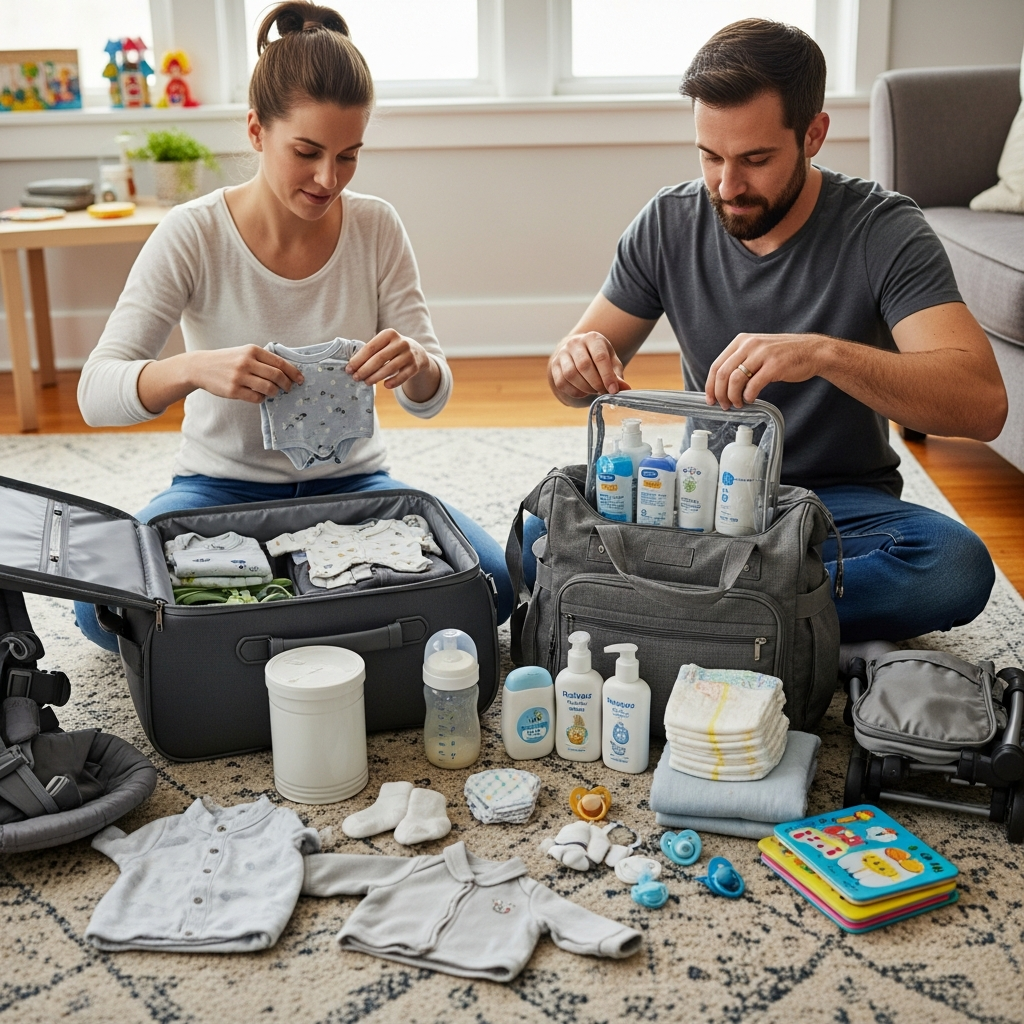
How you're traveling affects what and how you pack. Let's break down the specific considerations for different transportation methods.
Baby Packing List for Flying
Air travel with babies requires strategic thinking about what goes in carry-on versus checked bags. The TSA has special allowances for baby items that make flying easier than you might expect.
Carry-on essentials:
- Formula, breast milk, and baby food (no quantity limits for reasonable amounts)
- Enough diapers for the flight plus potential delays (8-10 minimum)
- 2-3 complete outfit changes
- Entertainment items and comfort objects
- Medications and first aid basics
- Sleep sack or blanket for in-flight naps
Pro tip for flying: Gate-check your stroller and car seat for free on most airlines. They'll be waiting at the jet bridge when you land. This keeps your hands free at security while ensuring you have essential gear immediately upon arrival.
Road Trip Packing List with Baby
Road trips offer more flexibility in what you bring but require different organization. You have unlimited space but need easy access to items while driving.
Road trip organization strategy:
- Pack a dedicated "road trip bag" separate from your destination luggage
- Include snacks, bottles, diapers, wipes, toys, and 2 outfit changes
- Keep this bag in the back seat, not the trunk
- Plan feeding stops every 2-3 hours (babies shouldn't stay in car seats too long)
The advantage of road trips: you can pack extras without worrying about bag fees or weight limits. The downside: you still need to pack strategically so you're not unpacking the entire car every time baby needs something.
Frequently Asked Questions About Baby Travel Packing
How many outfits should I pack for my baby per day of travel?
Pack 2-3 complete outfits per day for babies under 6 months (frequent spit-ups and blowouts), 1-2 outfits per day for babies 6-12 months, and 1 outfit plus one backup for toddlers. Add 2-3 extra outfits total for unexpected delays or extended travel days. Season matters too - spring and fall variable weather may require additional changes.
What baby items are not allowed on airplanes?
Most baby essentials are TSA-approved for air travel. Breast milk, formula, and baby food are exempt from the 3.4oz liquid rule - you can bring reasonable quantities. Strollers and car seats fly free on most airlines. Avoid packing sharp nail clippers in carry-on luggage. Check current TSA guidelines before travel as regulations occasionally change.
Should I pack diapers or buy them at my destination?
For trips under 3 days, pack all diapers needed. For longer trips, pack enough for travel days plus one day, then purchase at your destination. This saves significant luggage space and weight. Exception: If your baby uses specialty diapers that aren't widely available, pack your full supply regardless of trip length.
What is the best fabric for baby travel clothes?
Bamboo fabric is ideal for travel because it naturally regulates temperature, wicks moisture away from skin, and resists odors even after multiple wears. Cotton is a close second for breathability. Avoid synthetic fabrics like polyester that trap heat and moisture. Bamboo clothing works across all seasons, making it the most versatile choice for travel wardrobes.
How do I keep my baby comfortable on a plane?
Dress baby in soft, stretchy layers that allow easy temperature adjustment - airplane cabins fluctuate significantly. Feed during takeoff and landing to help equalize ear pressure. Bring a familiar blanket or sleep sack for comfort. Pack extra pacifiers and favorite toys within easy reach. When possible, book flights during baby's usual nap time for smoother travel.
What sleep items should I bring for baby travel?
Essential sleep items include a travel crib or pack and play, a familiar sleep sack or swaddle from home, white noise machine (or phone app), and your baby's comfort object or lovey. Portable blackout curtains or window covers help maintain sleep schedules in bright hotel rooms. Keep sleep conditions as similar to home as possible for faster adjustment.
How do I dress my baby for winter travel without making car seats unsafe?
Never buckle a baby into a car seat wearing a puffy coat - it creates dangerous slack in the harness straps. Instead, dress baby in thin base layers and a fleece middle layer. Secure the harness snugly against baby's chest, then place a blanket or specially designed car seat poncho over the buckled straps for warmth.
What is the minimum age for babies to travel safely?
Most pediatricians clear healthy babies for travel at 2-3 weeks old, though some recommend waiting 4-6 weeks for immune system development. Airlines typically require babies to be 7-14 days old minimum to fly. Always consult your pediatrician before traveling with a newborn. Avoid crowded destinations during cold and flu season with babies under 2 months whose immune systems are still developing.
Final Thoughts: Pack Smart, Travel Happy
Traveling with a baby doesn't have to mean packing the entire nursery. With this season-by-season baby travel packing list, you now have the specific guidance you need to pack exactly what's necessary - nothing more, nothing less.
Remember the core principles: layer for variable weather, prioritize versatile items that work across multiple situations, and always pack familiar comfort items that help baby feel at home anywhere. The right foundation - quality clothing in temperature-regulating fabrics like bamboo, proper sleep essentials, and a well-stocked diaper kit - handles most travel challenges.
Whether you're planning a spring break adventure, summer beach vacation, fall Thanksgiving visit, or winter holiday celebration, you're now equipped to create your perfect baby vacation packing list. Start with the all-season essentials, add your seasonal specifics, adjust for your baby's age, and apply the space-saving hacks to fit it all.
At PatPat, we're passionate about helping families create wonderful travel memories without the stress. Our bamboo baby clothing collections offer the temperature-regulating, easy-care fabrics that travel perfectly in any season. From lightweight summer onesies to cozy winter pajamas, we've designed pieces that work as hard as you do.
Ready to build your perfect travel wardrobe? Explore our collections to find the versatile, comfortable baby clothing that makes seasonal packing simple. Because the best family trips start with confident packing.
Safe travels, and may your baby sleep peacefully wherever adventure takes you!


