


Votre corps travaille sans relâche pour faire grandir un petit être humain, et une bonne hydratation est la base d'une grossesse saine. Pourtant, vous vous demandez si ce verre d'eau supplémentaire est vraiment important ou si vous buvez déjà assez. Vous n'êtes pas seule. De nombreuses futures mamans sont confrontées à des informations contradictoires sur l'hydratation pendant la grossesse, et les nausées matinales peuvent rendre la simple idée de boire de l'eau franchement désagréable.
Voici la bonne nouvelle : le Collège américain des obstétriciens et gynécologues recommande de boire 8 à 12 tasses (64-96 onces) d'eau par jour pendant la grossesse. Mais la quantité d'eau que vous devriez boire pendant la grossesse dépend vraiment de votre situation unique, y compris votre trimestre, votre niveau d'activité et même la météo extérieure.
Dans ce guide complet, vous découvrirez exactement quelle quantité d'eau votre corps a besoin pendant la grossesse, apprendrez à reconnaître les signes d'alerte de déshydratation, et trouverez des solutions pratiques pour rester hydratée même lorsque l'eau vous donne la nausée. Que vous soyez dans votre premier trimestre à lutter contre les nausées matinales ou que vous vous prépariez à l'accouchement au troisième trimestre, ce guide est fait pour vous. Chez PatPat, nous comprenons que prendre soin de vous pendant la grossesse, c'est aussi prendre soin de votre bébé en pleine croissance.
Pourquoi rester hydratée pendant la grossesse est essentiel pour vous et votre bébé
Lorsque vous êtes enceinte, l'eau fait bien plus que simplement étancher votre soif. Elle devient le matériau de base pour tout, des premières cellules de votre bébé au coussin protecteur de liquide amniotique qui les entoure. Comprendre pourquoi l'hydratation pendant la grossesse est importante peut vous motiver à prendre plus souvent cette bouteille d'eau.
Comment l'eau soutient le développement de votre bébé
Chaque système du corps en développement de votre bébé dépend d'une hydratation maternelle adéquate. L'eau aide à produire et à maintenir le liquide amniotique, qui protège votre bébé des chocs et aide à réguler sa température. Selon une recherche publiée sur MedlinePlus, le liquide amniotique atteint un pic d'environ 800 millilitres vers la 34e semaine de grossesse.
Votre volume sanguin raconte une histoire encore plus impressionnante. Les recherches montrent que le volume plasmatique augmente de 45 à 50 % pendant la grossesse, nécessitant un apport important en eau pour soutenir cette expansion. Ce sang supplémentaire transporte les nutriments et l'oxygène à votre bébé via le placenta, rendant l'hydratation essentielle pour un développement fœtal optimal.
Avantages d'une hydratation adéquate pour les futures mamans
Rester hydratée pendant la grossesse offre également des avantages remarquables pour votre propre santé :
- Réduit le risque d'infections urinaires : Une hydratation adéquate aide à maintenir les voies urinaires propres et réduit la colonisation bactérienne. La Mayo Clinic note que rester hydraté aide à prévenir les infections urinaires.
- Prévient la constipation : L'eau ramollit les selles et favorise des selles régulières, répondant à l'une des plaintes les plus courantes pendant la grossesse.
- Gère les gonflements : Contre-intuitivement, boire plus d'eau aide à réduire la rétention d'eau et les gonflements aux chevilles et aux pieds.
- Soutient une pression artérielle saine : Une bonne hydratation aide à maintenir le volume sanguin et la circulation.
- Réduit la fatigue et les maux de tête : Même une légère déshydratation peut provoquer de l'épuisement et des maux de tête lancinants.
- Régule la température corporelle : L'eau aide à prévenir la surchauffe, surtout pendant les grossesses estivales.
Directives pour l'apport quotidien en eau : combien d'onces une femme enceinte doit-elle boire ?
Voici enfin les chiffres que vous attendiez. Combien d'onces d'eau une femme enceinte doit-elle boire chaque jour ? Bien que les besoins individuels varient, les directives établies fournissent un point de départ fiable.
Explication des recommandations officielles de l'ACOG
Le Collège américain des obstétriciens et gynécologues recommande de boire tout au long de la journée, en visant 8 à 12 tasses d'eau par jour pendant la grossesse. Cela équivaut à environ 64-96 onces, soit 1,9 à 2,8 litres. Cette fourchette tient compte du fait que les besoins en eau varient selon plusieurs facteurs propres à chacun.
Comprendre vos besoins personnels en hydratation
Votre apport quotidien idéal en eau pendant la grossesse dépend de plusieurs facteurs. Utilisez ce tableau comme guide de départ :
| Poids corporel | Apport quotidien de base | Actif/Temps chaud |
|---|---|---|
| 120-140 lbs | 64-72 oz | 80-88 oz |
| 140-160 lbs | 72-80 oz | 88-96 oz |
| 160-180 lbs | 80-88 oz | 96-104 oz |
| 180+ lbs | 88-96 oz | 104-112 oz |
Les facteurs supplémentaires qui augmentent vos besoins en hydratation incluent :
- Temps chaud ou humide (augmenter la consommation de 10-20 %)
- Exercice ou activité physique
- Lieux en haute altitude
- Maladie avec fièvre, vomissements ou diarrhée
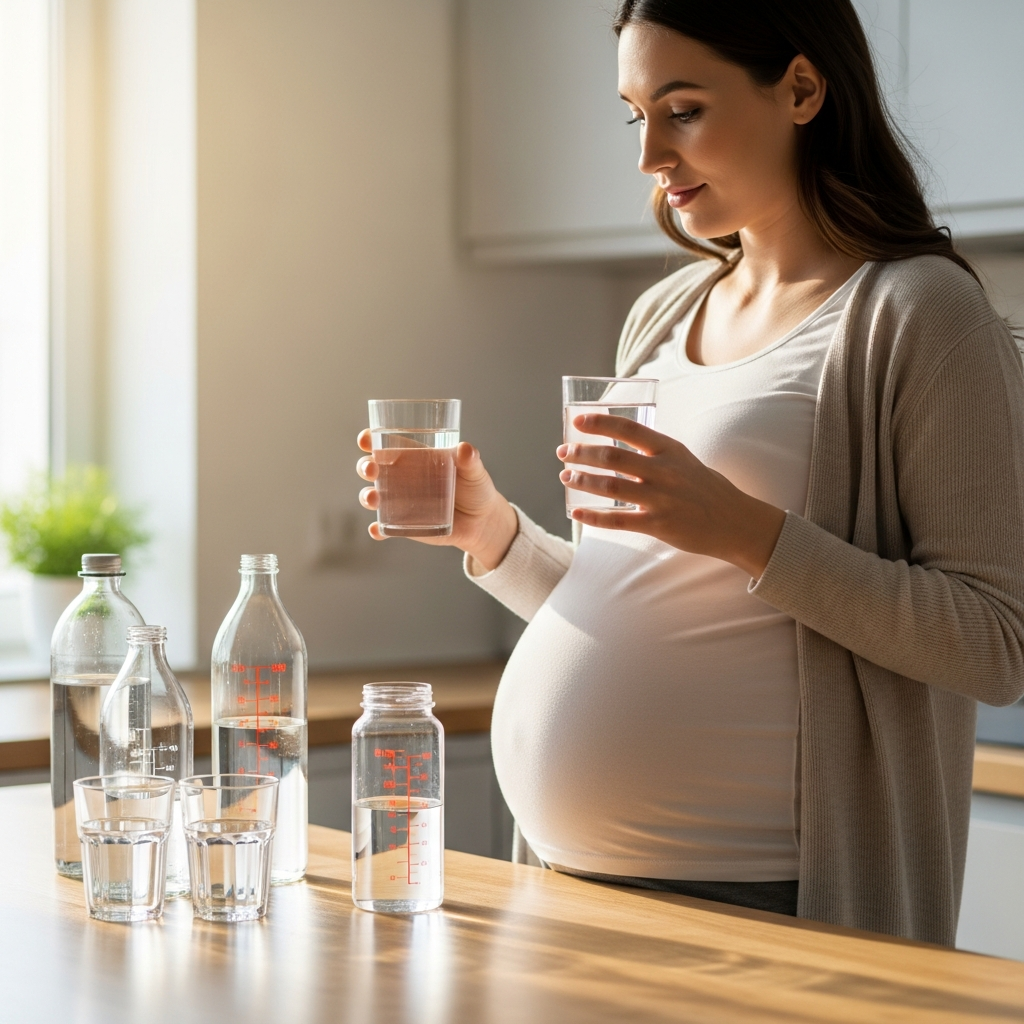
Apport en eau par trimestre : ajuster votre hydratation tout au long de la grossesse
Vos besoins en hydratation pendant la grossesse évoluent au fur et à mesure que votre bébé grandit. Bien que les directives de l'ACOG ne fassent pas de distinction par trimestre, les exigences de votre corps changent considérablement de ces premières semaines jusqu'à l'accouchement. Voici à quoi vous attendre à chaque étape.
Apport en eau au premier trimestre (semaines 1-12)
Le premier trimestre présente un défi unique : votre corps a besoin d'une hydratation adéquate, mais les nausées matinales peuvent rendre la consommation d'eau difficile. Malgré les nausées, visez au moins 8 à 10 tasses par jour pendant cette période critique où les organes de votre bébé se forment.
Conseils pour l'hydratation au premier trimestre :
- Sirotez de petites quantités tout au long de la journée plutôt que de boire de grandes gorgées
- Essayez l'eau froide si la température ambiante provoque des nausées
- Ajoutez un trait de citron ou de lime pour une saveur douce
- Buvez entre les repas plutôt que pendant
Besoins d'hydratation au deuxième trimestre (semaines 13-26)
Alors que les nausées matinales s'estompent généralement, le deuxième trimestre offre une occasion d'établir de bonnes habitudes d'hydratation. Le volume sanguin continue d'augmenter rapidement à ce moment, ce qui accroît vos besoins en eau. Visez 10 à 12 tasses par jour.
Des recherches dans l'European Journal of Nutrition suggèrent que la « sous-hydratation » survient fréquemment au deuxième trimestre, alors portez une attention particulière à votre consommation pendant ces semaines. C'est aussi la période où les os de votre bébé se renforcent et ses muscles se développent, des processus qui dépendent d'une bonne hydratation maternelle.
Besoins en eau au troisième trimestre (semaines 27-40)
Pendant votre troisième trimestre, la quantité d'eau à boire pendant la grossesse devient encore plus importante. Votre corps produit un niveau maximal de liquide amniotique, et une soif accrue est tout à fait normale. Visez 10 à 12 tasses ou plus par jour.
Considérations d'hydratation au troisième trimestre :
- Les allers-retours fréquents aux toilettes sont normaux mais ne doivent pas vous empêcher de boire
- Une hydratation adéquate peut aider à réduire les contractions de Braxton Hicks
- Une bonne hydratation soutient la préparation de votre corps au travail
- Continuez à boire de l'eau pendant le travail et l'accouchement selon votre tolérance
Signes d'alerte de déshydratation pendant la grossesse à ne pas ignorer
Reconnaître les symptômes de déshydratation pendant la grossesse peut vous aider à agir avant que des problèmes ne surviennent. Votre corps envoie des signaux clairs lorsqu'il a besoin de plus de liquides, et apprendre à les lire protège à la fois vous et votre bébé.
Symptômes précoces de déshydratation à surveiller
Repérez la déshydratation tôt en surveillant ces signes :
- Urine jaune foncé ou ambrée : Visez un jaune pâle, comme de la limonade
- Urines peu fréquentes : Vous devriez uriner toutes les 2-3 heures
- Soif persistante : Avoir soif signifie que vous êtes déjà légèrement déshydraté(e)
- Bouche sèche et lèvres gercées : Indicateurs précoces d'une hydratation insuffisante
- Maux de tête légers : Souvent le premier signe de déshydratation
- Fatigue et faible énergie : Au-delà de la fatigue normale de la grossesse
Signes graves de déshydratation nécessitant une attention médicale
Contactez immédiatement votre professionnel de santé si vous ressentez :
- Vertiges ou étourdissements en se levant
- Battements cardiaques rapides ou forts
- Maux de tête sévères et persistants
- Confusion ou désorientation
- Contractions fréquentes de Braxton Hicks
- Diminution des mouvements fœtaux
- Urine très foncée ou absence d'urine pendant plus de 8 heures
Comment la déshydratation affecte votre bébé
Comprendre ce qui se passe si vous ne buvez pas assez d'eau pendant la grossesse peut motiver des habitudes plus saines. Les recherches confirment que l'hydratation maternelle influence directement le volume de liquide amniotique. La déshydratation peut entraîner :
- Faible liquide amniotique (oligohydramnios) : Les recherches montrent que la déshydratation peut réduire le volume de liquide amniotique jusqu'à 35 %
- Risque accru d'accouchement prématuré : L'irritabilité utérine due à la déshydratation peut déclencher des contractions
- Réduction de l'apport en nutriments : Un volume sanguin plus faible signifie un transport des nutriments moins efficace
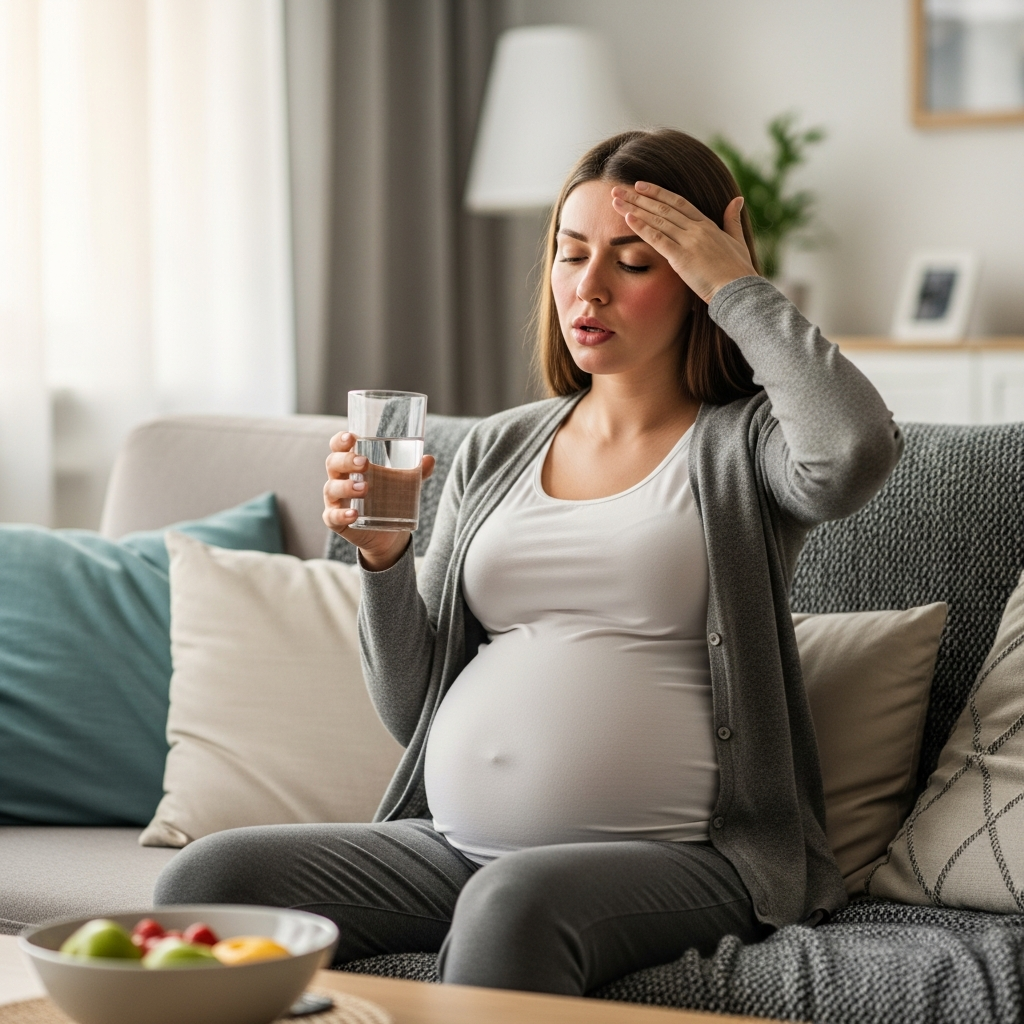
Conseils pratiques pour rester hydratée quand l'eau vous donne la nausée
Si l'eau vous donne la nausée pendant la grossesse, vous n'êtes pas seule. Le mal de matin touche jusqu'à 80 % des femmes enceintes, et même la simple pensée de l'eau plate peut provoquer des nausées. Voici des stratégies qui fonctionnent vraiment.
Stratégies d'hydratation adaptées au mal de matin
Lorsque vous ne pouvez pas boire assez d'eau pendant la grossesse à cause des nausées, essayez ces approches :
- Petites gorgées constantes : Prenez 2-3 gorgées toutes les 10-15 minutes au lieu de boire de grands verres
- Expériences de température : Certaines femmes tolèrent mieux l'eau glacée ; d'autres préfèrent la température ambiante
- Méthode de la paille : Boire avec une paille peut réduire les nausées pour certaines femmes
- Le timing est important : Buvez entre les repas plutôt qu'avec la nourriture
- Programmez des rappels : Des alarmes téléphoniques toutes les 30 minutes peuvent aider à prendre l'habitude
- Gardez l'eau visible : Une bouteille d'eau à portée de main sert de rappel constant
Alternatives à l'eau qui comptent dans votre apport quotidien
Bonne nouvelle : l'eau plate n'est pas votre seule option. Ces alternatives vous aident à rester hydratée :
- Eau infusée : Ajoutez du citron, du concombre, de la menthe ou des baies pour une saveur légère
- Eau de coco : Électrolytes naturels au goût doux
- Thés aux herbes sûrs pendant la grossesse : Le thé au gingembre peut apaiser les nausées tout en hydratant
- Fruits riches en eau : Pastèque (92 % d'eau), oranges, raisins et fraises
- Légumes riches en eau : Concombre (96 % d'eau), céleri, tomates et laitue
- Bouillons clairs et soupes : Options d'hydratation chaudes et savoureuses
Rendre l'eau plate plus attrayante
De simples changements peuvent transformer votre relation avec l'eau :
- Investissez dans une bouteille d'eau que vous aimez vraiment utiliser
- Ajoutez des tranches de fruits frais pour une douceur naturelle
- Essayez l'eau pétillante (sans excès)
- Utilisez une application de suivi de l'hydratation pour la motivation et la responsabilisation
Alors que vous préparez l'arrivée de votre bébé, rester hydratée devient une seconde nature. De nombreuses futures mamans constatent que l'établissement d'habitudes d'hydratation saines pendant la grossesse se poursuit après l'accouchement. En parlant de préparation, c'est aussi un excellent moment pour commencer à rassembler des essentiels comme des vêtements pour bébé confortables qui faciliteront ces premières semaines.
[IMAGE: infused-water-recipes-pregnancy-safe]Ce qui compte comme apport en liquide pendant la grossesse : au-delà de l'eau plate
Comprendre ce qui compte comme apport en liquide pendant la grossesse élargit vos options d'hydratation. Bien que l'eau reste la référence, d'autres sources contribuent de manière significative à vos totaux quotidiens.
Boissons qui contribuent à votre apport quotidien en eau
Ces boissons comptent dans votre apport hydrique pendant la grossesse :
- Lait et alternatives aux produits laitiers : Bonus riche en calcium avec hydratation
- Jus de fruits 100 % : À consommer avec modération en raison de la teneur naturelle en sucre
- Thés aux herbes sûrs pendant la grossesse : La menthe poivrée, le gingembre et le rooibos sont généralement sans danger
- Café et thé décaféinés : À déguster sans souci de caféine
- Smoothies : Allient hydratation et nutrition
- Boissons électrolytiques : Surveillez la teneur en sucre ; choisissez des options à faible teneur en sucre
Aliments riches en eau qui vous aident à rester hydratée
Environ 20 % de l'apport quotidien en eau provient généralement des aliments. Concentrez-vous sur ces options hydratantes :
| Aliment | Teneur en eau |
|---|---|
| Concombre | 96% |
| Laitue | 95% |
| Céleri | 95% |
| Pastèque | 92% |
| Fraises | 91% |
| Cantaloup | 90% |
| Oranges | 87% |
Boissons à limiter ou éviter pendant la grossesse
Certaines boissons nécessitent de la prudence ou une éviction complète :
- Caféine : L'ACOG recommande de limiter la caféine à moins de 200 mg par jour, ce qui équivaut à environ un café de 12 onces
- Boissons sucrées et sodas : Apportent des calories vides sans bénéfice nutritionnel
- Boissons énergisantes : Contiennent souvent trop de caféine et d'autres stimulants
- Alcool : Éviter complètement tout au long de la grossesse
- Jus non pasteurisés : Risque de bactéries nocives
L'eau du robinet est-elle sûre pendant la grossesse ? Guide sur la qualité et la sécurité de l'eau
Les préoccupations concernant la sécurité de l'eau du robinet pendant la grossesse sont tout à fait légitimes. Comprendre votre source d'eau et les options disponibles vous aide à prendre des décisions éclairées pour votre famille.
Comprendre votre source d'eau
L'EPA fixe des limites légales pour plus de 90 contaminants dans l'eau potable, rendant l'eau municipale aux États-Unis généralement sûre. Cependant, vous pouvez prendre des mesures supplémentaires pour plus de tranquillité d'esprit :
- Demandez votre rapport local sur la qualité de l'eau (les services publics doivent le fournir chaque année)
- Pour l'eau de puits, faites-la tester pendant la grossesse
- Soyez consciente des tuyaux anciens qui peuvent contenir du plomb
- Laissez couler l'eau froide du robinet pendant 30 secondes avant de boire si les tuyaux peuvent contenir du plomb
Options de filtration pour plus de tranquillité d'esprit
Si vous préférez l'eau filtrée, considérez ces options :
- Filtres à carafe : élimination basique abordable des contaminants
- Filtres montés sur robinet : filtration continue pratique
- Filtres de réfrigérateur : commodité intégrée
- Systèmes d'osmose inverse : filtration la plus complète
Eau en bouteille et préoccupations liées au BPA
Lors du choix d'eau en bouteille ou de contenants réutilisables :
- Recherchez les étiquettes sans BPA sur tous les contenants en plastique
- Les types de plastique plus sûrs incluent les numéros 1, 2, 4 et 5
- Les bouteilles en verre et en acier inoxydable éliminent totalement les préoccupations liées au plastique
- Évitez de laisser des bouteilles en plastique dans des voitures chaudes où des produits chimiques peuvent migrer
Tout comme vous faites attention à ce que vous mettez dans votre corps pendant la grossesse, vous voudrez être tout aussi vigilante quant à ce qui touche la peau sensible de votre bébé. De nombreux parents optent pour des vêtements pour bébé en bambou réputés pour leur douceur et leurs propriétés naturelles et délicates.
Considérations spéciales : grossesse gémellaire, hydratation estivale et exercice
Certaines situations nécessitent un ajustement de la consommation d'eau pendant la grossesse. Si vous vous trouvez dans l'une de ces catégories, soyez particulièrement attentive à votre stratégie d'hydratation.
Besoins en hydratation pour les grossesses gémellaires et multiples
Combien d'eau devriez-vous boire lorsque vous êtes enceinte de jumeaux ? Votre corps travaille encore plus dur avec des multiples :
- Augmentez votre consommation de base de 8 à 16 onces supplémentaires par jour
- L'augmentation du volume sanguin est encore plus importante avec des jumeaux
- Vous produisez du liquide amniotique pour plusieurs bébés
- Discutez des recommandations personnalisées avec votre professionnel de santé
Grossesse en été : rester hydratée par temps chaud
Combien d'eau devriez-vous boire pendant la grossesse en été ? La chaleur augmente considérablement vos besoins en hydratation :
- Augmentez votre consommation d'eau de 10 à 20 % par temps chaud
- Surveillez les signes de déshydratation liée à la chaleur : transpiration excessive, peau rouge, pouls rapide
- Limitez les activités en extérieur pendant les heures de chaleur maximale (10h-16h)
- Cherchez la climatisation ou l'ombre dès que possible
- Portez des vêtements légers et respirants
- Envisagez une supplémentation en électrolytes lors des journées très chaudes
Exercice et hydratation pendant la grossesse
L'activité physique augmente considérablement vos besoins en eau :
- Avant l'exercice : Buvez 8 à 12 onces environ 30 minutes avant
- Pendant l'exercice : Sirotez 4 à 8 onces toutes les 15-20 minutes
- Après l'exercice : Remplacez les liquides en fonction de la quantité de sueur perdue
- Envisagez des boissons électrolytiques pour les entraînements de plus de 30 minutes
- Arrêtez immédiatement l'exercice si vous vous sentez étourdie, surchauffée ou mal à l'aise
Questions fréquemment posées sur l'hydratation pendant la grossesse
Combien d'eau devrais-je boire pendant la grossesse ?
Le Collège américain des obstétriciens et gynécologues recommande aux femmes enceintes de boire 8 à 12 tasses (64-96 onces) d'eau par jour. Les besoins individuels varient selon le niveau d'activité, le climat et le poids corporel. La couleur de votre urine est un bon indicateur - visez un jaune pâle. Écoutez votre corps et buvez davantage si vous avez soif ou si votre urine est foncée.
Que se passe-t-il si vous ne buvez pas assez d'eau pendant la grossesse ?
La déshydratation pendant la grossesse peut entraîner un faible volume de liquide amniotique, des infections urinaires, de la constipation et un risque accru d'accouchement prématuré. Une déshydratation sévère peut provoquer des étourdissements, un rythme cardiaque rapide et peut nécessiter une attention médicale. Une hydratation adéquate est essentielle pour la santé maternelle et fœtale, soutenant tout, du transport des nutriments à la régulation de la température.
Boire trop d'eau peut-il être nocif pendant la grossesse ?
Bien que rare, l'hyperhydratation (hyponatrémie) peut survenir en buvant une quantité excessive d'eau sans électrolytes adéquats. Cela dilue le sodium dans votre sang à des niveaux dangereux. Respectez les 8 à 12 tasses recommandées par jour, sauf avis contraire de votre professionnel de santé. Votre corps régule généralement bien la consommation d'eau, mais contactez votre médecin si vous ressentez une soif excessive persistante.
Comment savoir si je suis déshydratée pendant la grossesse ?
Les signes courants de déshydratation incluent une urine jaune foncé, une miction peu fréquente, une soif persistante, une bouche sèche, des maux de tête, de la fatigue et des étourdissements. Pendant la grossesse, la déshydratation peut également déclencher des contractions de Braxton Hicks. Si les symptômes persistent après avoir augmenté votre consommation de liquides, contactez votre professionnel de santé pour une évaluation.
Boire plus d'eau aide-t-il à augmenter le liquide amniotique ?
Oui, l'hydratation maternelle est directement liée aux niveaux de liquide amniotique. Des études montrent qu'une hydratation orale avec 2 litres de liquide peut augmenter le volume de liquide amniotique jusqu'à 16 % chez les grossesses avec des niveaux normaux de liquide, et jusqu'à 31 % chez les femmes avec un liquide réduit. Si un faible liquide amniotique est diagnostiqué, votre médecin peut recommander d'augmenter votre consommation d'eau ainsi que d'autres traitements.
Que puis-je boire à part de l'eau pendant la grossesse ?
De nombreuses boissons comptent dans votre apport quotidien en liquides, y compris le lait, les tisanes (variétés sûres pendant la grossesse comme le gingembre et la menthe poivrée), l'eau de coco, les jus de fruits 100 % naturels avec modération, et les bouillons clairs. Les aliments riches en eau comme la pastèque, le concombre et les oranges contribuent également. Limitez la caféine à 200 mg par jour et évitez complètement l'alcool pendant toute la grossesse.
Est-il sûr de boire de l'eau du robinet pendant la grossesse ?
L'eau du robinet est généralement sûre aux États-Unis grâce aux réglementations de l'EPA qui fixent des limites légales pour plus de 90 contaminants. Cependant, vous pouvez consulter le rapport sur la qualité de l'eau locale pour plus de tranquillité d'esprit. Si vous êtes préoccupée par des contaminants comme le plomb ou les sous-produits du chlore, envisagez d'utiliser un filtre à eau. Pour les utilisateurs d'eau de puits, un test pendant la grossesse est recommandé.
Comment puis-je boire plus d'eau si les nausées matinales me donnent la nausée ?
Essayez de boire de petites gorgées fréquemment plutôt que de grandes quantités d'un coup. Expérimentez avec la température de l'eau (froide ou à température ambiante) et essayez d'ajouter des saveurs naturelles comme le citron, le concombre ou la menthe. Boire entre les repas plutôt que pendant peut aider à réduire les nausées. Utiliser une paille et garder l'eau très froide améliore parfois la tolérance. Si les nausées sévères persistent, consultez votre professionnel de santé pour des stratégies anti-nausée.
Rester hydratée tout au long de votre grossesse
Une hydratation adéquate pendant la grossesse est l'une des choses les plus simples mais aussi les plus puissantes que vous puissiez faire pour vous-même et votre bébé en pleine croissance. En visant 8 à 12 tasses d'eau par jour, en ajustant selon votre trimestre et votre niveau d'activité, et en reconnaissant les premiers signes de déshydratation, vous posez les bases d'une grossesse plus saine.
Rappelez-vous, les défis comme les nausées matinales sont temporaires, et de petites gorgées tout au long de la journée s'additionnent. Que vous optiez pour de l'eau plate, des alternatives infusées ou des fruits riches en eau, chaque petite quantité compte pour atteindre votre objectif. Écoutez votre corps, gardez votre bouteille d'eau à portée de main, et n'hésitez pas à contacter votre professionnel de santé si vous avez des inquiétudes concernant votre hydratation.
En prenant soin de votre bébé en pleine croissance avec une bonne hydratation et une nutrition adéquate, vous pensez peut-être aussi à préparer les essentiels pour votre nouveau-né. Préparer dès maintenant des vêtements confortables pour nouveau-né et des bodys douillets pour bébé peut vous aider à vous sentir prêt pour l'arrivée de votre bébé. Et n'oubliez pas les pyjamas doux pour bébé pour ces précieuses premières nuits à la maison.
Chez PatPat, nous sommes là pour vous accompagner à chaque étape de votre parcours vers la parentalité. Vos habitudes saines pendant la grossesse créent le meilleur départ pour votre petit, et nous avons hâte de vous aider à l'accueillir dans le monde.
[IMAGE: happy-pregnant-woman-water-bottle-nursery]




