


Imaginez ceci : votre enfant est blotti dans un coin, complètement absorbé par un livre. Aucun écran en vue. Pas besoin de le harceler. Juste un enfant et une histoire, connectés de cette manière silencieuse que chaque parent espère secrètement. C’est une image magnifique -- et cela ne se produit pas par hasard.
Si vous vous êtes déjà demandé comment élever un lecteur, vous n'êtes pas seul. Selon le rapport Scholastic Kids and Family Reading Report, seulement 35 % des enfants âgés de 6 à 17 ans sont des lecteurs fréquents -- c’est-à-dire qu’ils lisent cinq jours ou plus par semaine. Ce chiffre chute nettement après 8 ans. Pour les parents qui valorisent la littératie, ces statistiques font mal. Mais voici la bonne nouvelle : le facteur le plus puissant pour savoir si un enfant devient lecteur n’est ni son école, ni son enseignant, ni son talent naturel. C’est ce qui se passe à la maison.
Construire des habitudes de lecture chez les enfants est un jeu de longue haleine qui commence bien plus tôt que la plupart des gens ne le pensent -- et qui dure bien plus longtemps que ce que la plupart des guides couvrent. Cet article vous accompagne à chaque étape du parcours, depuis le moment où vous placez un livre en tissu dans les mains de votre nouveau-né jusqu'à celui où votre adolescent choisit volontiers un roman tout seul. Nous aborderons la science du cerveau, les routines pratiques, les obstacles courants et les stratégies qui fonctionnent vraiment quand votre enfant dit « Je déteste lire ».
Que vous soyez un nouveau parent qui se demande quand commencer à lire à votre bébé ou un parent frustré d'un collégien obsédé par les écrans, ce guide vous accompagne là où vous en êtes. Chez PatPat, nous croyons que faire grandir un enfant qui aime lire est l'un des plus beaux cadeaux que vous puissiez offrir -- et cela ne nécessite ni perfection, ni programmes coûteux, ni une maison remplie de livres. Cela demande de la constance, de la patience et quelques stratégies intelligentes au bon moment.
Commençons.
Pourquoi lire à votre enfant est plus important que vous ne le pensez
Avant d'explorer le comment, commençons par le pourquoi. Parce que lors de ces nuits épuisantes où vous avez du mal à garder les yeux ouverts et que votre tout-petit réclame encore une histoire, il est utile de savoir que ce que vous faites compte vraiment.
La science du cerveau derrière la lecture à voix haute
Lire à voix haute à votre enfant fait quelque chose de remarquable à son cerveau en développement. Une étude majeure de l'hôpital pour enfants de Cincinnati a révélé que les enfants à qui l'on lisait plus souvent à la maison présentaient une activation significativement plus grande des zones cérébrales responsables de la compréhension narrative et de l'imagerie mentale. En termes simples, lire à voix haute connecte littéralement le cerveau de votre enfant pour comprendre les histoires, traiter le langage et imaginer de nouveaux mondes -- avant même qu'il ne puisse lire un seul mot lui-même.
Les bienfaits de la lecture aux enfants vont bien au-delà du simple divertissement pendant l'heure du conte. Lire à voix haute construit des voies neuronales pour le traitement du langage, l'enrichissement du vocabulaire et le développement cognitif d'une manière qu'aucune application ou vidéo éducative ne peut reproduire. L'Académie américaine de pédiatrie note que lire régulièrement avec les jeunes enfants stimule des schémas optimaux de développement cérébral, renforçant le lien parent-enfant tout en développant des compétences linguistiques qui forment la base de tout apprentissage futur.
À l'âge de 3 ans, l'écart de vocabulaire entre les enfants issus de foyers riches en lecture et ceux moins exposés peut être important. L'exposition précoce aux mots grâce à la lecture partagée est l'un des moyens les plus efficaces pour combler cet écart -- et cela ne coûte rien d'autre que votre temps et votre voix.
Bienfaits émotionnels et sociaux qui vont au-delà du scolaire
L'argument en faveur de la lecture ne se limite pas aux résultats aux tests. Lire ensemble renforce le lien d'attachement entre le parent et l'enfant à tout âge. Lorsque vous lisez à votre bébé, votre tout-petit ou même votre adolescent, vous dites : « Tu comptes suffisamment pour que je cesse tout et sois présent avec toi ».
Les histoires enseignent aussi l'empathie d'une manière que les conférences ne peuvent jamais atteindre. Une recherche publiée dans Science a révélé que la lecture de fiction littéraire améliore la théorie de l'esprit -- la capacité à comprendre que les autres ont des pensées, des sentiments et des perspectives différentes des vôtres. Lorsque votre enfant vit l'expérience d'un personnage à travers un livre, il exerce son empathie de la manière la plus sûre possible.
Les livres offrent aussi aux enfants un cadre pour gérer des émotions difficiles : le deuil, la peur, la jalousie, les grandes transitions de la vie. Et les rituels de lecture partagée que vous créez — les histoires du coucher, les voix que vous faites pour les personnages, les négociations du type « encore un chapitre » — deviennent certains des souvenirs d'enfance les plus durables de votre enfant.
Comment commencer à lire à votre bébé dès le premier jour (de la naissance à 12 mois)
« Quand dois-je commencer à lire à mon bébé ? » est l'une des questions les plus fréquentes des nouveaux parents. La réponse est simple : commencez maintenant. Que votre bébé ait un jour ou dix mois, aujourd'hui est le bon jour pour commencer.
Quand commencer et pourquoi les nouveau-nés bénéficient d'entendre votre lecture
Les nouveau-nés ne comprennent pas les mots. Ils ne peuvent pas se concentrer sur les images. Ils essaieront probablement de manger le livre. Et rien de tout cela n'a d'importance. Ce qui compte, c'est le son de votre voix : son rythme, sa chaleur, sa cadence. Cette entrée auditive construit l'architecture de l'acquisition du langage dans le cerveau de votre bébé dès le premier jour.
L'initiative Reach Out and Read de l'AAP recommande aux parents de lire à voix haute dès la naissance, ce qui en fait l'un des premiers investissements développementaux que vous puissiez faire. La lecture n'a pas besoin d'être longue, structurée, ni même issue d'un livre pour enfants. Lisez le journal à voix haute. Lisez une recette. Lisez un livre d'images à l'envers. Votre bébé absorbe les rythmes du langage quoi qu'il en soit.
Doute fréquent : « Mon bébé fixe dans le vide ou se tortille — est-ce que ça marche vraiment ? » Oui. Mettre à la bouche, toucher et regarder les livres sont des comportements émergents de littératie adaptés à l'âge. Votre bébé apprend ce qu'est un livre, comment tourner les pages, et que cet objet est lié à votre attention concentrée et à votre voix chaleureuse.
Choisir les premiers livres et transformer le temps sur le ventre en séance d'histoire
Adaptez le livre au mois :
- De la naissance à 3 mois : Livres cartonnés en noir et blanc à fort contraste et livres en tissu doux qu'ils peuvent saisir en toute sécurité.
- 4 à 6 mois : Livres cartonnés épais avec images simples et textures. Posez un livre ouvert pendant le temps sur le ventre pour rendre les séances au sol plus attrayantes.
- 7 à 12 mois : Livres à volets, livres avec sons d'animaux et histoires avec phrases répétitives. Les bébés commencent à tourner les pages, à pointer les images et à babiller en réponse.
Ne vous inquiétez pas de finir un livre. À ce stade, la lecture interactive vise l'exposition et la connexion, pas la complétion. Cinq minutes de lecture engagée valent mieux que vingt minutes de tournage de pages forcé.
Créer un rituel de lecture chaleureux pour bébé
Créez une fenêtre de lecture quotidienne simple liée à une routine existante : après le bain, avant une sieste, ou pendant un matin calme. Tenez bébé sur vos genoux face au livre, ou lisez côte à côte pendant le temps sur le ventre. Utilisez une voix animée -- exagérez les sons, faites des pauses pour leurs « réponses », et montrez les images en les nommant.
Un facteur souvent négligé dans les séances de lecture réussies avec bébé est le confort physique. Habillez votre bébé avec des vêtements doux et extensibles qui lui permettent de bouger librement pendant la lecture au sol. Les tissus respirants comme le bambou gardent les bébés contents même pendant les histoires les plus longues, ils ne sont donc pas gênés par des coutures rigides ou des tissus irritants quand ils devraient être absorbés par les images. Si votre petit a la peau sensible, les vêtements en bambou peuvent faire une différence notable dans la durée pendant laquelle il reste calme lors des séances de lecture à voix haute. Et quand vous avez besoin de vêtements pour bébé doux et faciles à bouger pour ces séances de lecture pendant le temps sur le ventre, privilégiez l’extensibilité et la respirabilité avant tout.

Routines de lecture pour tout-petits qui instaurent une habitude quotidienne (1-3 ans)
Si vous avez un tout-petit, vous savez déjà ce qui vous attend : le même livre. Encore. Et encore. Et encore. Et encore. Cette section s’adresse aux parents qui sont à une lecture de « Bonne nuit Lune » de perdre la tête -- et qui veulent aussi savoir comment instaurer une habitude de lecture quotidienne avec les tout-petits qui dure.
Pourquoi votre tout-petit veut le même livre 47 fois (et pourquoi c’est une bonne chose)
Voici quelque chose qui pourrait vous sauver la raison : la répétition n’est pas un bug. C’est une fonctionnalité. Une recherche publiée dans Frontiers in Psychology a montré que les enfants apprenaient plus de nouveaux mots grâce à des lectures répétées des mêmes histoires comparé à l’écoute d’histoires différentes à chaque fois. Chaque relecture renforce les associations mot-objet, les structures de phrases et la séquence de l’histoire.
Les tout-petits ont aussi besoin de prévisibilité. Savoir ce qui vient ensuite leur donne un sentiment de maîtrise et de contrôle -- quelque chose d’autant plus important pendant une étape de développement marquée par la quête d’autonomie. Alors, quand votre enfant de deux ans vous tend le même livre cartonné pour la douzième fois aujourd’hui, respirez un bon coup et souvenez-vous : c’est le développement de la littératie en action.
Techniques de lecture interactive qui stimulent le développement du langage
Vous voulez dynamiser ces lectures répétées ? Essayez la lecture dialoguée — transformer le temps de l’histoire en conversation plutôt qu’en spectacle. Voici comment :
- Incitez : Montrez une image et demandez : « Qu’est-ce que c’est ? »
- Évaluez : Répondez à leur réponse avec encouragement.
- Élargissez : Ajoutez des détails. S’ils disent « chien », vous dites : « Oui ! Un grand chien marron qui court dans le parc. »
- Répétez : Encouragez-les à répéter la phrase développée.
Cette séquence PEER, développée par le chercheur Grover Whitehurst, a montré qu’elle augmentait considérablement le vocabulaire des enfants de 2 à 3 ans. Elle transforme l’écoute passive en pratique active du langage.
Laissez votre tout-petit tenir le livre, tourner les pages et « lire » pour vous — même s’il babille ou récite de mémoire. Utilisez des voix amusantes pour les personnages. Les tout-petits qui associent la lecture au jeu et au rire développent les liens émotionnels les plus forts avec les livres.
Un simple planning de lecture quotidien pour les tout-petits
| Moment de la journée | Durée | Stratégie |
|---|---|---|
| Matin (après le petit-déjeuner) | 5-10 minutes | Gardez les livres à hauteur de tout-petit pour qu’il puisse les prendre lui-même |
| Après-midi (après le déjeuner/avant la sieste) | 5-10 minutes | Utilisez-la comme signal de transition pour se détendre |
| Heure du coucher | 15-20 minutes | La séance principale — celle-ci est non négociable |
Objectif total quotidien : 20 à 30 minutes réparties dans la journée. La régularité compte bien plus que la durée.
Créez un coin lecture douillet pour votre tout-petit avec une étagère basse, un tapis moelleux et quelques coussins. Habillez votre tout-petit avec des vêtements confortables — des vêtements de jeu confortables qui ne limitent pas les mouvements l’aident à s’installer en position de lecture sans s’agiter après deux pages.
Des livres d’images à la phonétique : encourager les lecteurs en maternelle et en petite section (3-6 ans)
Les années préscolaires sont le moment où la magie opère. Votre enfant commence à comprendre que ces gribouillis sur la page ne sont pas que de la décoration — ils ont un sens. C’est l’aube de la préparation à la lecture, et c’est l’une des étapes les plus excitantes (et angoissantes) pour les parents.
Signes de préparation à la lecture que tout parent devrait connaître
Comment savoir si votre enfant est prêt à lire seul ? Cherchez ces signes :
- Reconnaît certaines lettres, surtout celles de son propre prénom
- Comprend que l’écrit a du sens (montre du doigt des panneaux, des étiquettes ou des titres de livres)
- Peut raconter une histoire familière avec ses propres mots
- Montre de l’intérêt pour les mots qui riment et les jeux de mots
- Fait semblant de « lire » en tournant les pages et en racontant à partir des images
- Commence à associer les lettres aux sons (« Ça commence par B, comme mon prénom ! »)
Voici quelque chose d'important : la préparation à la lecture est un spectre, pas un interrupteur. Certains enfants lisent à 4 ans. D'autres ne sont pas prêts avant 7 ans. Reading Rockets note que les enfants développent les compétences en lecture selon un continuum, et les lecteurs précoces comme tardifs atteignent souvent le même niveau de compétence vers 9 ou 10 ans. Le calendrier importe bien moins que la relation de l'enfant avec les livres.
Conscience phonémique par le jeu, pas par la pression
La conscience phonémique — la capacité d'entendre et de manipuler les sons individuels dans les mots — est le meilleur indicateur unique du succès futur en lecture. Et voici la partie contre-intuitive : elle se développe mieux par le jeu, pas par les fiches d'exercices.
Activités qui développent naturellement la conscience phonémique :
- Jeux de rimes (« Qu'est-ce qui rime avec chat ? Chapeau ! Batte ! Assis ! »)
- Claquer les syllabes des mots
- « Je vois » avec les sons initiaux (« Je vois quelque chose qui commence par sss... »)
- Chanter des chansons avec allitérations et motifs répétitifs
- Inventer des mots absurdes et des rimes sans sens
Présentez les visites à la bibliothèque comme des aventures, pas des obligations. Laissez votre enfant choisir ses propres livres, explorer différentes sections et participer aux programmes de lecture d'histoires. Un enfant qui voit la bibliothèque comme une destination excitante développe la conscience de l'écrit et des associations positives qui se prolongent à l'école et au-delà.
La transition des livres cartonnés aux livres d'images puis aux premiers livres de lecture se fait progressivement. Suivez l'intérêt de l'enfant, pas l'étiquette du niveau scolaire sur la tranche du livre. Si votre enfant de quatre ans préfère encore les livres cartonnés, c'est très bien. Si votre enfant de trois ans est attiré par des livres d'images plus longs, suivez cette tendance. Le développement de la littératie n'est pas une course, et pousser les enfants vers des livres « plus difficiles » avant qu'ils ne soient prêts peut se retourner contre vous en créant des associations négatives avec la lecture.
Que faire lorsque votre enfant ne lit pas « selon le calendrier »
Abordons l'éléphant dans la pièce : la comparaison. Il est difficile de ne pas paniquer quand le camarade de classe de votre enfant de cinq ans lit des livres à chapitres alors que le vôtre travaille encore sur les sons des lettres. Mais la comparaison est l'ennemie du plaisir de lire.
La lecture se développe selon une chronologie large et bien documentée. L'enfant qui lit à 4 ans et celui qui lit à 7 ans atteignent généralement le même niveau vers la troisième ou la quatrième année. Ce qui compte, ce n'est pas la ligne de départ, mais si l'enfant souhaite encore lire une fois arrivé là.
Cela dit, certains signes justifient une évaluation professionnelle : difficulté persistante à associer les lettres aux sons après une exposition régulière, forte évitement lié à la frustration plutôt qu'à une préférence, ou antécédents familiaux de dyslexie. Si vous remarquez ces signes, parlez-en à votre pédiatre ou demandez une évaluation de la lecture via votre district scolaire. Un soutien précoce fait une grande différence.
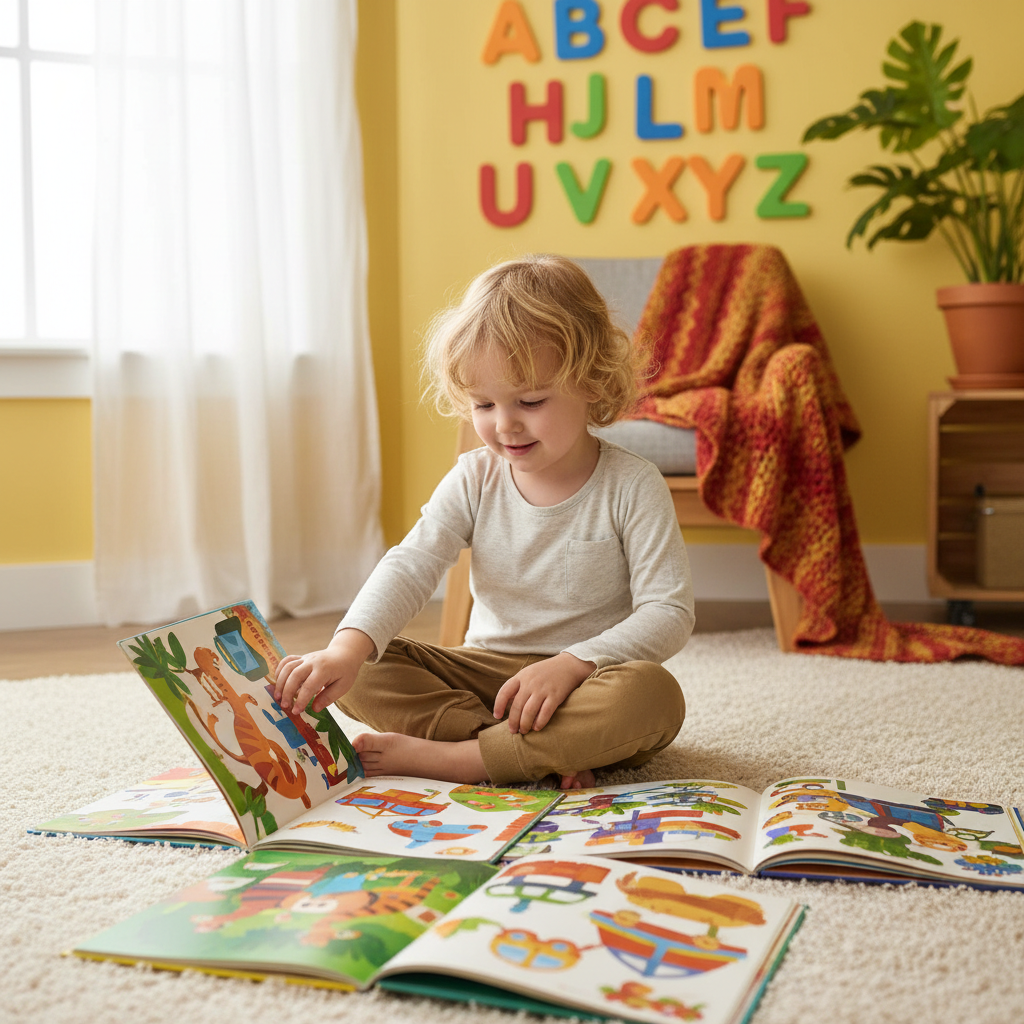
Comment garder les enfants d'âge scolaire accrochés aux livres (6-12 ans)
C'est là que beaucoup de familles butent. Votre enfant a appris à lire — félicitations ! — mais quelque part vers la deuxième ou troisième année, la lecture a cessé d'être amusante et a commencé à ressembler à des devoirs. C'est la fenêtre critique où la question de comment faire lire les enfants devient réelle et urgente.
Le tournant élémentaire : quand la lecture cesse d'être un plaisir
Vers 7 à 9 ans, la lecture scolaire devient souvent transactionnelle : textes assignés, journaux de lecture, quiz de compréhension. Pour un enfant qui aimait autrefois les histoires, cela peut lui faire perdre tout le plaisir des livres. Les recherches de Scholastic confirment que le pourcentage de lecteurs fréquents chute significativement après 8 ans.
La solution est de séparer la « lecture scolaire » de la « lecture libre ». Créez un espace protégé pour les livres purement destinés au plaisir — pas de rapports, pas de quiz, pas de « qu'as-tu appris ? » Juste lire pour le plaisir de lire.
Essayez l'approche « menu de lecture » : disposez trois à cinq livres de genres différents et laissez votre enfant choisir. L'autonomie est le moteur de la motivation à cet âge. Lorsqu'un enfant se sent propriétaire de ses choix de lecture, il est beaucoup plus susceptible de rester engagé.
Et normalisez les préférences de genre sans jugement. Si votre enfant ne veut lire que des livres documentaires sur l'espace, des compilations de bandes dessinées ou des livres de blagues — cela compte. La recherche est sans équivoque : le volume de lecture compte plus que le genre. Un enfant qui lit 30 minutes par jour des romans graphiques développe plus de compétences en lecture qu'un enfant qui ne lit aucune minute de « vraie » littérature.
Romans graphiques, séries de livres et le pouvoir du « Que se passe-t-il ensuite »
Si votre enfant est accro à Dog Man, Journal d'un dégonflé ou Wings of Fire, célébrez. Les séries de livres construisent quelque chose d'inestimable : l'endurance. L'élan du « Il me faut le prochain » que créent les séries transforme les lecteurs occasionnels en lecteurs habituels. Et c'est l'objectif.
Les romans graphiques méritent une mention spéciale car ils sont encore injustement rejetés par certains parents et éducateurs. Mais la recherche est claire : les romans graphiques développent la littératie visuelle, les compétences d'inférence et la compréhension narrative à des niveaux égaux ou supérieurs au texte traditionnel pour ce groupe d'âge. Si votre enfant préfère les romans graphiques, il est en train de lire. Point final.
Les livres audio comptent aussi. Un enfant qui écoute un roman en plusieurs chapitres lors d'un voyage en voiture traite toujours une narration, enrichit son vocabulaire et développe une relation avec les histoires. L'AAP et les chercheurs en alphabétisation reconnaissent de plus en plus les livres audio comme un format de lecture valide et précieux.
Stratégies pratiques pour l'enfant qui dit « Je déteste lire »
Quand votre enfant dit « Je déteste lire », résistez à l'envie de faire la leçon. Au lieu de cela, cherchez la cause profonde :
- Les livres sont ennuyeux : Laissez-les choisir librement. Visitez une librairie ou une bibliothèque sans aucun agenda. Essayez les magazines, les livres de blagues ou les ouvrages non fictionnels sur leur obsession du moment.
- La lecture est physiquement difficile : Faites vérifier leur vue. Dépistez la dyslexie ou les troubles de traitement. Associez-les à des livres audio pour qu'ils puissent suivre le texte.
- Les écrans sont plus gratifiants : Créez une « fenêtre de lecture » quotidienne — 20 minutes où les écrans ne sont tout simplement pas disponibles. Présentez cela comme une routine, pas une punition.
- L'école a tout gâché : Protégez la lecture plaisir en ne les interrogeant jamais sur les livres de loisir. Leur lecture libre leur appartient.
L'environnement physique joue aussi un rôle. Un coin lecture confortable — un endroit douillet, une bonne lumière, et des vêtements bien ajustés et doux — peut faire la différence entre un enfant qui s'agite après deux minutes et un autre qui s'immerge dans une histoire pendant une demi-heure.
Lecture d'été : prévenir le glissement
Le « glissement estival » est réel. Les enfants qui ne lisent pas pendant les mois d'été peuvent perdre jusqu'à deux mois de progrès en lecture, et ces pertes s'accumulent d'année en année. Mais l'été est aussi le moment idéal pour reconstruire l'amour de la lecture car il n'y a pas de devoirs qui rivalisent pour l'attention.
Stratégies qui fonctionnent :
- Inscrivez-vous au programme de lecture d'été de votre bibliothèque — la plupart offrent des récompenses gratuites et des suivis de lecture que les enfants apprécient.
- Créez un défi familial de lecture d'été avec un objectif commun et une célébration quand vous l'atteignez (soirée pizza, soirée cinéma, sortie à la librairie).
- Laissez la lecture d'été être entièrement basée sur le choix. Pas de genres imposés, pas de niveaux de difficulté requis. Bandes dessinées, romans graphiques, magazines sur leur hobby préféré — tout compte.
- Faites des livres une partie des activités d'été : emportez des livres pour la plage, les voyages en voiture et les après-midis paresseux dans le jardin.
L'objectif n'est pas de maintenir un niveau académique. L'objectif est de garder la lecture liée au plaisir pendant les mois où les enfants ont le plus de liberté pour découvrir ce qu'ils aiment vraiment.
Comment motiver un adolescent à lire à l'ère des écrans (13-18 ans)
Si votre adolescent n'a pas ouvert un livre depuis des mois, vous ne ratez pas votre rôle de parent. Vous traversez une phase parfaitement normale — et réversible. Comprendre pourquoi les ados arrêtent de lire est la première étape pour les aider à retrouver le chemin.
Pourquoi les adolescents arrêtent de lire (ce n'est pas ce que vous pensez)
Les raisons pour lesquelles les adolescents abandonnent les livres sont généralement pratiques, pas philosophiques :
- Pression du temps : Les devoirs, les activités extrascolaires, la vie sociale et les emplois à temps partiel laissent presque aucune marge pour la lecture volontaire.
- L'école a tué la joie : Quand chaque livre est accompagné d'une dissertation de cinq paragraphes, la lecture commence à ressembler à un travail pénible.
- Dopamine plus rapide ailleurs : Les téléphones et les réseaux sociaux offrent des boucles de récompense plus rapides que la montée lente d’un roman. C’est de la chimie cérébrale, pas un défaut de caractère.
Voici une perspective qui pourrait vous surprendre : beaucoup d’adolescents lisent plus que ce que leurs parents imaginent. Ils consomment de la fanfiction, des articles longs, des fils Reddit et des publications sur les réseaux sociaux riches en texte. La définition de la « lecture » s’est élargie, et ce n’est pas forcément une mauvaise chose.
BookTok, livres audio et rencontrer les adolescents là où ils sont
BookTok -- la communauté de lecture sur TikTok et autres réseaux sociaux -- a généré des millions de ventes de livres chez les adolescents. Plutôt que de lutter contre les réseaux sociaux, utilisez-les. Demandez à votre ado ce qui est tendance sur BookTok. Proposez-lui d’acheter le livre dont tout le monde parle.
Les livres audio éliminent complètement la barrière du temps. Un adolescent qui écoute un roman pendant son trajet, son entraînement ou avant de dormir s’engage toujours avec la narration, le vocabulaire et des idées complexes. Normalisez tous les formats : livres papier, liseuses, livres audio. Le support importe bien moins que l’engagement.
Donnez-leur un budget livres ou une carte de bibliothèque sans condition. Laissez-les choisir sans veto parental. La façon la plus rapide de détruire la motivation à lire chez les ados est de contrôler leurs choix.
La stratégie unique qui fonctionne vraiment avec les adolescents réticents à la lecture
Montrez l’exemple en lisant vous-même. C’est la chose la plus efficace que vous puissiez faire, et c’est la stratégie que la plupart des guides parentaux relèguent en note de bas de page. Les adolescents détectent parfaitement l’hypocrisie. Si vous leur dites de lire mais qu’ils ne vous voient jamais avec un livre, le message ne passe tout simplement pas.
Créez un moment de lecture partagé : une période familiale « téléphones baissés, livres ouverts » après le dîner. Même 15 minutes montrent que la lecture est valorisée par tous, pas seulement assignée aux enfants.
Ne le forcez jamais. La lecture forcée engendre du ressentiment. Inondez plutôt l’environnement : laissez des livres intéressants là où votre ado peut les voir, mentionnez une histoire que vous lisez au dîner, faites jouer un livre audio lors d’un voyage en famille. Le but n’est pas de contrôler leur lecture, mais de garder la porte ouverte pour que, quand la vie ralentira, l’habitude soit là, prête à être reprise.
Respecter les choix de lecture des adolescents
Ce point mérite une attention particulière car c’est là que beaucoup de parents bien intentionnés se trompent. Si votre adolescent prend un roman d’amour, un livre d’horreur ou une série fantastique dont vous n’avez jamais entendu parler, résistez à l’envie de le rediriger vers une « meilleure » littérature. Tout livre qui pousse un adolescent à lire volontairement est le bon livre.
Les romans pour jeunes adultes, en particulier, sont souvent rejetés par des adultes qui ne les ont jamais lus. Pourtant, ce genre aborde régulièrement des thèmes complexes -- identité, santé mentale, injustice systémique, deuil -- avec une profondeur et une honnêteté émotionnelle qui rivalisent avec la fiction littéraire. Votre adolescent ne perd pas son temps. Il fait exactement ce que font les lecteurs : choisir des histoires qui résonnent avec sa situation dans la vie.
Si vous voulez partager des livres avec votre adolescent, essayez de lire ce qu'il lit au lieu de lui imposer ce que vous pensez qu'il devrait lire. « Je viens de finir le livre que tu lisais, et j'ai des questions » est un bon moyen d'engager la conversation. « Tu devrais plutôt lire des classiques » met fin à la discussion.
Créer un foyer favorable à la lecture à chaque étape
Votre environnement domestique envoie un message constant sur ce que votre famille valorise. Si les livres sont visibles, accessibles et associés au confort, la lecture devient l'activité par défaut -- pas quelque chose qui nécessite de la persuasion.
Constituer une bibliothèque à la maison sans se ruiner
Vous n'avez pas besoin de centaines de livres pour créer un foyer riche en lecture. Commencez par ces stratégies :
- Cartes de bibliothèque : Gratuites, renouvelables, et la ressource la plus sous-utilisée par les parents. La plupart des bibliothèques proposent aussi des prêts numériques pour les livres électroniques et les livres audio.
- Petites bibliothèques libres et magasins d'occasion : Des mines d'or pour constituer une collection à quelques centimes le livre.
- Ventes de livres des bibliothèques : La plupart des bibliothèques organisent des ventes annuelles ou trimestrielles où les livres coûtent entre cinquante centimes et deux dollars.
- La rotation de 5 livres : Gardez une petite sélection soignée visible et accessible. Faites une rotation toutes les deux semaines pour maintenir la nouveauté. Rangez le reste hors de vue. Les enfants s'engagent davantage lorsque les options sont limitées et clairement exposées.
Placez les livres stratégiquement selon l'âge : des livres cartonnés dans un panier au niveau du sol pour les bébés, des étagères avec les tranches visibles à hauteur de tout-petit pour les tout-petits, une étagère dédiée dans la chambre pour les enfants d'âge scolaire. Créez une bibliothèque familiale dans un espace commun où les lectures actuelles de chacun sont visibles. Cela normalise la lecture comme une valeur familiale, pas seulement une activité pour enfants.
Idées de coins lecture qui sont vraiment utilisés
Un coin lecture ne nécessite pas de rénovation ni un budget digne de Pinterest. Voici ce qui fonctionne à chaque étape :
- Bébés et tout-petits : Un tapis ou une couverture douce près du panier à livres, avec des coussins pour soutenir pendant la lecture en position sur le ventre.
- Enfants d'âge préscolaire : Une petite tente ou un dais au-dessus d'un coussin au sol crée un espace de lecture "spécial" qui ressemble à une aventure.
- Enfants d'âge scolaire : Un pouf, une lampe de lecture à clipser et un rebord de fenêtre avec des coussins. Laissez l'enfant décorer et s'approprier cet espace.
- Adolescents : Respectez leur espace. Une bonne lampe de lecture, un fauteuil confortable et la liberté de lire au lit suffisent généralement.
Le principe clé : un coin lecture fonctionne lorsqu'il ressemble à un refuge, pas à une corvée. Aménagez-le avec une couverture douce, un bon éclairage et un petit panier de livres actuels. Certaines familles constatent que faire du coin lecture une zone sans écran -- où la seule option de divertissement est la lecture -- attire naturellement les enfants vers les livres pendant les temps calmes.
Rituels sans écran qui font de la lecture l'activité par défaut
Établissez une plage horaire quotidienne de lecture qui soit cohérente et présentée de manière positive -- non pas comme une punition pour les écrans, mais comme un rituel à part entière et valorisé.
- Routine de lecture au coucher : Pour les plus jeunes enfants, 15 à 20 minutes de lecture partagée avant d'éteindre la lumière. Pour les plus grands, un temps de lecture autonome au lit. La routine de l'histoire du soir est sans doute l'habitude de lecture la plus puissante que vous puissiez instaurer car elle est liée à un ancrage quotidien existant.
- Livres pour la voiture et la salle d'attente : Ayez toujours un livre ou des livres audio prêts. Remplissez les moments d'attente avec des histoires plutôt qu'avec des écrans par défaut.
- L'heure de lecture en famille : Un soir par semaine, tout le monde lit ensemble. Pas de téléphones, pas d'écrans, aucune exception. Cela devient une tradition familiale plus vite que vous ne le pensez.
- Lecture à côté des repas : Gardez un livre de trivia, de poésie ou de sujets de conversation à table. Même cinq minutes de discussion liée à la lecture pendant les repas renforcent l'idée que les livres font partie de la vie quotidienne, pas qu'ils en sont séparés.
Le fil conducteur de tous ces rituels est la constance. Une habitude de lecture n'a pas besoin d'être longue. Elle doit être fiable. Les enfants s'épanouissent grâce aux routines, et lorsque la lecture est intégrée au rythme de la journée de votre famille, elle cesse de nécessiter de la volonté et devient automatique.
Surmonter les plus grands défis pour élever un lecteur
Même les familles les plus amoureuses des livres rencontrent des obstacles. Cette section est votre guide de dépannage pour les moments où encourager la lecture semble impossible.
Quand les écrans semblent être l'ennemi des livres
Voici une reformulation qui pourrait aider : les écrans et les livres ne sont pas ennemis si vous gérez l'environnement plutôt que l'enfant. La règle du « lire d'abord » fonctionne bien -- le temps de lecture quotidien a lieu avant le temps d'écran récréatif. Pas comme une punition, mais comme une séquence. Les enfants s'adaptent rapidement aux routines.
Vous pouvez aussi créer des ponts entre les écrans et les livres. Les films basés sur des livres, les chaînes YouTube liées aux livres et les applications de livres audio créent tous des passerelles entre l'engagement sur écran et l'engagement dans la lecture. Common Sense Media rapporte que les préadolescents passent désormais en moyenne cinq heures et 33 minutes par jour devant des écrans -- donc trouver des moyens créatifs de rediriger ne serait-ce qu'une fraction de ce temps vers la lecture peut avoir un impact considérable.
Et soyez honnête avec vous-même : si vous faites défiler votre téléphone pendant deux heures chaque soir, votre enfant reçoit un signal clair sur ce que les adultes valorisent réellement. Montrez le comportement que vous souhaitez voir.
Soutenir les lecteurs neurodivergents
Les conseils de lecture standard ne fonctionnent pas toujours pour chaque enfant. Si votre enfant a un TDAH, une dyslexie, un autisme ou d'autres différences d'apprentissage, l'approche doit être ajustée -- pas abandonnée.
- Lecteurs avec TDAH : Des sessions courtes (5 à 10 minutes), des livres très intéressants, des romans graphiques et des livres audio fonctionnent bien. Les outils anti-stress pendant la lecture peuvent en fait aider, pas gêner, la concentration.
- Lecteurs dyslexiques : Faites évaluer tôt par un professionnel. Utilisez ensemble des livres déchiffrables et des livres audio. Insistez sur le fait que la dyslexie est une différence de lecture, pas une déficience. Beaucoup d’adultes passionnés de lecture sont dyslexiques.
- Lecteurs autistes : Les plongées approfondies dans des centres d’intérêt spécifiques à travers des livres documentaires peuvent être une entrée puissante. Respectez que certains enfants préfèrent les livres d’information à la fiction — cette préférence est tout à fait valide.
Pour tous les lecteurs neurodivergents, l’objectif est de trouver le format et le sujet qui suscitent l’engagement, pas de forcer la conformité à un modèle de lecture unique.
Le pouvoir des livres diversifiés et inclusifs
Les enfants sont plus susceptibles de devenir lecteurs quand ils se voient reflétés dans les livres qui les entourent. C’est ce que les chercheurs en alphabétisation appellent les « miroirs et fenêtres » — des livres qui reflètent l’expérience de l’enfant et des livres qui offrent une fenêtre sur le monde de quelqu’un d’autre. Les deux sont essentiels.
Si vos étagères ne présentent que des personnages qui se ressemblent, vivent et pensent de la même manière, vous réduisez le monde de lecture de votre enfant et signalez potentiellement que certaines histoires comptent plus que d’autres. Cherchez activement des livres avec des personnages, des structures familiales, des cultures et des capacités diversifiés. Demandez des recommandations à votre bibliothécaire. Parcourez les listes sélectionnées par des organisations comme Reading Rockets et l’American Library Association.
Les livres diversifiés ne profitent pas seulement aux enfants issus de milieux sous-représentés. Ils profitent à chaque enfant en élargissant l’empathie, en remettant en question les idées reçues et en construisant une vision du monde qui fait de quelqu’un un lecteur réfléchi et engagé à vie.
L’art d’inviter plutôt que de forcer
« Dois-je forcer mon enfant à lire ? » est l’une des questions parentales les plus recherchées sur la lecture. La réponse est nuancée.
Exiger un temps de lecture quotidien — une routine structurée — est raisonnable et efficace. Forcer un livre spécifique ou punir un enfant qui n’aime pas lire est contre-productif. La distinction est importante : créez les conditions et maintenez la limite (le temps de lecture existe), mais lâchez prise sur le contenu et la réaction émotionnelle de l’enfant.
Célébrez les petites victoires : finir un chapitre, choisir un livre de manière autonome, lire un menu au restaurant, poser une question sur une histoire. Ce sont tous des signes qu’un lecteur est en train de se développer. La lecture est une relation, pas une mesure de performance. Protégez cette relation avant tout.
Étapes et routines de lecture : guide de référence rapide
Parfois, il suffit d’une référence claire et rapide. Voici à quoi ressemble la lecture à chaque âge et ce que vous pouvez faire pour la soutenir.
Étapes de lecture selon l’âge
| Âge | À quoi s'attendre | Meilleurs types de livres | Stratégie parentale |
|---|---|---|---|
| 0-6 mois | Regarder fixement, saisir, mettre les livres à la bouche | Livres à fort contraste, en tissu, en carton | Lisez à voix haute tous les jours ; n’importe quel livre compte |
| 6-12 mois | Pointer, tourner les pages, babiller | Livres à volets, textures, sons d’animaux | Nommez les images ; faites des sons d’animaux |
| 1-2 ans | Demander des livres, « lire » seul | Histoires simples, livres en rimes | Acceptez la répétition ; utilisez la lecture dialoguée |
| 2-3 ans | Raconter des histoires, reconnaître les lettres | Albums illustrés, livres d’alphabet | Posez des questions ; laissez-les « lire » pour vous |
| 3-5 ans | Connexions lettres-sons, conscience de l’écrit | Albums illustrés, premiers lecteurs | Jouez à des jeux phonétiques ; visitez la bibliothèque |
| 5-8 ans | Lecture autonome commence | Lecteurs débutants, premiers romans en chapitres | Protégez la lecture libre ; célébrez les progrès |
| 8-12 ans | Les préférences de genre apparaissent | Séries, romans graphiques, non-fiction | Suivez leurs centres d’intérêt ; pas de quiz |
| 13-18 ans | La lecture peut diminuer ; redéfinissez la notion de « lecture » | Romans jeunesse, livres audio, numérique | Montrez l’exemple en lisant ; respectez leur autonomie |
La règle des 20 minutes
S’il y a une habitude à développer avant toutes les autres, c’est celle-ci : 20 minutes de lecture par jour. Selon Reading Rockets, un enfant qui lit 20 minutes par jour est exposé à environ 1,8 million de mots par an. Sur toute sa scolarité, cette exposition se traduit par un vocabulaire, une compréhension et des connaissances générales nettement renforcés.
Vingt minutes. C’est une séance de lecture avant le coucher. C’est moins de temps qu’il n’en faut pour regarder un épisode de sitcom. Et l’effet cumulé est énorme.
Créer des traditions de lecture saisonnières
La lecture prospère grâce à la nouveauté et au rituel. Intégrez les deux dans votre calendrier familial :
- Défi de lecture d'été : Fixez un objectif familial et suivez les progrès ensemble. De nombreuses bibliothèques proposent des programmes de lecture d'été gratuits avec des récompenses.
- Calendrier de l'avent des livres pour les fêtes : Emballez 25 livres (de la bibliothèque ou de vos étagères) et ouvrez-en un chaque soir en décembre.
- Picnic de lecture pendant les vacances de printemps : Combinez le temps en plein air avec la lecture — couvertures, collations et une pile de livres au parc.
- Shopping de livres pour la rentrée : Laissez chaque enfant choisir un nouveau livre pour bien commencer l'année scolaire.
Ces traditions font de la lecture une fête, pas une obligation — et cette association émotionnelle est ce qui crée des lecteurs à vie.
Questions fréquemment posées sur l'éducation d'un lecteur
Quand devrais-je commencer à lire à mon bébé ?
Vous pouvez commencer à lire à votre bébé dès sa naissance. L'American Academy of Pediatrics recommande de lire à voix haute dès la naissance. Les nouveau-nés bénéficient d'entendre le rythme et le ton de votre voix, ce qui construit les premières voies linguistiques dans le cerveau. Vous n'avez pas besoin d'attendre que votre bébé puisse s'asseoir, se concentrer sur les images ou comprendre les mots.
Combien de minutes par jour un enfant devrait-il lire ?
Pour les tout-petits, visez 15 à 20 minutes réparties dans la journée. Pour les enfants d'âge préscolaire et maternelle, 20 à 30 minutes par jour. Pour les enfants d'âge scolaire, au moins 20 minutes de lecture autonome par jour sont largement recommandées. Pour les adolescents, même 15 minutes de lecture volontaire avant le coucher font une différence mesurable. La régularité compte plus que la durée.
À quel âge les enfants commencent-ils à lire seuls ?
La plupart des enfants commencent à lire des mots simples de manière autonome entre 5 et 7 ans, bien que la fourchette normale s'étende de 4 à 8 ans. La préparation à la lecture dépend du développement individuel, pas d'un calendrier fixe. Les recherches montrent que les débutants précoces et tardifs atteignent généralement la même compétence vers 9 ou 10 ans.
Mon enfant déteste lire. Que dois-je faire ?
Commencez par identifier la cause principale. Si les livres semblent ennuyeux, laissez votre enfant choisir les siens -- romans graphiques, livres de blagues et magazines comptent tous. Si la lecture est physiquement difficile, faites évaluer sa vision et ses capacités de traitement. Si les écrans sont la concurrence, créez un court moment de lecture quotidien avant le temps d'écran. Ne punissez jamais un enfant qui n'aime pas lire. Remplissez plutôt l'environnement de livres accessibles et intéressants et donnez l'exemple en lisant vous-même.
Lire aux bébés aide-t-il vraiment ?
Oui. Des recherches de l'hôpital pour enfants de Cincinnati montrent que les bébés à qui on lit régulièrement développent des connexions neuronales plus fortes dans les zones du cerveau responsables du langage et de la compréhension. Lire aux bébés expose au vocabulaire, renforce le lien parent-enfant et établit une routine qui soutient le développement de la littératie pendant des années -- même avant que l'enfant ne comprenne un seul mot.
Est-il acceptable de lire le même livre à un tout-petit encore et encore ?
Oui, et c'est en fait bénéfique. La répétition aide les tout-petits à apprendre du nouveau vocabulaire, à intégrer des structures de phrases et à développer la compréhension narrative. Des études montrent que les enfants acquièrent les mots plus rapidement en lisant plusieurs fois le même livre qu'en lisant une seule fois différents livres. Les tout-petits trouvent du réconfort dans la prévisibilité, ce qui soutient la régulation émotionnelle. Continuez à relire jusqu'à ce qu'ils passent naturellement à autre chose.
Comment faire pour que mon adolescent lise plus ?
Donnez l'exemple en lisant vous-même -- les adolescents remarquent quand les parents valorisent les livres en pratique, pas seulement en paroles. Parlez des tendances BookTok et proposez d'acheter les livres qui les enthousiasment. Normalisez les livres audio et les liseuses comme formats valides. Créez un court moment familial « téléphones en bas, livres en main ». Évitez d'imposer des titres spécifiques ou de les interroger. Gardez la porte ouverte sans pression.
Les romans graphiques et les livres audio comptent-ils comme une vraie lecture ?
Oui. La recherche confirme que les deux formats sont des expériences de lecture valides. Les romans graphiques développent la littératie visuelle, les compétences d’inférence et la compréhension narrative à des niveaux comparables au texte traditionnel. Les livres audio activent les mêmes réseaux de traitement du langage et de compréhension dans le cerveau que le texte imprimé. Le format importe bien moins que l’engagement avec les histoires et le langage.
Vous le faites déjà
Élever un lecteur ne consiste pas à être parfait. Ce n’est pas une question d’avoir les bons livres, le bon emploi du temps ou le bon coin lecture. Il s’agit d’être présent régulièrement, de créer un environnement où les livres sont accessibles et valorisés, et de protéger avant tout la relation de votre enfant avec la lecture.
Certains enfants dévoreront des dizaines de livres. D’autres liront lentement et de manière sélective. Certains feront de longues pauses et reviendront à la lecture dans la vingtaine. Tous sont des lecteurs si vous gardez la porte ouverte.
Les habitudes que vous construisez aujourd’hui -- les histoires du coucher, les visites à la bibliothèque, les voix amusantes, les négociations du type « encore un chapitre » -- deviennent les souvenirs que vos enfants garderont à l’âge adulte et, un jour, transmettront à leurs propres enfants. C’est le véritable pouvoir de développer des habitudes de lecture chez les enfants. Cela résonne à travers les générations.
Le fait que vous ayez cherché ce guide montre que vous vous souciez de la manière d’élever un lecteur. Ce souci est la base sur laquelle tout le reste se construit. Chez PatPat, nous sommes là pour soutenir chaque étape du parcours de votre famille -- des premières séances de lecture sur le ventre en vêtements doux et confortables aux romans à chapitres et au-delà. Continuez à lire. Continuez à être présent. Vous faites les choses correctement.
Commencez ce soir. Prenez un livre, trouvez un endroit confortable, et lisez avec votre enfant. Vingt minutes. C’est tout ce qu’il faut pour commencer.
Ressources supplémentaires pour élever un lecteur
Vous cherchez plus de conseils ? Ces organisations de confiance offrent des ressources gratuites pour les parents à chaque étape :
- Reading Rockets -- Stratégies basées sur la recherche, idées d’activités et recommandations de livres organisées par âge et sujet.
- HealthyChildren.org (AAP) -- Étapes clés de la littératie et conseils de développement soutenus par des pédiatres, de la petite enfance à l'adolescence.
- Rapport Scholastic sur la lecture des enfants et des familles -- Données annuelles sur les habitudes, motivations et attitudes de lecture selon les tranches d'âge.
- Votre bibliothèque publique locale -- Programmation gratuite, défis de lecture estivale, séances de contes, et bibliothécaires spécialisés pour trouver les livres que vos enfants vont adorer.



